Best ADHD Gadgets for Adults in 2026: The Ultimate Buyer's Guide
Discover the best ADHD gadgets for adults in 2026. Our comprehensive buyer's guide reviews focus timers, smart wearables, and organization tools.
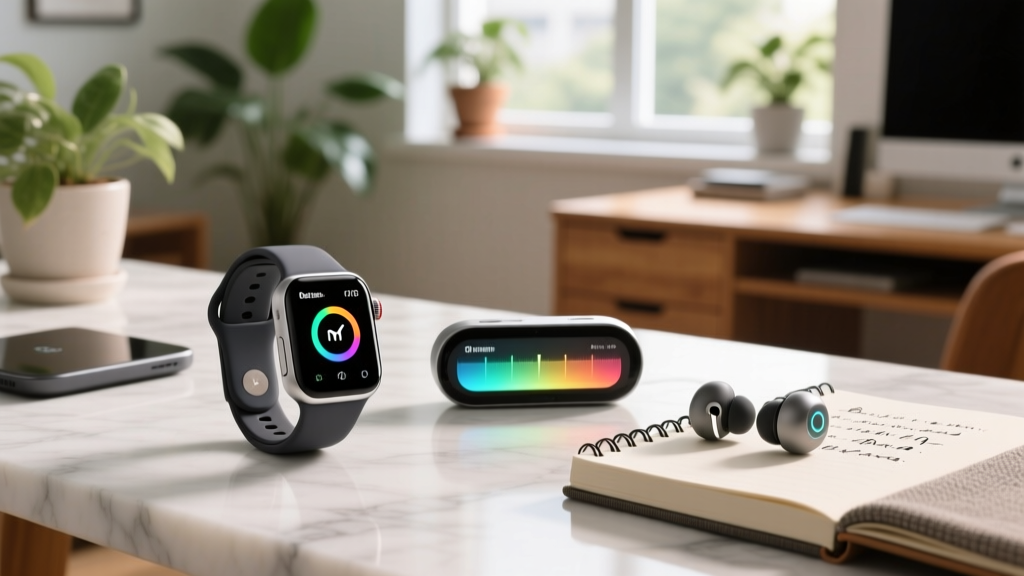
The Adult ADHD Hardware Imperative
According to the National Institute of Mental Health (NIMH), adult ADHD affects approximately 4.4% of the U.S. population. The core deficit is not a lack of willpower, but a neurobiological gap in executive function and dopamine regulation. In 2026, the most effective accessibility strategy is 'externalizing' executive function through specialized hardware that bypasses the brain's working memory bottlenecks.
The Neurobiology of Externalized Executive Function
Adults with Attention-Deficit/Hyperactivity Disorder experience chronic time blindness, working memory deficits, and task-initiation paralysis. Standard productivity apps often fail because they require the very cognitive resources the ADHD brain lacks: sustained working memory and self-initiation. Specialized ADHD gadgets solve this by shifting the cognitive load from the prefrontal cortex to the physical environment. By utilizing haptic feedback, visual permanence, and AI-driven capture, these devices provide the external scaffolding necessary to bridge the dopamine gap.
Category 1: Haptic Wearables & Autonomic Regulators
Auditory alarms and phone notifications often trigger rejection sensitive dysphoria (RSD) or anxiety in neurodivergent adults. Haptic wearables bypass the auditory processing center, delivering gentle physical cues that ground the nervous system and prompt task transitions without inducing a stress response.
Top Pick: Apollo Neuro (2025/2026 Edition)
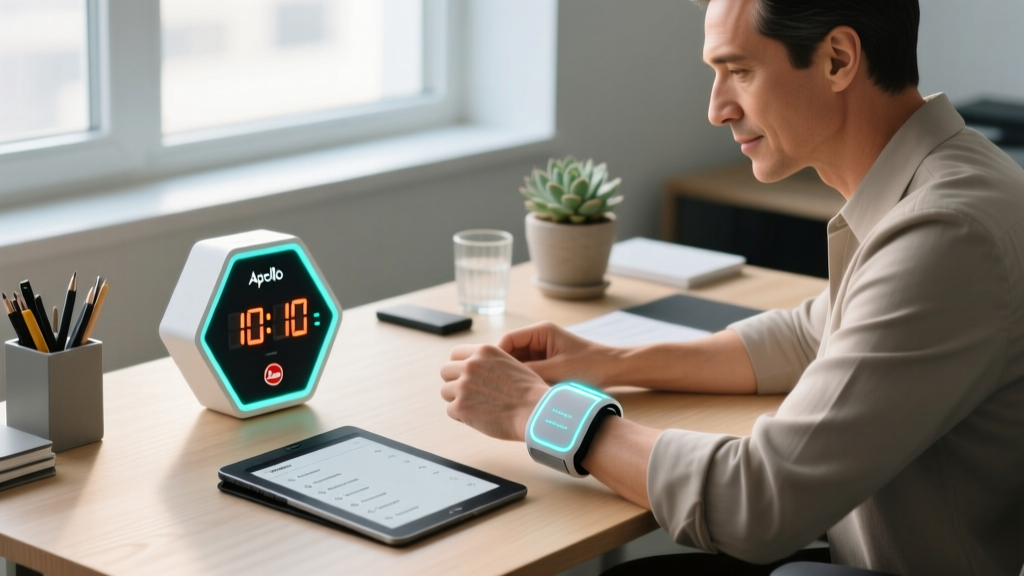
The Apollo Neuro is a wearable device worn on the wrist or ankle that uses low-frequency vibrations (between 30Hz and 100Hz) to stimulate the vagus nerve. Unlike smartwatches that bombard you with texts, the Apollo is strictly a bi-directional biofeedback tool.
- Key Feature: The 'Focus & Flow' mode utilizes specific vibration patterns clinically shown to improve heart rate variability (HRV) and sustain attention during deep work.
- Pricing: $269 one-time purchase (no mandatory subscription for core features).
- Battery Life: Up to 7 days on a single charge.
- ADHD Use Case: Wear it during high-friction tasks (like tax preparation or inbox zero) to maintain autonomic nervous system regulation, preventing the 'freeze' response common in executive dysfunction.
Category 2: Visual Timers & Time-Blindness Mitigators
Time blindness—the inability to accurately perceive the passage of time—is a hallmark of adult ADHD. Digital timers on smartphones are counterproductive; unlocking a phone to set a timer exposes the user to a dopamine minefield of notifications. Physical, visual timers provide 'time permanence'.
Comparison Matrix: Physical ADHD Timers
| Device | Mechanism | Price | Best For |
|---|---|---|---|
| Time Timer MOD | Red visual disk disappears as time elapses | $44.95 | Visualizing time remaining for open-ended tasks |
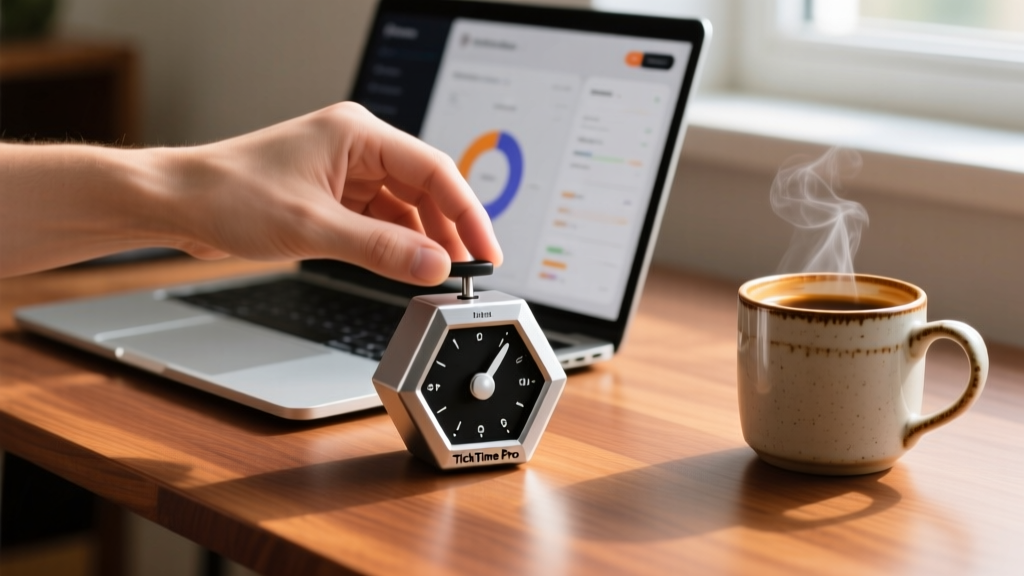
| TickTime Pro | Hexagonal flip-timer with physical gravity switch | $59.00 | Fidget-friendly Pomodoro intervals and task gamification |
| Mudita Bell | Analog visual dial with gentle acoustic chime | $89.00 | ADHD-friendly morning wake routines and wind-downs |
⚠️ The Fidget Factor
The TickTime Pro excels because it satisfies the ADHD need for kinesthetic engagement. Flipping the physical hexagon to select a 25-minute Pomodoro interval provides a micro-dose of dopamine, lowering the activation energy required to start a dreaded task.
Category 3: Working Memory Offloads & AI Capture
Adults with ADHD frequently experience 'out of sight, out of mind' syndrome, extending to verbal instructions. If a manager gives verbal feedback in a hallway, that working memory trace often degrades within minutes. AI wearables solve this by acting as an external hippocampus.
Top Pick: Plaud NotePin
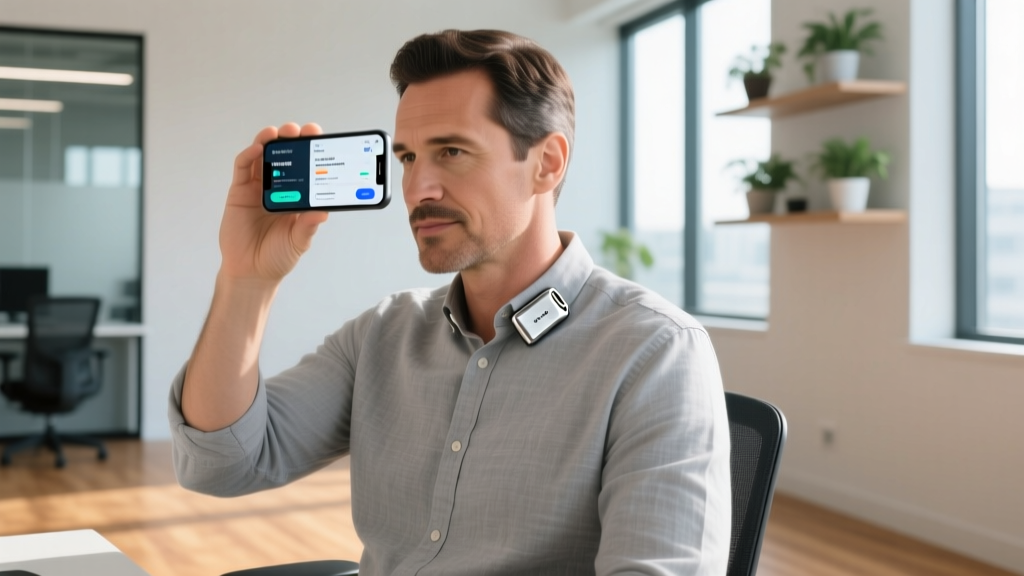
The Plaud NotePin is an ultra-thin, wearable AI voice recorder that clips to your shirt collar or magnetic necklace. It records up to 30 hours of continuous audio and uses onboard AI to transcribe, summarize, and extract action items.
- Hardware Specs: Weighs just 28 grams, features a dedicated physical record button (crucial for bypassing app-launch friction), and boasts a 7-day standby battery.
- Pricing: $169 for the hardware, with optional cloud AI processing subscriptions starting at $7.90/month.
- ADHD Use Case: Wear it during unstructured meetings, therapy sessions, or while doing household chores to capture fleeting ideas. The AI summary prevents the overwhelm of reviewing a 2-hour audio file, delivering only the bulleted 'next steps' your brain needs.
The 'ADHD Tax' Decision Framework
The 'ADHD Tax' refers to the financial cost of buying productivity systems that are ultimately abandoned. Before purchasing any accessibility gadget, run it through this three-point clinical decision matrix to ensure long-term adoption.
'According to Children and Adults with Attention-Deficit/Hyperactivity Disorder (CHADD), successful ADHD management relies on environmental modifications rather than sheer cognitive effort. A tool that adds friction to your environment will inevitably be discarded.'
Evaluate Your Hardware Using the 3-Second Rule
- Setup Friction: Can the device be activated in under 3 seconds? If a visual timer requires navigating a digital menu, it will not be used. Physical toggles and gravity-switches win.
- Visual Permanence: If the device can be easily hidden in a drawer, it ceases to exist to the ADHD brain. Gadgets must have a dedicated, highly visible physical footprint on your desk or body.
- Sensory Profile: Does the device rely on jarring auditory alarms? Opt for hardware that utilizes haptics (vibration), light therapy, or visual color-shifting to prompt transitions without triggering sensory overload.
Navigating FSA/HSA Eligibility for ADHD Hardware
Many adults are unaware that specialized ADHD gadgets can be purchased using pre-tax Flexible Spending Account (FSA) or Health Savings Account (HSA) funds. According to IRS Publication 502, medical expenses must be primarily to alleviate or prevent a physical or mental defect or illness.
How to Secure a Letter of Medical Necessity (LMN)
While a standard laptop is not FSA-eligible, a dedicated e-ink tablet (like the reMarkable Paper Pro, $599) used strictly to manage ADHD-related cognitive overload, or an Apollo Neuro used for biofeedback therapy, can qualify. To use your FSA/HSA:
- Request a Letter of Medical Necessity (LMN) from your diagnosing psychiatrist or psychologist.
- The LMN must explicitly state your ADHD diagnosis (ICD-10 code F90.0) and explain how the specific hardware (e.g., haptic biofeedback device) is a prescribed treatment to mitigate your specific executive function deficits.
- Submit the LMN to your FSA/HSA administrator for pre-approval before purchasing, or submit it with your receipt for post-purchase reimbursement.
Final Verdict: Building Your 2026 Accessibility Stack
Managing adult ADHD requires a layered hardware approach. Start with the TickTime Pro ($59) to externalize time perception and gamify task initiation. If you struggle with emotional dysregulation or task-freeze, invest in the Apollo Neuro ($269) for autonomic nervous system support. Finally, for professionals drowning in unstructured verbal data, the Plaud NotePin ($169) is a non-negotiable working memory prosthetic. By selecting tools that respect your neurobiology rather than fighting it, you transform accessibility gadgets from expensive paperweights into vital cognitive scaffolding.
Written by
Ryan TanakaRyan Tanaka holds a B.S. in Mechanical Engineering from Oregon State University and is a certified AWS Solutions Architect. He has built over 80 custom electronics projects ranging from CNC machines to IoT sensor networks, and has reviewed development boards, 3D printers, soldering equipment, and maker tools for the past 6 years. Ryan is an active contributor to 12 open-source hardware projects on GitHub and teaches monthly workshops at three hackerspaces across the Pacific Northwest. His reviews combine engineering rigor with accessibility — he evaluates products not just on specs but on documentation quality, community support, and learning curve for beginners. He has presented at Maker Faire Bay Area, Open Hardware Summit, and the Adafruit community showcase, and maintains a popular blog documenting his build processes.