Best Kitchen Gadget for Storage: Beginner vs Expert 2026
Compare beginner and expert pantry organization tools. We test OXO POP vs Zwilling vacuum systems to find the best kitchen gadget for food storage.
The "Best Kitchen Gadget" Myth: Aesthetic vs. Atmospheric Control
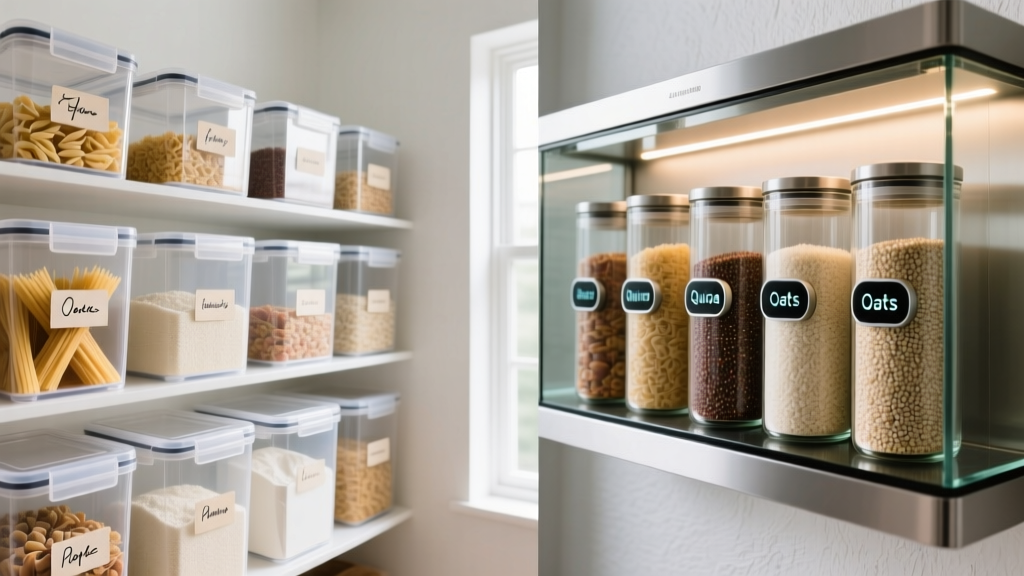
Searching for the best kitchen gadget for organization often leads to a trap: optimizing for visual symmetry rather than food preservation. Beginners typically approach kitchen storage as an interior design problem, purchasing uniform acrylic bins to achieve a clean pantry aesthetic. Experts, however, treat storage as an atmospheric control challenge. They invest in gadgets that manipulate oxygen levels, regulate humidity, and maximize volumetric efficiency.
According to EPA food waste statistics, food is the single most common material landfilled in the US, representing 24% of municipal solid waste. A significant portion of this waste stems from improper storage leading to premature oxidation, moisture loss, and pest infiltration. This guide dissects the storage stacks of beginners versus experts to determine which tools actually deliver a return on investment.
The Beginner Stack: Passive Seals and Rigid Geometry
OXO Good Grips POP Containers (Model 1081200)
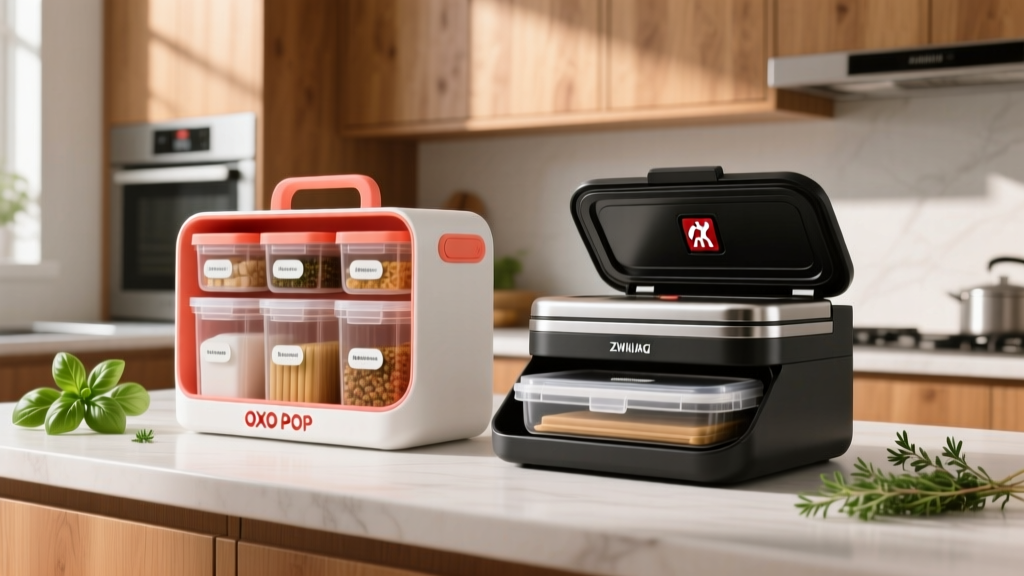
The OXO POP container is the undisputed entry-level champion of pantry organization. The 5.7-quart model (retailing around $14.99 per unit, or $65 for a 10-piece set) features a push-button mechanism that expands a silicone gasket against the inner wall to create a seal. For casual bakers storing sugar or rice, this is adequate.
However, the failure mode of the POP container is well-documented among culinary professionals. Fine particulates like flour and powdered sugar inevitably migrate into the silicone gasket track. Over six to twelve months, this buildup prevents the button mechanism from fully depressing, creating micro-leaks. Furthermore, the rigid rectangular geometry creates a "dead air" penalty. When storing irregularly shaped items or bulk grains, the rigid corners trap ambient oxygen that accelerates rancidity in high-fat foods like brown rice or nuts.
- Pros: Highly stackable, BPA-free Tritan plastic, visually uniform, widely available.
- Pros: Dishwasher safe (top rack), modular sizing system.
- Cons: Gasket degradation from fine powders, rigid corners trap oxygen, plastic scratches over time causing cloudiness.
The Expert Stack: Active Preservation and Material Science
Zwilling Fresh & Save Vacuum System (Model 36820-000)
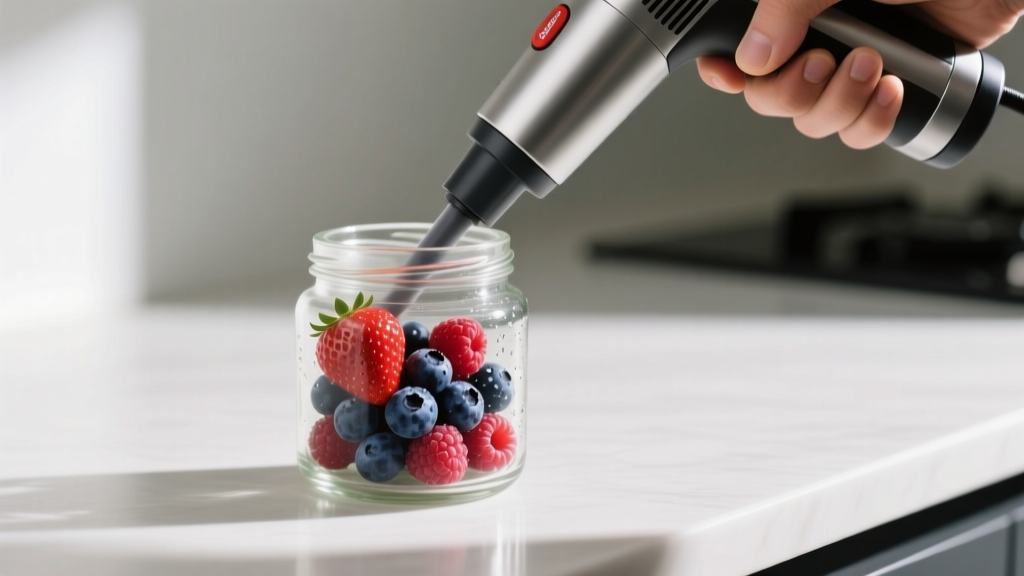
Experts have largely migrated away from passive plastic seals toward active vacuum technology. The Zwilling Fresh & Save system utilizes a handheld electric pump (retailing at $49.99) and borosilicate glass containers ($24.99 for the 1.5L size). Unlike traditional bulky chamber vacuum sealers that require single-use plastic bags, this system extracts air directly from reusable glass vessels down to approximately 0.2 bar of pressure.
This active extraction is critical for lipid oxidation. According to FDA guidelines on safe food storage, dry goods containing natural oils (such as whole wheat flour, quinoa, and walnuts) are highly susceptible to rancidity when exposed to ambient oxygen. By dropping the internal pressure to 0.2 bar, the Zwilling system removes roughly 80% of the oxygen present in a standard sealed container, extending the shelf life of volatile pantry staples by 300% to 500%.
Vejibaga Vegetable Crisper Bags
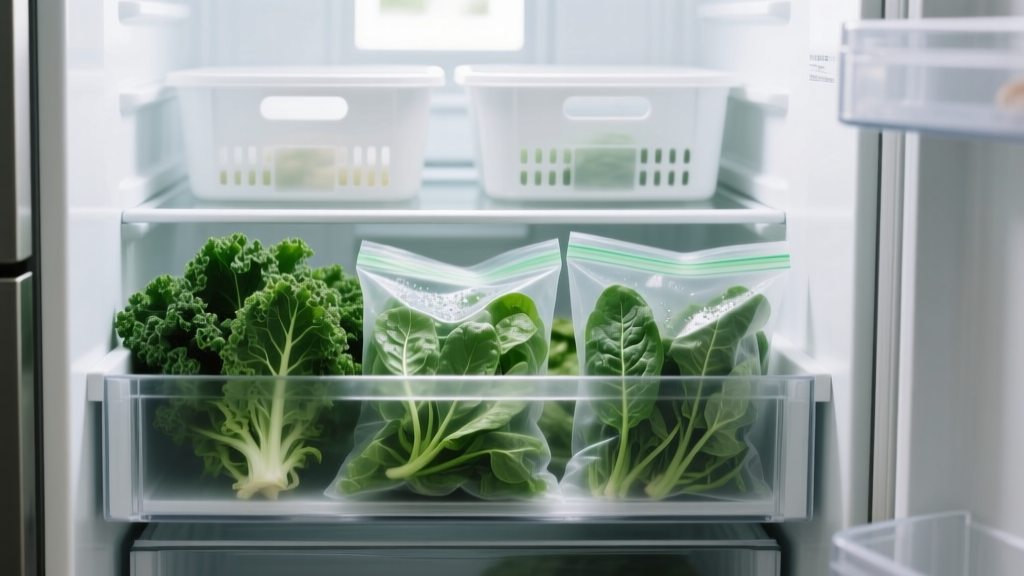
Beginners rely on the refrigerator's built-in crisper drawer, which rarely maintains consistent humidity. Experts use Vejibaga bags ($19.99 for a 3-pack). These are constructed from 100% cotton terry cloth. The user wets the bag, wrings it out, and stores unwashed leafy greens inside. The damp cotton creates a localized high-humidity micro-climate while allowing the vegetables to breathe, preventing the cellular suffocation and subsequent slime that occurs when greens are trapped in sealed plastic produce bags.
Storage Matrix: Passive vs. Active Gadgets
| Feature | OXO POP (Beginner) | Zwilling Vacuum (Expert) | Vejibaga Bags (Expert) |
|---|---|---|---|
| Primary Use | Dry pantry staples | Oxidation-prone goods & leftovers | Leafy greens & fresh produce |
| Seal Type | Passive silicone gasket | Active 0.2 bar vacuum extraction | Breathable moisture barrier |
| Material | Tritan Plastic | Borosilicate Glass | 100% Cotton Terry Cloth |
| Cost per Unit | ~$14.99 | ~$24.99 + $49.99 pump | ~$6.66 |
| Shelf-Life Impact | Neutral (Pest block only) | Extends by 3x - 5x | Extends greens by 2x - 3x |
Spatial Efficiency: Gravity Dispensers vs. Stackable Bins
Organization is not just about preservation; it is about volumetric geometry. Beginners often stack identical square bins, which requires unstacking the top three containers to access the bottom one. This friction leads to abandoned ingredients in the back of the pantry.
Experts utilize gravity-fed dispensers and adjustable tension rods. The DispenseMate Gravity Cereal Dispenser (approx. $35) mounts to the underside of a shelf, utilizing dead vertical space while providing one-handed access. For baking sheets and cutting boards, experts abandon horizontal stacking entirely, opting for the YouCopia StoreMore Adjustable Bakeware Rack ($24.99). This gadget uses spring-loaded tension dividers that adjust in 1.5-inch increments, allowing vertical filing of trays. Vertical filing reduces retrieval time by an estimated 80% compared to horizontal stacking, eliminating the scratching and clattering that damages non-stick coatings and warps aluminum sheets.
"The most dangerous place in a kitchen is the back corner of a deep pantry shelf. If a gadget requires you to move three items to reach one, it is a failed organizational tool, regardless of how airtight its seal is." — Culinary ergonomics principle
Decision Framework: Which Tier Are You In?
To determine the best kitchen gadget for your specific storage needs, run your inventory through this three-step assessment:
- The Lipid Test: Do you store whole grains, nuts, seeds, or whole wheat flour? If yes, passive plastic bins will result in rancidity within 3 to 6 months. Action: Upgrade these specific items to the Zwilling vacuum glass system.
- The Particulate Test: Do you bake frequently with fine powders (cake flour, cornstarch, confectioners sugar)? Action: Avoid vacuum-seal lids with complex valve mechanisms that clog. Use simple, gasket-less snap-lock bins or OXO POP containers, but commit to washing the silicone gaskets monthly.
- The Retrieval Friction Test: Track how many seconds it takes to access your most used spices or baking sheets. If it exceeds 10 seconds, your geometry is flawed. Action: Install under-shelf gravity dispensers for high-volume dry goods and vertical tension racks for flatwares.
Final Verdict: What is the Best Kitchen Gadget for Organization?
There is no single best kitchen gadget; there is only the right tool for the specific biological and spatial problem you are solving. For the beginner looking to declutter and standardize their pantry visuals, the OXO POP system remains a highly functional, cost-effective entry point. However, for the culinary expert focused on minimizing food waste, preventing lipid oxidation, and optimizing retrieval ergonomics, the Zwilling Fresh & Save vacuum system paired with YouCudia vertical tension racks represents the pinnacle of modern kitchen storage technology. Investing in active atmospheric control ultimately pays for itself by drastically reducing the volume of spoiled groceries sent to the landfill.
Written by
Marcus WebbMarcus Webb served as a U.S. Army logistics officer for 8 years, where he managed field equipment procurement and tactical gear evaluation across three combat deployments. After honorable discharge, he earned a certification from the Professional Knife Makers Association and became a certified Wilderness First Responder (WFR). Marcus has tested over 500 EDC products in extreme environments — from -40°F in Alaska to 120°F in the Mojave Desert — using military-spec testing protocols. His reviews of multi-tools, tactical flashlights, and survival gear are known for their rigorous methodology: controlled drop tests from 6 feet, 120-minute water submersion at 2 meters, and lateral torque testing at 45 Nm. He is a member of the Blade Show judging panel and contributes to OutdoorGearLab.