Best Tech Gadgets Under $50 for Outdoor Camping 2026
Discover the best tech gadgets under $50 for outdoor camping in 2026. We review budget survival gear, power banks, and smart trail tools.
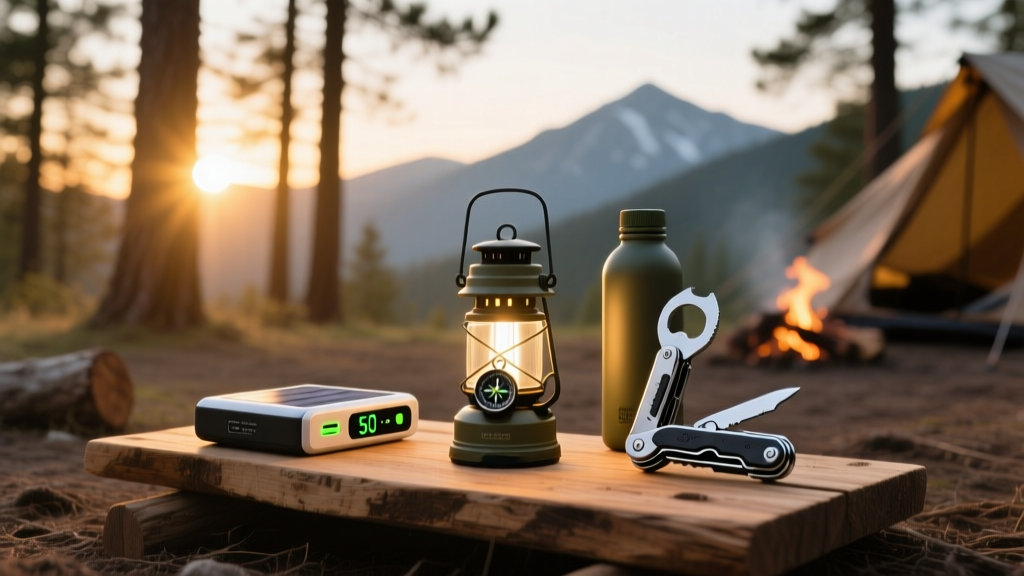
The Power-to-Weight Ratio: High-Density Lithium Banks
When evaluating the best tech gadgets under $50 for backcountry use, capacity is secondary to the capacity-to-weight ratio. A standard 10,000mAh power bank is useless if its weight forces you to leave behind essential water or insulation. In 2026, carbon-fiber chassis designs have trickled down to the sub-$50 price point, fundamentally changing ultralight power management.
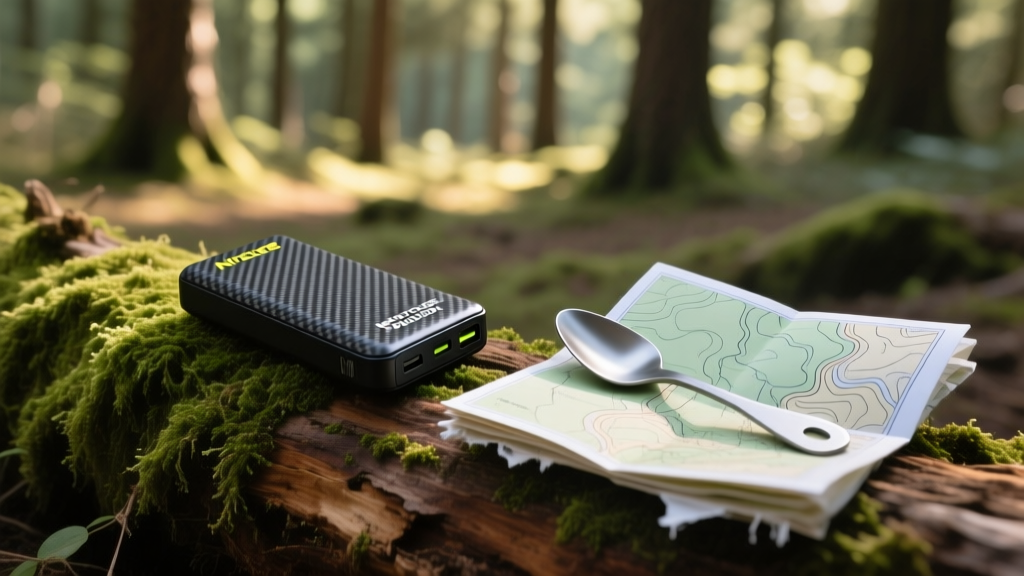
The Nitecore NB10000 Gen 2 ($45.95) utilizes a carbon fiber outer shell to achieve a 10,000mAh capacity at just 150 grams (5.29 oz). By contrast, the Anker 325 Power Bank ($25.99) offers the same 10,000mAh capacity but weighs 215 grams (7.58 oz) due to its standard ABS plastic and denser, lower-tier lithium-polymer cells. While the Anker saves you $20 upfront, the 65-gram penalty is significant for thru-hikers counting every ounce.
| Feature | Nitecore NB10000 Gen 2 | Anker 325 (10K) |
|---|---|---|
| Price (2026) | $45.95 | $25.99 |
| Weight | 150g (5.29 oz) | 215g (7.58 oz) |
| Max Output | 22.5W (USB-C PD) | 12W (USB-A) |
| Recharge Cycles | ~800 to 80% health | ~500 to 80% health |
Failure Mode Warning: Both units utilize lithium-ion chemistry, which suffers from severe voltage sag and temporary capacity loss when ambient temperatures drop below 32°F (0°C). Always store your power bank in an interior jacket pocket or the center of your sleeping bag at night to maintain chemical efficiency.
Illumination: Lumens, Throw, and Cold-Weather Chemistry
Smartphone flashlights drain primary device batteries and lack the beam geometry required for trail navigation. Dedicated headlamps remain mandatory, but the market is split between regulated and unregulated output circuits.
Regulated vs. Unregulated Output
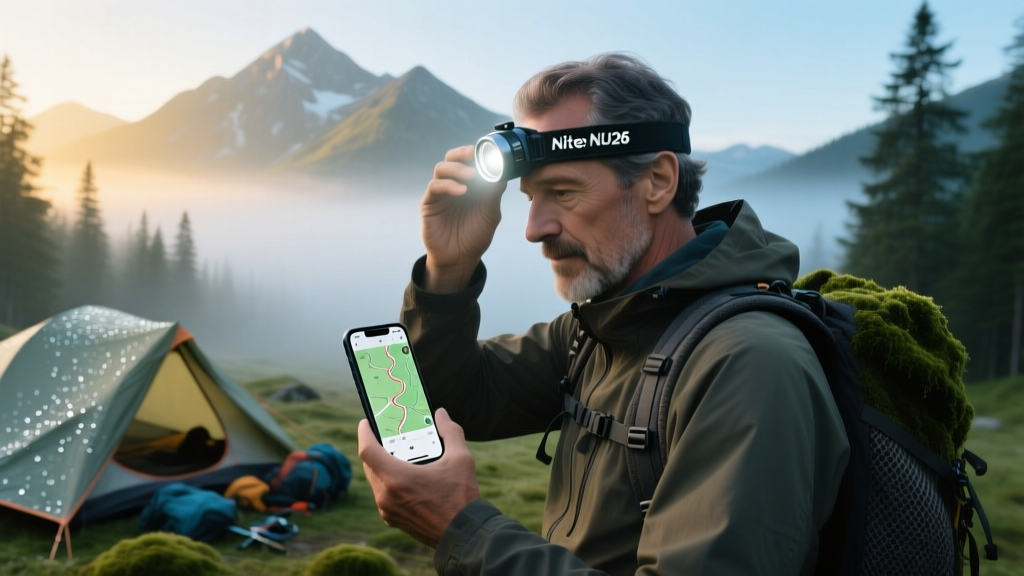
The Nitecore NU25 UL ($35.00) features a regulated circuit. This means it maintains a steady 400-lumen output until the battery is nearly depleted, at which point it drops off a cliff. The Petzl Tikkina ($24.95) uses an unregulated circuit; its 300-lumen max output begins dimming the moment you turn it on, gradually fading over the 60-hour burn time. For technical terrain where consistent depth perception is required to avoid ankle sprains, regulated output is non-negotiable.
Fire & Environment: Dual-Arc Plasma vs. Ferrocerium
While ferrocerium rods are the ultimate fail-safe, they require fine motor skills and dry tinder—both of which degrade during hypothermic events. Dual-arc plasma lighters, such as the SaberSpark or generic IP67-rated USB-C rechargeable models ($20–$28), offer a one-handed, windproof ignition source.
Plasma lighters generate an electrical arc between two ceramic nodes, reaching temperatures exceeding 1,100°C (2,000°F). This easily ignites damp bark, cotton balls soaked in petroleum jelly, or commercial fire starters in winds up to 35 mph. However, they are not without edge cases:
- Moisture Bridging: If water bridges the gap between the nodes, the arc will short out. You must blow the nodes completely dry before activation.
- Altitude Limits: The ionization of air required to form the plasma arc becomes less efficient above 8,000 feet. If you are camping in the high Sierras or Rockies, carry a micro-ferro rod as a backup.
- Debris Snagging: The dual-arc grid easily catches ash and unburned tinder, requiring cleaning with a small brush after every use to prevent node degradation.

Pack Management: Digital Hanging Scales
Overpacking is the primary cause of early trip abandonment and joint degradation. A Digital Hanging Scale (such as the Etekcity model, ~$15) is a sub-$50 tech essential for base-weight management. Biomechanical studies consistently show that carrying a load exceeding 20% of your body weight exponentially increases compressive forces on the lumbar spine and knee menisci. By weighing your pack at home and at the trailhead, you can ruthlessly audit redundant gear. Furthermore, if you are flying to your trailhead, a digital scale prevents exorbitant airline overweight baggage fees, paying for itself on a single trip.
The Leave No Trace Tech Integration
Budget tech should actively support environmental stewardship. The Leave No Trace Center for Outdoor Ethics emphasizes minimizing impacts on wildlife and other visitors. Tech gadgets play a direct role here:
"Respect Wildlife: Observe wildlife from a distance. Do not follow or approach them. Avoid wildlife during sensitive times: mating, nesting, raising young, or winter."
Using a headlamp with a dedicated red-light mode (available on both the NU25 UL and Petzl Tikkina) preserves your night vision and prevents blinding nocturnal wildlife, whose eyes are highly sensitive to the blue-white spectrum of standard LEDs. Similarly, using digital GPS apps on your charged smartphone to stay strictly on established trails prevents the creation of social trails that accelerate soil erosion.
Quick-Decision Matrix: Match the Gadget to the Trip
Use this framework to allocate your $50 budget based on your specific seasonal excursion:
- Weekend Car Camping (High Comfort, Low Weight Concern): Buy the Anker 325 ($25) and a Petzl Tikkina ($24). Total: $49. You get maximum reliability without worrying about gram-counting.
- Ultralight Thru-Hiking (High Weight Concern, High Mileage): Buy the Nitecore NB10000 Gen 2 ($45) and rely on your phone's flashlight for camp chores. Total: $45. The 65g weight savings on the power bank is critical for high-mileage days.
- Winter/Alpine Survival (High Risk, Cold Weather): Buy the Nitecore NU25 UL ($35) and a Dual-Arc Plasma Lighter ($15). Total: $50. Prioritize regulated illumination for icy trail navigation and one-handed fire starting if dexterity is compromised by cold.
Written by
Lena ChenLena Chen earned her M.S. in Human-Computer Interaction from Carnegie Mellon University and a B.S. in Electrical Engineering from the University of Washington. She has spent the past decade specializing in smart home architecture and IoT ecosystems, helping over 200 homeowners design fully connected living spaces. Lena is a certified Matter protocol consultant and has published peer-reviewed research on voice-first interface design in the ACM Digital Library. Her reviews of smart home products combine deep technical analysis with real-world usability testing, evaluating everything from Zigbee mesh stability to Alexa skill responsiveness. She regularly speaks at CEDIA Expo and CES smart home panels.