Best Budget Cooking Gadgets for Men in 2026 Under $50
Upgrade your kitchen arsenal without breaking the bank. We test the best budget cooking gadgets for men in 2026, featuring top-rated gear under $50.
The "Tactical Tax" in Men's Culinary Gear
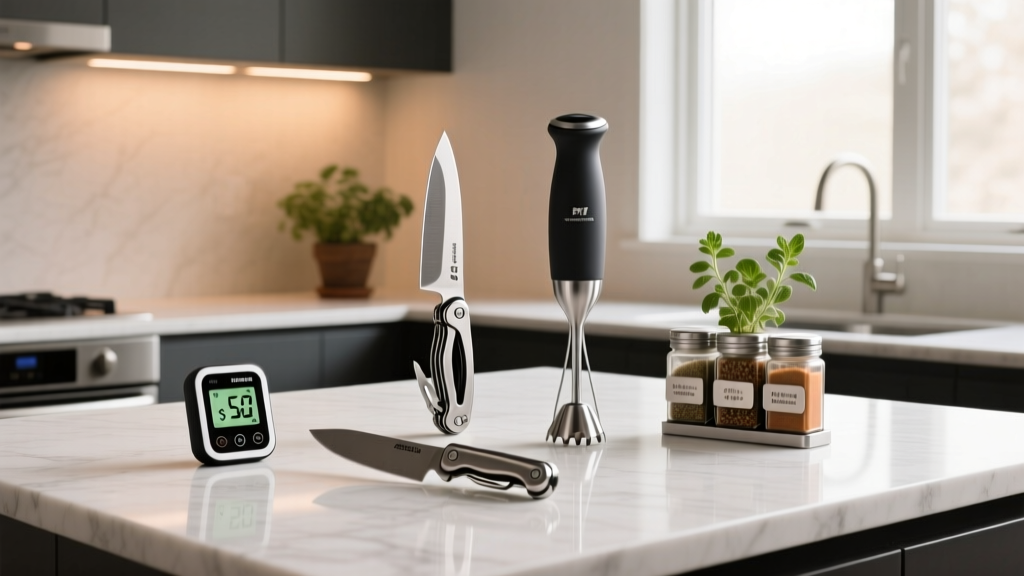
The market for men's cooking equipment is heavily saturated with overpriced, "tactical" branding. Matte black finishes, paracord-wrapped handles, and aggressive marketing often inflate the price of basic tools by 300%. When sourcing the best budget cooking gadgets for men in 2026, the objective is to strip away the aesthetic fluff and evaluate raw material science, thermal dynamics, and ergonomic utility. You do not need to spend $200 on a forged Damascus blade or $150 on a smart-probe thermometer to achieve professional-grade results. By targeting commercial-grade workhorses and specialized single-purpose tools, you can outfit a high-performance kitchen and BBQ station for under $50 per item.
1. The Workhorse Blade: Victorinox Fibrox Pro 8-Inch Chef's Knife
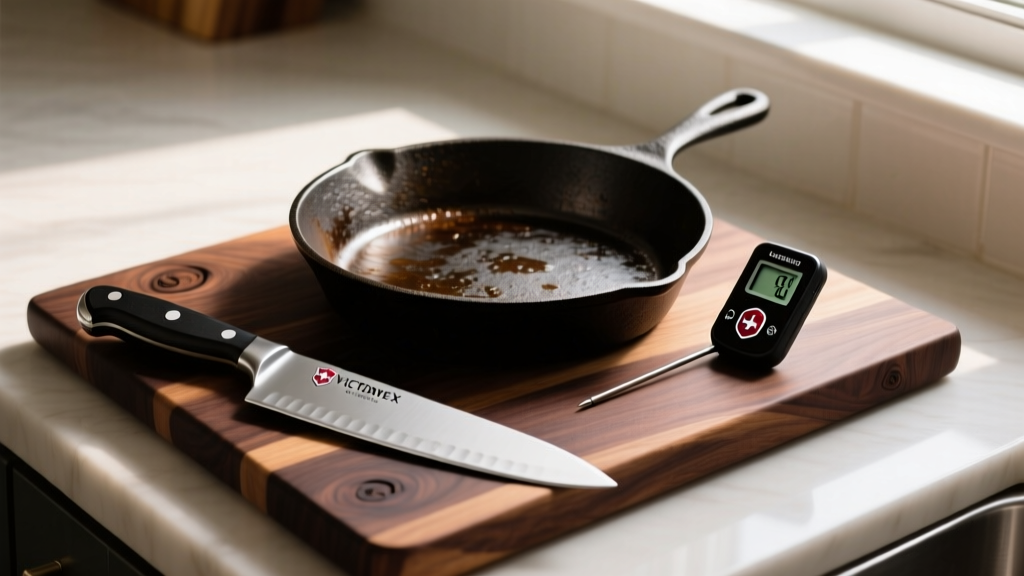
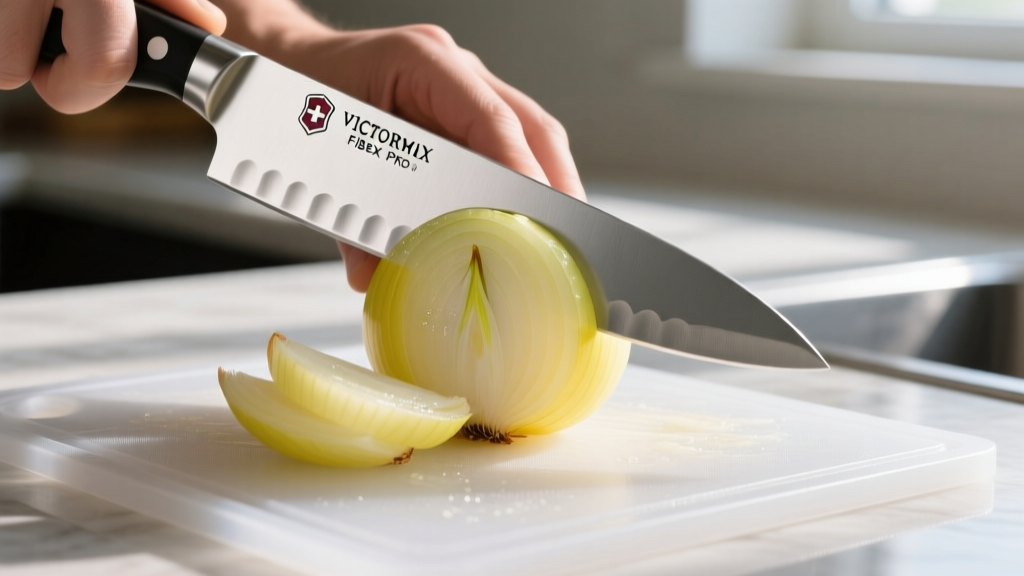
While boutique knife makers push high-carbon steel that requires meticulous oiling to prevent rust, the Victorinox Fibrox Pro 8-Inch (typically priced around $45) utilizes X50CrMoV15 stainless steel. This specific alloy composition contains 0.5% carbon for edge retention and 15% chromium for aggressive corrosion resistance. It is the exact steel used in commercial butcher blocks where tools are subjected to constant moisture and high-volume prep.
Metallurgy Note: Unlike heavy forged German knives that rely on a bolster for weight, the Fibrox is stamped and laser-cut. This reduces the weight to just 6.9 ounces, significantly decreasing wrist fatigue during high-volume tasks like breaking down whole chickens or dicing mirepoix.
Out of the box, Victorinox grinds this blade to a 15-degree angle per side (30 degrees total). This is noticeably steeper than the traditional 20-degree angle found on most budget Western knives, allowing it to glide through dense root vegetables without wedging or splitting. According to extensive edge-retention testing by Serious Eats, the Fibrox consistently outperforms knives triple its price in initial sharpness, though it requires honing every 3-4 uses due to the softer 56 HRC (Rockwell Hardness) rating designed to prevent micro-chipping on hard bones.
2. Thermal Precision: ThermoWorks ThermoPop 2
Carryover cooking can increase the internal temperature of a thick cut of meat by 5°F to 10°F while it rests. If your thermometer takes 15 seconds to register a final reading, your medium-rare ribeye will overshoot into medium. The ThermoWorks ThermoPop 2 ($35) solves this with a 5-second response time using an advanced thermistor sensor housed in an IP67-rated waterproof body.
Why IP67 Matters for BBQ and Brisket
Previous generations of budget thermometers failed when meat juices, marinades, or dishwater breached the probe junction. The IP67 rating on the ThermoPop 2 means the entire unit can be submerged in up to 1 meter of water for 30 minutes without sensor degradation. When pulling a 14-pound brisket off the smoker, you can wipe the probe completely clean under the tap without worrying about shorting the internal circuit board.
The 360-degree rotating backlit display eliminates the awkward wrist contortions required when checking the deep-core temperature of a massive pork shoulder on a crowded grill grate. For baseline safety parameters, always cross-reference your final pull temperatures with the USDA Meat and Poultry Charts, which mandate 145°F for whole cuts of beef with a 3-minute rest, and 165°F for all poultry.
3. The Searing Engine: Lodge 10.25-Inch Cast Iron Skillet
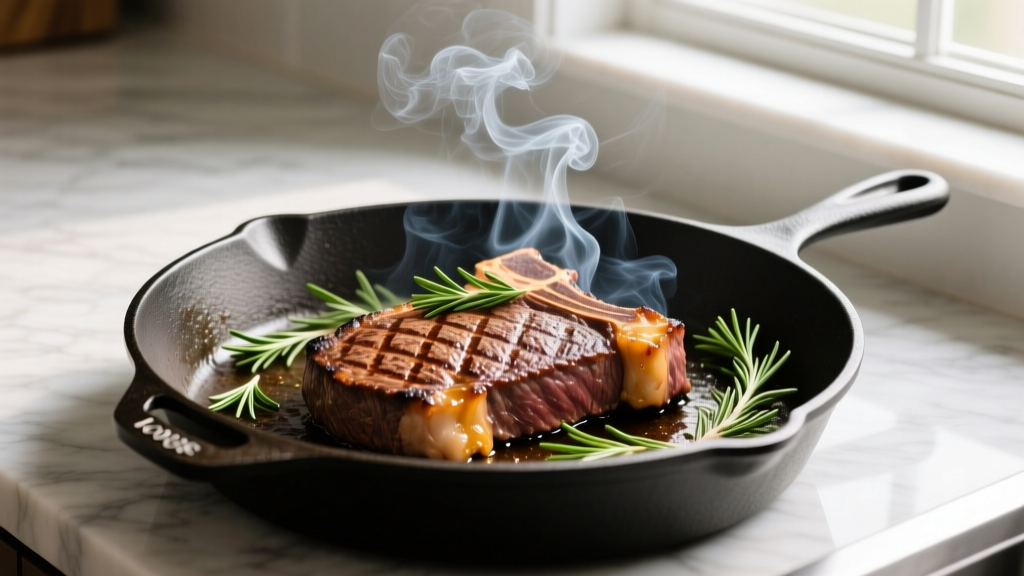
Achieving a proper Maillard reaction (the chemical browning of amino acids and reducing sugars) requires sustained surface temperatures above 300°F. Thin aluminum or stamped steel pans suffer from rapid thermal loss the moment a cold, wet steak hits the surface, resulting in a gray, steamed exterior. The Lodge 10.25-Inch Cast Iron Skillet ($25) weighs 5.35 pounds and possesses a massive volumetric heat capacity, acting as a thermal battery that maintains searing temperatures even when loaded with cold protein.
Do not fear modern dish soap. The outdated rule that "soap destroys cast iron seasoning" applies only to vintage lye-based soaps. Modern detergents are mild and will not strip the polymerized oil layers. According to the official Lodge Cast Iron care guidelines, a drop of mild soap and a chainmail scrubber are perfectly safe for removing stubborn carbon buildup without damaging the skillet's non-stick patina.
It is critical to note that the "10.25-inch" designation refers to the top lip diameter. The actual flat cooking surface is roughly 8 inches. If you are searing multiple large scallops or two 12-ounce New York strips simultaneously, you must leave a 1-inch gap between proteins to prevent localized steam pockets. For larger batch searing, step up to the 12-inch model, but be prepared for the 8-pound heft.
4. High-Heat Containment: Kona XL BBQ Grill Mats (Set of 2)
Grilling delicate items like asparagus, diced vegetables, or flaky fish directly on standard cast-iron grates often results in lost food and severe flare-ups from dripping marinades. The Kona XL BBQ Grill Mats ($15 for a set) are constructed from 0.25mm thick PTFE (polytetrafluoroethylene) coated fiberglass. This specific thickness is the critical differentiator; cheaper 0.1mm mats warp under high heat and fail to distribute thermal energy evenly.
The PTFE coating is entirely non-reactive and withstands continuous temperatures up to 500°F. However, you must never place these mats directly over an open, un-diffused flame, as PTFE begins to degrade and release fumes at temperatures exceeding 500°F. Use them exclusively over indirect heat zones or on grills with proper flame tamers and heat tents. They provide the distinct char marks of a grill while functioning as a flat-top griddle, reducing cleanup time by 90%.
Budget Gear Comparison Matrix
| Gadget | Approx. Price | Primary Utility | Material / Spec | Tactical Fluff Score |
|---|---|---|---|---|
| Victorinox Fibrox Pro 8" | $45 | High-volume prep & butchery | X50CrMoV15 Steel, 56 HRC | 0/10 (Pure utility) |
| ThermoWorks ThermoPop 2 | $35 | Instant temp verification | IP67 Waterproof, 5s read | 1/10 (Minimalist) |
| Lodge 10.25" Cast Iron | $25 | High-heat searing & baking | 5.35 lbs, Pre-seasoned | 2/10 (Heritage brand) |
| Kona XL Grill Mats | $15 | Flare-up prevention & veggies | 0.25mm PTFE Fiberglass | 0/10 (Pure utility) |
The Splurge vs. Save Decision Framework
Not all kitchen categories benefit from budget constraints. When allocating funds for your cooking arsenal, apply this decision matrix to determine where to deploy capital:
- Always Save on: Consumables and Flat Surfaces. Grill mats, baking sheets, and polyethylene cutting boards degrade over time regardless of price. A $15 PTFE mat performs identically to a $40 branded version until it inevitably gets scorched or scratched.
- Always Save on: Cast Iron. The metallurgical properties of a $25 Lodge skillet are virtually indistinguishable from a $180 boutique artisan pan. Both are made of poured pig iron. The premium price only buys you smoother casting and a lighter weight, which rarely impacts the final culinary output.
- Never Save on: Edge Geometry and Thermal Sensors. While the $45 Victorinox is the absolute floor for acceptable professional geometry, do not drop below this tier into $15 stamped supermarket knives. Poorly heat-treated steel rolls at the edge, requiring constant sharpening and increasing the risk of slip-and-cut injuries. Similarly, a $10 bimetallic dial thermometer reacts too slowly for modern precision BBQ, resulting in overcooked proteins and wasted expensive cuts of meat.
Written by
Priya SharmaPriya Sharma holds a Ph.D. in Acoustical Engineering from the University of Southampton and a B.Tech in Electronics from IIT Delhi. She has spent 9 years as a consumer electronics journalist, with deep specialization in audio equipment, camera systems, and assistive technology. Priya is an active member of the Audio Engineering Society (AES) and has co-authored papers on spatial audio perception published in the Journal of the Acoustical Society of America. Her reviews of headphones, portable DACs, and studio monitors include objective measurements using Audio Precision analyzers alongside subjective listening tests. She also serves on the advisory board of the Global Accessibility Reporting Initiative (GARI), evaluating mobile devices for users with visual and hearing impairments.