Best Budget EDC Gadgets Under $40: 2026 Everyday Carry Guide
Discover the best budget EDC gadgets under $40 for 2026. Our expert roundup covers top pocket knives, flashlights, and multitools for everyday carry.
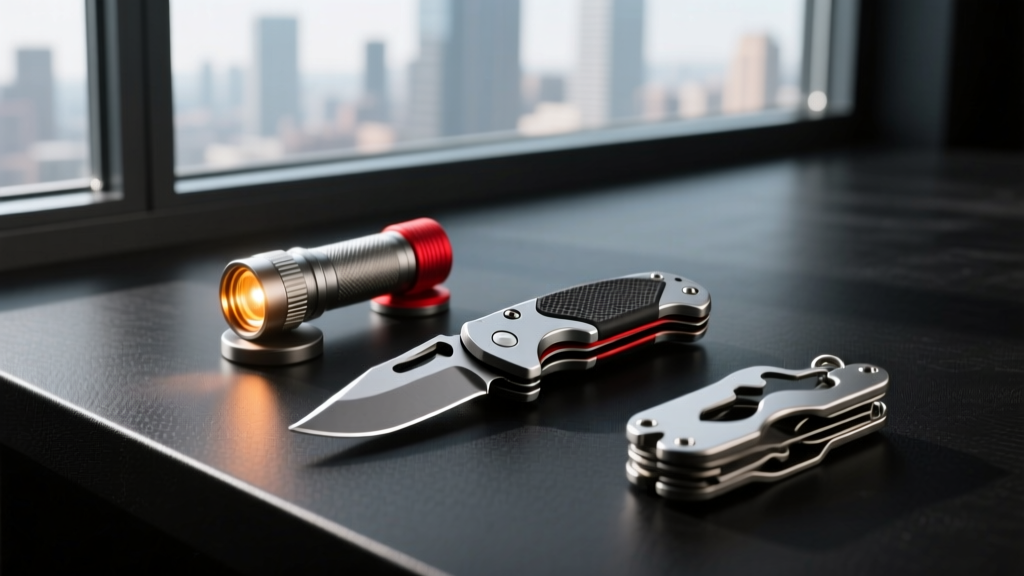
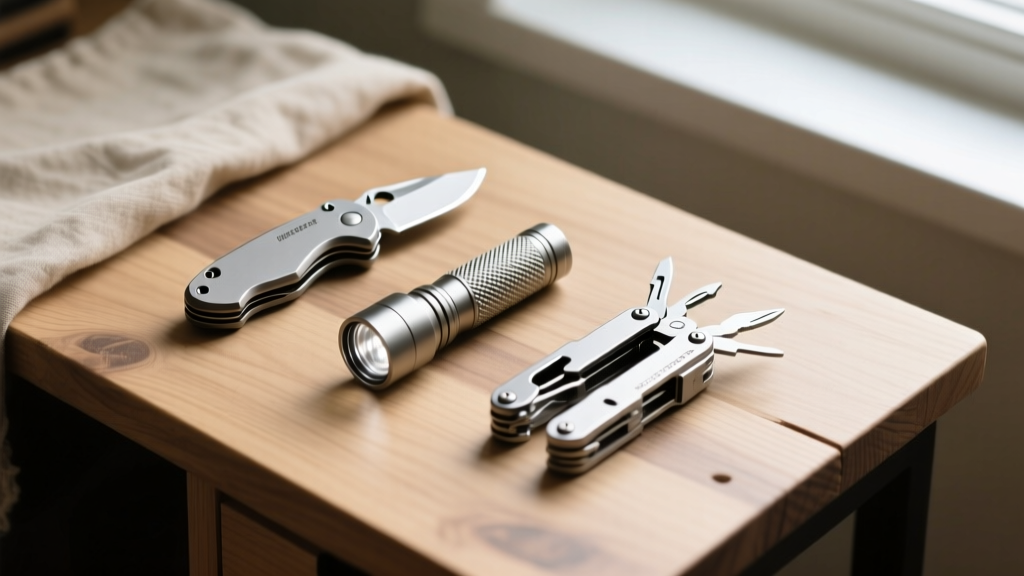
The 2026 Budget EDC Philosophy: Why Spend Less?
There is a persistent myth in the everyday carry community that you need to drop hundreds of dollars on titanium framelocks and aerospace-grade aluminum flashlights to have a reliable pocket loadout. As we move through 2026, the manufacturing landscape has completely shattered this misconception. Thanks to advanced CNC machining trickling down to overseas production hubs and the mass adoption of premium powder steels, the sub-$40 tier is now packed with high-performance tools that rival their premium counterparts.
When curating a budget-friendly loadout, the goal isn't just to find the cheapest option; it is to maximize the utility-to-weight ratio while ensuring the metallurgy and electronics won't fail you in a critical moment. Below, we break down the absolute best budget EDC gadgets available right now, complete with exact model numbers, real-world pricing, and specific maintenance requirements to keep them running for years.
The Core Loadout: Top Budget EDC Gadgets Under $40
1. The Blade: Civivi Elementum (Model C907A-1)
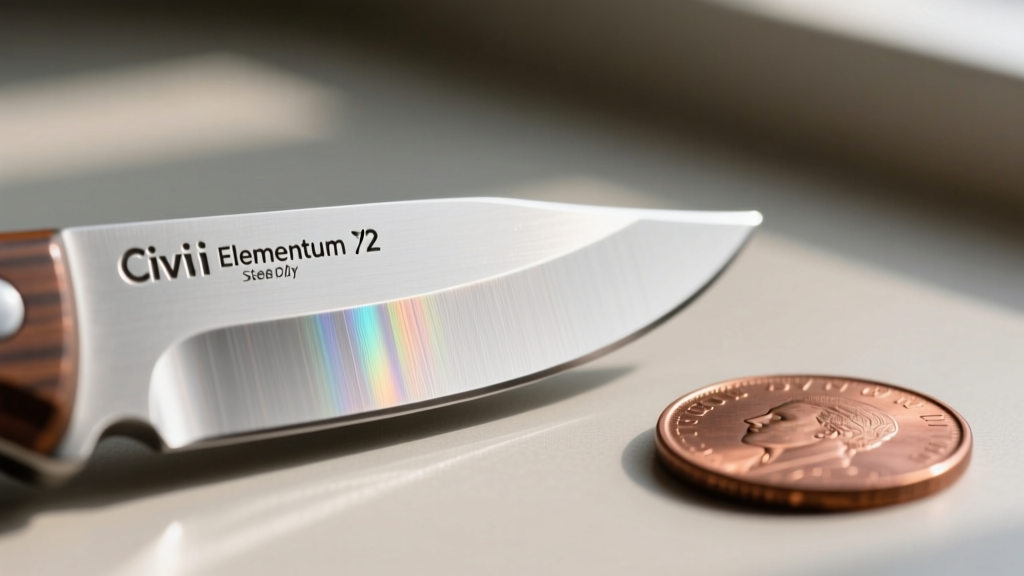
While the original Elementum put Civivi on the map, the 2026 standard for budget carry is the Civivi Elementum D2 (C907A-1). Priced consistently around $38.00, this folder offers a masterclass in budget ergonomics and cutting performance.
- Steel: D2 Tool Steel. While not fully stainless, D2 offers exceptional edge retention due to its high carbon (1.5%) and chromium (11.5%) content. It will easily slice through hundreds of zip-ties and cardboard boxes before needing a strop.
- Deployment: The caged ceramic ball-bearing pivot system makes the 3.54-inch blade deploy with the smoothness of a $150 custom knife. You can open it via the ambidextrous thumb studs or the subtle flipper tab.
- Handle: Contoured G10 scales provide excellent grip texture without shredding your denim pockets.
Pro Tip: Because D2 is semi-stainless, wipe the blade down with a microfiber cloth and apply a drop of mineral oil once a month to prevent micro-corrosion, especially if you live in a humid climate.
2. The Illuminator: Wurkkos FC11C
The flashlight market is saturated, but the Wurkkos FC11C (approx. $32.00) remains the undisputed king of budget EDC lighting. Unlike older models that required you to unscrew the tail cap to charge, the FC11C features a hidden USB-C port under the magnetic charging ring.
- Emitter: It utilizes the Luminus SST20 (or LH351D in the high-CRI variant) LED, pushing up to 1,300 lumens on Turbo. The high-CRI version (90+) renders colors accurately, which is crucial for identifying wire colors in an electrical panel or checking a wound in an emergency.
- UI (User Interface): Single click to turn on/off. Press and hold to cycle through Low (10 lumens), Medium (150 lumens), and High (500 lumens). A quick double-click from any state instantly activates the 1,300-lumen Turbo mode.
- Form Factor: At just 2.1 oz and 4.5 inches long, it disappears in the pocket but offers a massive 163-meter beam distance.
According to extensive testing documented on BudgetLightForum, the FC11C's step-down thermal regulation is incredibly well-tuned, preventing the light from becoming too hot to hold while maintaining a usable output level.
3. The Fixer: Gerber Dime Micro Multi-Tool
Most budget multitools suffer from loose pivots and useless, stamp-metal blades. The Gerber Dime (Model 31-001113), coming in at roughly $24.00, is the exception. It packs 12 tools into a compact 2.2 oz package that measures just 4.25 inches when open.
- The Pliers: Spring-loaded, which drastically reduces hand fatigue during prolonged use. They snap open and shut with satisfying authority.
- The Wire Cutters: This is the Dime's secret weapon. It features a specialized V-cut notch designed to cleanly strip and cut up to 14-gauge copper wire without denting or chipping the cutting edges.
- The Blade: A 2.25-inch fine-edge blade made from 3Cr13 stainless steel. It's basic steel, but the shallow grind makes it exceptionally easy to sharpen in the field with a ceramic rod.
4. The Utility King: Nite Ize DoohicKey
At just $8.00, the Nite Ize DoohicKey is the ultimate keychain companion. Machined from 2Cr13 stainless steel, it weighs a mere 0.5 oz and serves as a highly effective pocket pry bar, saving your knife tip from destructive lateral forces.
- Wrenches: Includes 1/4-inch and 5/16-inch hex wrench cutouts, perfect for tightening loose bolts on office chairs or skateboards.
- Scoring Tool & Bottle Opener: The serrated edge can score drywall or plastics for snapping, while the integrated bottle opener is ergonomically angled for easy leverage.
Weight & Pocket Print Matrix
When building an everyday carry loadout, weight distribution and 'pocket print' (how visible the tools are through your clothing) are just as important as functionality. Here is how our budget lineup stacks up:
| Gadget | Model | Weight | Length (Closed) | Est. Price (2026) |
|---|---|---|---|---|
| Pocket Knife | Civivi Elementum D2 | 2.8 oz | 4.47 inches | $38.00 |
| Flashlight | Wurkkos FC11C | 2.1 oz | 4.50 inches | $32.00 |
| Multi-Tool | Gerber Dime | 2.2 oz | 2.75 inches | $24.00 |
| Pry/Key Tool | Nite Ize DoohicKey | 0.5 oz | 1.80 inches | $8.00 |
| Total Loadout | Complete Set | 7.6 oz | N/A | $102.00 |
'A 7.6-ounce total pocket weight is the sweet spot for modern EDC. Anything over 12 ounces begins to cause asymmetrical gait issues and premature wear on lightweight denim.' — Biomechanics and Ergonomics in Everyday Carry, GearJunkie Analysis.
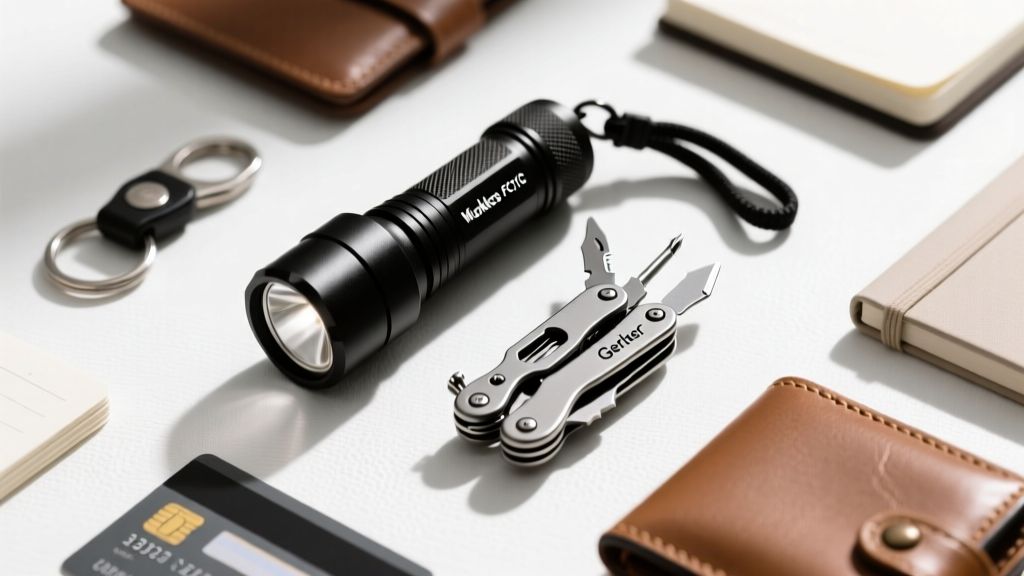
How to Distribute Your Budget Loadout
To maximize comfort and accessibility, adopt the Asymmetrical Pocket Strategy:
- Strong Side (Right pocket for right-handers): Carry the Civivi Elementum and the Nite Ize DoohicKey (clipped to your keys). This keeps your primary cutting tool and your pry-bar instantly accessible without digging.
- Weak Side (Left pocket): Carry the Wurkkos FC11C and the Gerber Dime. The cylindrical shape of the flashlight pairs well with the flat, rectangular profile of the folded Dime, preventing them from tangling or creating a massive, uncomfortable bulge.
- Back Pocket: Reserve for your wallet or smartphone to maintain a balanced center of gravity while walking or sitting.
Frequently Asked Questions (FAQ)
Is D2 steel too difficult to maintain for a beginner?
Not at all. While D2 is prone to surface rust if left wet, a simple habit of wiping the blade on your jeans after use and applying a tiny drop of knife oil (like Tuf-Oil or mineral oil) every few weeks will keep it in pristine condition. The edge retention far outweighs the minimal maintenance required.
Will the Wurkkos FC11C drain its battery if left unused?
The FC11C features electronic switching, which draws a microscopic amount of parasitic drain. If you plan to store it in a glovebox or emergency kit for more than three months, simply unscrew the tail cap a quarter-turn to physically disconnect the battery. This prevents both parasitic drain and accidental activation.
Are these budget EDC gadgets TSA compliant?
No. The Civivi Elementum and the Gerber Dime both feature blades and are strictly prohibited in carry-on luggage. The Nite Ize DoohicKey and the Wurkkos FC11C flashlight, however, are generally TSA-approved for carry-on travel, though the final decision always rests with the individual security officer. Always check your gear before heading to the airport.
Final Thoughts on Budget Carry
Building a reliable everyday carry kit doesn't require a massive financial investment. By focusing on proven designs, quality entry-level steels like D2, and high-CRI emitters, you can assemble a highly capable 2026 loadout for just over $100. The gadgets listed above have survived the rigors of daily use, proving that when it comes to EDC, smart engineering will always beat an inflated price tag.
Written by
Lena ChenLena Chen earned her M.S. in Human-Computer Interaction from Carnegie Mellon University and a B.S. in Electrical Engineering from the University of Washington. She has spent the past decade specializing in smart home architecture and IoT ecosystems, helping over 200 homeowners design fully connected living spaces. Lena is a certified Matter protocol consultant and has published peer-reviewed research on voice-first interface design in the ACM Digital Library. Her reviews of smart home products combine deep technical analysis with real-world usability testing, evaluating everything from Zigbee mesh stability to Alexa skill responsiveness. She regularly speaks at CEDIA Expo and CES smart home panels.