Essential Camper Gadgets: Beginner vs Expert Setups
Compare essential camper gadgets for beginners and experts. Discover budget-friendly basics versus high-end survival tech for your 2026 outdoor adventures.
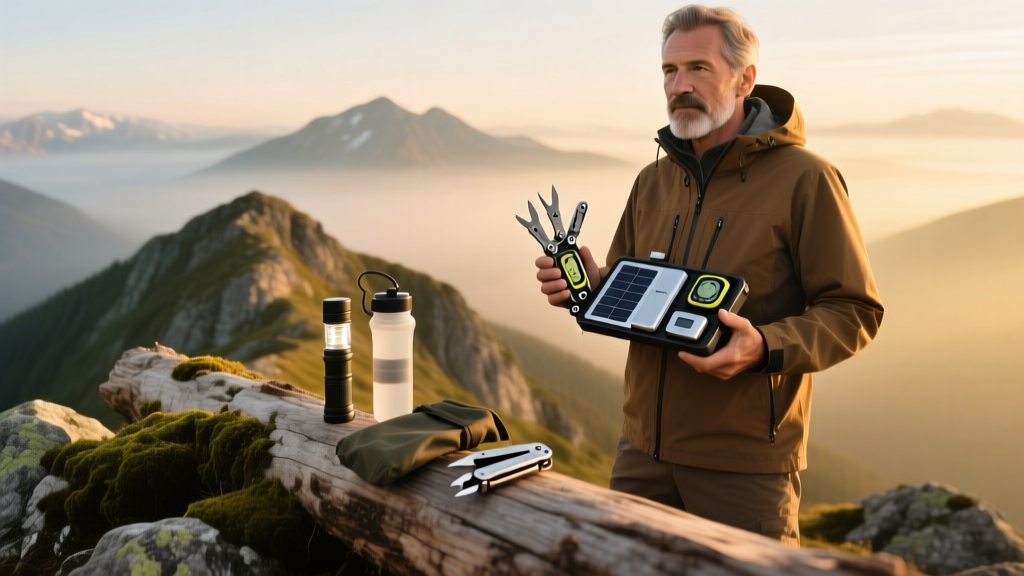
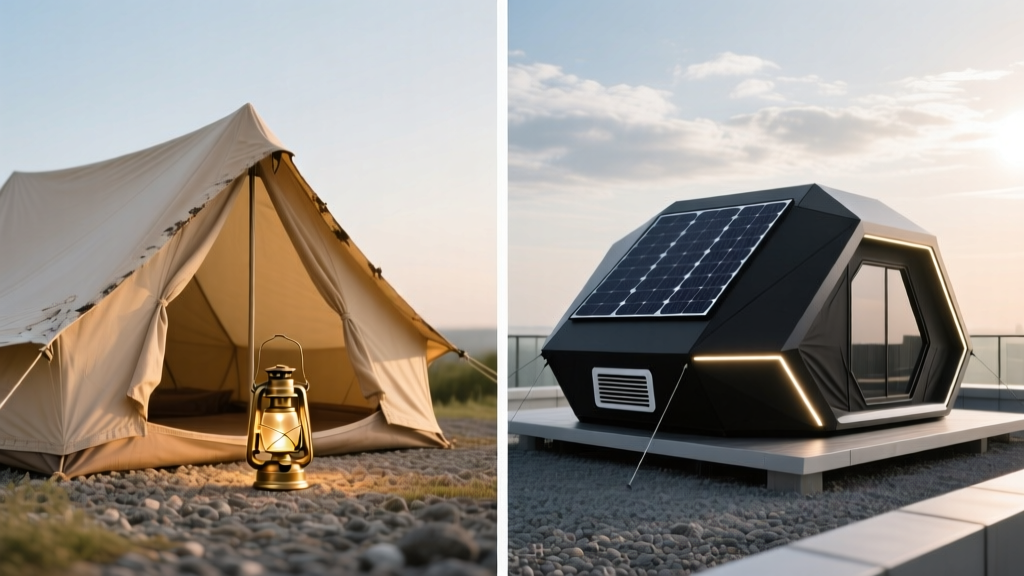
The Great Divide: Budget Basics vs. Tactical Tech
The transition from a casual weekend camper to a hardened backcountry expert is rarely marked by a single trip. Instead, it is defined by the evolution of your gear. When you first start out, the sheer volume of camper gadgets on the market can be paralyzing. Do you need a $1,200 solar generator, or will a $40 power bank suffice? The truth is that beginner gear prioritizes affordability and ease of use, while expert setups focus on redundancy, extreme weather tolerance, and weight-to-power ratios.
In this comprehensive guide, we break down the essential camper gadgets across power, navigation, and camp kitchen categories. We will compare entry-level staples against high-end overlanding and backcountry tech, giving you a clear decision framework for your next upgrade.
Power & Lighting: Crank Flashlights vs. Solar Generators
Power management is the most common failure point for novice campers. Relying on your vehicle's 12V outlet or a handful of AA batteries is a gamble that experts learned to avoid years ago.
Beginner Pick: Anker 537 Power Bank & BioLite HeadLamp 330
For the casual car camper, the Anker 537 (24k mAh) ($65) is the gold standard. It provides enough juice to recharge a modern smartphone 4 to 5 times. Paired with the BioLite HeadLamp 330 ($60), which offers 330 lumens and a 40-hour battery life on low, you have a reliable, sub-$130 lighting and power ecosystem. However, these lithium-ion devices suffer heavily in cold weather, losing up to 30% of their capacity when temperatures drop below freezing.
Expert Pick: Jackery Explorer 1000 v2 & Goal Zero Boulder 200
Experts and overlanders demand LiFePO4 (Lithium Iron Phosphate) chemistry for its 3,000+ cycle lifespan and superior thermal stability. The Jackery Explorer 1000 v2 ($1,099) delivers 1070Wh of capacity and features an internal heating pad for sub-zero charging. When paired with the Goal Zero Boulder 200 Briefcase ($399), experts can run CPAP machines, 12V fridges, and drone charging stations indefinitely off-grid.
| Feature | Anker 537 (Beginner) | Jackery 1000 v2 (Expert) |
|---|---|---|
| Capacity | 24,000 mAh (86.4Wh) | 1070Wh |
| Battery Chemistry | Li-ion NMC | LiFePO4 |
| Weight | 1.3 lbs | 23.8 lbs |
| Cold Weather Performance | Poor (Requires body heat) | Excellent (Internal heating) |
| Price | $65 | $1,099 |
Navigation & Safety: Smartphone Apps vs. Satellite Messengers
Getting lost without a communication lifeline is a critical risk. The divide between beginner and expert navigation gadgets is the difference between local cell service and global satellite coverage.
Beginner: Offline Maps & Basic Power Banks
Most beginners rely on smartphones running Gaia GPS or AllTrails+ ($30–$60/year). By downloading topographic maps for offline use, this method works flawlessly in areas with reliable GPS satellite visibility and mild weather. However, if your phone screen shatters, gets submerged, or dies, your navigation and emergency communication capabilities drop to zero.
Expert: Garmin inReach Mini 2 & Thermal Imaging
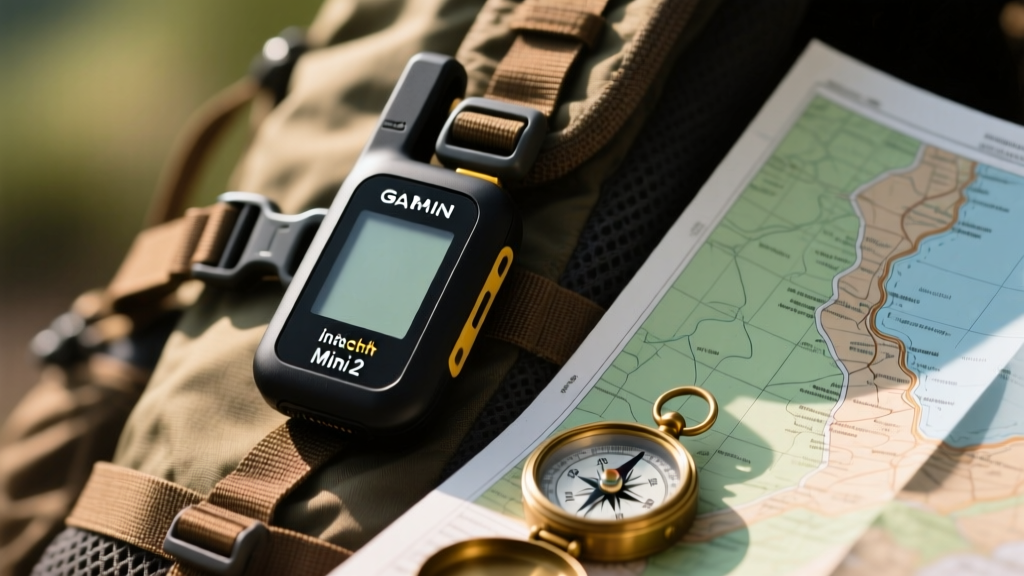
Experts never rely on a single point of failure. The Garmin inReach Mini 2 ($399 + $15/mo subscription) is a non-negotiable piece of kit for backcountry veterans. Weighing just 3.5 ounces, it offers two-way SMS via the Iridium satellite network and an interactive SOS button that connects directly to the GEOS International Emergency Response Coordination Center. According to REI Co-op's guide on satellite messengers, devices like the inReach have drastically reduced backcountry rescue times over the last decade.
For nocturnal navigation and wildlife awareness, experts often add the FLIR Scout TK ($239) thermal monocular. It detects heat signatures up to 100 yards away, making it invaluable for spotting predators or finding a lost camp dog in pitch blackness.
Expert Insight: Never store your satellite messenger inside a waterproof dry bag while hiking. The dense material and water can attenuate the Iridium satellite signal, delaying your SOS transmission or routine check-in pings.
Camp Kitchen: Portable Stoves vs. Precision Cooking Systems
Cooking in the wild requires balancing fuel efficiency, boil times, and wind resistance. The National Park Service frequently updates fire restrictions, making reliable camp stoves a mandatory gadget for modern campers.
Beginner: Coleman Classic Propane Stove
The Coleman Classic ($65) is an iconic entry-level gadget. Pushing 20,000 BTUs across two burners, it can easily boil water and fry bacon simultaneously. The downside? It weighs 12 pounds, relies on bulky 16oz green propane cylinders (which are terrible for the environment and hard to dispose of), and its open flame is easily extinguished by winds exceeding 10 mph.
Expert: Jetboil Flash & BioLite FirePit+
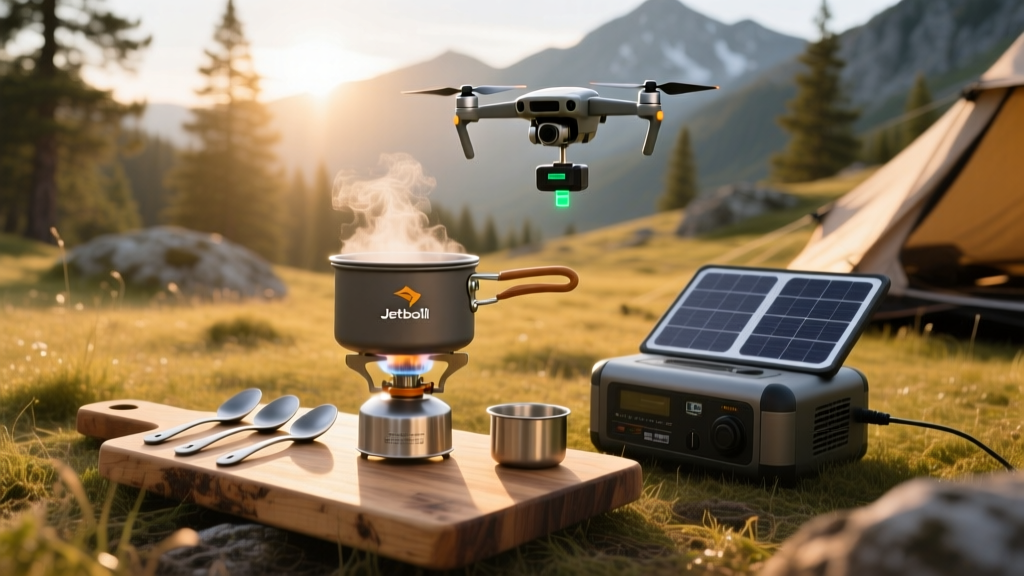
Experts optimize for speed and fuel weight. The Jetboil Flash ($120) uses a heat-exchange ring to boil 0.5 liters of water in exactly 100 seconds, using a fraction of the isobutane fuel required by standard stoves. For basecamp ambiance and smokeless grilling, the BioLite FirePit+ ($299) uses patented airflow technology to burn wood or charcoal with virtually zero smoke, controlled via a Bluetooth smartphone app.
Shelter & Climate Control: Foam Pads vs. High R-Value Systems
The ground will steal your body heat 50 times faster than the air. Sleep systems are where beginners suffer most, often mistaking sleeping bag temperature ratings for absolute comfort limits.
Beginner Setup: Therm-a-Rest Z Lite & Kelty Cosmic 20
The Therm-a-Rest Z Lite Sol ($50) is a closed-cell foam pad with an R-value of 2.6. It is indestructible and cheap, but in temperatures below 40°F, the ground will sap your core heat. Paired with the Kelty Cosmic 20 synthetic bag ($110), this setup is fine for summer car camping but miserable in the shoulder seasons.
Expert Setup: Nemo Tensor Extreme & Rumpl NanoLoft
Experts invest heavily in ground insulation. The Nemo Tensor Extreme Conditions pad ($250) boasts an R-value of 8.5, utilizing space-blanket reflectivity to trap heat, allowing comfortable sleep on snow or frozen tundra. Topped with the Rumpl NanoLoft Puffy Blanket ($300)—which uses synthetic down clusters that retain warmth even when wet—experts maintain core temperatures in extreme alpine environments.
The 3-Trip Upgrade Framework: When to Buy Expert Gear
You do not need to drop $3,000 on your first camping trip. Use this decision framework to guide your camper gadget purchases:
- Trip 1-3 (The Proving Ground): Stick to beginner gear. Borrow or rent high-ticket items like rooftop tents or solar generators. Focus on mastering camp setup, knot tying, and basic meal prep.
- Trip 4-10 (The Friction Points): Identify what annoyed you. Did your phone die? Buy the Anker 537. Did you freeze at night? Upgrade to an R-value 5+ sleeping pad. Solve specific problems rather than buying hype.
- Trip 11+ (The Expert Transition): Once you are pushing into off-grid overlanding, winter camping, or backcountry hunting, invest in LiFePO4 power stations, satellite communicators, and ultralight titanium cookware.
Frequently Asked Questions About Camper Gadgets
Do I really need a satellite messenger if I have a modern smartphone?
If you are camping within 5 miles of a paved road or in areas with verified 5G coverage, a smartphone with offline maps is sufficient. However, if you venture into national parks, deep canyons, or alpine ridges where cell service is non-existent, a device like the Garmin inReach Mini 2 is a critical life-saving gadget.
What is the best battery chemistry for cold-weather camping?
LiFePO4 (Lithium Iron Phosphate) is vastly superior to standard Li-ion NMC for cold weather. While you still cannot charge a LiFePO4 battery below freezing without damaging the cells, premium 2026 models like the Jackery v2 series include internal heating pads that safely warm the cells using solar input before accepting a charge.
Are thermal imaging cameras worth the investment for camping?
For casual campers, no. But for hunters, wildlife photographers, and those camping in bear or cougar country, a gadget like the FLIR Scout TK provides a massive safety and tactical advantage by revealing heat signatures that the naked eye and standard flashlights completely miss.
Written by
Jake MorrisonJake Morrison holds a B.S. in Electrical Engineering from UC Berkeley and an MBA from Stanford Graduate School of Business. With over 12 years of hands-on experience in consumer electronics, he previously served as a senior product engineer at a Silicon Valley startup before transitioning to tech journalism. Jake has personally tested and benchmarked over 3,000 gadgets across categories including smartphones, wearables, smart home devices, and audio equipment. His durability testing methodology — involving controlled drop tests, thermal cycling, and water submersion — is widely cited by major tech publications. He is a certified CompTIA A+ technician and a contributing editor to the IEEE Consumer Electronics Magazine.