2026 Drone Gadgets Trend Report: Platinum Gadget Malang Insights
Explore 2026 drone gadget trends, from FPV racing to cinematic camera drones, with market insights from regional hubs like Platinum Gadget Malang.
The Grassroots Indicator: Why Regional Hubs Shape 2026 Trends
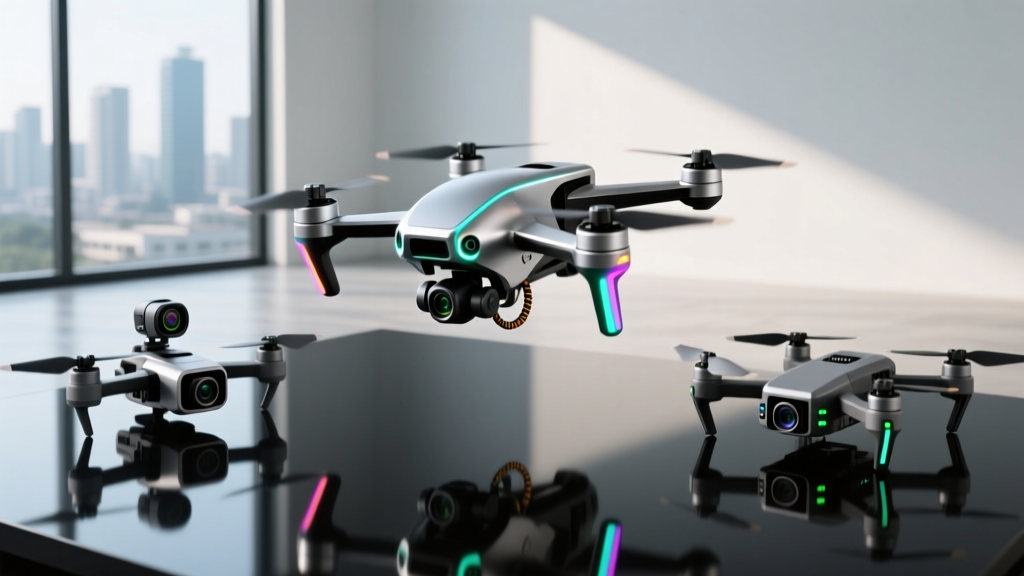
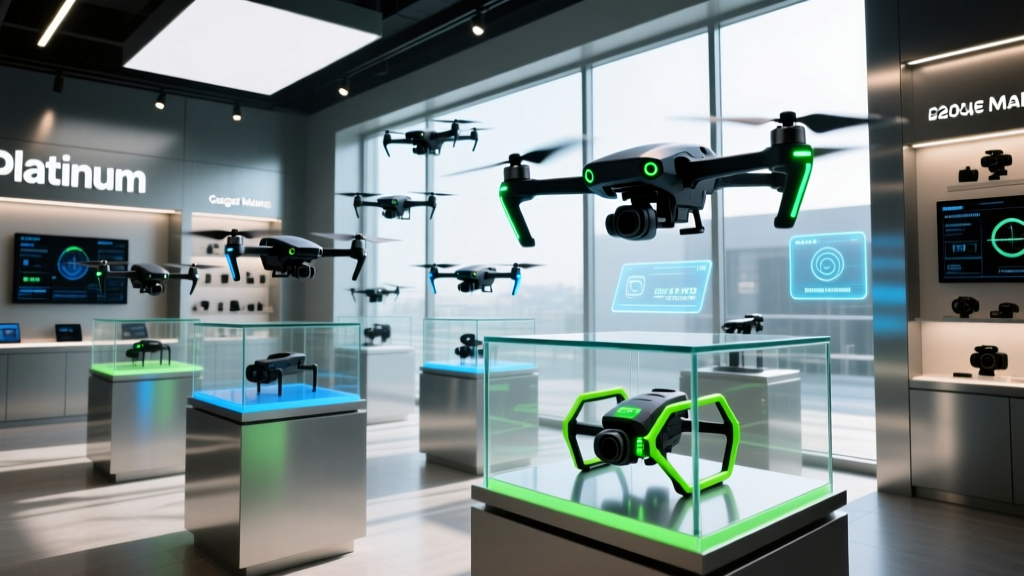
When analyzing the global drone gadget ecosystem, it is easy to focus solely on flagship releases from Shenzhen or Silicon Valley. However, true market penetration and grassroots adoption are best observed through regional tech hubs. In 2026, market data and consumer behavior observed from prominent Southeast Asian retailers like Platinum Gadget Malang reveal a fascinating microcosm of global drone trends. Malang, situated near the high-altitude, high-wind environments of East Java's volcanic landscapes, has become an unofficial testing ground for drone durability, wind resistance, and battery efficiency.
Retailers such as Platinum Gadget Malang have reported a massive year-over-year shift in consumer purchasing habits. The days of buying a drone and flying it stock are over. Today's tech enthusiasts are investing heavily in modular upgrades, digital video transmission (VTX) systems, and hyper-specific camera accessories. This trend report breaks down the exact hardware, pricing, and accessory ecosystems dominating the 2026 landscape, using regional market indicators to forecast where the hobby and professional sectors are heading next.
Cinematic Camera Drones: Sub-250g Dominance and Sensor Upgrades
The regulatory landscape continues to dictate hardware design. The sub-250g weight class remains the undisputed king of the consumer and prosumer market, bypassing stringent FAA and international DGCA registration requirements. In 2026, the benchmark for this category is the DJI Mini 4 Pro and the emerging Autel EVO Nano+ 2026 Edition.
- Sensor Tech: The standard is now a 1/1.3-inch CMOS sensor capable of 48MP stills and 4K/100fps HDR video. This allows creators to utilize the 180-degree shutter rule (shooting at 1/120s for 60fps) without blowing out highlights, provided they use ND filters.
- Transmission: DJI's O4 transmission system offers a 20km theoretical range with a 1080p/60fps live feed to the pilot's screen, drastically reducing the 'video lag' anxiety that plagued early Wi-Fi-based drones.
- Obstacle Avoidance: Omnidirectional sensing utilizing LiDAR-assisted binocular vision is now standard, allowing for automated tracking through dense foliage—a feature heavily tested and demanded by enthusiasts flying in Malang's teak forests.
Pricing Insight: Expect to pay between $759 and $959 for the Fly More Combo, which includes the crucial Intelligent Flight Batteries (each yielding roughly 34 minutes of real-world flight time in mild winds).
FPV Racing and Freestyle: The Digital VTX Revolution
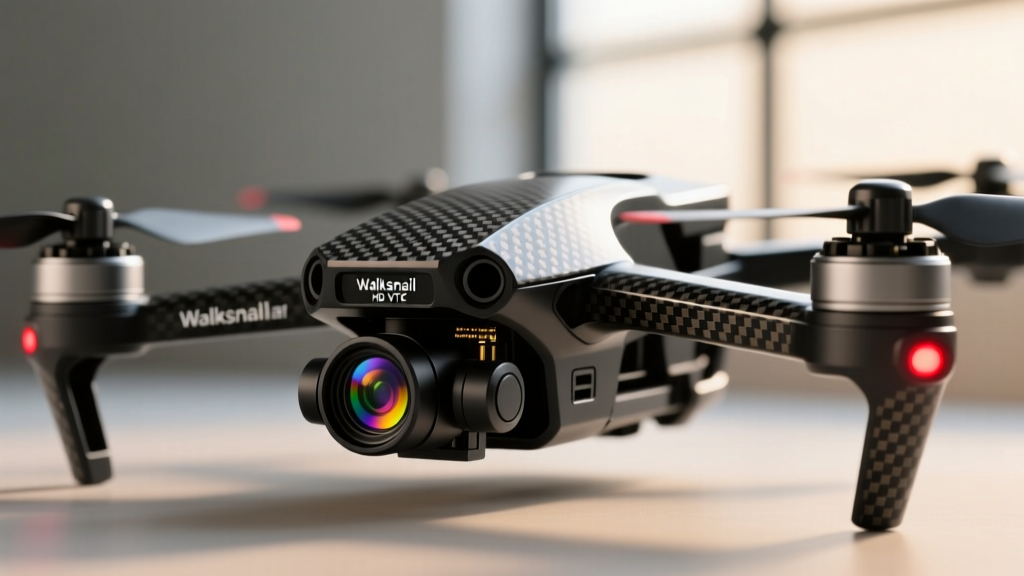
If camera drones are about automation, First-Person View (FPV) drones are about raw, unfiltered manual control. The most significant trend solidifying in 2026 is the near-total death of analog video systems in the mid-to-high-end freestyle market. Digital VTX systems have conquered the latency and cost barriers that previously kept analog alive.
The Walksnail vs. HDZero vs. DJI Matrix
Enthusiasts are moving away from proprietary ecosystems toward open, low-latency digital systems. The Walksnail Avatar HD Pro kit (retailing around $139) has become the go-to for budget-conscious freestyle pilots, offering 1080p/60fps recording directly on the drone and a 22ms glass-to-glass latency. Meanwhile, competitive racers are adopting HDZero systems, which utilize a digital codec that mimics the analog 'graceful degradation' of signal—meaning the video gets noisy rather than freezing completely when flying behind concrete structures or deep in valleys.
The 5-Inch Freestyle Standard: iFlight Nazgul ECO V3
The 5-inch freestyle quad remains the gold standard for power-to-weight ratio. The iFlight Nazgul ECO V3 ($459) represents the current meta:
| Component | Specification | 2026 Market Relevance |
|---|---|---|
| Flight Controller | SpeedyBee F405 V4 Stack | Bluetooth configuration via smartphone; no laptop needed in the field. |
| Motors | Xing2 2207 1950KV | Optimized for 6S LiPo batteries, providing explosive throttle response. |
| Frame | T700 Carbon Fiber, 5mm arms | Withstands high-impact crashes; replaceable arms reduce long-term costs. |
| Video Link | Walksnail Avatar HD V2 | Dual-antenna diversity for stable signal in multipath environments. |
Accessory Ecosystem: Data from the Malang Market
What are enthusiasts actually spending their money on after the initial drone purchase? Insights from regional distributors and storefronts like Platinum Gadget Malang highlight a massive pivot toward power management and optical fidelity. The accessory market is no longer an afterthought; it is the primary profit driver and the key to unlocking a drone's true potential.
Top Accessory Categories by Growth (2025-2026)
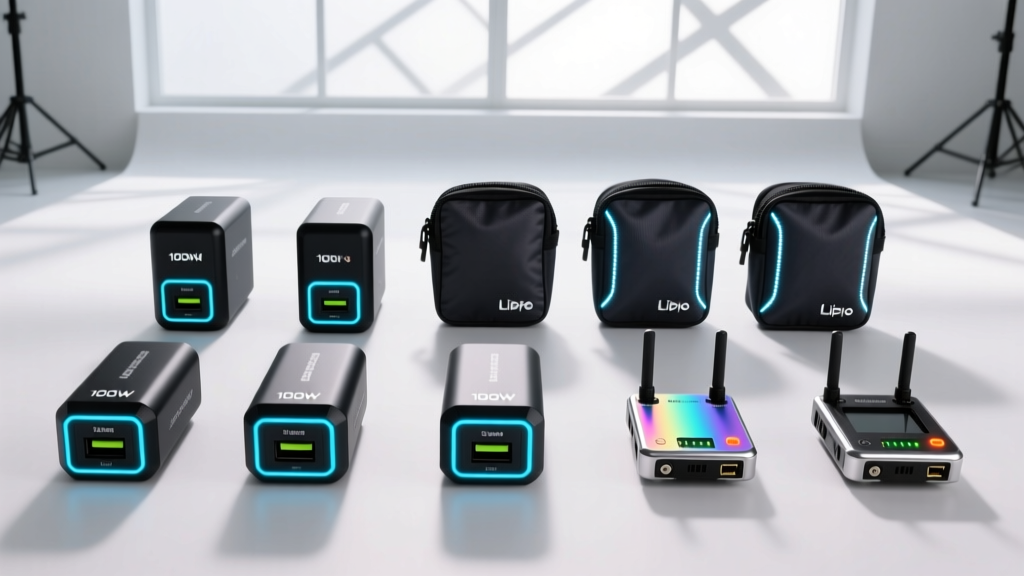
- GaN Fast Charging Hubs (100W-140W): Standard chargers take 90 minutes per battery. 140W USB-C GaN chargers paired with smart-charging LiPo hubs have reduced turnaround times to 35 minutes per 6S 1300mAh battery.
- Variable ND Filters (VND): Instead of swapping magnetic ND8, ND16, and ND32 filters, pilots are adopting 2-5 stop VND filters with CPL (Circular Polarizer) layers to cut glare off water and volcanic ash.
- LiPo Safety Infrastructure: With the rise of high-C discharge batteries, fireproof LiPo bags and bat-safe charging ammo cans with built-in voltage alarms are now mandatory purchases for responsible hobbyists.
Future Outlook: Solid-State Batteries and AI Swarm Telemetry
Looking toward late 2026 and 2027, the hardware ceiling is being pushed by two emerging technologies. First, semi-solid-state LiPo batteries are entering the premium consumer market. These batteries offer a 20% increase in energy density without the fire risk associated with traditional liquid electrolyte LiPos, potentially pushing sub-250g flight times past the 45-minute barrier.
Second, AI-assisted swarm telemetry is moving from military applications to high-end commercial cinematography. Systems are being developed where a primary 'hero' drone is flanked by two automated 'lighting' drones that carry high-lumen LED arrays, automatically positioning themselves to maintain perfect three-point lighting on a moving subject, regardless of the sun's position.
Expert Insight: 'The biggest mistake new enthusiasts make in 2026 is overspending on the drone and under-investing in the radio transmitter and goggles. A high-quality EdgeTX radio like the RadioMaster TX16S MKII ($219) will last you a decade and survive countless crashes, while your drones will inevitably break and be upgraded.' — Regional FPV Flight Instructor
Expert Decision Framework: Budgeting Your 2026 Loadout
If you are entering the drone space or upgrading your current fleet, allocate your budget using the 40/30/30 rule:
- 40% on the Aircraft/Camera: The core tool (e.g., DJI Mini 4 Pro or custom 5-inch FPV).
- 30% on the Control/View Link: High-end goggles (DJI Goggles 3 or FatShark Dominator HD) and a Hall-effect gimbal radio transmitter to prevent stick drift.
- 30% on the Support Ecosystem: Batteries (minimum 4 for FPV, 3 for Camera), GaN chargers, ND filters, and a dedicated field repair kit including a TS101 soldering iron and spare propellers.
Sources and Further Reading
For the latest firmware updates, regional regulatory changes, and in-depth teardowns of the latest VTX systems, we recommend consulting the following authoritative resources:
- DroneDJ - Comprehensive daily news on global drone regulations, market shifts, and enterprise hardware releases.
- DJI Official - Technical whitepapers and specification sheets for the latest O4 transmission and CMOS sensor architectures.
Written by
Sarah KimSarah Kim holds certifications from both NASM (National Academy of Sports Medicine) and ACE (American Council on Exercise), along with a B.S. in Kinesiology from UCLA. She has spent 7 years bridging the gap between exercise science and consumer technology, evaluating fitness trackers, smart scales, sleep monitors, and recovery devices with clinical precision. Sarah has tested over 200 health-focused wearables in controlled lab settings and real-world training environments, comparing device data against gold-standard medical equipment like ECG monitors and DEXA scans. She consults for three fitness app companies on data accuracy standards and has presented research on wearable reliability at the American College of Sports Medicine (ACSM) annual conference. Her reviews emphasize clinical validity over marketing claims.