How to Evaluate Eco-Friendly Display Gadgets for VR
Discover how to evaluate eco-friendly display gadgets for VR and AR. Compare sustainable headsets, recycled accessories, and e-waste reduction tips.


The Shift Toward Sustainable Immersion
As virtual and augmented reality hardware becomes a staple in both enterprise and consumer tech stacks, the environmental footprint of these devices has come under intense scrutiny. A standard mixed-reality headset contains a complex matrix of rare earth metals, lithium-ion cells, and injection-molded plastics. For tech enthusiasts who care about their carbon footprint, the challenge is no longer just about finding the highest resolution Micro-OLED panels or the lowest latency pancake lenses. It is about understanding how to evaluate eco-friendly display gadgets without compromising on immersive performance.
In 2026, the consumer electronics industry has seen a massive pivot toward circular economy principles. Manufacturers are moving away from virgin ABS plastics and unrecyclable mixed-material packaging. However, greenwashing remains prevalent. To make genuinely sustainable purchasing decisions, enthusiasts must look past marketing buzzwords and analyze the complete lifecycle of VR and AR hardware—from silicon yield rates to end-of-life take-back programs.
Core Metrics to Evaluate Eco-Friendly Display Gadgets
When auditing a VR headset or AR smart glass setup for sustainability, rely on these four measurable pillars rather than vague 'eco-friendly' labels:
- Post-Consumer Recycled (PCR) Content: Look for specific percentages of PCR plastics in the chassis and 100% recycled aluminum in structural frames. High-end headsets now routinely feature 40-60% PCR content in non-optical housing components.
- Modularity and Repairability: A device that cannot be repaired is destined for the landfill. Check for modular battery designs, standard Torx or Phillips screws (rather than excessive adhesive), and available OEM spare parts.
- Optical Manufacturing Efficiency: The shift from thick Fresnel lenses to ultra-thin pancake lenses and resin-based waveguides has drastically reduced raw plastic waste and molding energy requirements during manufacturing.
- Packaging and Logistics: Premium AR/VR unboxing experiences used to rely on heavy, plastic-laden presentation boxes. Today's sustainable standard demands 100% plastic-free, FSC-certified paper packaging, sometimes utilizing innovative bio-based cushioning like molded bamboo fiber or sphagnum moss-based alternatives.
2026 Sustainable VR & AR Headset Breakdown
To put these metrics into practice, let us compare three of the most prominent headsets on the market through an environmental lens. This matrix highlights how different manufacturers prioritize sustainability across varying price tiers.
| Device Model | PCR / Recycled Materials | Repairability Profile | Packaging Footprint | Average Power Draw |
|---|---|---|---|---|
| Meta Quest 3 | High (Recycled aluminum, PCR plastics in strap/housing) | Moderate (Adhesive-heavy, but modular facial interface) | Minimalist, 100% plastic-free paper pulp | ~5.5W (Optimized Snapdragon XR2 Gen 2) |
| Apple Vision Pro | Very High (100% recycled rare earths, recycled aluminum) | Low (Highly integrated, proprietary components) | FSC-certified, zero-plastic internal trays | ~10W-12W (High compute/Micro-OLED draw) |
| Bigscreen Beyond | Moderate (Custom-molded resin reduces return waste) | Low (Ultra-compact epoxy-sealed chassis) | Ultra-small box, minimal shipping volume | ~4.5W (Relies on host PC, ultra-low OLED draw) |
Deep Dive: Material Sourcing and Longevity
The Meta Quest 3 ($499) represents the best balance of mass-market accessibility and sustainable manufacturing. According to Meta's ESG disclosures, the company has aggressively eliminated single-use plastics from their supply chain. The Quest 3's packaging uses molded pulp instead of expanded polystyrene (EPS) foam, and the device itself integrates recycled aluminum in its internal chassis. Furthermore, its power-efficient architecture means less thermal stress on the battery, extending the total lifecycle of the cell before degradation requires replacement.
On the premium end, the Apple Vision Pro ($3,499) is a masterclass in material science. Apple's Environmental Progress Report confirms the use of 100% recycled rare earth elements in all magnets and 100% recycled tin soldering on multiple printed circuit boards. However, hardware teardowns from iFixit reveal that the Vision Pro's extreme integration and heavy use of structural adhesives make out-of-warranty repairs nearly impossible, creating a tension between material purity and right-to-repair principles.
The Micro-OLED and Silicon Yield Dilemma
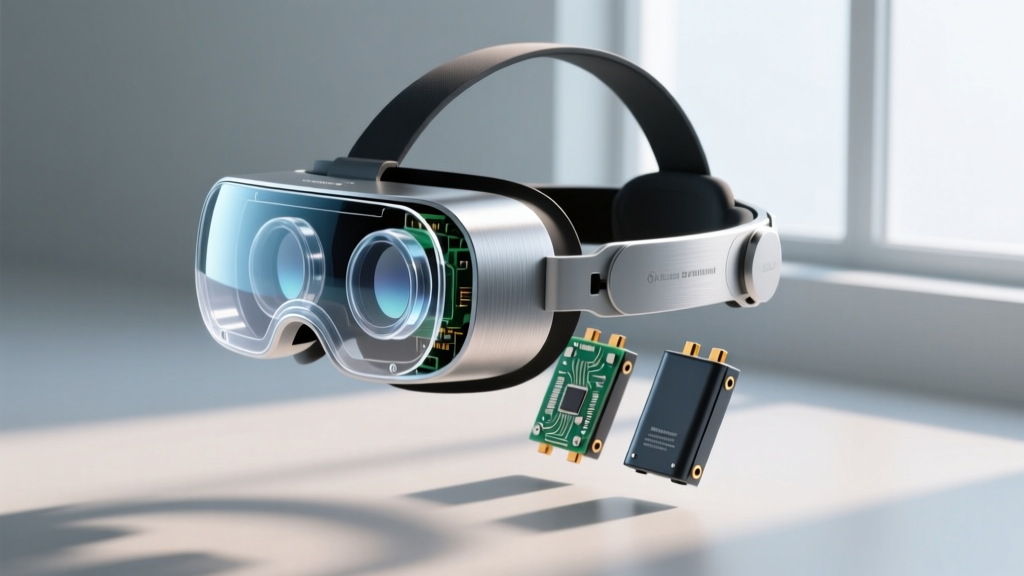
One of the most hidden environmental costs in modern AR/VR gadgets is the manufacturing of Micro-OLED and Micro-LED displays. Producing these ultra-dense silicon backplanes requires immense energy and water. In the early days of VR, low yield rates meant that up to 30% of manufactured display panels were discarded as e-waste due to dead pixels or uniformity issues. By 2026, advancements in lithography and AI-driven optical inspection have pushed Micro-OLED yields past 85%, drastically reducing the silicon waste associated with high-end headsets like the Vision Pro and the Varjo XR-4.
Eco-Conscious Accessories and Haptics
A headset is only part of the ecosystem. The peripherals you choose can either compound your environmental impact or help mitigate it.
Sustainable Audio and Head Straps
The stock synthetic leather and nylon straps on most headsets degrade quickly, absorbing sweat and eventually ending up in landfills. Enthusiasts are increasingly turning to third-party accessories made from bio-based thermoplastic polyurethanes (TPU) and recycled ocean plastics. Brands like House of Marley have introduced VR-compatible audio straps utilizing REWIND fabric (a blend of recycled PET and organic cotton) and sustainable bamboo accents. These materials not only last longer against skin oils but are far less toxic to produce than virgin polyurethane.
Green Charging Docks
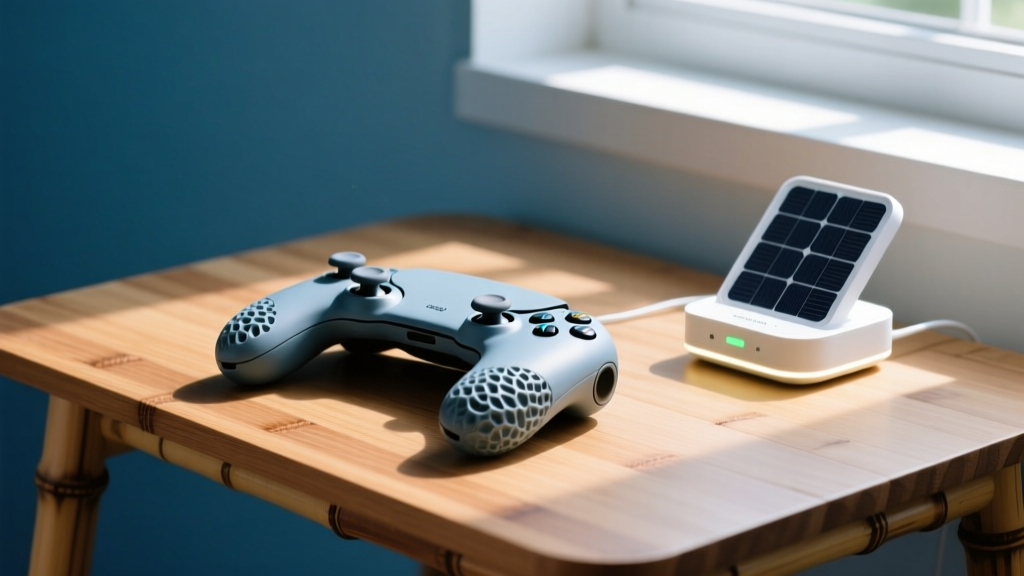
Lithium-ion batteries degrade fastest when subjected to high heat and constant 100% charge states. Sustainable charging isn't just about the electricity source; it's about battery preservation. Smart charging docks from companies like Nimble use recycled aluminum housings and feature intelligent microcontrollers that halt charging at 80% or trickle-charge at ultra-low currents to prevent thermal degradation. By extending the life of your VR controllers' rechargeable cells by an estimated 2-3 years, you prevent toxic battery waste from entering the ecosystem.
Decision Framework: Upgrade, Repair, or Recycle?
When your current VR display gadget begins to fail, use this framework to determine the most eco-friendly path forward:
The 50% Rule of Sustainable Tech: If the cost of repairing a broken component (like a cracked Fresnel lens or a degraded battery) is less than 50% of the cost of replacing the entire unit, repair is almost always the more sustainable choice. Manufacturing a brand-new headset generates roughly 80-120 kg of CO2e, whereas shipping a single replacement part generates a fraction of that.
- Diagnose the Failure: Is it a software bricking, a dead battery, or a shattered lens? Use community forums to identify if the part is user-replaceable.
- Source Refurbished OEM Parts: Before buying new, check certified e-waste recyclers and OEM refurbished marketplaces for harvested replacement components.
- Responsible E-Waste Routing: If the device is beyond repair, never throw it in municipal trash. VR headsets contain lithium batteries and heavy metals. Utilize manufacturer take-back programs (like Meta's or Apple's trade-in recycling) or locate a certified e-Stewards recycler in your area to ensure the rare earth metals are recovered safely.
Frequently Asked Questions
Are pancake lenses more eco-friendly than Fresnel lenses?
Yes, generally. Pancake lenses rely on folded optics and thinner layers of specialized resins, requiring less raw plastic volume and less energy-intensive injection molding compared to the thick, concentric-ringed Fresnel lenses of older generations. They also reduce the overall plastic weight of the headset, lowering shipping emissions.
Does using a PC-tethered VR headset consume more energy than a standalone one?
While a standalone headset like the Quest 3 draws around 5.5W from its battery, a PC-tethered setup requires a high-end desktop GPU that can draw 300W to 450W under load. If your local power grid relies on fossil fuels, standalone, mobile-optimized AR/VR display gadgets are significantly more energy-efficient for the end user.
How can I clean my VR lenses without using harsh, environmentally toxic chemicals?
Avoid alcohol-based wipes or aerosol sprays, which can degrade anti-reflective coatings and introduce volatile organic compounds (VOCs) into your home. Instead, use a dry, optical-grade microfiber cloth (ideally one made from recycled PET bottles) and a gentle, plant-based lens cleaning solution applied sparingly to the cloth, never directly to the display glass.
Written by
Sarah KimSarah Kim holds certifications from both NASM (National Academy of Sports Medicine) and ACE (American Council on Exercise), along with a B.S. in Kinesiology from UCLA. She has spent 7 years bridging the gap between exercise science and consumer technology, evaluating fitness trackers, smart scales, sleep monitors, and recovery devices with clinical precision. Sarah has tested over 200 health-focused wearables in controlled lab settings and real-world training environments, comparing device data against gold-standard medical equipment like ECG monitors and DEXA scans. She consults for three fitness app companies on data accuracy standards and has presented research on wearable reliability at the American College of Sports Medicine (ACSM) annual conference. Her reviews emphasize clinical validity over marketing claims.