Best Hiking Gadgets 2026: Future Tech & Trend Report
Discover the best hiking gadgets shaping 2026. Our trend report covers LEO satellite mesh, solid-state power, and AI offline topography.
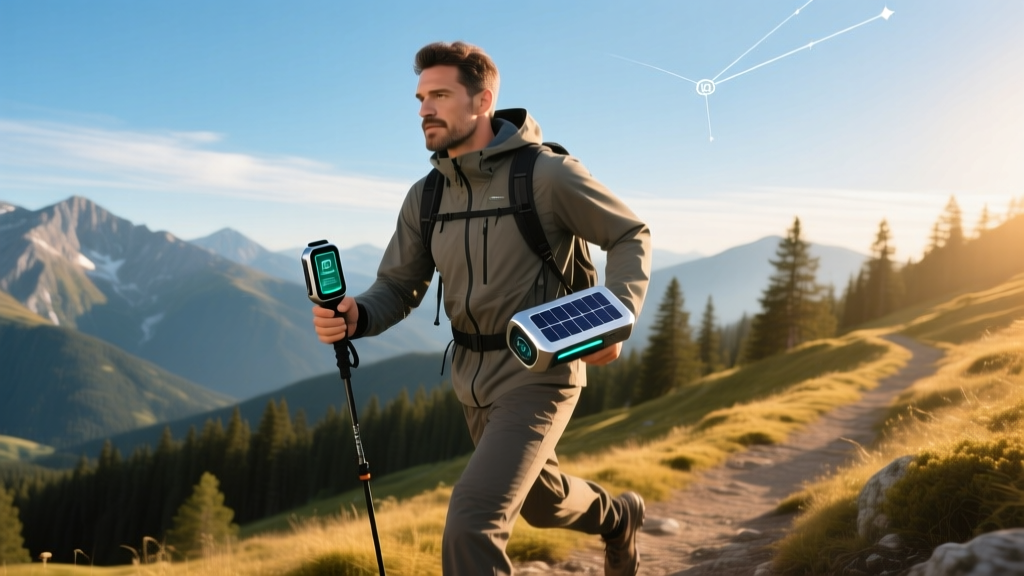
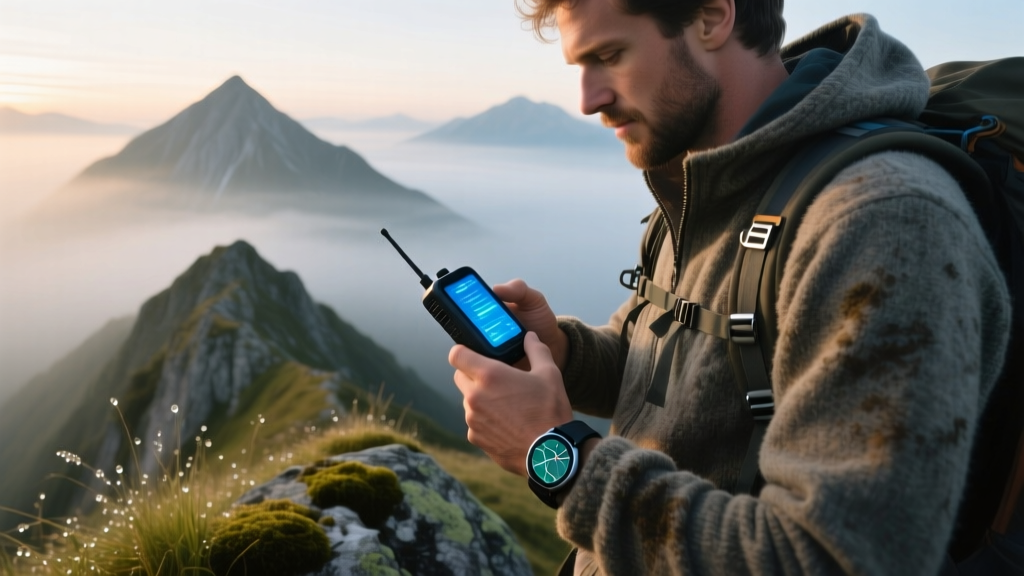
The Paradigm Shift: What Defines the Best Hiking Gadgets in 2026?
The definition of the best hiking gadgets has fundamentally shifted. We are no longer simply looking for durable flashlights and basic GPS units. In 2026, the outdoor tech landscape is dominated by miniaturization, Low Earth Orbit (LEO) satellite integration, and predictive biometrics. According to the Outdoor Industry Association, backcountry participation continues to surge, driving demand for gear that bridges the gap between extreme survival reliability and everyday smart-device convenience.
This trend report dissects the cutting-edge technology redefining the modern hiker's kit. From solid-state power banks that eliminate thermal runaway risks to AI-driven offline routing, here is the future outlook for outdoor technology.
1. Satellite Direct-to-Cell and LEO Mesh Networks
The era of the bulky, single-purpose Personal Locator Beacon (PLB) is ending. While traditional PLBs like the ACR ResQLink still hold value for pure emergency signaling, 2026 is the year of seamless LEO mesh networks and direct-to-cell satellite integration. Devices are now leveraging Iridium and Starlink constellations to offer two-way SMS, weather routing, and SOS capabilities without the line-of-sight limitations of older geostationary networks.
| Tech Standard | Bandwidth | Latency | Hardware Cost | Best Use Case |
|---|---|---|---|---|
| Traditional PLB (406 MHz) | 100 bps | 5-15 mins | $300 - $400 | Life-threatening SOS only |
| LEO Mesh (e.g., Zoleo) | 2.4 kbps | 10-20 secs | $399 + Sub | Two-way SMS & Location tracking |
| Direct-to-Cell (Starlink/T-Mobile) | 2-4 Mbps | < 50 ms | Built-in (Smartphone) | Standard SMS & Voice in dead zones |
The Zoleo Satellite Communicator remains a top tier choice for dedicated hikers who need guaranteed message delivery via its seamless cell-to-satellite handoff. However, as smartphone manufacturers integrate direct-to-satellite antennas natively, dedicated communicators are pivoting to offer ruggedized, standalone mesh-networking for group tracking in deep canyons where cell signals fail.
2. Solid-State Power and Thermoelectric Harvesting
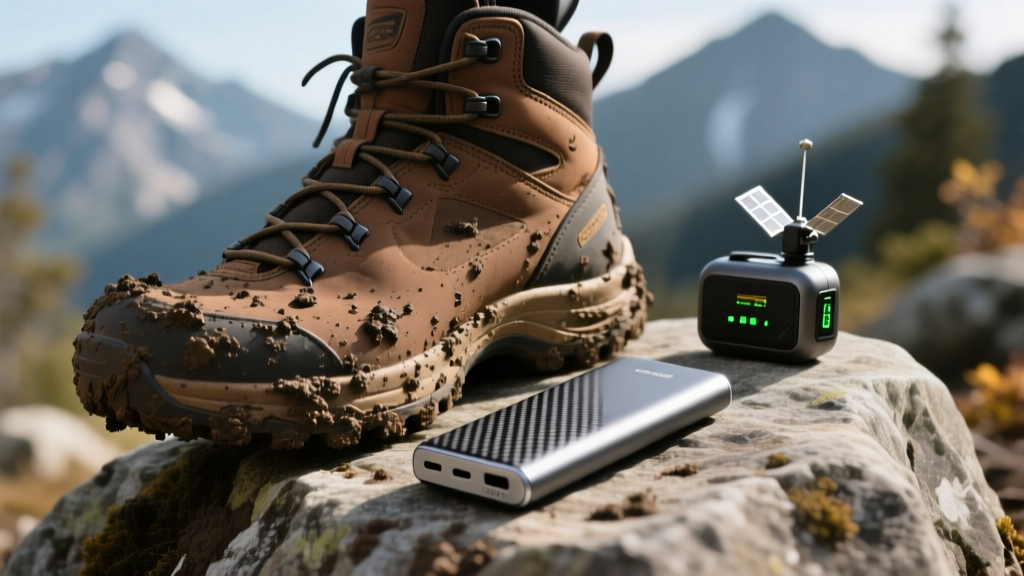
Lithium-ion power banks have been the standard for a decade, but they carry inherent risks: they degrade in sub-zero temperatures and pose thermal runaway (fire) hazards if punctured. The 2026 outlook highlights the commercialization of solid-state batteries. As noted in IEEE Spectrum, solid-state tech replaces the flammable liquid electrolyte with a solid material, drastically improving energy density and cold-weather performance.
Current Bridge Tech: Carbon Fiber & Thermoelectrics
While solid-state banks are just hitting the premium market, current weight-weenies rely on advanced carbon-fiber housings. The Nitecore NB10000 Gen 2 is a prime example, delivering 10,000mAh at a staggering 152 grams (5.3 oz). It utilizes high-density lithium-polymer cells encased in a carbon fiber shell, offering a 30% weight reduction over standard plastic-cased equivalents.
For extended off-grid trips, thermoelectric harvesting is maturing. The BioLite CampStove 2+ converts waste heat from a wood fire into 3 watts of usable electricity. While not a replacement for a primary solar setup, it provides critical trickle-charging for headlamps and satellite messengers when solar exposure is limited by dense canopy or alpine storms.
3. AI-Driven Offline Topography and Biometric Wearables
The smartwatch market has moved beyond simple heart-rate tracking. The Garmin Fenix 8 series and the Coros Vertix 2S have introduced predictive AI routing. These devices don't just tell you where you are; they calculate route feasibility based on your real-time biometric fatigue.
Expert Insight: Predictive routing algorithms now cross-reference offline topographic maps with your current Heart Rate Variability (HRV) and VO2 Max. If the watch detects acute fatigue, it will suggest a lower-gradient bailout route to prevent bonking before you even realize you are overexerting.
- Multi-Band GNSS: Dual-frequency GPS (L1 + L5) is now standard, bouncing signals off canyon walls to maintain accuracy in deep ravines.
- Solar Efficiency: Power Glass technology has improved by 15% in 2026, yielding up to 45 days of battery life in smartwatch mode under optimal UV exposure.
- Offline Voice Notes: On-device AI transcription allows hikers to dictate trail condition notes (e.g., 'Bridge out at mile 14') without stopping to type.
4. Advanced Hydration: Graphene-Infused Filtration
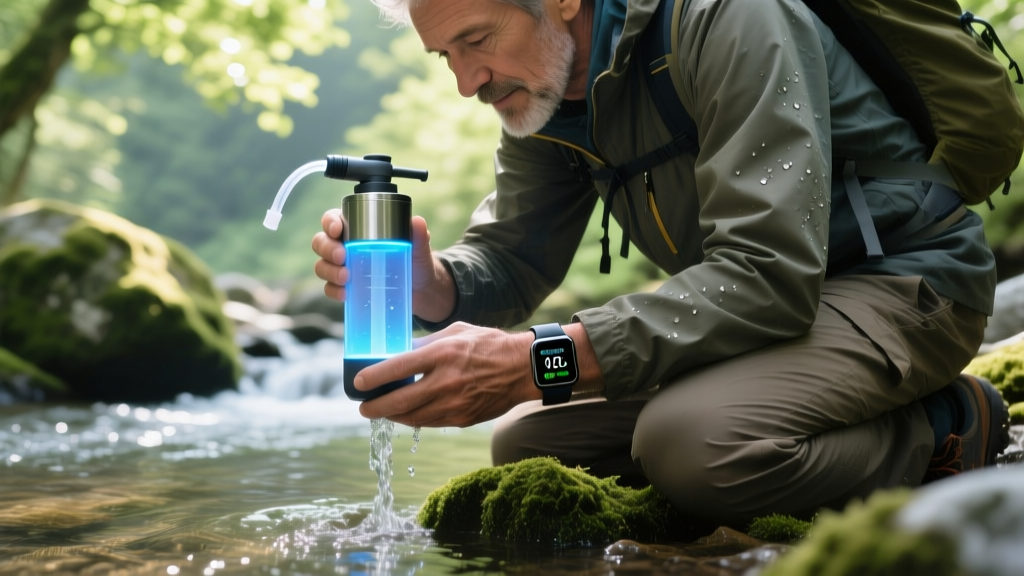
Water purification is experiencing a materials science revolution. Traditional hollow-membrane filters (like the Sawyer Squeeze) are lightweight but prone to freezing damage and require high squeeze pressure. The 2026 trend is the integration of graphene-oxide membranes.
Graphene filters offer atomic-level precision, blocking heavy metals and viruses while requiring 40% less physical pressure to push water through. While the Grayl GeoPress (710ml, $99) remains the gold standard for viral protection via its electro-adsorptive media, emerging inline graphene filters from brands like MSR are reducing the weight of backcountry water treatment to under 2 ounces while increasing flow rates to 2.5 liters per minute.
2026 Buyer's Matrix: Upgrading Your Kit
Use this decision framework to prioritize your gear upgrades based on your specific hiking profile and budget.
| Hiker Profile | Priority Upgrade | Recommended Tech | Estimated Cost |
|---|---|---|---|
| Ultralight Thru-Hiker | Power & Weight | Nitecore NB10000 Gen 2 | $109 |
| Alpine Mountaineer | Comms & Safety | Zoleo Satellite Communicator | $399 + $20/mo |
| Data-Driven Trekker | Biometrics & Nav | Garmin Fenix 8 (47mm AMOLED) | $999 |
| International Backpacker | Water Purification | Grayl GeoPress Purifier | $99 |
Frequently Asked Questions (Future Tech)
Will smartphones completely replace dedicated satellite communicators by 2027?
Not entirely. While direct-to-cell satellite texting is expanding rapidly via partnerships like T-Mobile and Starlink, smartphones still suffer from severe battery drain when searching for weak satellite signals in deep terrain. Dedicated devices like the Garmin inReach or Zoleo are optimized for low-power satellite handshakes and offer physical SOS buttons that can be operated with heavy gloves or in a panic state, which touchscreens cannot reliably replicate.
Are solid-state power banks safe to take on commercial flights?
Yes. In fact, solid-state batteries are significantly safer for air travel than traditional lithium-ion banks. Because they lack a flammable liquid electrolyte, the risk of thermal runaway is virtually eliminated. However, you must still adhere to FAA and IATA regulations regarding total Watt-hour (Wh) limits, typically capping at 100Wh per battery in carry-on luggage.
How accurate is AI predictive routing on current smartwatches?
Current AI routing models are highly accurate for pacing and caloric expenditure, provided the user has worn the watch consistently for at least 14 days to establish a baseline HRV and VO2 Max. However, they cannot yet predict micro-terrain obstacles like blown-down trees or sudden scree fields, meaning human judgment and traditional map-reading skills remain essential for backcountry navigation.
Written by
Priya SharmaPriya Sharma holds a Ph.D. in Acoustical Engineering from the University of Southampton and a B.Tech in Electronics from IIT Delhi. She has spent 9 years as a consumer electronics journalist, with deep specialization in audio equipment, camera systems, and assistive technology. Priya is an active member of the Audio Engineering Society (AES) and has co-authored papers on spatial audio perception published in the Journal of the Acoustical Society of America. Her reviews of headphones, portable DACs, and studio monitors include objective measurements using Audio Precision analyzers alongside subjective listening tests. She also serves on the advisory board of the Global Accessibility Reporting Initiative (GARI), evaluating mobile devices for users with visual and hearing impairments.