The 2026 Trend Report: What Modern Gadget Guyz Are Carrying Next
Discover the 2026 EDC trend report for modern gadget guyz. Explore modular tools, transparent micro-power, and AI wearables reshaping men's tech.
The Evolution of the Modern Tech Enthusiast
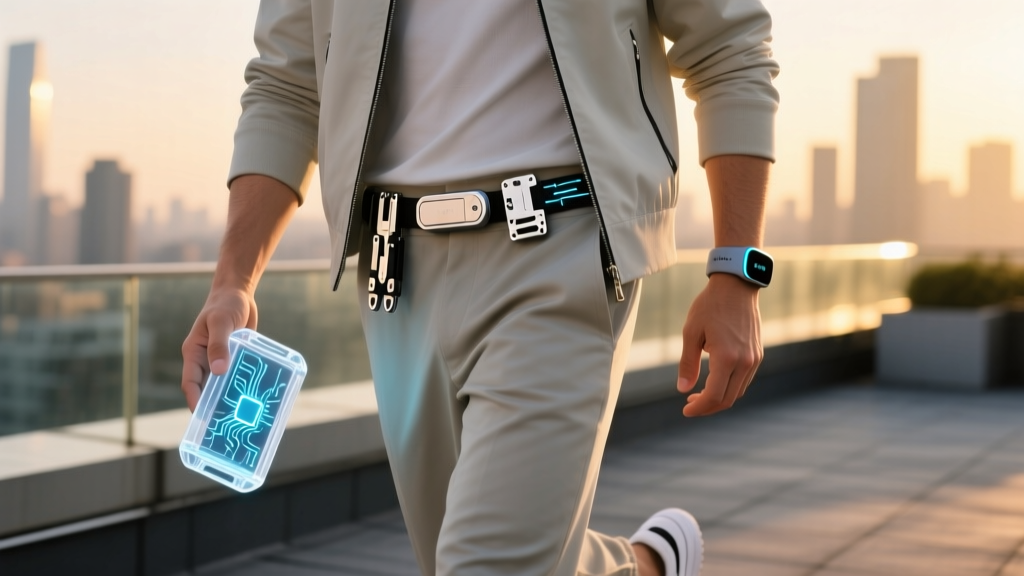
If you look back at the early 2010s, the term 'gadget guyz' conjured images of cargo pants bulging with tangled paracord, heavy stainless steel multi-tools, and brick-like lithium-ion power banks. It was an era defined by maximalism and the 'tactical mall ninja' aesthetic. But as we navigate 2026, the landscape of men's everyday carry (EDC) and personal tech has undergone a radical transformation. Today's tech-savvy men prioritize high-density utility, material science, and seamless digital integration over sheer bulk.
The modern EDC community has shifted away from aggressive, military-inspired gear toward what industry analysts call 'stealth utility.' According to Carryology's recent EDC trend analysis, the focus is now on modularity, repairability, and passive technology. Gear must earn its place in your pocket by offering multiple functions without adding unnecessary weight. In this comprehensive 2026 trend report, we break down the exact gadgets, materials, and philosophies defining the cutting-edge of men's tech.
The Death of 'Tactical' and the Rise of Stealth Materials
The most visible shift in the gadget guyz community is the abandonment of heavy Cordura nylon and matte-black plastic. In 2026, material science dictates the premium EDC market. Ultra-High-Molecular-Weight Polyethylene (UHMWPE) fabrics, commonly known by brand names like Dyneema, have become the gold standard for tech pouches and slings. These materials offer a strength-to-weight ratio that makes traditional nylon look obsolete, while providing a distinct, crinkled aesthetic that signals high-end gear.
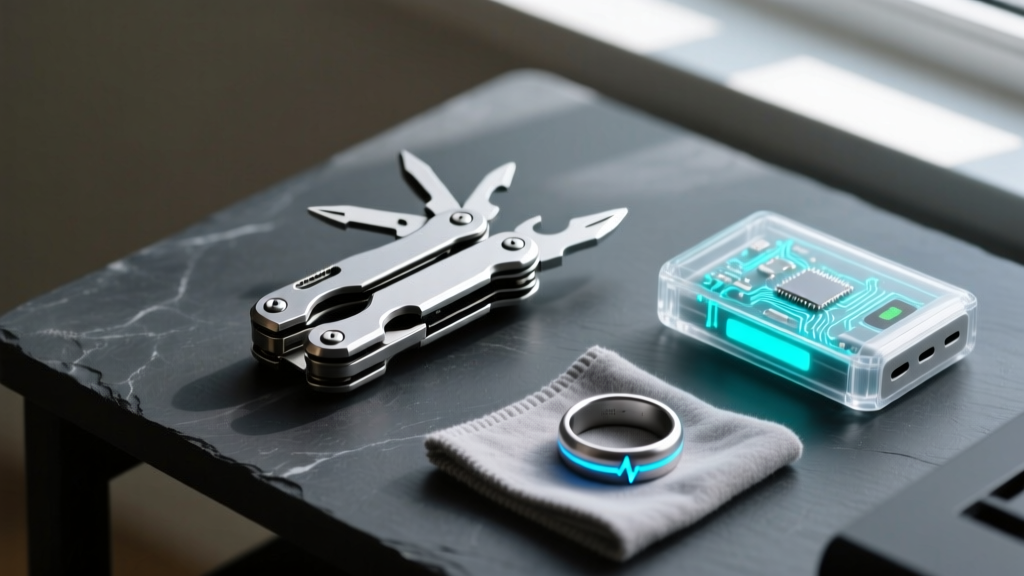
On the hardware side, Grade 5 Titanium and CPM MagnaCut steel have completely dominated the $100+ EDC tool market. MagnaCut, a powdered metallurgy steel originally designed for the marine industry, offers the holy trinity of blade and tool performance: extreme corrosion resistance, high toughness, and excellent edge retention. When you see a premium EDC pry tool or pocket knife in 2026, it is almost certainly sporting a MagnaCut edge and a bead-blasted titanium chassis, weighing in at under 3 ounces.
Micro-Power: Silicon-Carbon and Transparent Tech
Power banks used to be the heaviest items in a tech enthusiast's bag. The introduction of Gallium Nitride (GaN) chargers shrank the wall bricks, but the batteries themselves remained bulky. The breakthrough of 2025 and 2026 is the mass adoption of Silicon-Carbon anode batteries. This chemistry allows for a 20% to 30% increase in energy density within the same physical footprint.
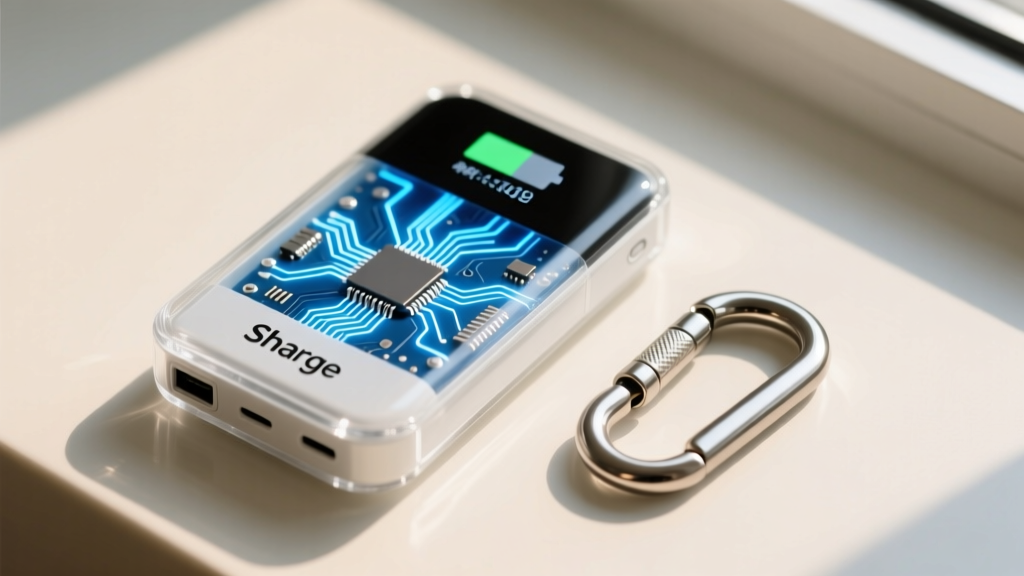
Simultaneously, the 'cyberpunk' transparent aesthetic has matured from a gimmick into a hallmark of premium engineering. Brands are showcasing their internal PCBs and copper cooling pads behind scratch-resistant polycarbonate shells, complete with OLED telemetry screens.
2026 Micro-Power Bank Comparison Matrix
| Model | Capacity | Weight | Max Output | Price (2026) | Best For |
|---|---|---|---|---|---|
| Sharge Storm2 Mini | 10,000mAh | 212g | 65W PD | $129 | Transparent tech lovers & laptop top-ups |
| Anker Nano (Si-C) | 10,000mAh | 185g | 30W PD | $49 | Ultralight commuters & phone charging |
| Nitecore NB10000 Gen 3 | 10,000mAh | 158g | 22.5W PD | $55 | Hardcore ultralight hikers & minimalists |
As noted in Wirecutter's latest power bank recommendations, the 30W to 65W output range is the new sweet spot, allowing users to fast-charge modern flagship smartphones and even trickle-charge ultra-efficient laptops like the 13-inch Framework or MacBook Air without carrying a dedicated brick.
Wearables: The Shift to Passive Biometrics
For years, the smartwatch was the undisputed king of the gadget guyz wrist. But in 2026, screen fatigue and battery anxiety have pushed the community toward passive, invisible wearables. The smart ring category has exploded, moving beyond basic sleep tracking into comprehensive, AI-driven metabolic and cardiovascular monitoring.
The Oura Ring 4 ($349) and the Ultrahuman Ring Air ($399) are the current market leaders. These devices use multi-path optical heart rate sensors and advanced accelerometer arrays to track Heart Rate Variability (HRV), skin temperature deviations, and continuous glucose monitor (CGM) correlations. The appeal is clear: you get elite-level biometric data without the distraction of a glowing screen or the need to charge a device every 36 hours. Modern smart rings easily push 7 to 10 days of battery life, integrating seamlessly with AI health coaches that analyze your recovery scores against your calendar and workout data.

Modular EDC: The Right-to-Repair Movement Hits the Pocket
Sustainability and the 'Right to Repair' movement have finally trickled down to everyday carry tools. The days of buying a $100 multi-tool only to throw it away when the main pivot loosens or a specific bit strips are over. The 2026 ethos is built around user-serviceable, modular gear.
The Leatherman Arc ($119) remains a benchmark in this space, featuring a one-handed opening MagnaCut blade, a replaceable bit driver, and a chassis that can be fully disassembled with a standard Torx T6 and T8 driver. Furthermore, niche EDC brands are offering 'platform' tools—a single titanium handle that accepts interchangeable magnetic pry bars, glass breakers, and hex drivers. This modular approach not only reduces waste but allows the user to customize their tool for a specific day's tasks, whether that involves opening server racks at work or adjusting bicycle components on a weekend ride.
The 2026 Gadget Guyz Investment Framework
How should you allocate your EDC budget this year? We have developed a decision framework based on utility, longevity, and daily interaction.
- High-ROI Daily Drivers (Invest Heavily): Your smartphone, your primary power bank, and your everyday cutting tool. These items are used dozens of times a day. Spend $100+ on a premium knife with MagnaCut steel and $80+ on a high-density Silicon-Carbon power bank.
- Status & Tech Integration (Moderate Investment): Smart rings, wireless earbuds (like the Bose Ultra Open or Sony WF-1000XM6), and digital notebooks. Expect to replace or upgrade these every 3 to 4 years as battery chemistry and AI processing evolve.
- Heritage & Longevity (Buy Once, Cry Once): Titanium carabiners, Dyneema slings, and mechanical watches. These items should outlive you. Allocate $150-$300 for gear that will develop a patina and last decades.
Future Outlook: What's Next for 2027?
Looking just over the horizon, the integration of localized, on-device AI into EDC is the next frontier. While standalone AI pins and pendants struggled with battery life and social acceptance in 2024, the technology is being miniaturized into existing form factors. Expect to see smart glasses with integrated bone-conduction audio and whisper-modes for AI interaction, as well as the first commercial solid-state batteries hitting the premium EDC market by late 2027, promising zero fire risk and double the energy density.
For a deeper dive into how wearable AI is reshaping personal tech, The Verge's wearable tech coverage provides excellent ongoing analysis of the hardware powering these shifts.
Frequently Asked Questions
What is the most essential EDC upgrade for 2026?
Upgrading to a Silicon-Carbon anode power bank. The weight savings (often 30% lighter than older lithium-ion packs of the same capacity) drastically reduces pocket fatigue while providing the same 10,000mAh output.
Are smart rings better than smartwatches for EDC?
For data collection and sleep tracking, smart rings are superior due to their comfort and battery life. However, if you require GPS mapping, NFC payments, and immediate notification triage, a smartwatch remains necessary. Many enthusiasts now wear a dumb mechanical watch on one wrist and a smart ring on the other.
Why is CPM MagnaCut steel so popular in EDC tools?
MagnaCut eliminates the traditional compromise between toughness and edge retention. It resists chipping during prying tasks, holds a razor edge through heavy cardboard cutting, and will not rust even in humid, coastal environments, making it the ultimate 'do-it-all' EDC steel.
Written by
Ryan TanakaRyan Tanaka holds a B.S. in Mechanical Engineering from Oregon State University and is a certified AWS Solutions Architect. He has built over 80 custom electronics projects ranging from CNC machines to IoT sensor networks, and has reviewed development boards, 3D printers, soldering equipment, and maker tools for the past 6 years. Ryan is an active contributor to 12 open-source hardware projects on GitHub and teaches monthly workshops at three hackerspaces across the Pacific Northwest. His reviews combine engineering rigor with accessibility — he evaluates products not just on specs but on documentation quality, community support, and learning curve for beginners. He has presented at Maker Faire Bay Area, Open Hardware Summit, and the Adafruit community showcase, and maintains a popular blog documenting his build processes.