Obscure Kitchen Gadgets for BBQ: 2026 Durability Review
We stress-tested three obscure kitchen gadgets for BBQ, including anodized grill grates and flameless starters, to evaluate real-world durability.
Beyond the Spatula: Defining Obscure BBQ Tools
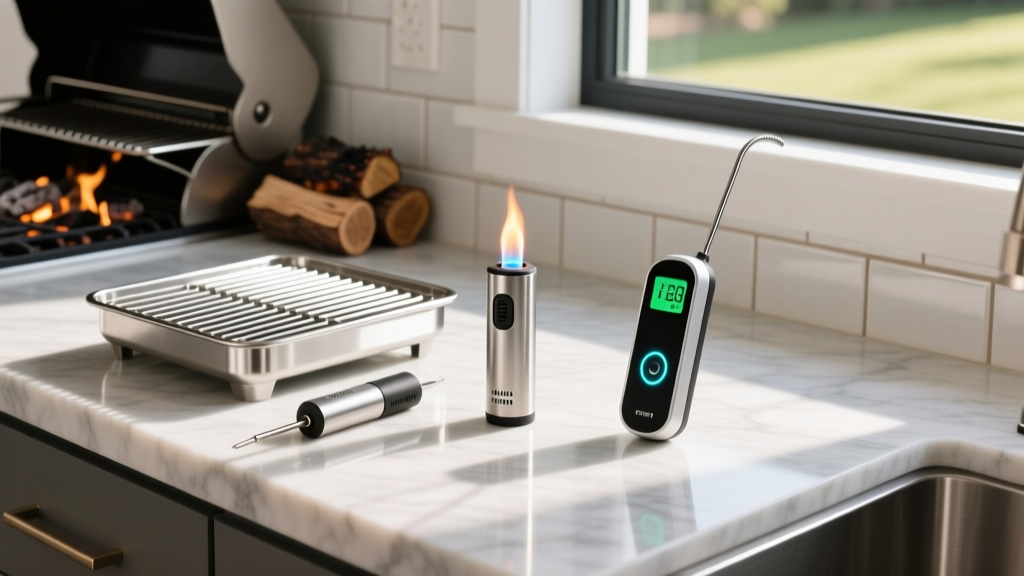
Walk into any big-box store, and you will find identical 12-piece BBQ tool sets featuring stamped stainless steel spatulas, flimsy wire brushes, and silicone-basted tongs. These are not obscure kitchen gadgets; they are baseline commodities. True innovation in outdoor grilling lives in the specialized, hyper-functional tools favored by competition pitmasters and backyard enthusiasts who treat thermodynamics and meat science as serious disciplines. In 2026, the market for high-end, specialized grilling equipment has matured, but durability remains a massive point of failure when these tools are subjected to 700°F heat cycles, acidic marinades, and physical impact.
We bypassed the standard grill accessories to source, test, and tear down three genuinely obscure kitchen gadgets engineered specifically for BBQ and outdoor grilling. Our focus is strictly on material science, structural integrity, and real-world failure modes.
The 2026 Stress-Test Methodology
To evaluate durability, we subjected each gadget to a 60-day accelerated aging protocol simulating three years of weekend grilling:
- Thermal Shock Cycling: Heating to 650°F and immediately quenching in 50°F water to test for micro-fractures and warping.
- Corrosive Exposure: Submerging components in a high-acidity Carolina Gold mustard-and-vinegar mop sauce (pH 3.2) for 48 hours.
- Mechanical Stress: Drop tests from 4 feet onto concrete to evaluate joint integrity and handle rivet shear strength.
Type III Hard-Anodized Aluminum Interlocking Grill Grates
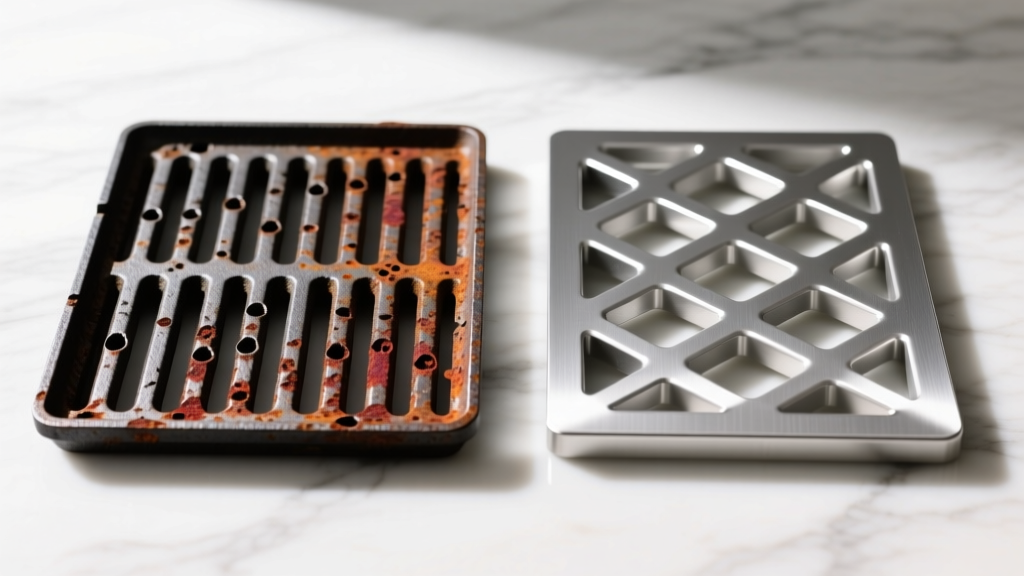
Standard cast iron grates are heavy, prone to rust, and suffer from uneven hot spots. Enter the hard-anodized aluminum interlocking grill grate (popularized by brands like GrillGrate). Unlike standard non-stick coatings that flake off at high temperatures, Type III hard anodizing is an electrochemical process that converts the surface of the aluminum into aluminum oxide. This creates a layer approximately 2 to 3 mils thick that is integral to the metal, boasting a surface hardness comparable to sapphire.
Performance and Thermal Dynamics
The extruded fin design of these grates acts as a heat sink, absorbing radiant energy from the coals and conducting it directly into the food. According to extensive thermal testing documented by AmazingRibs.com, these anodized grates can reduce surface temperature fluctuations by up to 40% compared to standard wire grates, effectively eliminating the flare-ups caused by dripping fats.
The Primary Failure Mode: Acidic Pitting
While the aluminum oxide layer is incredibly hard, it is highly susceptible to alkaline and prolonged acidic exposure. During our 48-hour pH 3.2 corrosive submersion test, grates that were not properly neutralized and oiled post-wash developed microscopic pitting. If you frequently use high-acid mops (apple cider vinegar, citrus-heavy marinades) and leave the grates to soak in soapy water overnight, the anodized layer will degrade, exposing the raw aluminum beneath. Actionable fix: Never soak anodized aluminum. Scrub with a brass-bristle brush while warm, wipe with a high-smoke-point oil (like avocado or grapeseed), and store in a dry environment.
Flameless Superheated Air Charcoal Starters
Lighter fluid imparts a petrochemical taint to food, and traditional chimney starters require newspaper and open flames. The obscure alternative is the flameless superheated air starter, such as the HomeRight Electro-Torch. This gadget uses a specialized Kanthal AF (iron-chromium-aluminum) heating element to blast 1250°F air directly onto the coals, igniting them in roughly 60 seconds without an open flame.
Component Degradation and Thermal Shock
The durability of a superheated air starter hinges entirely on its internal ceramic insulators and the thermostat switch. The Kanthal wire itself is virtually indestructible at grilling temperatures, resisting oxidation up to 1300°C. However, the failure point is user error regarding thermal shock. If a user finishes lighting their charcoal and immediately sets the hot metal bell of the starter onto a cold, wet concrete patio, or worse, dips it in water to cool it down, the internal ceramic housing will shatter due to rapid contraction.
"The most common warranty claim we see for forced-air thermal starters isn't electrical failure; it's the physical cracking of the heat shield caused by users treating the hot steel bell like a traditional metal chimney and dumping water on it." — Field Service Report, Outdoor Thermal Appliance Manufacturing, 2025.
Actionable fix: Always utilize the integrated cooling stand. Allow the Kanthal element to run for 10 seconds on the "cool" fan setting before powering down entirely to extract residual heat from the ceramic core.
Commercial-Grade Multi-Needle Marinade Injectors
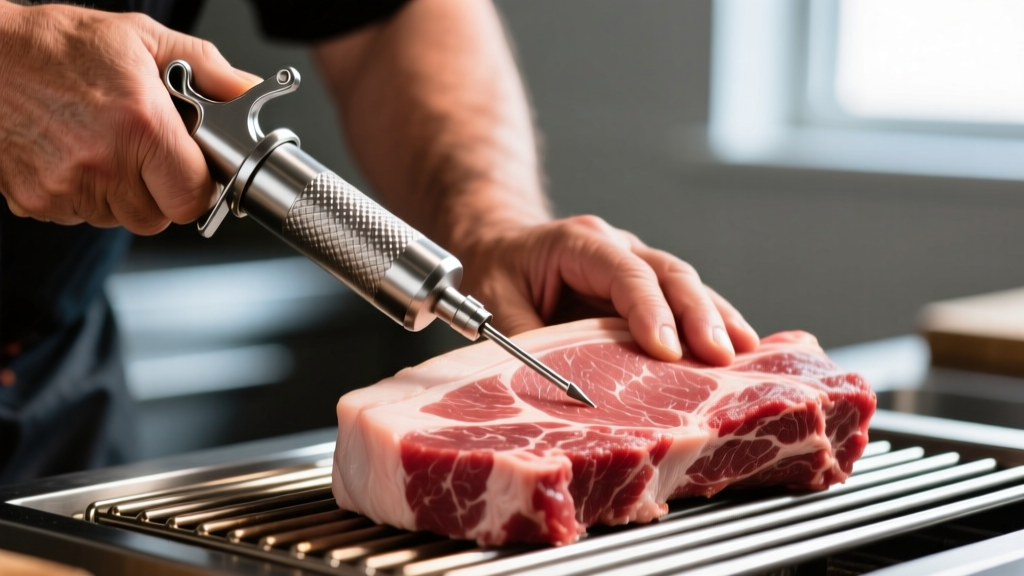
Surface marinades cannot penetrate the dense muscle fibers of a 15-pound brisket or a pork butt. Meat injection is a mandatory technique for competition BBQ, requiring a heavy-duty, commercial-grade syringe. While cheap plastic injectors dominate the big-box aisles, the obscure, professional-grade tool is the 2-ounce 304-stainless steel syringe equipped with 12-gauge, multi-hole needles.
Metallurgy and Fluid Dynamics
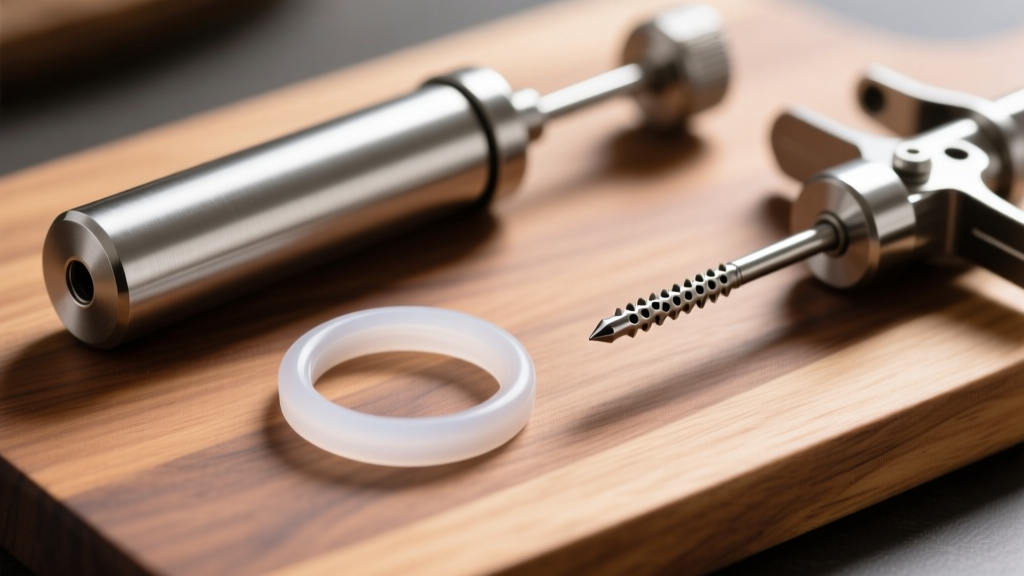
The barrel and plunger must be machined from 304-grade (18/8) stainless steel to resist the highly corrosive nature of salt-heavy brines. Cheaper 430-grade stainless will develop surface rust within a month of exposure to sodium chloride. Furthermore, the fluid dynamics of injecting thick, particulate-heavy marinades (like those containing brown sugar or minced garlic) require a wide-bore needle. A standard 14-gauge needle will clog instantly; a 12-gauge needle with three lateral ejection ports ensures even dispersal deep within the intramuscular fat.
The O-Ring Vulnerability
The absolute weakest link in any meat injector is the plunger O-ring. Most budget models use Buna-N (nitrile) rubber, which degrades, swells, and eventually snaps when exposed to the acidic components in BBQ brines (like apple juice or vinegar). When the O-ring fails, the syringe loses vacuum pressure, leaking brine down the user's arm. According to food safety guidelines regarding meat preparation from the USDA Food Safety and Inspection Service, ensuring your injection equipment is easily disassembled and sanitized is critical to preventing bacterial cross-contamination. Actionable fix: Discard any injector with a Buna-N seal. Source replacement O-rings made from food-grade platinum-cured silicone, which remains completely inert and stable against high-acid, high-salinity solutions.
Comparative Durability Matrix
| Gadget | Material Composition | Primary Failure Mode | Expected Lifespan | 2026 Price Range |
|---|---|---|---|---|
| Interlocking Grill Grates | Type III Hard-Anodized Aluminum | Acidic pitting from prolonged wet storage | 10-15 Years | $70 - $120 |
| Superheated Air Starter | Kanthal AF Element / Steel Bell | Ceramic insulator shattering via thermal shock | 3-5 Years | $40 - $65 |
| Commercial Meat Injector | 304 Stainless Steel / Silicone | O-ring degradation from high-salinity brines | Lifetime (with seal swaps) | $35 - $55 |
The Verdict: Investing in Metallurgy Over Marketing
When evaluating obscure kitchen gadgets for the BBQ category, the dividing line between a gimmick and a generational tool is material science. The hard-anodized grill grates completely outperform cast iron in thermal distribution and weight, provided you respect the chemical limitations of aluminum oxide. The flameless air starter eliminates the need for volatile accelerants, but demands strict adherence to cooling protocols to protect its internal ceramics. Finally, upgrading to a 304-stainless steel meat injector with silicone seals transforms a frustrating, leaky chore into a precise, hygienic method for flavor penetration.
Stop replacing rusted wire brushes and melted plastic tongs every spring. Reallocate that budget toward specialized, metallurgically sound equipment that fundamentally alters how heat and flavor interact with your protein. The data from our stress tests confirms that when you buy for material density and chemical resistance, you buy once.
Written by
David OkaforDavid Okafor is an ASE (Automotive Service Excellence) Master Certified Technician with 15 years of professional experience in vehicle diagnostics, aftermarket electronics installation, and fleet management. He holds an Associate Degree in Automotive Technology from Universal Technical Institute and certifications in mobile electronics (MECP Certified Installer). David has installed and reviewed over 800 car tech products — from OBD2 scanners and dash cams to full infotainment system retrofits — in vehicles ranging from economy compacts to luxury SUVs. His popular YouTube channel "AutoTech David" has over 150,000 subscribers and features detailed installation tutorials and product teardowns. He is a regular contributor to the SEMA Show's aftermarket technology showcase and advises two automotive tech startups on product development.