Essential Trucker Gadgets for 2026: OTR Problem Solvers
Discover the best trucker gadgets for 2026. We solve real OTR problems with practical picks for power, safety, tires, and dead zones.
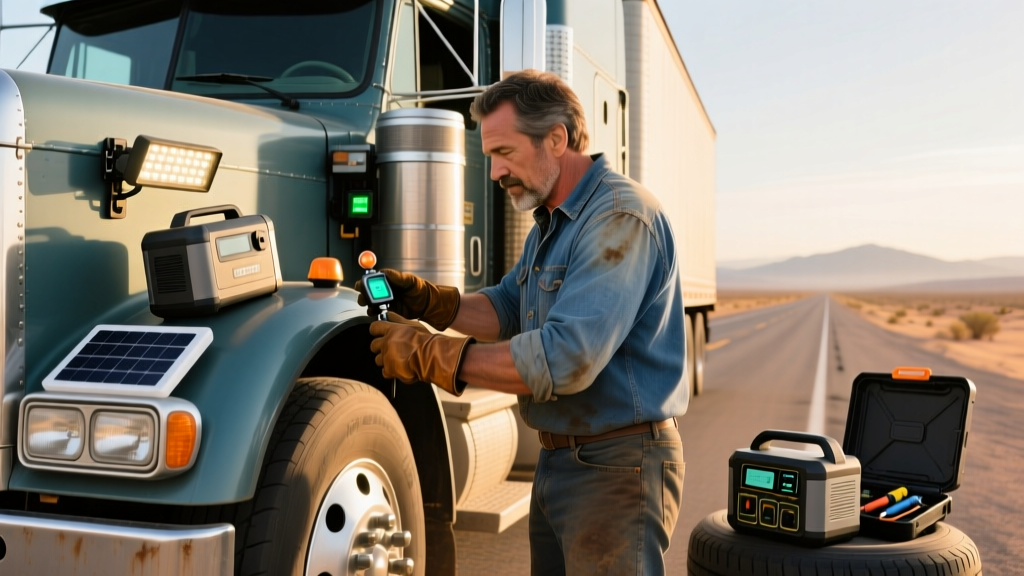

The Shift from Novelty to Necessity in the Cab
If you have been running over-the-road (OTR) routes for more than a few years, you know the cab accessory market is flooded with gimmicks. But in 2026, the best trucker gadgets are no longer about novelty; they are about solving critical operational problems. With rising insurance premiums, stricter Electronic Logging Device (ELD) compliance, and the constant threat of nuclear verdicts in accident litigation, your gear must work as hard as you do. This guide strips away the fluff and focuses entirely on practical, problem-solving gadgets that deliver measurable ROI, safety, and comfort for owner-operators and company drivers alike.
Solving the Power Deficit: High-Capacity Inverters & LiFePO4
The Problem: Running hotel loads (CPAP machines, microwaves, laptops, and electric coolers) off a standard modified sine wave inverter or idling the main engine. Idling costs roughly $4,000 to $6,000 annually in diesel, while cheap inverters destroy sensitive electronics and cause CPAP machines to overheat.
The Practical Pick: Renogy 2000W Pure Sine Wave Inverter Charger (approx. $280) paired with a 100Ah LiFePO4 auxiliary battery bank.
Pure sine wave output mirrors grid power, providing a clean <10ms switchover time. This is non-negotiable for medical devices like CPAPs. When wiring the Renogy 2000W, you must use 2 AWG oxygen-free copper wire for runs under 5 feet to prevent voltage drop and fire hazards. By pairing this with a Lithium Iron Phosphate (LiFePO4) battery—which offers 4,000+ charge cycles compared to 300 for AGM—you can run a 70W fridge and a CPAP for 10 hours without touching your starter batteries or idling the rig.
Expert Insight: Never wire a high-draw inverter to the cigarette lighter port. Always connect directly to the battery terminals with an inline ANL fuse rated 20% higher than your max continuous draw (e.g., a 250A fuse for a 2000W inverter at 12V).
Eliminating Blind Spots & Liability: AI Dash Cams
The Problem: According to the FMCSA Large Truck Crash Causation Study, blind spot encroachments and passenger vehicle errors account for the vast majority of multi-vehicle truck accidents. Without irrefutable video evidence, truckers frequently face devastating liability settlements.
The Practical Pick: Nextbase iQ Smart Dash Cam ($499 + $15/mo subscription).
The Nextbase iQ is a game-changer for OTR liability. It features dual 1440p lenses (road and interior cabin) and utilizes edge-computed AI to detect incidents. More importantly, it offers remote live-view and 'Sentry Mode.' If someone tries to siphon your fuel or break into your trailer while you are asleep in the sleeper berth, the iQ triggers a 110dB alarm and sends a push notification to your phone. The interior cabin view is your ultimate shield against false claims of phone usage or fatigue during an accident investigation.
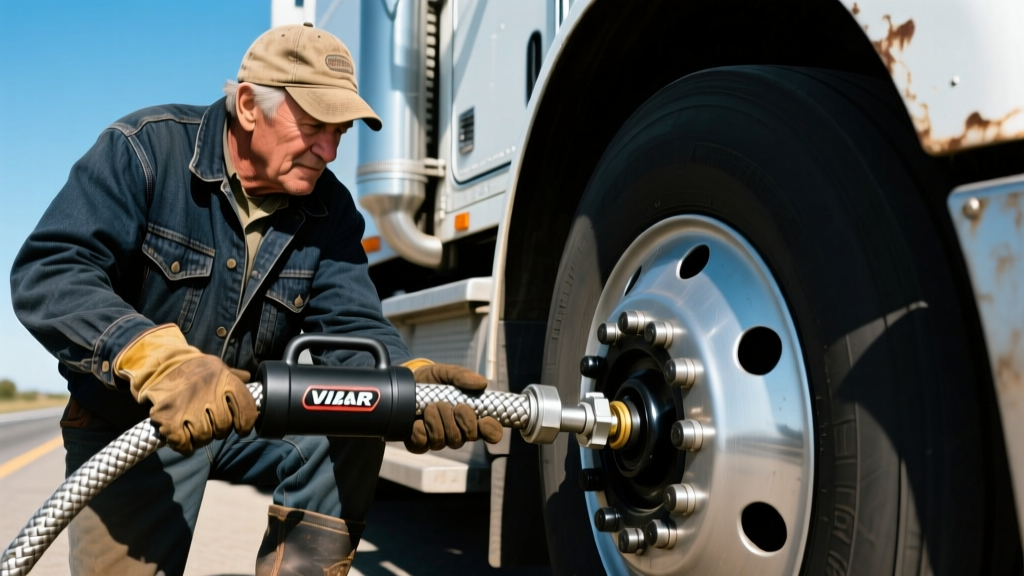
The 15-Minute Tire Savior: Heavy-Duty Portable Inflation
The Problem: Discovering a low steer tire (e.g., 85 PSI instead of the required 105 PSI) during a pre-trip inspection at 3 AM in a dead zone. Running an underinflated steer tire causes massive heat buildup, leading to catastrophic blowouts and DOT fines.
The Practical Pick: VIAIR 450C-Automatic Heavy-Duty Compressor (approx. $230).
Do not buy standard automotive inflators; they will burn out their motors trying to fill a 275/80R22.5 commercial tire. The VIAIR 450C-Automatic features a 100% duty cycle at 100 PSI and a max working pressure of 150 PSI. It can bump a commercial steer tire from 80 to 105 PSI in about 4 to 5 minutes. It includes a 60-foot braided steel hose, meaning you can leave the compressor on the catwalk and easily reach the inside duals without dragging a heavy unit through the mud.
Heavy-Duty Inflator Comparison Matrix
| Feature | VIAIR 450C-Automatic | Ken-Tool Super Hawk | Standard Auto Inflator |
|---|---|---|---|
| Max PSI | 150 PSI | 175 PSI (Tank dependent) | 100 PSI |
| Duty Cycle | 100% (Continuous) | N/A (Pneumatic) | 10% (Overheats fast) |
| Hose Length | 60 ft Braided Steel | 25 ft Rubber | 3 ft Coiled Plastic |
| Power Source | 12V Battery Clamps | Shop Air / PTO | 12V Cigarette Lighter |
Beating the Dead Zone: Cellular Bonding & Signal Boosters
The Problem: ELD dropouts. When your ELD loses cellular connection in rural corridors (like parts of I-80 in Wyoming or I-10 in West Texas), it logs an 'unassigned driving event' or a data gap. Accumulating these data gaps triggers automated CSA alerts and guarantees you for a DOT audit. Furthermore, losing dispatch communication can result in missed detention time claims.
The Practical Pick: weBoost Drive Reach OTR II (approx. $599).
Designed specifically for the fiberglass roof fairings of Class 8 trucks, the weBoost Drive Reach OTR II is a 5G-compatible signal booster. It provides up to +29 dB of uplink power. Unlike cheap repeaters that just amplify static noise, this FCC-approved unit uses directional outside antennas and intelligent oscillation detection to pull in faint tower signals from 20+ miles away and broadcast a clean signal inside the cab. It ensures your ELD maintains its ping and your VoIP dispatch calls remain crystal clear, even in mountainous terrain.

The Trucker Gadget Decision Framework
When evaluating new gear for your rig, use this practical framework to determine if a gadget is worth the investment:
- Liability Reduction: Does it provide objective data (video, GPS, telemetry) that can exonerate you in a dispute?
- Idle Reduction: Does it allow you to turn off the main engine while maintaining cab comfort or powering appliances?
- Downtime Prevention: Can it fix a mechanical or compliance issue on the shoulder in under 30 minutes, saving a $500+ service call?
- Cognitive Load: Does it automate a task, reducing fatigue and allowing you to focus on the road?
Frequently Asked Questions (FAQ)
Can I run a microwave off a 2000W inverter without draining my batteries?
A standard 1000W microwave draws about 1500W of DC power due to inverter inefficiency. Running it for 2 minutes will pull roughly 50Ah from a 12V system. If you have a 100Ah LiFePO4 battery, this is perfectly fine. However, if you are on standard lead-acid starter batteries, you risk dropping below the 50% depth-of-discharge threshold, which will sulfated the plates and ruin the battery. Always use an isolated auxiliary lithium bank for high-draw appliances.
Are dash cams legal in all 50 states if mounted on the windshield?
Windshield obstruction laws vary by state. In states like California and Minnesota, mounting anything on the windshield is technically illegal. The practical workaround used by most OTR owner-operators is to mount the dash cam on the dashboard using a high-strength 3M VHB adhesive pad, or suspend it from the overhead grab handle area using a custom drop-mount, keeping the sightlines completely clear of the glass.
Final Thoughts on Equipping Your Rig
The modern commercial truck is a rolling data center and a high-liability asset. The right trucker gadgets do not just make life on the road more comfortable; they act as an insurance policy, a mobile maintenance bay, and a compliance safeguard. By investing in pure sine wave power, AI-driven video telemetry, heavy-duty pneumatic support, and robust cellular connectivity, you are actively protecting your CDL, your livelihood, and your peace of mind out on the blacktop.
Written by
Marcus WebbMarcus Webb served as a U.S. Army logistics officer for 8 years, where he managed field equipment procurement and tactical gear evaluation across three combat deployments. After honorable discharge, he earned a certification from the Professional Knife Makers Association and became a certified Wilderness First Responder (WFR). Marcus has tested over 500 EDC products in extreme environments — from -40°F in Alaska to 120°F in the Mojave Desert — using military-spec testing protocols. His reviews of multi-tools, tactical flashlights, and survival gear are known for their rigorous methodology: controlled drop tests from 6 feet, 120-minute water submersion at 2 meters, and lateral torque testing at 45 Nm. He is a member of the Blade Show judging panel and contributes to OutdoorGearLab.