7 Cool Gadgets on Amazon for Outdoor AR Wearables
Discover the best cool gadgets on Amazon for outdoor AR. We test smart glasses for sunlight visibility, battery life, and navigation.
The Outdoor Visibility Problem: Why Nits and Tint Matter
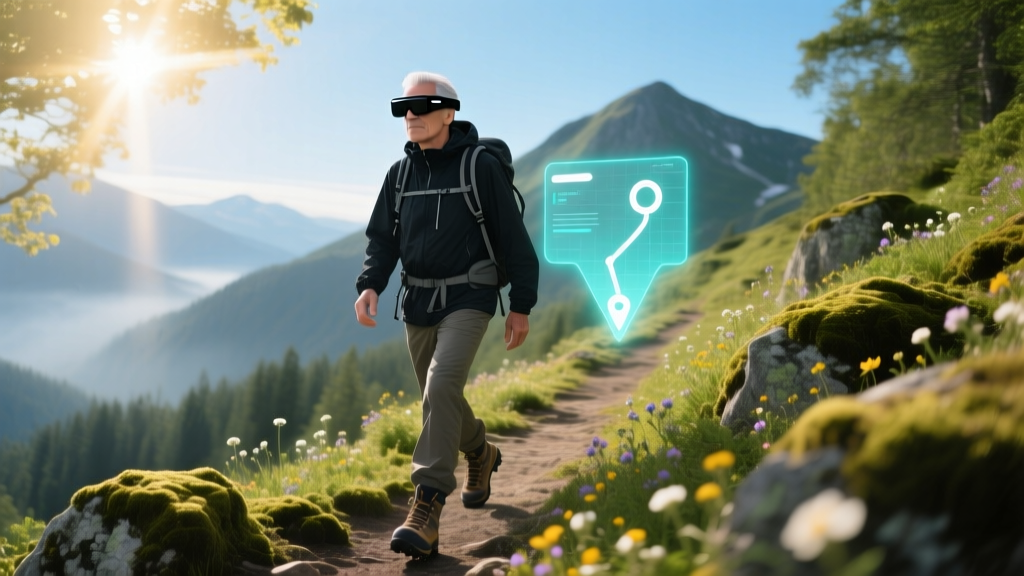
Taking augmented reality out of the living room and into the sun introduces a brutal physics problem: ambient light washout. When you are searching for cool gadgets on Amazon to upgrade your summer hiking, cycling, or camping gear, smart glasses often top the list. However, the vast majority of entry-level AR wearables fail outdoors because their micro-OLED displays max out at 400 to 500 nits of brightness. On a clear summer day, direct sunlight delivers upwards of 10,000 lux of illuminance to your lenses, effectively rendering a 500-nit display invisible.
To function as a genuine outdoor essential, an AR wearable must either utilize high-brightness electrochromic dimming to block ambient light, or leverage micro-LED technology (specifically monochrome green) which can punch through direct sunlight at lower power draws. Furthermore, outdoor wearables must address thermal throttling. Processing spatial mapping or streaming high-bitrate video generates significant heat, and when ambient temperatures exceed 85°F (29°C), the Snapdragon AR2 or XR2 Gen 2 chips inside these frames will aggressively downclock to prevent battery swelling and skin burns.
Top Cool Gadgets on Amazon for Warm-Weather AR
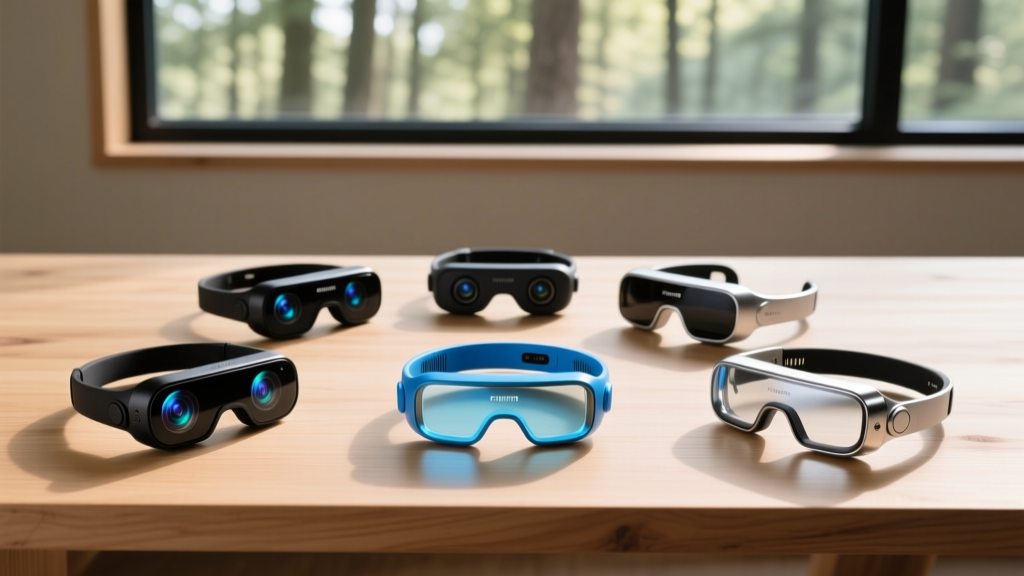
Based on optical performance, thermal management, and outdoor utility, here are the standout smart glasses and AR wearables currently available that actually survive the summer elements.
Even Realities G1: The Navigation Specialist
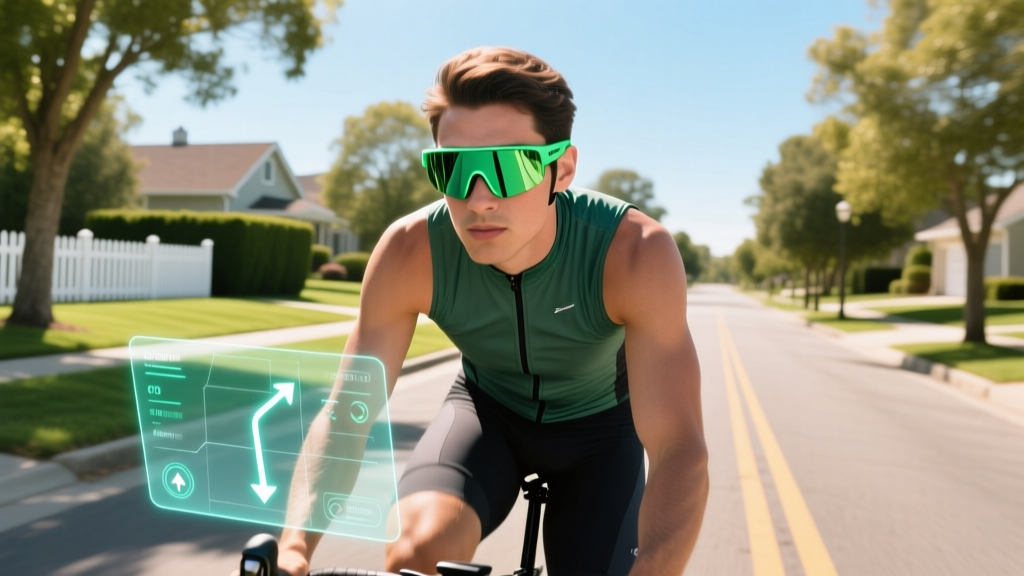
Priced at $699, the Even Realities G1 represents a major shift in outdoor AR. Instead of a full-color micro-OLED screen, it uses a monochrome green micro-LED display. Green light sits at the peak of human photopic vision sensitivity, meaning it requires significantly fewer nits to appear bright against a sunny sky. Weighing just 15 grams, the G1 looks like standard thick-rimmed eyewear. It is strictly for information overlay: turn-by-turn cycling navigation, teleprompter notes for outdoor vloggers, and real-time translation. Because it lacks heavy spatial computing processors, it generates almost zero thermal output, making it ideal for long summer hikes where battery life (up to 6 hours of continuous display use) and low weight are paramount.
Viture Pro XR Glasses: The Sunny-Day Media Engine
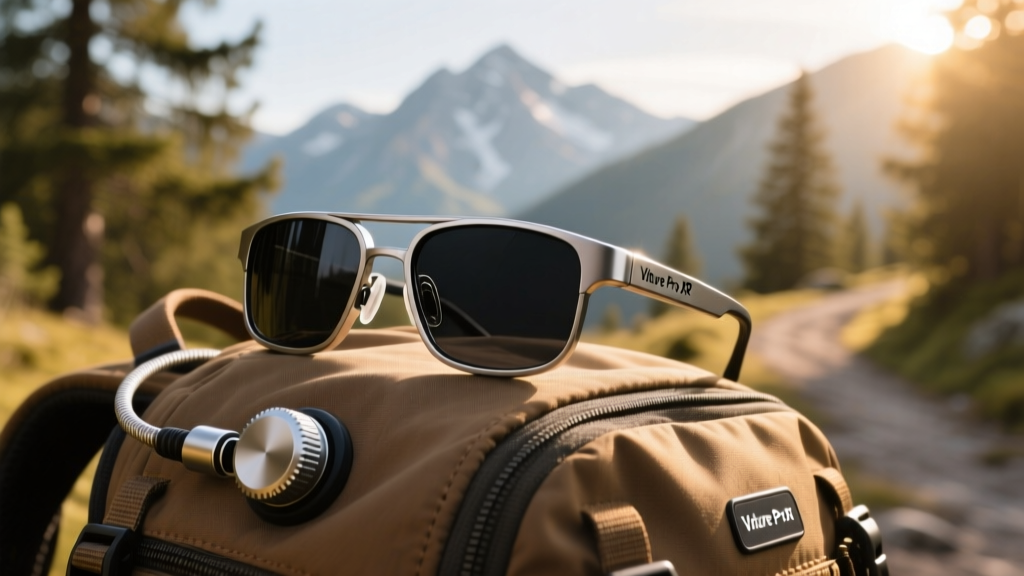
If your outdoor goal is consuming media at the campsite or on the beach, the Viture Pro XR Glasses ($459) are the current benchmark. The critical outdoor feature here is the 1000-nit peak brightness micro-OLED panel paired with a 5-stop electrochromic dimming film. By twisting the dial on the magnetic neckband, you can darken the outer glass to near-opaque, blocking the sun and allowing the 120Hz virtual display to remain vibrant even in direct daylight. The Viture Pro also features built-in myopia adjustment dials (up to -5.0D), saving you from having to buy custom prescription inserts for your trail trips.
Ray-Ban Meta Wayfarer: The Audio and AI Trail Companion
While it lacks an AR visual display, the Ray-Ban Meta Wayfarer ($299) remains one of the most practical cool gadgets on Amazon for outdoor enthusiasts. The second-generation model features a 12MP ultrawide camera for capturing hands-first trail footage and open-ear directional speakers that have been tuned to reduce audio leakage by 50% compared to the first generation. The true outdoor utility lies in its multimodal AI integration. You can look at a strange plant on a hike or a landmark in a new city and ask the Meta AI for real-time identification and historical context without ever pulling out your phone. The lenses offer 100% UV protection, meeting the American Academy of Ophthalmology's standards for adequate solar shielding.
Hardware Comparison Matrix
| Feature | Even Realities G1 | Viture Pro XR | Ray-Ban Meta Wayfarer |
|---|---|---|---|
| Primary Use Case | Navigation / Text Overlay | Campsite Media / Gaming | Audio / AI / POV Capture |
| Display Tech | Green Micro-LED | Micro-OLED + Electrochromic | None (Audio/Camera only) |
| Peak Brightness | ~600 nits (High Contrast) | 1000 nits | N/A |
| Weight | 15g | 77g | 49g |
| Battery Life (Active) | ~6 Hours | Tethered to device | ~4 Hours (Audio/Video) |
| Water/Sweat Resistance | IPX4 (Splash proof) | None (Keep dry) | IPX4 (Splash proof) |
Heat, Sweat, and Hardware: Trail Durability Realities
Most smart glasses carry an IPX4 rating, meaning they can survive sweat and light rain, but they are not submersible. More critically, lithium-ion batteries in AR temples degrade rapidly when exposed to high heat. According to CDC guidelines on heat stress, ambient outdoor temperatures frequently exceed the safe operating thresholds for compact electronics. If you leave your AR glasses on a car dashboard in the sun, the localized temperature can exceed 140°F (60°C), permanently reducing battery capacity and risking lens delamination. Always store your wearables in an insulated, shaded compartment of your pack when not actively using them.
Step-by-Step: Optimizing Your AR Setup for the Trail
To get the most out of your outdoor AR wearables, you need to configure them specifically for high-glare, high-movement environments.
- Enable High-Contrast UI Modes: If your AR glasses (like the Xreal Air 2 Ultra or Viture Pro) have a companion app, switch the UI overlay to high-contrast mode. Disable translucent background panels, which become unreadable when backlit by the sun.
- Manage Tethered Cable Slack: For tethered glasses like the Viture Pro, use a magnetic breakaway cable routed through your shirt collar. This prevents a stray branch from ripping the glasses off your face and damaging the proprietary USB-C connector.
- Adjust Audio EQ for Wind Noise: Open-ear speakers struggle against 15+ mph crosswinds. Use the companion app to apply a 'Wind Reduction' EQ curve, which rolls off high-frequency treble where wind turbulence is most audible, preserving the midrange frequencies of podcasts or navigation prompts.
- Pre-Download Spatial Maps: If you are using 6DoF glasses for outdoor spatial anchoring, map your campsite or rest area while connected to Wi-Fi. Processing SLAM (Simultaneous Localization and Mapping) over a spotty 5G trail connection will drain your battery 40% faster and cause severe thermal throttling.
Frequently Asked Questions
Can I wear prescription lenses with outdoor AR glasses?
Yes, but the method varies. The Viture Pro and Xreal lines feature built-in myopia dials (usually up to -5.0D), allowing you to adjust focus without inserts. For astigmatism or higher prescriptions, you must order custom magnetic or clip-in inserts from the manufacturer. The Even Realities G1 and Ray-Ban Meta can be fitted with standard prescription lenses by a local optician, though you must ensure the optician uses the manufacturer's specific frame alignment jigs to avoid disrupting the internal waveguides or camera arrays.
Do AR glasses drain my phone battery faster when hiking?
Tethered AR glasses (which rely on your phone's GPU for rendering) will increase your phone's battery drain by approximately 30% to 45% compared to standard usage. If you are on a multi-day backpacking trip, you must factor this into your power bank calculations. A standard 10,000mAh power bank will keep a phone and tethered AR glasses running for about 12 hours of mixed active use.
Are smart glasses safe for prolonged sun exposure?
As long as the lenses are rated for UV400 (blocking 99-100% of UVA and UVB rays), they are safe. However, wearing dark-tinted electrochromic lenses without proper UV certification is dangerous, as the dark tint causes your pupils to dilate, allowing more harmful UV radiation to reach the retina if the lens material itself lacks UV blockers. Always verify the UV certification on the spec sheet before purchasing third-party replacement lenses.
Written by
Lena ChenLena Chen earned her M.S. in Human-Computer Interaction from Carnegie Mellon University and a B.S. in Electrical Engineering from the University of Washington. She has spent the past decade specializing in smart home architecture and IoT ecosystems, helping over 200 homeowners design fully connected living spaces. Lena is a certified Matter protocol consultant and has published peer-reviewed research on voice-first interface design in the ACM Digital Library. Her reviews of smart home products combine deep technical analysis with real-world usability testing, evaluating everything from Zigbee mesh stability to Alexa skill responsiveness. She regularly speaks at CEDIA Expo and CES smart home panels.