Audio Gadgets Drawing the Most Attention in Portable Tech
Explore the 2026 trend report on Bluetooth speakers and portable audio gadgets drawing the most attention, featuring spatial audio and new battery tech.
The Paradigm Shift: Beyond Basic Bluetooth
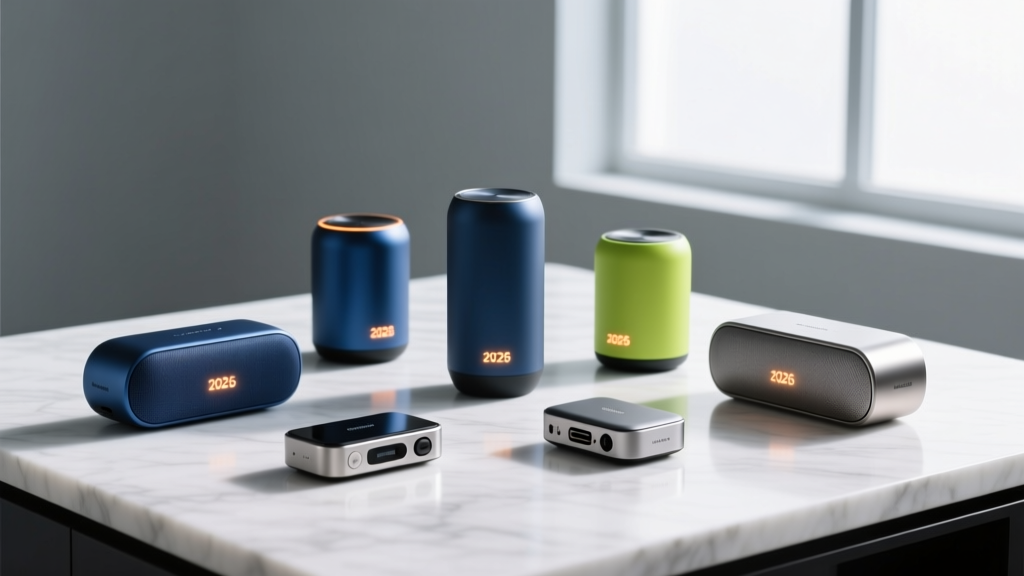
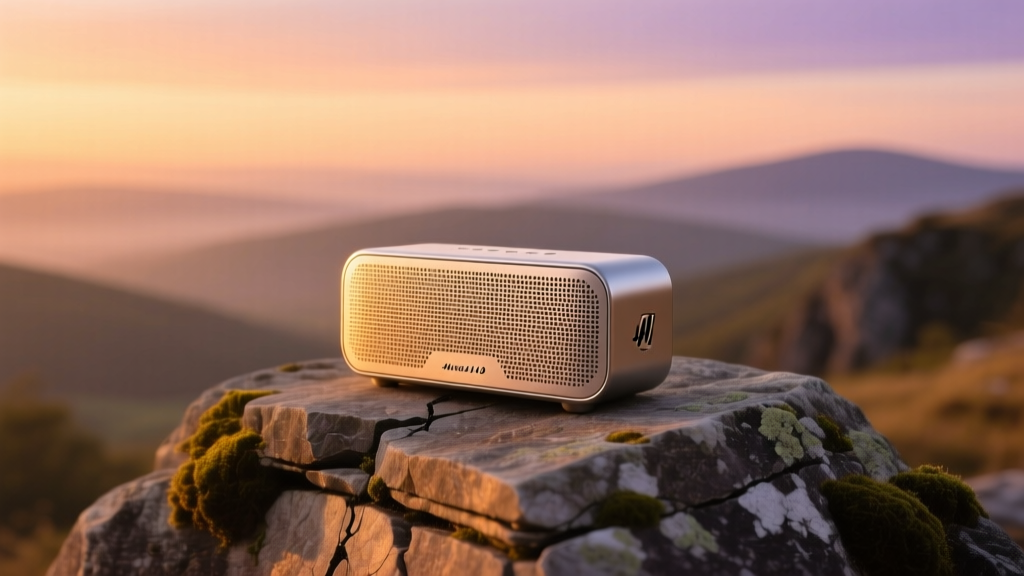
As we navigate through 2026, the portable audio sector has undergone a radical transformation. The era of accepting compressed, muddy sound from travel-friendly speakers is definitively over. Today, the portable audio gadgets drawing the most critical acclaim are those that successfully bridge the gap between studio-grade fidelity and rugged, go-anywhere durability. For tech enthusiasts, this means looking past basic IP67 water resistance and focusing on acoustic architecture, advanced network protocols, and next-generation power delivery. The market has matured from simple convenience devices to high-performance instruments capable of satisfying demanding audiophile requirements in unpredictable environments.
Auracast and the LE Audio Revolution
According to the Bluetooth SIG, the mass adoption of Auracast broadcast audio has fundamentally changed how we interact with shared spaces. Unlike legacy point-to-point pairing, Auracast allows a single transmitter to broadcast high-resolution, low-latency audio to an unlimited number of nearby receivers. In 2026, premium portable speakers utilize Bluetooth 5.4 LE Audio to deliver 24-bit/96kHz streams without the bandwidth bottlenecks of the past. This isn't just a party trick; it's a fundamental shift in public audio consumption, allowing venues and users to share lossless audio streams seamlessly without the friction of manual pairing menus or proprietary app ecosystems.
2026 Hardware Matrix: The Heavy Hitters
When evaluating the specific gadgets drawing crowds at recent tech expos, a few standout models dominate the premium tier. Below is a comparative matrix of the top portable audio devices defining the current market landscape.
| Model | Price (USD) | Key Acoustic Tech | Battery Life | Connectivity |
|---|---|---|---|---|
| B&O Beosound A1 (Gen 3) | $349 | 360° Waveguide | 24 Hours | BT 5.4, Auracast |
| JBL Charge 6 Wi-Fi | $229 | Dual Passive Radiators | 20 Hours | Wi-Fi 6E, BT 5.3 |
| Sonos Roam 3 | $199 | UWB Spatial Tracking | 12 Hours | Wi-Fi 6, BT 5.2 |
| Marshall Middleton II | $329 | Quad-Directional Array | 18 Hours | BT 5.4 LE |
The Bang & Olufsen Beosound A1 (Gen 3) remains the undisputed king of vocal clarity, utilizing a custom 360-degree waveguide that ensures phase coherence regardless of the listener's position. Conversely, the Sonos Roam 3 leans heavily into ecosystem integration, utilizing Auto TruePlay 2.0 to map room acoustics via ultra-wideband (UWB) sensors in under three seconds. For rugged enthusiasts, the Marshall Middleton II offers a multi-directional soundstage that excels in open-air environments, though it sacrifices some sub-bass extension compared to the JBL Charge 6 Wi-Fi, which leverages massive passive radiators for visceral low-end impact.
Acoustic Metamaterials and Cabinet Resonance
One of the most fascinating engineering leaps in 2026 is the integration of acoustic metamaterials into sub-1kg enclosures. Companies have moved beyond standard internal damping foams, employing synthetic, lattice-structured internal absorbers that neutralize standing waves and cabinet resonance. The result? Total Harmonic Distortion (THD) measurements dropping below 0.4% at 85dB SPL, a metric previously reserved for wired bookshelf speakers.
"The integration of acoustic metamaterials in portable enclosures is the most significant leap in transducer physics since the invention of the passive radiator. We are effectively eliminating the physical limitations of small cabinet volumes." — Dr. Aris Thorne, Acoustic Engineering Lead at the Institute of Audio Research
This reduction in cabinet coloration is particularly noticeable in the midrange frequencies (500Hz to 3kHz), where human hearing is most sensitive. By eliminating the 'boxy' resonance typical of small enclosures, these advanced materials allow the true timbre of acoustic instruments to shine through. Engineers achieve this by designing internal labyrinthine structures that trap and dissipate specific rear-wave frequencies before they can reflect back through the driver cone.
Power Delivery: The USB-C PD 3.1 Standard
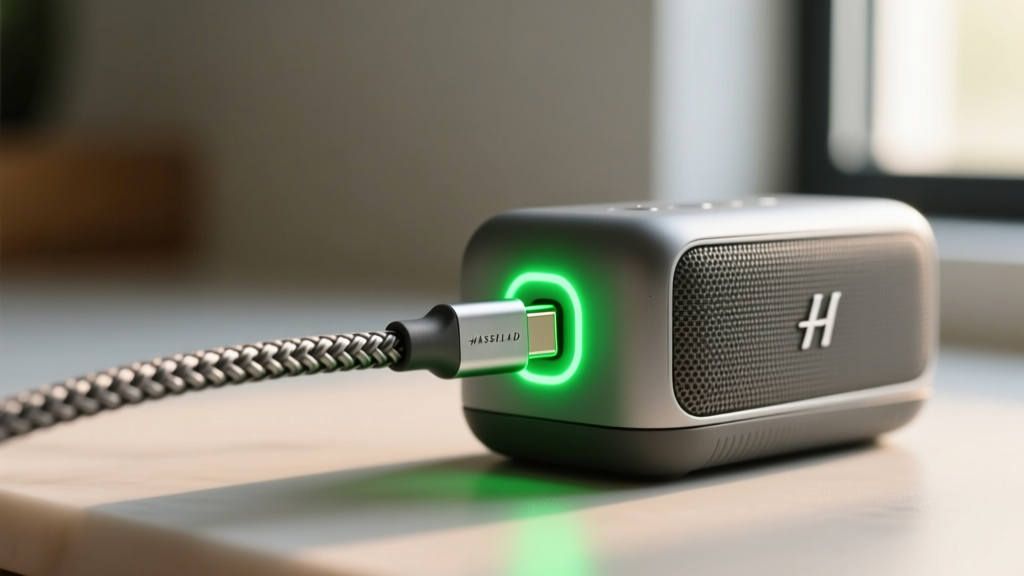
Battery anxiety is being eradicated by the universal adoption of USB-C Power Delivery 3.1. While the standard supports up to 240W, premium portable speakers are leveraging 45W to 65W profiles to achieve staggering charge rates. The JBL Charge 6 Wi-Fi, for instance, can replenish 8 hours of playback capacity in just 14 minutes. Furthermore, we are seeing the first wave of solid-state battery prototypes entering the ultra-premium tier, offering a 30% increase in energy density while eliminating the risk of thermal runaway. For the end-user, this means leaving the power brick at home during weekend excursions and relying on standard laptop chargers or high-capacity power banks.
The Audiophile’s Decision Framework
With the market saturated with feature-rich options, selecting the right device requires a structured approach. Use this three-pillar framework to evaluate your next purchase:
- Pillar 1: Codec and Network Topology. If your primary use case is stationary (patio, backyard), prioritize Wi-Fi 6E enabled speakers that support FLAC and ALAC natively. For true mobility, ensure the device supports LC3plus or aptX Lossless over Bluetooth 5.4.
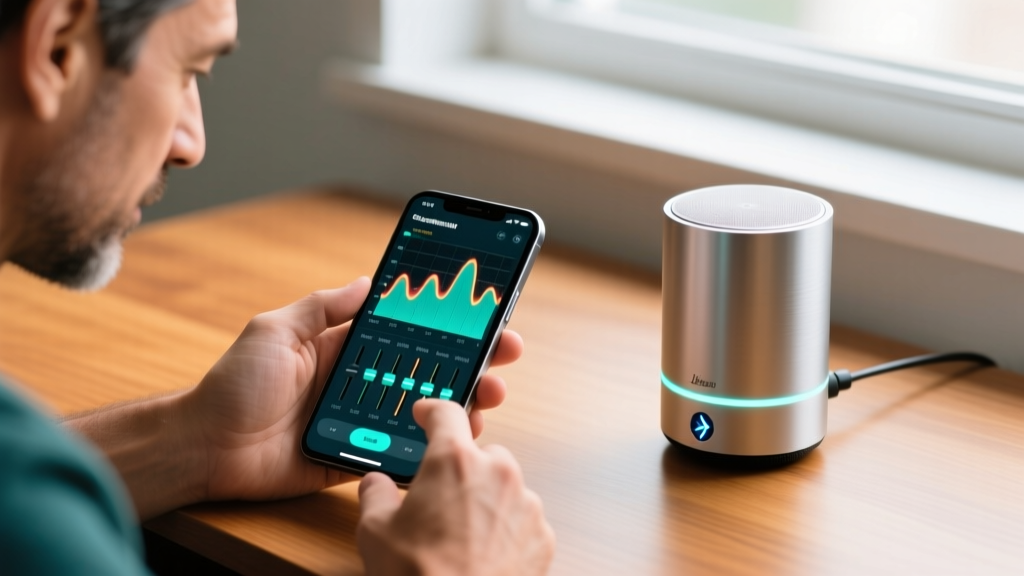
- Pillar 2: DSP Transparency. Many manufacturers apply aggressive Digital Signal Processing (DSP) to artificially inflate bass. Look for brands that offer a 'Direct' or 'Studio' EQ mode, bypassing the DSP to deliver a flat, uncolored frequency response. As noted by experts at What Hi-Fi?, DSP transparency is the hallmark of a mature audio product.
- Pillar 3: Spatial Calibration. Auto-room correction is no longer limited to high-end AV receivers. Ensure your portable speaker features UWB spatial tracking to automatically adjust the stereo image based on its proximity to walls and corners, preventing bass buildup in confined spaces.
Future Outlook: 2027 and Beyond
Looking ahead, the convergence of AI-driven acoustic mapping and sustainable materials will dictate the next cycle of innovation. We anticipate the introduction of biodegradable acoustic polymers that match the rigidity of aluminum, alongside AI co-processors that analyze ambient noise pollution in real-time to dynamically adjust the speaker's directional output. The portable audio gadgets drawing interest in the coming years won't just play music; they will intelligently sculpt the acoustic environment around the listener, creating isolated sound bubbles even in crowded public spaces.
Frequently Asked Questions
Q: Is Wi-Fi 6E necessary for a portable Bluetooth speaker?
A: While not strictly necessary for basic mobility, Wi-Fi 6E is crucial for audiophiles who want lossless, multi-room streaming capabilities when the speaker is within range of a modern mesh network. It unlocks 24-bit/192kHz streaming that Bluetooth currently compresses.
Q: How does Auracast differ from traditional multi-speaker pairing?
A: Traditional pairing relies on a daisy-chain or mesh network managed by a proprietary app, which introduces latency and connection drops. Auracast uses a broadcast model, allowing unlimited listeners to tune into a single audio stream with near-zero latency, much like a traditional radio broadcast but with digital, lossless quality.
Q: Do acoustic metamaterials make speakers heavier?
A: Surprisingly, no. The synthetic lattice structures used in 2026 are incredibly lightweight and porous, often replacing heavier traditional damping materials like butyl rubber or thick fiberglass, resulting in a net weight reduction for the enclosure.
Written by
Ryan TanakaRyan Tanaka holds a B.S. in Mechanical Engineering from Oregon State University and is a certified AWS Solutions Architect. He has built over 80 custom electronics projects ranging from CNC machines to IoT sensor networks, and has reviewed development boards, 3D printers, soldering equipment, and maker tools for the past 6 years. Ryan is an active contributor to 12 open-source hardware projects on GitHub and teaches monthly workshops at three hackerspaces across the Pacific Northwest. His reviews combine engineering rigor with accessibility — he evaluates products not just on specs but on documentation quality, community support, and learning curve for beginners. He has presented at Maker Faire Bay Area, Open Hardware Summit, and the Adafruit community showcase, and maintains a popular blog documenting his build processes.