Modern Kitchen Gadgets for Outdoors: Portable Knives & Sharpeners
Discover the best modern kitchen gadgets for outdoor cooking, featuring portable knife sets, field sharpeners, and heavy-duty BBQ cutting tools for 2026.
The Al Fresco Evolution of Modern Kitchen Gadgets
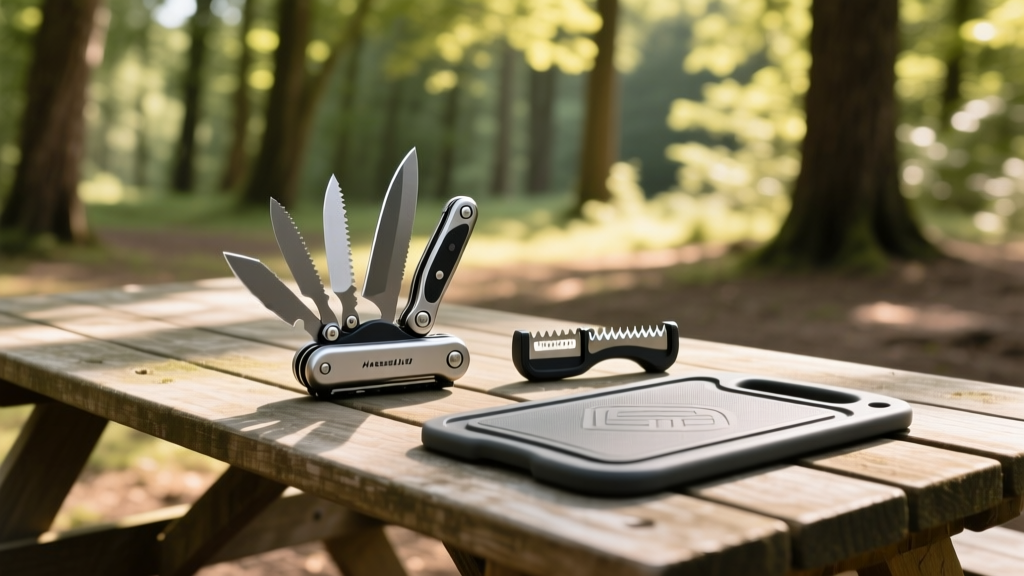
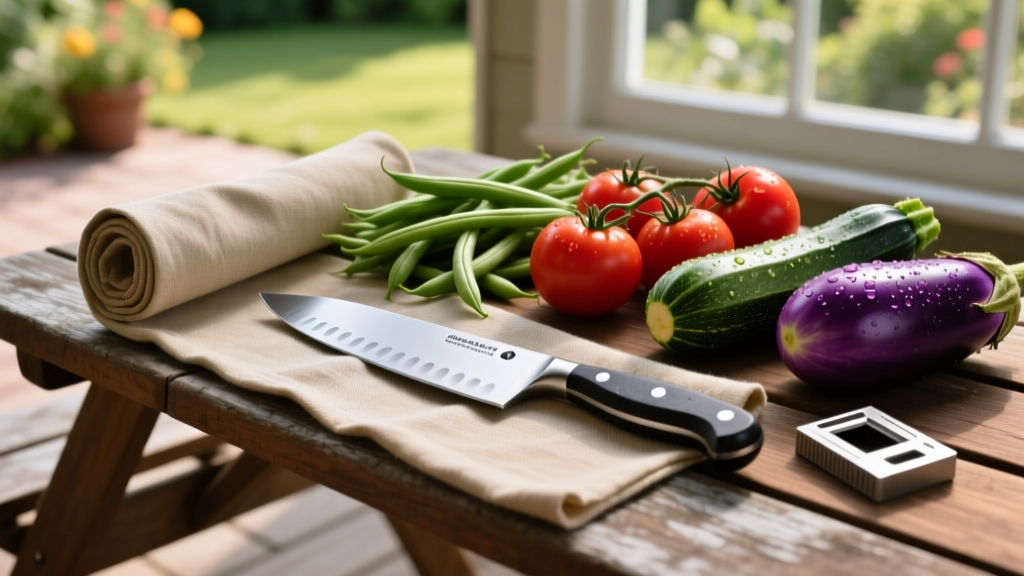
The boundary between the indoor kitchen and the outdoor cooking space has completely dissolved. As backyard kitchens, overlanding rigs, and high-end tailgating setups become more sophisticated, the demand for modern kitchen gadgets that can survive seasonal outdoor conditions has surged. Nowhere is this more critical than with cutting tools. A standard indoor chef knife will quickly fail in high-humidity summer environments or when processing wild game and tough BBQ cuts. True outdoor prep requires specialized metallurgy, ergonomic field sharpeners, and heavy-duty shears designed to handle the rigors of al fresco cooking without compromising on the precision expected from premium indoor equipment.
Portable Knife Sets: Steel Metallurgy for the Outdoors
When selecting a portable knife set for seasonal cooking, the primary consideration is the steel alloy. Indoor knives often utilize high-carbon steels (like Shirogami or Aogami) or high-hardness stainless steels (like VG-10 at 60+ HRC) for maximum edge retention. However, outdoor environments introduce moisture, acidic marinades, and unpredictable cutting surfaces like wooden stumps or portable plastic boards. For outdoor modern kitchen gadgets, you need a Rockwell Hardness (HRC) between 54 and 58 to prevent micro-chipping when the blade strikes hidden bone or grit, alongside high chromium content for corrosion resistance.
Wüsthof Outdoor Knife Roll Set
Priced around $299, the Wüsthof Outdoor Knife Roll Set is a masterclass in adapting indoor precision for exterior use. It features three essential blades forged from X50CrMoV15 stainless steel (HRC 58). This specific German alloy contains 0.5% carbon for adequate hardness and 15% chromium to form a passive oxide layer that resists rust during humid July BBQs. The set includes a 6-inch utility knife, a 4.5-inch paring knife, and heavy-duty poultry shears, all housed in a water-resistant, wipe-clean thermoplastic polyurethane (TPU) roll that sheds grease and marinade splatters far better than traditional leather or canvas.
Barebones Enclave Knife Set
For a more rustic aesthetic without sacrificing modern performance, the Barebones Enclave set ($149) utilizes 420HC stainless steel. While 420HC has a lower carbon content than premium indoor steels, its high chromium levels (approx. 13%) make it exceptionally resistant to the corrosive effects of salt rubs and acidic citrus marinades used in summer grilling. The walnut handles are treated with a weather-resistant sealant, preventing the wood from swelling or cracking when exposed to sudden summer rainstorms or high ambient humidity.
Field Sharpeners: Maintaining Edges in the Wild
A dull knife is a dangerous knife, especially when processing large cuts of meat like brisket or whole hogs outdoors. Lugging a heavy, plug-in whetstone system to a campsite is impractical. Modern field sharpeners are compact, multi-stage gadgets that allow you to restore a 15-to-20-degree edge angle in minutes. According to culinary safety guidelines, maintaining a sharp edge reduces the slipping that leads to severe lacerations during high-volume outdoor prep.
Work Sharp Guided Field Sharpener
Retailing for $34.95, the Work Sharp Guided Field Sharpener is arguably the most versatile manual sharpener on the market. It features a 5-stage progression: a 220-grit coarse diamond plate for repairing chips, a 320-grit fine diamond plate for sharpening, a ceramic rod for honing, a leather strop for polishing, and a built-in broadhead wrench. The diamond plates are coated on both sides and require no water or oil, making them ideal for dusty tailgate environments. The integrated angle guide ensures you maintain a consistent 20-degree bevel, which is optimal for outdoor knives that need a slightly more robust edge than the 15-degree bevel used on indoor Japanese slicers.
Lansky Turn Box Sharpener
For those who prefer a pull-through V-notch style for speed, the Lansky Turn Box ($29.99) offers preset ceramic rods at 20 and 25 degrees. The 25-degree setting is specifically useful for heavy-duty outdoor cleavers and machetes used in wood processing or breaking down large carcasses, providing a micro-bevel that resists rolling under heavy lateral stress.
Field Sharpener Comparison Matrix
| Sharpener Model | Abrasive Type | Grit Progression | Weight | Best Use Case |
|---|---|---|---|---|
| Work Sharp Guided Field | Diamond / Ceramic / Leather | 220 / 320 / Fine Ceramic | 4.2 oz | Complete edge restoration & chip repair |
| Lansky Turn Box | Alumina Ceramic Rods | Medium / Fine (Preset Angles) | 6.0 oz | Quick touch-ups on heavy-duty cleavers |
| Fallkniven DC4 | Diamond / Sapphire Ceramic | Coarse Diamond / Fine Ceramic | 2.6 oz | Ultralight backpacking & minimal gear |
Specialty Cutting Tools for BBQ and Campfire Prep
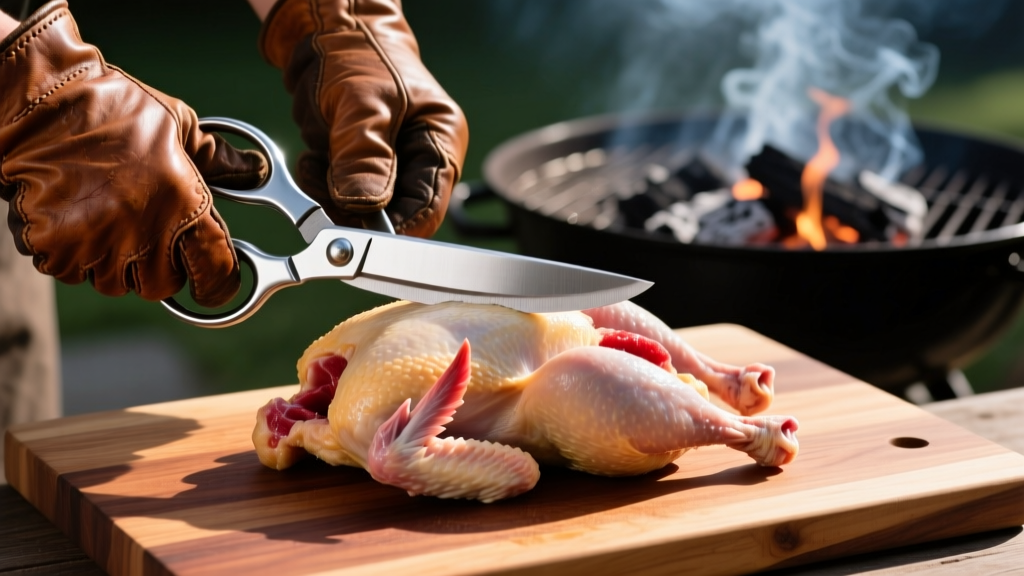
Beyond standard chef knives, seasonal outdoor cooking requires specialized modern kitchen gadgets designed for high-heat and high-fat environments. Standard indoor kitchen shears often fail when cutting through the dense cartilage of a spatchcocked chicken or trimming the thick fat cap off a packer brisket.
- Dexter-Russell Sani-Safe 6-inch Boning Knife ($28.00): The Sani-Safe line features a textured, slip-resistant polypropylene handle that maintains grip even when coated in rendered animal fat or wet marinades. The narrow, flexible 420HC blade is perfect for silver-skin removal and navigating around joints without snapping the tip.
- Shun Classic 7-inch Cleaver ($229.95): While expensive, this VG-MAX steel cleaver (HRC 60-61) is designed for precision chopping of dense summer vegetables like squash and watermelon, as well as light bone processing. Its wide blade acts as a bench scraper for transferring chopped mirepoix to the grill prep area.
- Kuhn Rikon Heavy-Duty Poultry Shears ($49.95): Featuring a ratcheting mechanism and micro-serrated stainless steel blades, these shears grip slippery poultry skin and cut through the sternum with minimal hand fatigue, a crucial feature when prepping multiple birds for a summer cookout.
Humidity and Rust: Seasonal Maintenance Protocols
Summer humidity is the enemy of high-performance cutting tools. Even "stainless" steels will develop surface oxidation (tea-staining) if left wet in 80%+ humidity. Proper maintenance of your outdoor modern kitchen gadgets requires a shift from indoor habits.
- Immediate Wipe Down: Never let marinades, citrus juices, or blood sit on the blade. Wipe the blade clean with a damp microfiber cloth immediately after use.
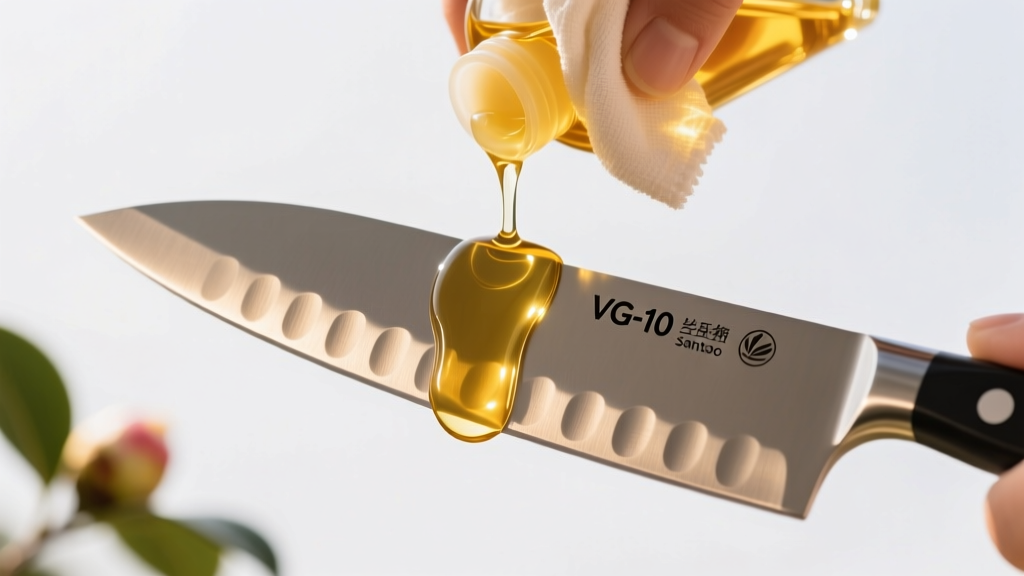
- Camellia Oil Application: Mineral oil is standard, but food-grade Camellia oil (Tsubaki oil) is superior for outdoor storage. It is lighter, non-drying, and creates a thinner, more effective moisture barrier. Apply two drops to a cloth and wipe the blade before storing it in a roll.
- Avoid Leather Sheaths for Storage: Leather absorbs moisture from the air and traps it against the steel, accelerating pitting. Store outdoor knives in Kydex inserts, plastic edge guards, or synthetic blade sleeves. As noted in expert gear guides from REI, keeping gear dry and properly ventilated is the cornerstone of camp kitchen longevity.
- Rust Removal: If surface rust does appear, do not use steel wool, which leaves behind iron particles that will cause worse rusting. Instead, use a rust eraser block (like the Idahone) or a paste of baking soda and water applied with a cork to gently polish the oxidation away without scratching the primary grind.
Frequently Asked Questions
Can I use my indoor Japanese Gyuto for outdoor BBQ prep?
It is highly discouraged. Japanese Gyutos typically feature hard, brittle steels (HRC 61-64) ground to thin 12-to-15-degree edge angles. Outdoor cutting surfaces are rarely perfectly flat, and the risk of striking a bone, a hidden pit, or a warped wooden board is high. This will cause micro-chipping along the delicate edge. Stick to softer, tougher German or American steels (HRC 54-58) for exterior use.
How often should I hone my outdoor knives during a long cook?
During a 12-hour brisket smoke or a high-volume catering event, you should use a ceramic honing rod every 45 to 60 minutes of active cutting. Honing realigns the microscopic teeth of the edge that roll over during use, restoring sharpness without removing significant metal. Only use your diamond or coarse sharpener when honing no longer restores the bite.
Are folding knives suitable for outdoor kitchen prep?
Folding knives are excellent for pocket carry and light tasks, but they are poor choices for primary kitchen prep. The pivot joint traps food particles, fat, and moisture, creating a breeding ground for bacteria that is difficult to clean without fully disassembling the knife. For food preparation, always use fixed-blade knives with full tangs and seamless handle constructions to ensure compliance with basic food safety standards outlined by the FDA.
Written by
Sarah KimSarah Kim holds certifications from both NASM (National Academy of Sports Medicine) and ACE (American Council on Exercise), along with a B.S. in Kinesiology from UCLA. She has spent 7 years bridging the gap between exercise science and consumer technology, evaluating fitness trackers, smart scales, sleep monitors, and recovery devices with clinical precision. Sarah has tested over 200 health-focused wearables in controlled lab settings and real-world training environments, comparing device data against gold-standard medical equipment like ECG monitors and DEXA scans. She consults for three fitness app companies on data accuracy standards and has presented research on wearable reliability at the American College of Sports Medicine (ACSM) annual conference. Her reviews emphasize clinical validity over marketing claims.