Top Problem-Solving Beauty Gadgets: 2026 Practical Picks
Discover the best problem-solving beauty gadgets of 2026. We review practical picks for acne, collagen loss, and tech-neck with real pricing and data.
The Shift from Hype to Clinical Utility in 2026
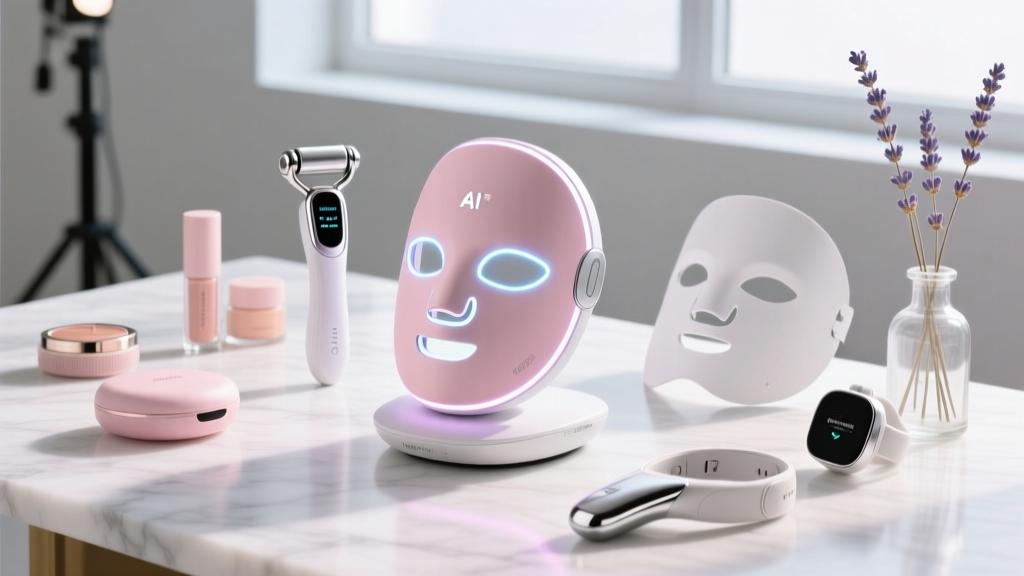
The landscape of at-home skincare technology has matured significantly. Gone are the days of novelty vibrating rollers and unverified ion-cleansers. In 2026, the most effective beauty gadgets are defined by their clinical utility, FDA clearances, and ability to solve specific dermatological problems. According to the U.S. Food and Drug Administration, the market has seen a surge in Class II medical device clearances for at-home light therapy and microcurrent systems, bridging the gap between med-spa treatments and daily routines.
However, a high price tag does not guarantee results. The primary point of failure for most consumers is a mismatch between the device's mechanism of action and their specific skin pathology, compounded by poor adherence to usage protocols. This guide cuts through the marketing noise to present practical, problem-solving beauty gadgets, complete with exact specifications, real-world pricing, and the hidden failure modes that brands rarely disclose.
Problem 1: Hormonal Breakouts & Cystic Acne
The Pick: CurrentBody Skin LED Face Mask & Solawave Bye Acne
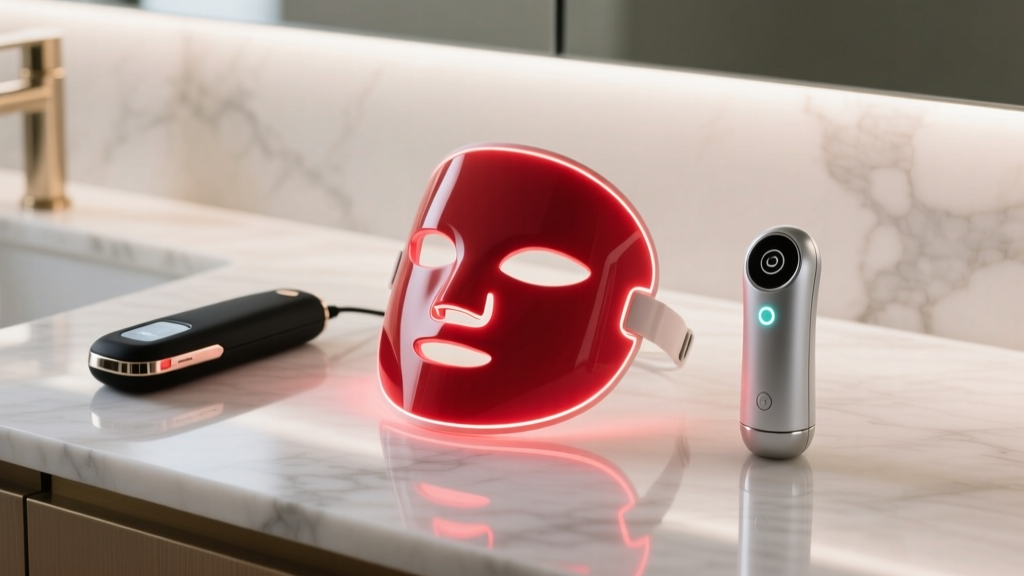
For adult hormonal acne, topical treatments often fail to penetrate deeply enough to target the Cutibacterium acnes bacteria residing in the sebaceous glands. LED light therapy offers a non-invasive solution, but wavelength precision is non-negotiable. Research published in the Journal of Clinical and Aesthetic Dermatology confirms that blue light at exactly 415nm is required to destroy acne-causing bacteria, while 633nm red light reduces the associated inflammation.
- CurrentBody Skin LED Face Mask ($419): Delivers precise 415nm and 633nm wavelengths. It requires a 10-minute daily commitment. Failure Mode: Users often apply thick moisturizers or fail to double-cleanse before use. Sebum and heavy creams create a physical barrier that scatters the 415nm light, reducing bacterial eradication by up to 40%.
- Solawave Bye Acne ($119): A targeted, handheld 415nm blue light device for spot treatment. It operates in 3-minute intervals. Edge Case: It is ineffective on closed comedones (whiteheads) because the light cannot penetrate the keratin plug. It is strictly for active, inflamed papules.
Problem 2: Tech-Neck & Jawline Laxity
The Pick: NuFACE Trinity+ with Smart App Integration
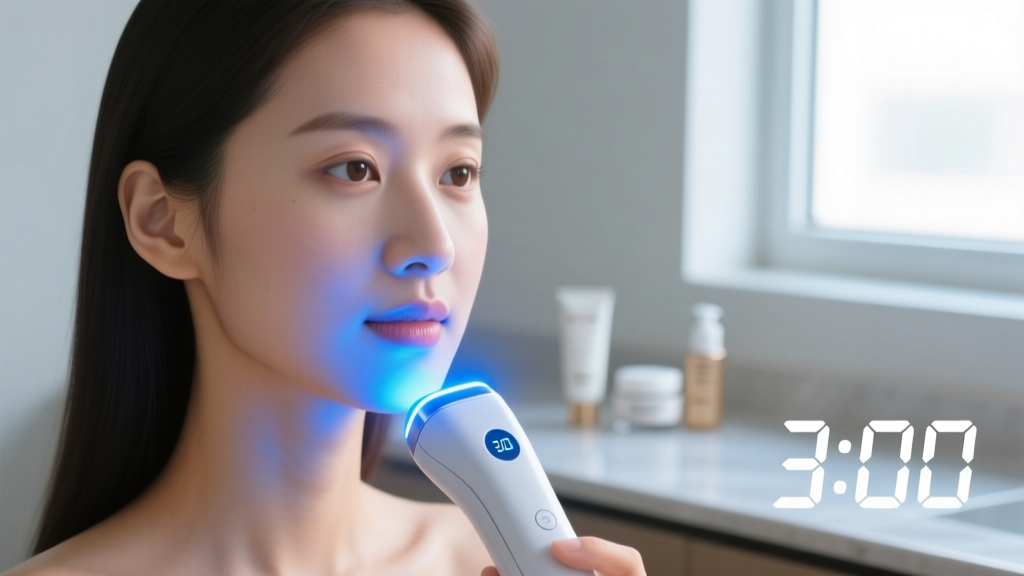
'Tech-neck'—the premature sagging and horizontal creasing caused by looking down at mobile devices—has become a primary concern for women in their 30s and 40s. Microcurrent devices stimulate ATP (adenosine triphosphate) production in facial muscles, essentially providing a workout for the platysma and masseter muscles.
The NuFACE Trinity+ ($395) remains the gold standard, outputting up to 335 microamps of current. The 2026 model features '3-Depth' technology, allowing users to toggle between superficial skin toning and deeper muscle contraction. However, the practical reality of microcurrent involves hidden maintenance costs and strict usage parameters.
Expert Insight: The number one reason users return microcurrent devices is 'lack of results.' In 90% of these cases, the user has allowed the conductive gel to dry out during the 5-minute routine. Once the gel dries, electrical resistance spikes, the current fails to reach the muscle belly, and the user experiences uncomfortable micro-sparks on the epidermis instead of muscle contraction. Budget an extra $30 every two months for the NuFACE Hydrating Aqua Gel to maintain conductivity.
Comparison Matrix: Investment vs. Clinical Yield
| Device Model | Target Issue | Core Technology | Price Range | Daily Time | Primary Failure Risk |
|---|---|---|---|---|---|
| CurrentBody LED Mask | Acne & Collagen Loss | 415nm / 633nm LED | $419 | 10 mins | Light scattering from unwashed sebum |
| NuFACE Trinity+ | Jawline Laxity / Tech-Neck | Microcurrent (335µA) | $395 | 5 mins | Dry conductive gel causing resistance |
| FOREO UFO 3 | Dullness & Barrier Repair | Thermo/Cryo + T-Sonic | $279 | 2 mins | Using incompatible thick creams |
Problem 3: Dullness & Compromised Skin Barrier
The Pick: FOREO UFO 3 LED Power Mask
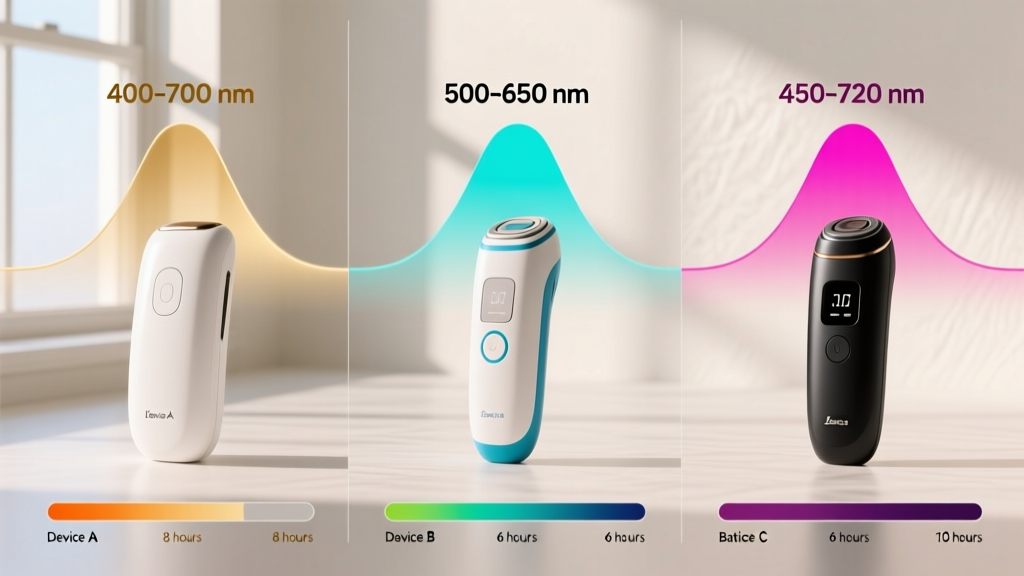
Chemical exfoliants and retinoids can compromise the stratum corneum, leading to transepidermal water loss (TEWL) and chronic dullness. The FOREO UFO 3 ($279) solves this by utilizing rapid thermotherapy (heating up to 52°C / 125°F) to dilate pores and enhance serum absorption, followed by cryotherapy (cooling to 5°C / 41°F) to constrict capillaries and reduce erythema (redness).
Combined with 10,000 T-Sonic pulsations per minute, it forces hydrating ingredients into the epidermis without the need for aggressive physical scrubbing. Practical Tip: Do not use this device with heavy, occlusive ointments like Aquaphor or Vaseline. The T-Sonic waves cannot effectively oscillate through high-viscosity lipids. Stick to low-viscosity, water-based activating serums or the proprietary UFO-Activated masks for optimal sonophoresis.
Practical Decision Framework: Choosing Your Device
Before investing in high-ticket beauty gadgets, run your skin concerns through this three-step diagnostic framework:
- Identify the Tissue Depth: Is your problem epidermal (dullness, surface dryness) or dermal/muscular (sagging, deep cystic acne)? Epidermal issues require sonophoresis or superficial LED; deeper issues require microcurrent or targeted 415nm light.
- Audit Your Time Compliance: If you cannot commit to 10 uninterrupted minutes daily, do not buy an LED mask. Opt for the 90-second FOREO UFO or the 3-minute Solawave spot treatment instead. Consistency always beats clinical intensity.
- Calculate the Total Cost of Ownership (TCO): Factor in the mandatory consumables. A $395 microcurrent device actually costs closer to $575 over two years when you include the necessary conductive gels and replacement heads.
Frequently Asked Questions
Can I use LED light therapy and microcurrent on the same day?
Yes, but sequence matters. Always perform LED light therapy on a clean, bare face first. Follow up with your conductive gel and microcurrent routine. Applying the conductive gel before LED therapy will block the light wavelengths and render the LED treatment useless.
Are at-home beauty gadgets safe for pregnant women?
While LED light therapy is generally considered safe during pregnancy as it does not emit UV radiation, microcurrent devices are strictly contraindicated. The electrical stimulation has not been tested for fetal safety, and manufacturers universally advise against using devices like NuFACE during pregnancy or if you have a pacemaker.
How long until I see structural changes from microcurrent?
Unlike Botox, which paralyzes muscle instantly, microcurrent builds muscle tone cumulatively. Clinical data suggests visible lifting in the jawline and brow area requires 5 sessions per week for the first 60 days, followed by a maintenance schedule of 2-3 times per week. Expect a 12% to 15% improvement in muscle contouring after 8 weeks of strict compliance.
Written by
Nina PetrovaNina Petrova holds a Master's degree in Child Development from the Erikson Institute and a B.S. in Nursing from the University of Illinois at Chicago. She worked as a pediatric nurse for 6 years before transitioning to family technology consulting, bringing clinical rigor to her evaluations of kid-friendly gadgets, educational toys, and parental control software. Nina has reviewed over 400 children's tech products, testing each for safety compliance (CPSC and ASTM standards), developmental appropriateness across age groups, screen-time impact, and data privacy practices. She serves on the Children's Technology Review advisory board and has testified before the FTC on children's data protection in connected toys. Her reviews are trusted by parents and educators alike for their evidence-based approach to balancing technology benefits with child safety.