Is a Rechargeable Probe the Ultimate Cool Kitchen Gadget for Eco-Chefs
Discover why a USB-C rechargeable meat probe is the ultimate cool kitchen gadget for eco-chefs. Compare sustainable thermometers and zero-waste timers.
The Hidden E-Waste Problem in Your Utensil Drawer
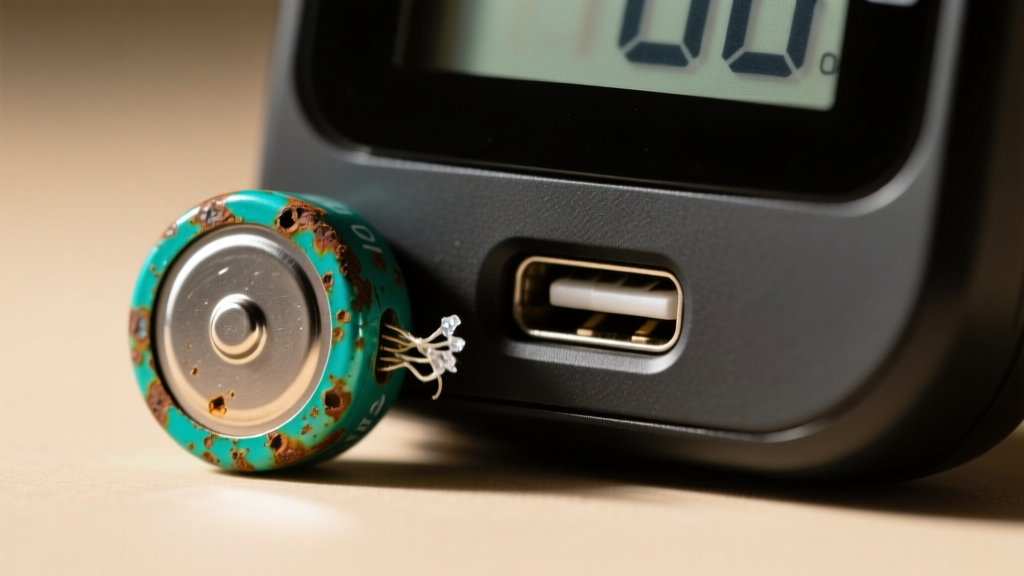
When evaluating culinary tools, home cooks rarely consider the end-of-life environmental impact of their equipment. Yet, the average kitchen drawer is a graveyard of disposable battery waste. Traditional digital thermometers and electronic timers predominantly rely on CR2032 lithium coin cells or LR44 alkaline button batteries. According to the U.S. Environmental Protection Agency, billions of batteries are discarded annually, with button cells representing a disproportionately high toxic risk due to their mixed heavy-metal chemistries and low recycling rates.
When a cheap $15 digital timer dies, the entire unit is often thrown into the trash because the cost of replacing the battery and the difficulty of prying open glued-together plastic housings outweigh the value of the device. If you are actively trying to reduce your household's carbon footprint, finding a genuinely sustainable, cool kitchen gadget requires looking past the marketing and examining the power architecture and material longevity of the tool.
Defining the Sustainable Kitchen Gadget
A truly eco-friendly thermometer or timer must meet three strict criteria to qualify as a sustainable upgrade:
- Power Architecture: Must eliminate single-use alkaline or lithium coin cells in favor of USB-C rechargeable lithium-ion cells, kinetic mechanical energy, or thermoelectric harvesting.
- Material Longevity: Must feature high-grade metallurgy (e.g., 304 stainless steel, solid brass) that resists kitchen humidity and acidic degradation, ensuring a 10+ year lifespan.
- Repairability: Must avoid ultrasonic welding or heavy adhesives, allowing for battery or component replacement rather than total device disposal.
A standard CR2032 battery contains roughly 0.1 grams of lithium and trace amounts of manganese dioxide. While seemingly small, the sheer volume of discarded culinary gadgets means thousands of tons of these cells end up in landfills each year, where the casing corrodes and leaches electrolytes into the soil. Upgrading to a single USB-C rechargeable gadget eliminates the need for approximately 500 disposable batteries over the device's lifecycle.
Top Eco-Conscious Temperature & Timing Gadgets Reviewed
As of 2026, the market has finally shifted toward sustainable power solutions for precision cooking tools. Here are the top-performing, eco-friendly thermometers and timers that prove sustainability does not require sacrificing accuracy.
1. The USB-C Rechargeable Standard: ThermoWorks ThermoPop 2
Priced at $35, the ThermoPop 2 is a masterclass in sustainable gadget design. Unlike its predecessor or cheaper competitors that demand AAA batteries, the ThermoPop 2 utilizes an integrated lithium-ion battery charged via a universal USB-C port. It delivers a blistering 2-second read time and an accuracy of ±0.5°F (±0.3°C). By integrating a high-capacity rechargeable cell, ThermoWorks ensures this tool will survive hundreds of charge cycles, effectively removing dozens of alkaline batteries from the waste stream over a decade of use. The 304-grade stainless steel probe is fully waterproof (IP67), preventing internal circuit corrosion—the primary killer of kitchen electronics.
2. The Zero-Electricity Timer: Norpro Brass Mechanical Wind-Up
Electronic timers require microchips, LCD screens, and batteries. The Norpro Brass Mechanical Timer ($22) strips away the e-waste entirely, relying on a precision spring-wound escapement mechanism. Crafted from solid brass—an alloy of copper and zinc that naturally resists the humid, corrosive environment of a busy kitchen—this timer requires zero electricity. The tactile feedback and acoustic ring of a mechanical bell provide a sensory experience that digital beeps cannot match, while guaranteeing a 100% zero-emission operational footprint.
3. The Bluetooth Efficiency King: MEATER Plus
At $130, the MEATER Plus is a premium investment that solves the transmitter battery problem. Traditional wireless probes require users to replace AAA batteries in the base station. The MEATER Plus utilizes an inductive charging dock that not only stores the probe but wirelessly charges its internal micro-cell using the dock's own high-capacity lithium battery. Furthermore, the USDA recommends precise internal temperature tracking to prevent both foodborne illness and the overcooking that leads to food waste. By ensuring perfect edge-to-edge cooking on expensive proteins, the MEATER Plus indirectly reduces household food waste, a massive contributor to greenhouse gas emissions.
| Device | Power Source | E-Waste Impact | Price |
|---|---|---|---|
| ThermoWorks ThermoPop 2 | USB-C Rechargeable Li-ion | Very Low (500+ cycles) | $35 |
| Norpro Brass Timer | Kinetic (Spring-Wound) | Zero | $22 |
| MEATER Plus | Inductive Dock Charging | Low (Reduces food waste) | $130 |

Thermoelectric Harvesting: The Next Frontier
The most exciting development in sustainable culinary tech is the application of the Seebeck effect to meat probes. Thermoelectric generators (TEGs) utilize Bismuth telluride (Bi2Te3) thermocouples to convert temperature differentials directly into electrical voltage.
In a kitchen scenario, a probe inserted into a 165°F (74°C) roasting chicken while the ambient kitchen air sits at 72°F (22°C) creates a Delta T of nearly 100 degrees. Next-generation prototype probes are beginning to harvest this exact thermal gradient to generate the microwatts of power required to run low-energy Bluetooth transmitters. This means the heat of the food itself powers the gadget, achieving true energy autonomy and eliminating the need for charging cables or batteries entirely. While commercial availability of fully thermoelectric consumer probes is still scaling, it represents the holy grail of sustainable kitchen electronics.
End-of-Life Protocol: Recycling Old Gadgets
Upgrading to a sustainable gadget means you must responsibly dispose of your old, battery-dependent tools. Never throw a digital thermometer with a corroded battery compartment into standard municipal trash.
- Extract the Battery: Use a precision jeweler's screwdriver to open the battery compartment. If the battery is corroded, wear nitrile gloves and neutralize alkaline leakage with a cotton swab dipped in white vinegar.
- Separate Components: Separate the lithium/alkaline battery from the plastic housing and the stainless steel probe.
- Locate a Drop-Off: Use the Call2Recycle locator tool to find a nearby retail drop-off (often found at hardware or electronics stores) that accepts both household batteries and e-waste circuit boards.
Frequently Asked Questions
Are mechanical timers as accurate as digital ones for baking?
Mechanical wind-up timers typically have a variance of ±15 seconds over a 10-minute period due to the physical tolerances of the spring escapement. For long braises or roasting, this is negligible. However, for precision baking (like tempering chocolate or making macarons) where exact seconds matter, a USB-C rechargeable digital timer remains the superior choice.
Can I put a USB-C rechargeable thermometer in the dishwasher?
No. While the stainless steel probe of high-end models like the ThermoPop 2 is IP67 waterproof and can be washed under running tap water with dish soap, the extreme heat and harsh detergents of a dishwasher cycle will degrade the silicone gaskets sealing the USB-C port, leading to moisture intrusion and battery failure.
How do I maintain a brass mechanical timer to prevent tarnishing?
Brass naturally develops a patina when exposed to oxygen and kitchen humidity. If you prefer a high-polish finish, rub the timer monthly with a paste made of equal parts white vinegar, salt, and flour. Rinse with warm water and dry immediately with a microfiber cloth to prevent water spots.
Written by
Emma LarssonEmma Larsson holds an M.A. in International Relations from Sciences Po Paris and a B.A. in Communications from Stockholm University. A digital nomad since 2017, she has worked from over 45 countries across six continents, building deep expertise in portable power solutions, travel routers, compact computing, and connectivity gadgets that survive international travel. Emma is a certified member of the Travel Technology Association and has advised three travel gear startups on product-market fit for remote workers. Her reviews evaluate products against real travel scenarios — TSA compliance, voltage compatibility across 200+ countries, durability through 50+ checked bag cycles, and battery life under airplane mode vs. active use. She has been featured in Condé Nast Traveler's "Tech-Savvy Traveler" series and speaks at Remote Work Summit events.