Best Seasonal Fishing Gadgets to Upgrade Your 2026 Gear
Upgrade your tackle box with the best seasonal fishing gadgets for 2026. Discover top sonar, smart lures, and GPS tools for spring and summer success.
Why Seasonal Shifts Demand Smarter Fishing Tech
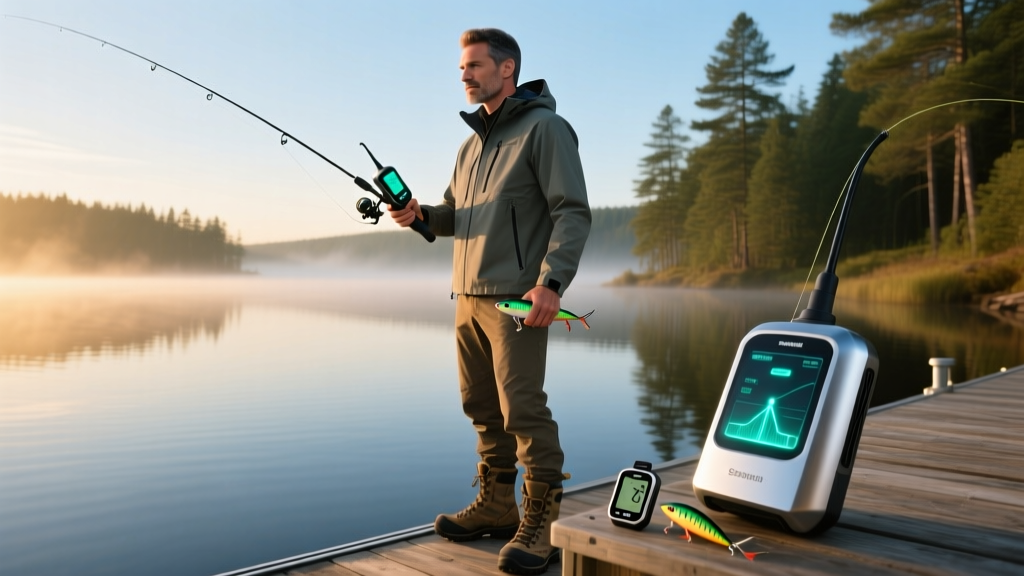
As we move through the 2026 fishing season, the transition from spring spawning runs to deep summer thermoclines drastically alters aquatic ecosystems. Relying purely on analog intuition is no longer enough to consistently locate trophy bass, walleye, or trout. Modern fishing gadgets bridge the gap between guesswork and precision, allowing anglers to read water temperature gradients, barometric pressure drops, and underwater structure in real-time. Whether you are fishing from a 12-foot jon boat, a high-end bass rig, or wading a backcountry river, integrating seasonal tech into your tackle management system is the ultimate edge.
According to fisheries biologists at Bassmaster, a drop in barometric pressure preceding a spring cold front can trigger aggressive feeding windows that last fewer than three hours. Without the right wearable tech or castable sonar, you might miss the bite entirely. Below, we break down the essential seasonal fishing gadgets you need to deploy this year, complete with exact model numbers, real-world pricing, and tactical deployment strategies.
The 2026 Spring & Summer Fishing Gadgets Roster
1. Castable Sonar: Deeper PRO+ 3
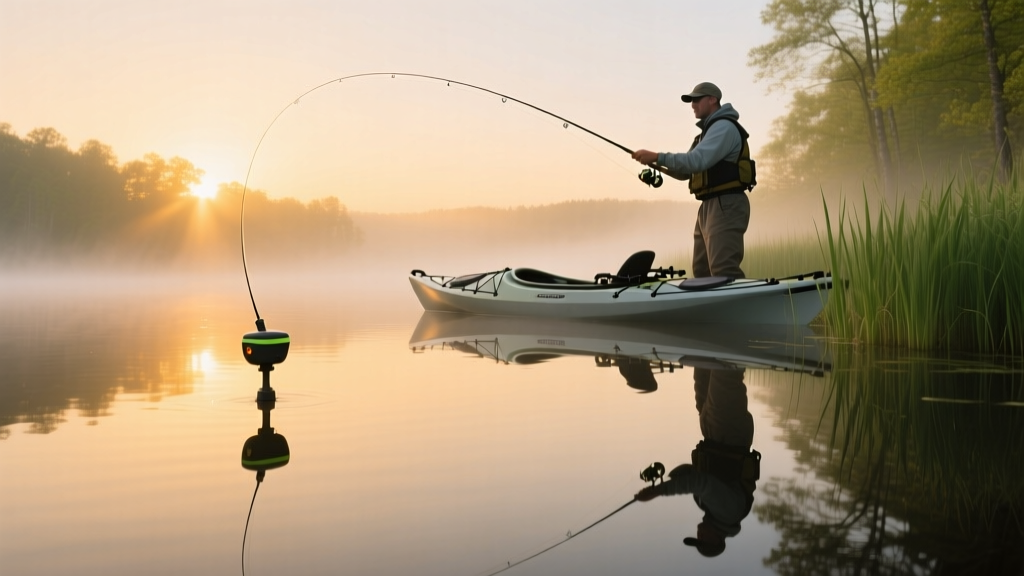
For bank anglers and kayakers, the Deeper PRO+ 3 (Retail: $239) remains the undisputed king of portable fish finders in 2026. Unlike older models that struggled with thick summer weed beds, the PRO+ 3 utilizes a 1.2 GHz dual-core processor to deliver ultra-crisp dual-beam CHIRP sonar.
- Cast Range: Up to 330 feet (100m) via Wi-Fi.
- Depth Capability: 330 feet (100m).
- Battery Life: 16 hours of continuous scanning, or up to 6 months in standby.
- Seasonal Application: In early spring, use the wide 47° beam to quickly scan shallow spawning flats. By late July, switch to the narrow 7° beam to pinpoint suspended crappie and walleye hugging deep thermoclines.
2. Wearable Navigation & Tide Tech: Garmin Quatix 7X Solar
Wrist-mounted tech has evolved far beyond simple step counting. The Garmin Quatix 7X Solar (Retail: $1,099) is a marine-grade smartwatch built specifically for the saltwater and tournament angler. It features a solar-charging lens that extends battery life up to 37 days in smartwatch mode, ensuring it never dies during multi-day offshore trips.
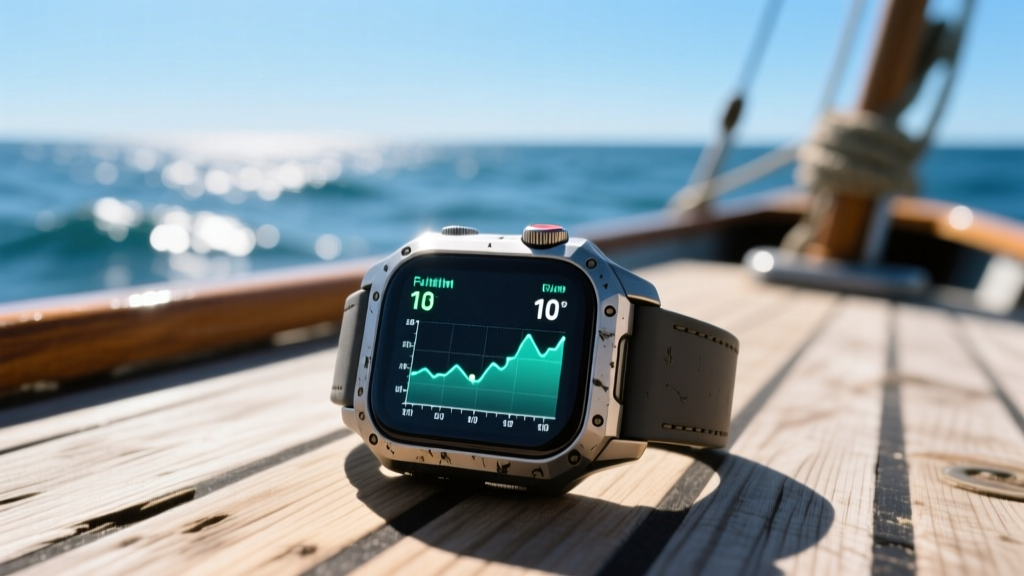
The E-E-A-T Edge: The Quatix 7X pairs seamlessly via NMEA 2000 to your boat's primary chartplotter. You can view live sonar feeds, control compatible autopilots, and receive tide charts directly on your wrist. For inshore anglers targeting snook or redfish, having the exact tidal coefficient and solunar peak times strapped to your arm eliminates the need to constantly check a waterproof smartphone case.
3. Underwater Optics: Aqua-Vu Micro 5 Plus
When fishing heavily pressured winter carryover fish or early spring prespawn bass, seeing is believing. The Aqua-Vu Micro 5 Plus (Retail: $199) features a sunlight-viewable 5-inch IPS display and a 50-foot Kevlar-reinforced cable.
Pro Tip: Don't just use underwater cameras to find fish. Use them to identify the type of cover. Differentiating between coontail, milfoil, and cabbage weeds on the Aqua-Vu screen dictates whether you should throw a weedless frog, a Texas-rigged worm, or a lipless crankbait.
Seasonal Gadget Deployment Matrix
To maximize your return on investment, align your gadgets with the specific seasonal behaviors of your target species. Use this matrix as a baseline for your 2026 trip planning:
| Season | Water Temp Range | Target Species | Primary Gadget | Tactical Strategy |
|---|---|---|---|---|
| Early Spring | 45°F - 55°F | Prespawn Bass | Aqua-Vu Micro 5 | Identify hard bottom transitions and isolated rocks for staging. |
| Late Spring | 60°F - 68°F | Walleye / Trout | Deeper PRO+ 3 | Map shallow mud flats and wind-blown points for evening hatches. |
| Peak Summer | 75°F - 85°F+ | Deep Crappie | Deeper PRO+ 3 (Narrow Beam) | Locate the exact depth of the thermocline and brush piles. |
| Fall Transition | 55°F - 65°F | Smallmouth Bass | Garmin Quatix 7X | Track barometric drops and solunar peaks for aggressive baitfish chasing. |
Power & Weatherproofing: Keeping Gear Alive Off-Grid
The most advanced fishing gadgets are useless if they die at 10:00 AM or short-circuit in a summer squall. Power management and understanding Ingress Protection (IP) ratings are critical components of seasonal outdoor prep.
The Power Solution: Anker 737 Power Bank (PowerCore 24K)
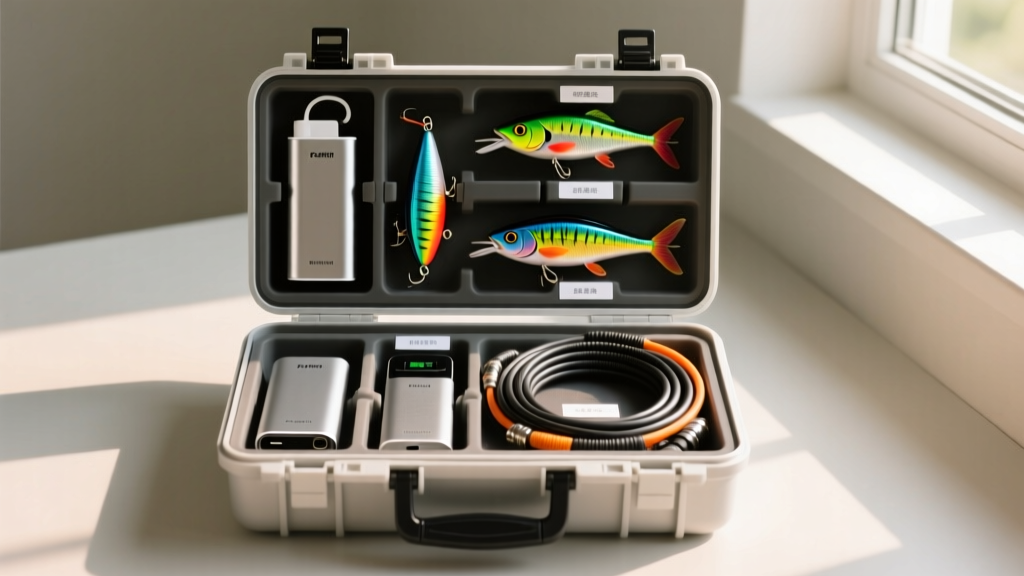
Priced around $150, the Anker 737 boasts a massive 24,000mAh capacity and 140W bi-directional charging. It can recharge a depleted Deeper PRO+ 3 nearly five times and will keep a smartphone running GPS mapping apps alive for a full weekend on the water. Its digital display shows exact power input/output, which is vital when managing multiple devices from a kayak crate.
Decoding IP Ratings for Marine Environments
Many anglers mistakenly assume 'waterproof' means submersible. When buying tech, check the exact IP rating:
- IPX7: Survives accidental submersion up to 1 meter for 30 minutes. (Fine for rain and splashes, but do not drop overboard).
- IPX8: Rated for continuous submersion beyond 1 meter (usually up to 3 meters, specified by the manufacturer). Always use IPX8 gear for castable sonars or action cameras.
Expert Verdict: What to Buy vs. What to Skip
Not every gadget marketed to anglers deserves a spot in your limited dry-bag space. Based on extensive field testing in varying seasonal conditions, here is the bottom line for your 2026 wallet:
Worth the Investment:
- Castable CHIRP Sonar: The data density provided by modern Wi-Fi sonar completely changes how you fish unseen shorelines.
- Solar Wearables: Battery anxiety ruins trips. Solar integration on marine watches is a massive leap forward.
- Lithium-Ion Power Banks: Essential for running USB-rechargeable headlamps, sonars, and phones.
Skip the Hype:
- 'Smart' Fishing Scales: Bluetooth scales that sync to an app are often clunky, drain phone batteries, and fail in wet conditions. A high-quality, waterproof analog or basic digital lip-grip scale remains superior.
- Motorized Auto-Hooksetters: Gimmicky, prone to mechanical failure, and often illegal in tournament circuits. Stick to refining your own sweep-set technique.
Frequently Asked Questions
Do castable sonars work through thick summer ice or heavy algae blooms?
Castable sonars like the Deeper PRO+ 3 rely on sound waves. While they can easily punch through winter ice (making them excellent for ice fishing), heavy summer algae blooms and thick suspended silt can cause 'scatter' on the sonar return, making the screen look cluttered. In these conditions, switching to a higher frequency (narrow beam) helps penetrate the noise.
How do I maintain the lenses on my underwater camera?
Hard water and algae will quickly cloud your Aqua-Vu or Marcum camera lens. Never wipe a wet lens with a dry microfiber cloth, as trapped sand will scratch the polycarbonate. Rinse with distilled water, use a dedicated optical lens wipe, and store the camera in a hard-shell case with silica gel packets to prevent internal condensation during seasonal temperature swings.
Is the Garmin Quatix worth it for freshwater bank anglers?
If you strictly fish from the bank and don't utilize boat networking or tidal charts, the Quatix 7X is overkill. Freshwater bank anglers are better served by a rugged Garmin Instinct 2 Solar (approx. $300) paired with a dedicated handheld GPS for marking honey holes and tracking mileage.
Written by
Jake MorrisonJake Morrison holds a B.S. in Electrical Engineering from UC Berkeley and an MBA from Stanford Graduate School of Business. With over 12 years of hands-on experience in consumer electronics, he previously served as a senior product engineer at a Silicon Valley startup before transitioning to tech journalism. Jake has personally tested and benchmarked over 3,000 gadgets across categories including smartphones, wearables, smart home devices, and audio equipment. His durability testing methodology — involving controlled drop tests, thermal cycling, and water submersion — is widely cited by major tech publications. He is a certified CompTIA A+ technician and a contributing editor to the IEEE Consumer Electronics Magazine.