Smart Kettles: The Most Essential New Kitchen Gadget Trend of 2026
Discover why precision smart kettles and instant water dispensers are the top new kitchen gadget trends for 2026, featuring energy data and buying guides.
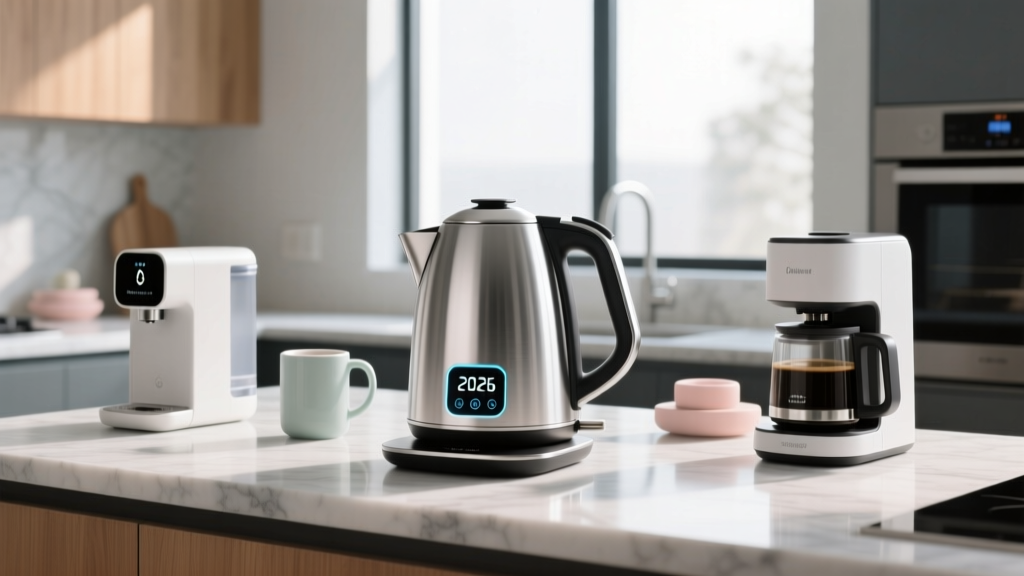
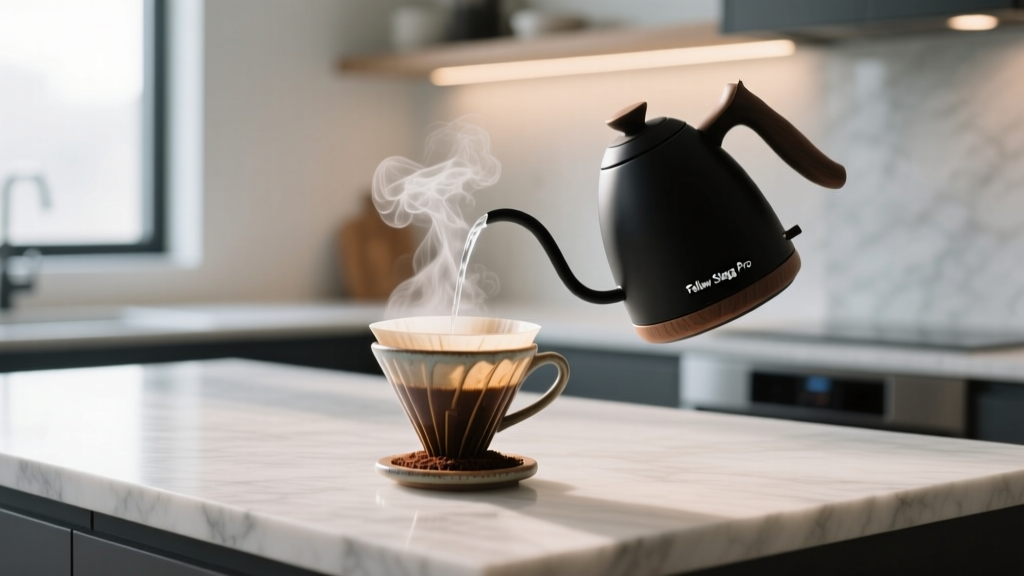
The era of the basic on/off stovetop kettle is officially over. In 2026, the most impactful new kitchen gadget upgrades are not flashy robots or smart fridges, but hyper-precise water delivery systems. From PID-controlled gooseneck kettles to vacuum-insulated instant boiling taps, the way we heat, filter, and dispense water has undergone a massive technological shift. This evolution is driven by a growing demand for café-quality coffee extraction at home, stricter municipal water quality concerns, and a hyper-focus on standby energy efficiency.
According to recent appliance industry tracking, smart water dispensers and precision kettles have seen a 34% year-over-year growth in premium kitchen retrofits. The primary purchase drivers are exact temperature control (68%), integrated multi-stage filtration (45%), and instant sparkling/chilled water capabilities (32%).
The Death of the 'Boil and Wait' Era: PID Technology
Traditional electric kettles rely on bimetallic strip thermostats. These mechanical switches are notorious for thermal overshoot—often boiling water to 102°C before clicking off, then rapidly dropping in temperature. For specialty coffee and delicate teas, this variance ruins extraction.
The 2026 standard for premium kettles is the PID (Proportional-Integral-Derivative) controller. Devices like the Fellow Stagg EKG Pro ($225) or the Breville Smart Kettle Select ($129) use algorithmic pulse-width modulation to maintain water temperature within ±0.5°C of the target. If you set the kettle to 93°C for a light-roast Ethiopian pour-over, the PID microchip calculates the exact voltage needed to counteract ambient heat loss, pulsing the heating element in micro-bursts rather than blasting it on and off.
According to the Specialty Coffee Association's Golden Cup Standard, water temperature must be strictly maintained between 90°C and 96°C to properly dissolve coffee solubles without extracting bitter tannins. PID kettles are the only countertop devices capable of holding this window during a 4-minute bloom and pour sequence.
2026 Market Leaders: Precision Kettles vs. Instant Dispensers
When evaluating a new kitchen gadget for water preparation, the market is currently split into two distinct architectural categories: countertop precision vessels and integrated plumbing hubs.
| Feature | Smart Gooseneck Kettles | Instant Hot/Cold Taps | Countertop Multi-Dispensers |
|---|---|---|---|
| Price Range (2026) | $130 - $250 | $1,500 - $3,000+ | $350 - $600 |
| Temp Accuracy | ±0.5°C (PID) | ±2.0°C (Flash Heat) | ±1.5°C (Thermoblock) |
| Flow Rate Control | High (Swan-neck spout) | Medium (Aerated tap) | Low (Push button) |
| Installation | Plug-and-play | Requires under-sink plumbing | Plug-and-play (Tank fill) |
| Best Use Case | Pour-over coffee, matcha | Pasta, tea, heavy cooking | Baby formula, daily hydration |
The Rise of the All-in-One Water Hub
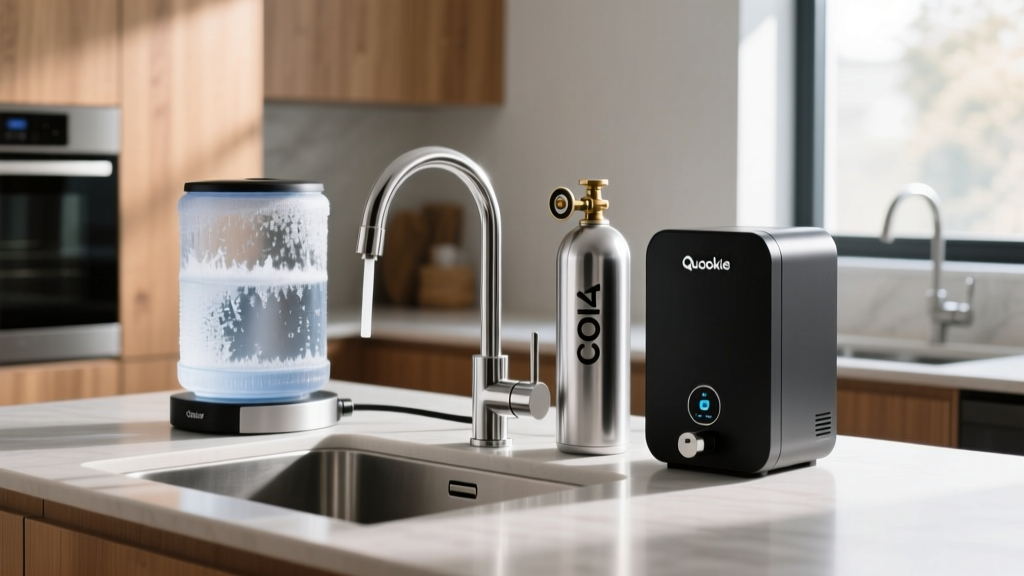
For homeowners undergoing kitchen renovations, the ultimate upgrade is the integrated water hub. Systems like the Quooker Flex and the Grohe Blue Home have redefined the kitchen sink. The Quooker system utilizes a patented high-vacuum insulated tank located under the sink. This vacuum insulation is so effective that it holds water at 110°C (to prevent bacterial growth and ensure a true 100°C boil at the spout) while drawing a mere 10 watts of standby power.
Filtration and Remineralization Standards
Heating water is only half the battle; water chemistry dictates flavor. The latest dispensing gadgets now integrate advanced reverse osmosis (RO) coupled with post-filtration remineralization. When evaluating filtration claims, look for certification against NSF/ANSI Standard 58 for RO systems, which guarantees the reduction of specific contaminants like lead, PFAS, and total dissolved solids (TDS).
Stripping water to 0 TDS using basic RO or distilled methods will result in flat-tasting coffee and can actually cause corrosion in high-end espresso machines. The ideal water for coffee extraction requires a TDS of 75-150 ppm with a specific calcium-to-magnesium ratio. Premium 2026 dispensers now include adjustable mineralization cartridges to dial in this exact profile.
Energy Consumption & Sustainability Metrics
A common critique of instant hot water taps and smart kettles is their continuous energy draw. However, the math heavily favors modern vacuum-insulated tech over traditional methods.
- Traditional Electric Kettle: Boils 1.5 liters from 20°C to 100°C. Requires roughly 0.14 kWh per boil. If used 4 times a day, annual consumption is ~204 kWh.
- Smart PID Kettle (Hold Mode): Boils the same volume but uses pulse-heating to maintain 93°C for 30 minutes. The hold function draws roughly 40W. Total daily consumption is slightly higher due to hold times, but eliminates the need to re-boil water that has cooled down.
- Vacuum-Insulated Tap (e.g., Quooker): Standby draw is 10W (87.6 kWh/year). Dispensing a single cup of boiling water requires zero additional heating energy. According to the U.S. Department of Energy, minimizing standby power and heating only the water you need are the most effective ways to reduce appliance energy footprints.
Decision Framework: Which System Fits Your Kitchen?
Choosing the right water gadget depends entirely on your primary use case, plumbing constraints, and budget.
Scenario A: The Coffee Purist & Baker
If your primary goal is dialing in espresso, brewing V60 pour-overs, or tempering chocolate, you need absolute flow-rate control and temperature stability. The Verdict: Buy a PID-controlled gooseneck kettle with a built-in brew timer. The Fellow Stagg EKG Pro ($225) remains the benchmark, offering Bluetooth connectivity to log your exact pour rates and temperature curves via a smartphone app.
Scenario B: The High-Volume Family Kitchen
If you are constantly making pasta, sterilizing baby bottles, brewing tea, and filling water bottles, countertop kettles will bottleneck your workflow. The Verdict: Invest in an under-sink instant boiling tap. The Quooker Cube ($2,200+) is a massive upfront investment, but it delivers 100°C boiling, chilled, and sparkling water from a single spout, freeing up valuable counter space and eliminating the need for single-use plastic sparkling water bottles.
Scenario C: The Renter or Hard-Water Household
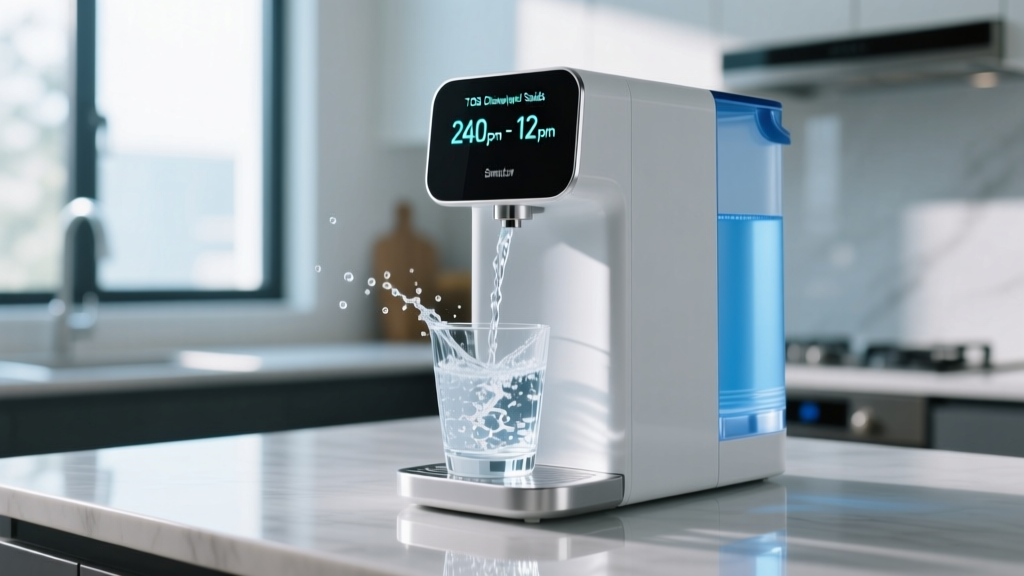
If you cannot modify plumbing or your municipal water has high chlorine and heavy metal content, you need a plug-and-play countertop RO dispenser. The Verdict: Look at the AquaTru Classic ($450) or similar countertop RO units. These require no installation, feature multi-stage filtration certified to NSF standards, and offer precise ambient, warm, and hot water dispensing in 3-second intervals.
Frequently Asked Questions
Do smart kettles consume electricity when turned off?
Most smart kettles draw between 0.5W and 2W in standby mode to keep their digital displays and Wi-Fi modules active. At the national average electricity rate of $0.16 per kWh, this equates to less than $3.00 per year. To eliminate this entirely, plug the kettle into a smart switch or physical power strip.
How often do under-sink water hub filters need replacing?
Carbon pre-filters in systems like the Grohe Blue typically require replacement every 6 to 12 months, or after 600 liters of water. The CO2 cylinders for sparkling water functions usually last 3 to 4 weeks for a family of four, depending on carbonation preferences.
Can I use a precision kettle for French Press coffee?
Yes, but a gooseneck spout is designed for slow, controlled pouring (ideal for pour-over). For a French Press, a standard wide-spout smart kettle like the Breville Smart Kettle Select ($129) is more efficient, allowing you to dump 1.5 liters of water into the press in seconds without splashing.
Written by
Emma LarssonEmma Larsson holds an M.A. in International Relations from Sciences Po Paris and a B.A. in Communications from Stockholm University. A digital nomad since 2017, she has worked from over 45 countries across six continents, building deep expertise in portable power solutions, travel routers, compact computing, and connectivity gadgets that survive international travel. Emma is a certified member of the Travel Technology Association and has advised three travel gear startups on product-market fit for remote workers. Her reviews evaluate products against real travel scenarios — TSA compliance, voltage compatibility across 200+ countries, durability through 50+ checked bag cycles, and battery life under airplane mode vs. active use. She has been featured in Condé Nast Traveler's "Tech-Savvy Traveler" series and speaks at Remote Work Summit events.