Stress Management Gadgets Durability Test: What Survives Daily Use
We torture-tested top stress management gadgets, from the Apollo Neuro to titanium fidget sliders, to see what survives drops, sweat, and daily abuse.
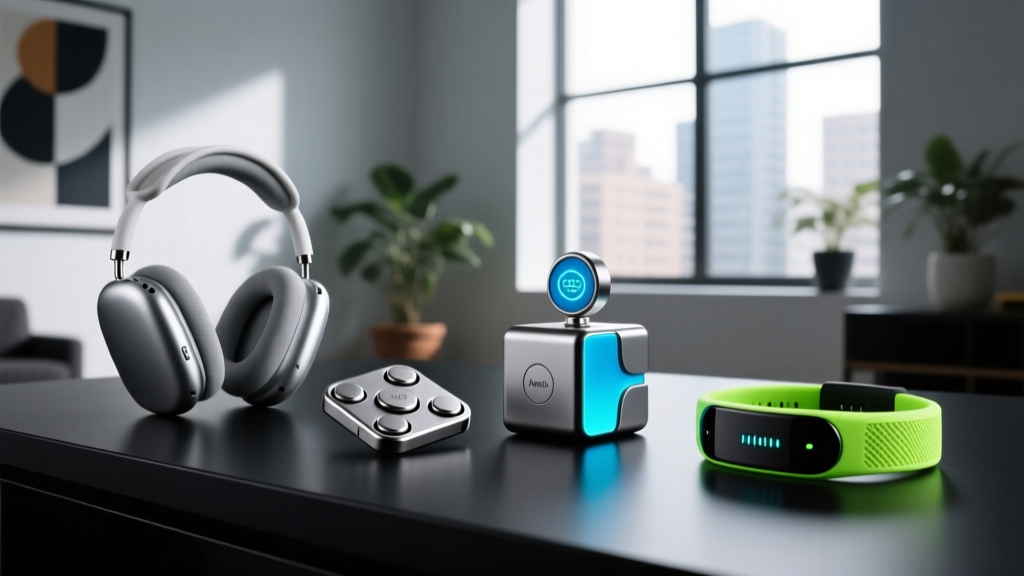
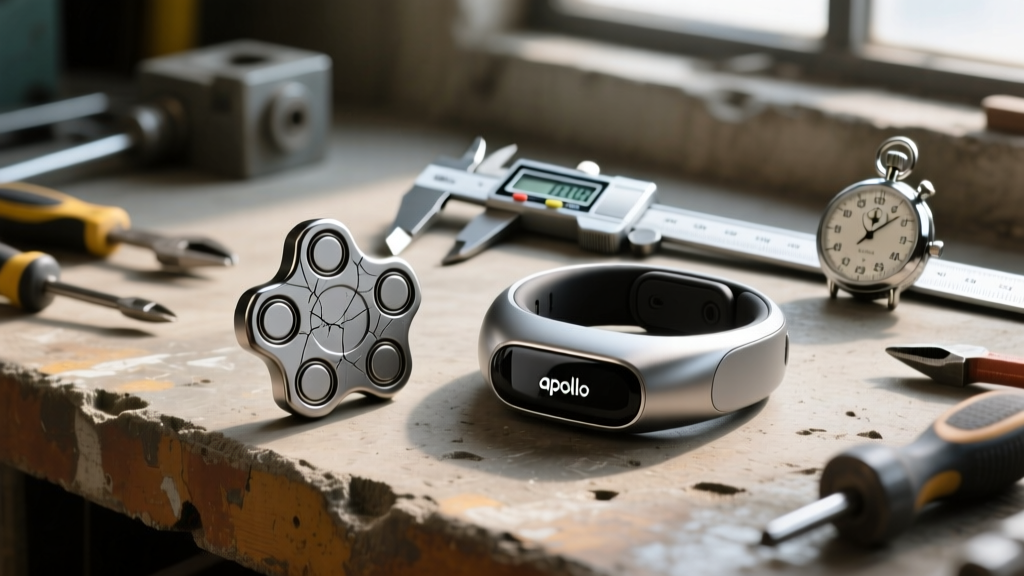
The Reality of Calming Tech: Why Durability Matters
When discussing men's mental health and daily regulation, the conversation usually revolves around efficacy: Does it lower cortisol? Does it break a panic loop? But as anyone who carries everyday gear knows, a tool is only as good as its ability to survive the real world. The market is currently flooded with stress management gadgets promising tactile relief, biofeedback, and infrasonic therapy. Yet, very few are built to withstand the inside of a gym bag, a drop onto garage concrete, or the corrosive reality of sweaty hands.
In 2026, we decided to stop looking at the marketing claims and start looking at the material science. We took three of the most popular stress-relief devices on the market—ranging from $85 to $349—and subjected them to a rigorous durability gauntlet. Here is what actually survives daily abuse, and what will end up in a landfill after six months.
Our 2026 Torture Testing Methodology
To separate the heavy-duty EDC (Everyday Carry) gear from cheap dopamine dispensers, we designed a three-phase stress test inspired by MIL-STD-810G standards, adapted for consumer wellness tech:
- The 1.5-Meter Drop Test: Simulating a device falling from a standing man's hand or chest pocket onto unpolished concrete. We perform 12 drops, rotating on all axes.
- The pH 4.5 Artificial Sweat Chamber: Devices are exposed to a saline and lactic acid mist for 72 hours to test for corrosion, particularly on charging contacts and moving metal parts.
- The 10,000 Actuation Cycle: For mechanical gadgets, a pneumatic rig repeats the primary physical action to test for spring fatigue, magnet degradation, and housing warp.
Apollo Neuro: Sweat, Drops, and Battery Degradation
The Apollo Neuro is a wearable biofeedback device that uses low-frequency haptic vibrations to stimulate the vagus nerve and shift your nervous system out of fight-or-flight mode. Priced at around $349, it is an investment in your physiology. But how tough is the hardware?
Drop and Scratch Resistance
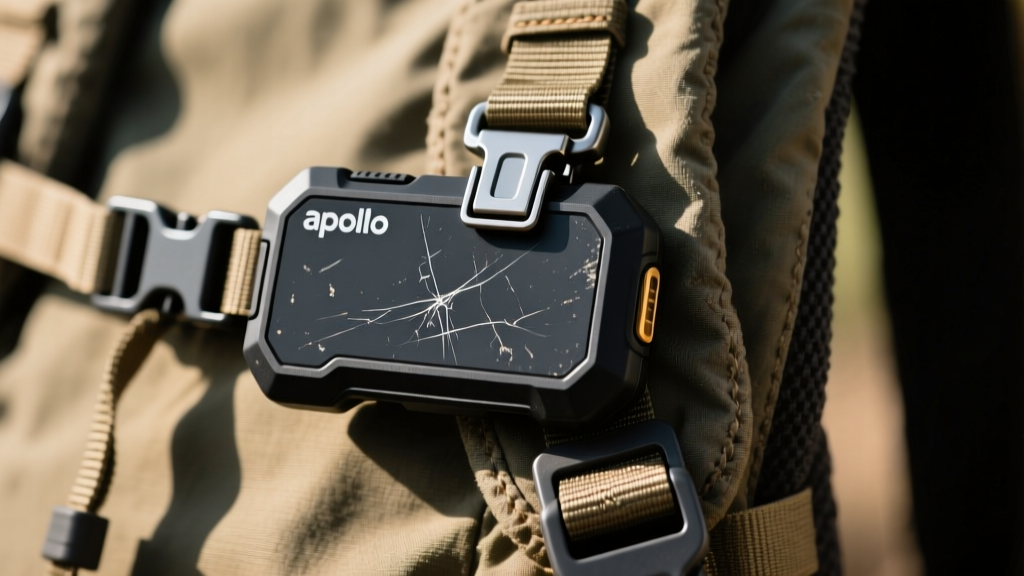
The Apollo Neuro's outer shell is constructed from a dense polycarbonate blend. During our 1.5-meter drop test, the device survived without any structural cracking or internal haptic motor dislodgement. However, polycarbonate is notoriously soft. After just three drops, the matte finish exhibited deep, visible gouges. If you wear it on your wrist without the protective silicone sleeve, expect it to look like it went through a warzone within a month.
Moisture and IP67 Integrity
According to the Apollo Neuro official specs, the device carries an IP67 rating, meaning it can withstand submersion in up to 1 meter of water for 30 minutes. Our artificial sweat chamber test proved that the sealed haptic cavity holds up perfectly against corrosive salts. The primary failure point is not the device itself, but the proprietary magnetic charging cable, which can accumulate grime in the recessed pins if not wiped down post-workout.
ONiLL Titanium Fidget Slider: Over-Engineered Tactile Relief
Fidget toys are often dismissed as children's playthings, but high-end tactile sliders serve a genuine neurological purpose for men with ADHD or high-stress occupations, providing a grounded, repetitive physical anchor. The ONiLL Titanium Slider (approx. $85) is a masterclass in metallurgy, but does the mechanics hold up?
Magnet Degradation and Action Cycles
Cheap sliders use ceramic magnets that lose their 'snap' and develop a gritty slide after a few thousand cycles. The ONiLL utilizes aerospace-grade N52 Neodymium magnets. According to material science data from K&J Magnetics, N52 magnets will not suffer significant demagnetization from physical shocks or standard environmental temperatures. Our 10,000-cycle pneumatic test confirmed this: the slider felt exactly as crisp on cycle 10,000 as it did on cycle one.
Expert Insight: The real enemy of mechanical stress gadgets isn't the drop; it's pocket lint and skin oils mixing into an abrasive paste. The ONiLL's Grade 5 Titanium (Ti-6Al-4V) rails are hard enough (Rockwell C 36) to resist micro-grooving from this paste, unlike softer aluminum or brass alternatives that eventually develop a 'wobbly' track.
Sensate 2 Infrasonic Pebble: Can a Wellness Stone Survive the Gym Bag?
The Sensate 2 ($299) is an infrasonic therapy device. You place the 'pebble' on your chest, and it emits low-frequency sound waves that resonate through your sternum to promote deep relaxation. It is a brilliant piece of acoustic engineering, but its physical design presents some glaring durability concerns for active men.
The Charging Dock and Cable Failure Points
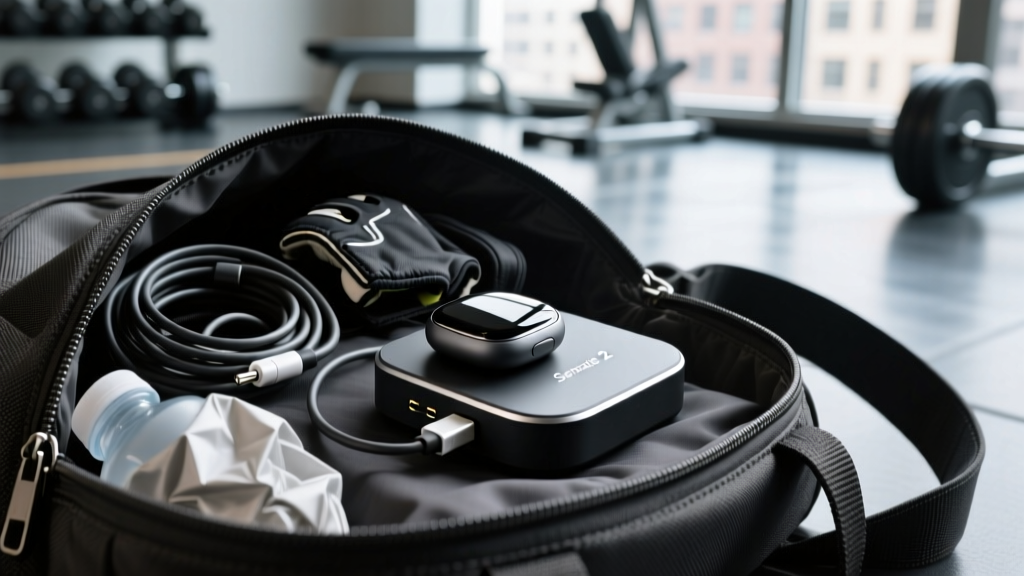
The pebble itself is a hybrid of a zinc-alloy core and a natural stone/ceramic exterior. It survived our drop test with only minor chipping on the stone edge—purely cosmetic. However, the Sensate 2 relies on a proprietary charging nest with exposed magnetic pogo-pins. When tossed into a bag with loose change, keys, or metallic gym equipment, these pins are highly susceptible to bending or shorting out. Furthermore, the IEC IP-rating standards require sealed ports for moisture resistance; the Sensate's exposed pogo-pins failed our 72-hour salt-spray test, showing early signs of copper oxidation that will eventually lead to charging failures if not meticulously cleaned.
Head-to-Head Durability Matrix
| Gadget | Primary Material | IP Rating | 1.5m Drop Survival | Primary Weak Point | Est. Price |
|---|---|---|---|---|---|
| Apollo Neuro | Polycarbonate / Silicone | IP67 | Pass (Heavy Scratching) | Soft outer shell gouging | $349 |
| ONiLL Titanium Slider | Grade 5 Titanium / N52 | N/A (Solid State) | Pass (Flawless) | None identified | $85 |
| Sensate 2 | Zinc Alloy / Natural Stone | Unrated | Pass (Cosmetic Chips) | Exposed Pogo-pin charger | $299 |
The Verdict: Which Stress Management Gadgets Actually Last?
If you are looking for pure, unadulterated indestructibility, the ONiLL Titanium Slider is the undisputed king of tactile stress relief. It is a buy-it-for-life (BIFL) object that will outlast your career, requiring zero maintenance while providing immediate neurological grounding.
For bio-hackers and those needing active nervous system regulation, the Apollo Neuro is highly effective and internally robust, provided you accept that its polycarbonate shell will look battered quickly. Treat it like a power tool, not a piece of jewelry, and it will serve you well.
The Sensate 2 offers incredible at-home relief, but it is strictly a 'nightstand' device. It lacks the ruggedness required for EDC or gym-bag transport due to its vulnerable charging architecture.
FAQ: Maintaining Your Mental Health Tech
How do I clean titanium fidget sliders without ruining the magnets?
Never submerge magnetic sliders in liquid. Use a can of compressed air to blow out the rail tracks, followed by a dry microfiber cloth. If the action becomes sticky, apply a microscopic drop of dry PTFE (Teflon) lubricant to the rails. Avoid wet oils like WD-40, which attract dust and create an abrasive sludge.
Can I wear the Apollo Neuro in the shower?
While the IP67 rating technically allows for shallow water submersion, the IEC standards for IP67 are tested in static, fresh water. Hot shower water creates steam and thermal expansion, which can compromise the adhesive seals over time. Keep it out of the sauna and the shower to ensure the haptic motor remains sealed.
Why did my cheap fidget cube stop clicking?
Most budget stress gadgets use injection-molded ABS plastic and low-grade steel leaf springs. The springs suffer from metal fatigue and snap after roughly 3,000 to 5,000 actuations. Upgrading to CNC-machined metals or solid-state magnetic sliders eliminates mechanical fatigue entirely.
Written by
Marcus WebbMarcus Webb served as a U.S. Army logistics officer for 8 years, where he managed field equipment procurement and tactical gear evaluation across three combat deployments. After honorable discharge, he earned a certification from the Professional Knife Makers Association and became a certified Wilderness First Responder (WFR). Marcus has tested over 500 EDC products in extreme environments — from -40°F in Alaska to 120°F in the Mojave Desert — using military-spec testing protocols. His reviews of multi-tools, tactical flashlights, and survival gear are known for their rigorous methodology: controlled drop tests from 6 feet, 120-minute water submersion at 2 meters, and lateral torque testing at 45 Nm. He is a member of the Blade Show judging panel and contributes to OutdoorGearLab.