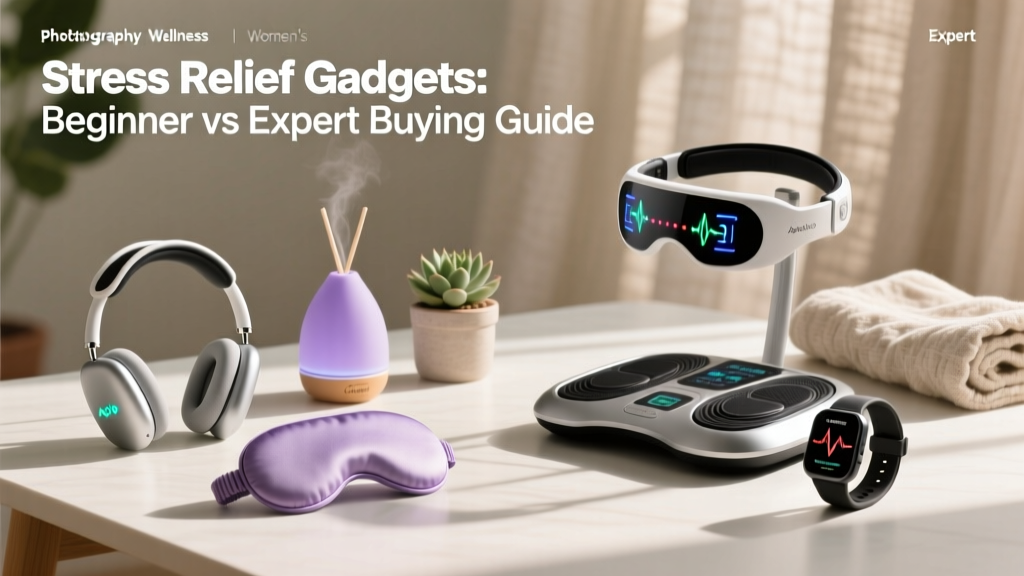
Stress Relief Gadgets: Beginner vs Expert Buying Guide
Compare beginner and expert stress relief gadgets. Discover if you need gentle wearables like Apollo Neuro or advanced biohackers like Sensate 2.
The Evolution of Tech-Assisted Calm
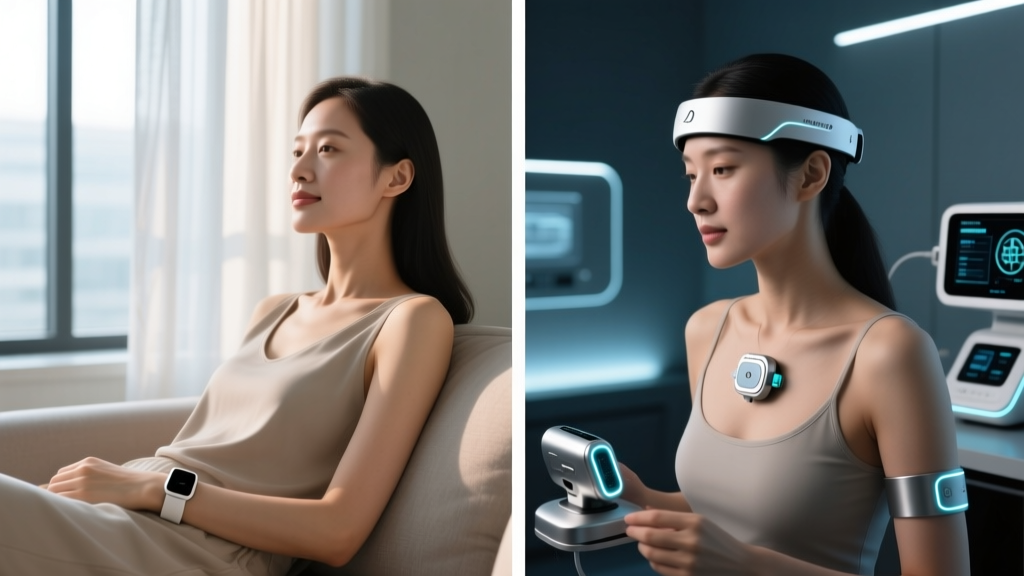
In 2026, the wellness tech market has matured far beyond simple meditation apps and basic fidget toys. Today's stress relief gadgets are grounded in neuroscience, leveraging biometric feedback, infrasonic resonance, and circadian biology to actively down-regulate the nervous system. However, this rapid innovation has created a steep learning curve for consumers. Are you a beginner looking for a gentle, passive on-ramp to relaxation? Or are you an expert biohacker ready to invest in clinical-grade vagus nerve stimulation and continuous allostatic load tracking?
Choosing the right device requires understanding your current stress baseline, your willingness to engage with data, and your budget. In this comprehensive guide, we break down the best stress relief gadgets across two distinct tiers: Beginner (accessible, passive, habit-building) and Expert (data-rich, active, physiologically targeted).
The Physiology of Tech-Assisted Calm
Before diving into specific models, it is crucial to understand the biological target of these devices: the autonomic nervous system. Chronic stress keeps the sympathetic nervous system (fight-or-flight) engaged, suppressing the parasympathetic nervous system (rest-and-digest). The primary bridge between the brain and the body's relaxation response is the vagus nerve. According to research published in the National Institutes of Health, vagal tone is a direct indicator of your capacity to recover from stress. Modern stress relief gadgets either attempt to stimulate the vagus nerve directly through acoustic or vibrational means, or they track Heart Rate Variability (HRV) to measure your physiological resilience over time.
Beginner Stress Relief Gadgets: Gentle On-Ramps
Beginner devices prioritize ease of use, passive engagement, and immediate sensory relief. They require minimal setup and do not overwhelm the user with complex biometric data. The goal here is habit formation and acute symptom management.
Apollo Neuro: Vibrational Entrainment
The Apollo Neuro is a wearable device that clips to your waistband, bra strap, or wrist. Instead of tracking your stress, it actively intervenes. It emits silent, low-frequency vibrations (ranging from 30 to 500 Hz) that mimic the rhythmic patterns of deep breathing and heart rate coherence. This process, known as tactile entrainment, signals the brain to shift into a parasympathetic state.
- Best For: Acute anxiety spikes, focus enhancement, and sleep onset.
- Key Specs: 40+ hour battery life, 30-500 Hz frequency range, IP67 water resistance.
- Investment: $249 upfront, no subscription required.
- Expert Insight: Clinical trials cited on Apollo's science portal demonstrate a 40% improvement in focus and a 19% increase in HRV during active use. However, it requires consistent wear to build a conditioned relaxation response.
Hatch Restore 2: Circadian Anchoring
Sleep disruption is both a cause and a symptom of chronic stress. The Hatch Restore 2 addresses this by combining a sunrise alarm, a sound machine, and a reading light. Stress management begins with circadian alignment; waking up to a gradual light simulation (reaching 350 lux) suppresses melatonin and spikes cortisol naturally, preventing the groggy, stressed feeling induced by harsh auditory alarms.
- Best For: Insomnia, sleep anxiety, and establishing a wind-down routine.
- Key Specs: Customizable red-light reading mode (620-750nm to preserve melatonin), 100+ soundscapes.
- Investment: $199 upfront, optional $19.99/year membership for premium content.
- Expert Insight: As noted by the Sleep Foundation, minimizing blue light exposure before bed is critical. The Restore 2's dedicated amber/red light spectrum is a massive upgrade over standard smart bulbs for evening stress reduction.

Expert Stress Relief Gadgets: Clinical-Grade Biohacking
Expert-tier gadgets demand a higher financial investment and a deeper understanding of human physiology. These tools are designed for users who want to measure their stress load objectively, optimize their vagal tone, and integrate neuro-acoustic therapies into their daily protocols.
Sensate 2: Infrasonic Vagal Toning
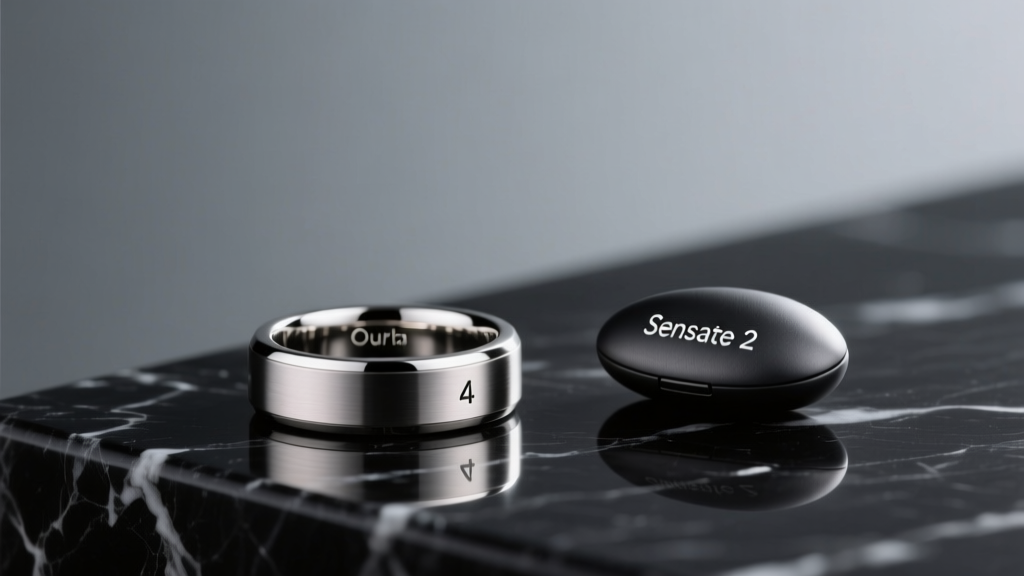
The Sensate 2 is a premium, pebble-shaped device that rests on your chest while you lie down. It pairs with a specialized app to deliver infrasonic sound waves (frequencies below 20 Hz, which are felt rather than heard) directly through the sternum. This bone conduction targets the vagus nerve as it branches through the chest cavity, inducing a profound state of deep rest in just 10 to 20 minutes.
- Best For: Deep nervous system resets, trauma recovery support, and advanced meditation practitioners.
- Key Specs: Bone-conduction transducer, proprietary 'Infrasound' audio tracks, braided charging cable.
- Investment: $699 (includes device and lifetime app access).
- Expert Insight: Unlike the Apollo Neuro, which you can wear while working, the Sensate 2 requires dedicated, supine stillness. It is not for passive background use; it is a targeted physiological intervention. Users often report a 'heavy' sensation in the limbs, indicative of a massive parasympathetic shift.
Oura Ring 4: Continuous Allostatic Load Tracking
You cannot manage what you do not measure. The Oura Ring 4 (Titanium) is the gold standard for continuous, passive biometric tracking. While it does not 'treat' stress directly, it provides the most accurate daytime stress and HRV metrics on the market. By tracking skin temperature, respiratory rate, and HRV 24/7, Oura calculates your 'Allostatic Load'—the cumulative wear and tear on your body from chronic stress.
- Best For: Data-driven women, athletes, and those mapping their stress triggers to menstrual cycle phases.
- Key Specs: 18 signal pathways, 2.5mm thickness, titanium build, 8-day battery life.
- Investment: $349 for the ring + $5.99/month subscription.
- Expert Insight: The true value of Oura for stress management lies in its 'Daytime Stress' feature, which alerts you when your sympathetic nervous system is overactive during waking hours, prompting you to deploy breathing exercises before burnout occurs.
The Beginner vs. Expert Comparison Matrix
Use this framework to determine which category aligns with your current wellness lifestyle.
| Feature | Beginner Tier (Apollo / Hatch) | Expert Tier (Sensate / Oura) |
|---|---|---|
| Mechanism | Sensory masking, circadian alignment, tactile entrainment | Infrasonic vagal stimulation, continuous biometric telemetry |
| Time Commitment | Passive / Background (0-5 mins active setup) | Active protocols (10-20 mins) + daily data review |
| Data Output | Low (Subjective mood tracking) | High (HRV, Skin Temp, Respiratory Rate, Allostatic Load) |
| Cost Barrier | Low to Moderate ($199 - $249) | High ($349 + sub to $699) |
| Ideal User | Stressed professionals needing immediate, easy relief | Biohackers and mindfulness veterans optimizing baseline health |
The GadgetGuideNet Decision Framework
Rule of Thumb: Never buy an expert-tier tracking device if you do not have a beginner-tier intervention strategy. Data without a protocol just creates more anxiety.
Step 1: Assess Your Sleep. If your sleep onset latency is over 30 minutes and you wake up exhausted, start with the Hatch Restore 2. Fix your circadian rhythm before attempting advanced vagal toning.
Step 2: Address Acute Spikes. If you experience mid-day panic, brain fog, or overwhelming occupational stress, the Apollo Neuro provides the fastest, most discreet physiological brake pedal.
Step 3: Optimize and Measure. Once your baseline sleep and acute stress are managed, introduce the Oura Ring 4 to track your HRV trends and identify hidden stressors (like alcohol or late meals). Finally, use the Sensate 2 for deep, weekend nervous-system resets.
Frequently Asked Questions
Can I use the Apollo Neuro and Oura Ring together?
Yes, and they complement each other perfectly. Wear the Oura Ring on your index finger to passively collect HRV and sleep data, while clipping the Apollo Neuro to your waistband to actively intervene when the Oura app notifies you that your daytime stress levels are peaking.
Is the Sensate 2 safe for women with pacemakers or implants?
The Sensate 2 uses acoustic bone conduction, not electrical currents (like CES devices). However, because it relies on low-frequency vibrations near the chest cavity, you must consult your cardiologist before using it if you have a pacemaker, stent, or any thoracic implants.
Do I need a subscription for these stress relief gadgets?
The Apollo Neuro and Sensate 2 include lifetime access to their core app features and soundscapes without a subscription. The Hatch Restore 2 requires a membership only if you want access to premium sleep stories and masterclasses. The Oura Ring 4, however, strictly requires a $5.99/month subscription to view your detailed biometric data and stress reports.
Written by
Emma LarssonEmma Larsson holds an M.A. in International Relations from Sciences Po Paris and a B.A. in Communications from Stockholm University. A digital nomad since 2017, she has worked from over 45 countries across six continents, building deep expertise in portable power solutions, travel routers, compact computing, and connectivity gadgets that survive international travel. Emma is a certified member of the Travel Technology Association and has advised three travel gear startups on product-market fit for remote workers. Her reviews evaluate products against real travel scenarios — TSA compliance, voltage compatibility across 200+ countries, durability through 50+ checked bag cycles, and battery life under airplane mode vs. active use. She has been featured in Condé Nast Traveler's "Tech-Savvy Traveler" series and speaks at Remote Work Summit events.