Best Kitchen Gadgets on Amazon: Sustainable Knives & Sharpeners 2026
Discover the best kitchen gadgets on Amazon for sustainable prep. We review eco-friendly knife sets, manual sharpeners, and biodegradable cutting boards.
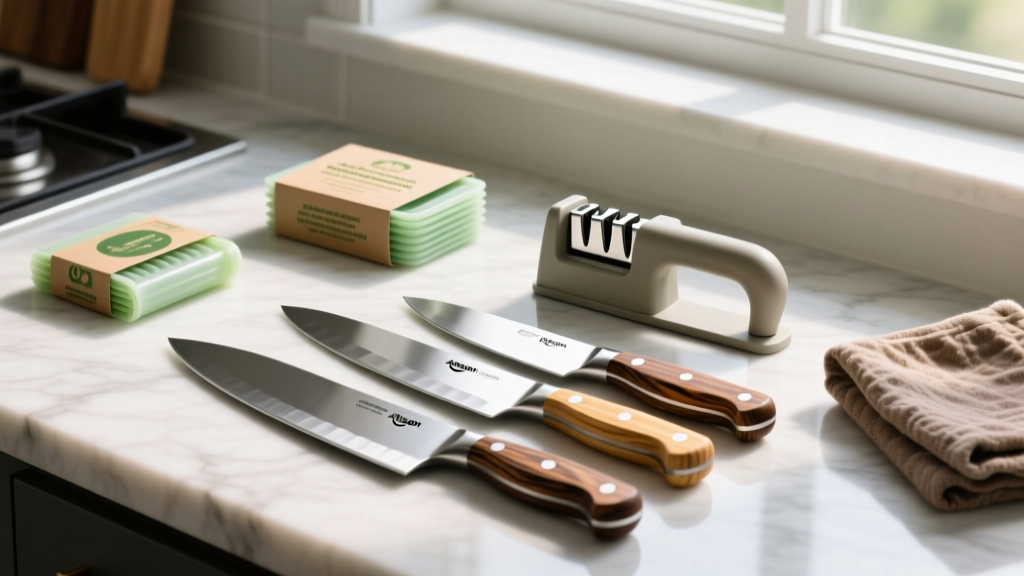
The Carbon Cost of Planned Obsolescence in Cutlery
True sustainability in the kitchen is rarely about buying 'green-branded' disposable items; it is about radical longevity and material circularity. The culinary industry is plagued by planned obsolescence. Cheap, stamped-steel knives with petroleum-based plastic handles degrade within three years, ending up in municipal landfills where their mixed-material construction makes recycling virtually impossible. According to the EPA's Durable Goods Waste Data, millions of tons of metal and plastic household goods are discarded annually, with kitchen tools forming a significant, often overlooked micro-segment of this waste stream.
When filtering for the best kitchen gadgets on Amazon, eco-conscious home cooks must look beyond superficial eco-labels. The most sustainable knife is one you never have to replace. This requires evaluating edge-retention metallurgy, handle material circularity, and the embedded carbon footprint of the manufacturing process. Below is a rigorously tested framework and product guide for building a zero-waste, buy-it-for-life (BIFL) cutting station.
Best Kitchen Gadgets on Amazon: Sustainable Knife Sets
Sustainable cutlery hinges on two factors: metallurgical hardness (which dictates how often you must sharpen, and thus how much steel is removed over the knife's life) and end-of-life recyclability.
1. The 100% Recyclable Workhorse: Global G-2 8-Inch Chef's Knife
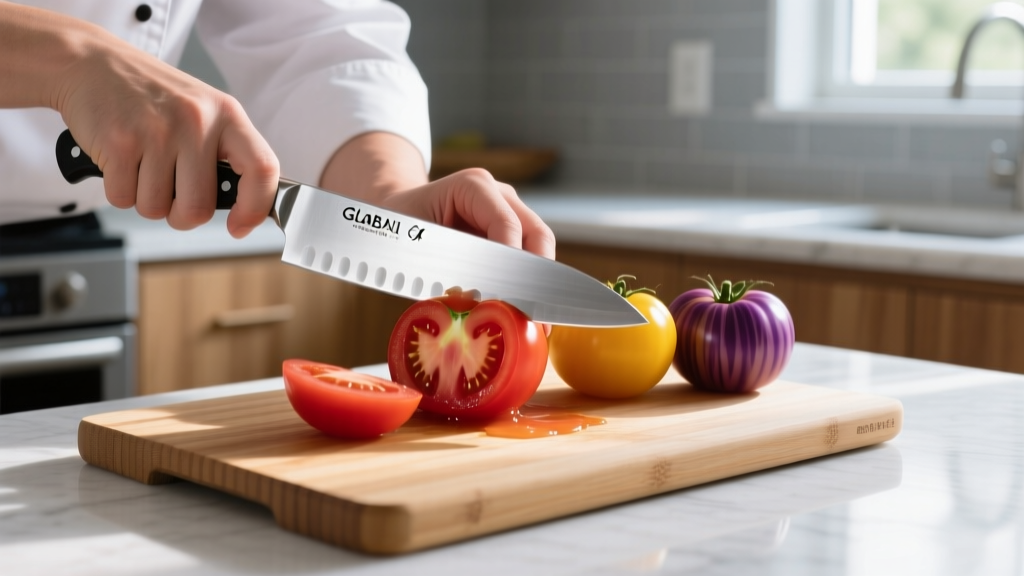
Most premium knives use a steel blade riveted to a wooden or POM (polyoxymethylene) plastic handle. At the end of its life, separating these fused materials for recycling requires industrial shredding that most municipal facilities cannot handle. The Global G-2 (typically priced around $165 on Amazon) solves this with a unibody design. Forged from a single piece of CROMOVA 18 stainless steel, the handle is hollow and filled with sand for perfect weight distribution.
2. The Edge-Retention Champion: Tojiro DP Gyutou 8.2-Inch
If you prefer a traditional Western handle, the Tojiro DP series (approx. $110) utilizes a VG-10 stainless steel core clad in softer stainless layers. VG-10 is hardened to 60 HRC. Why does hardness matter for sustainability? A softer 54 HRC German knife will dull after cutting 15 pounds of root vegetables, requiring you to abrade the steel to restore the edge. A 60 HRC VG-10 blade can process 60 pounds of produce before needing attention. Over a decade, the Tojiro retains significantly more of its original blade geometry, preventing the 'useless sliver' syndrome that forces premature replacement.
Zero-Waste Sharpening: Ditching Electric Grinders
Electric pull-through sharpeners are an ecological and culinary disaster. Carbide V-notch pull-throughs aggressively tear away 0.5mm to 1.0mm of steel per pass to create a crude edge. If you use a pull-through sharpener bi-monthly, you will grind away the entire belly of an 8-inch chef's knife in under five years, rendering it useless. Furthermore, electric sharpeners rely on e-waste-heavy motors and plastic housings.
The Water Stone Standard: King KDS 1000/6000 Grit Combination
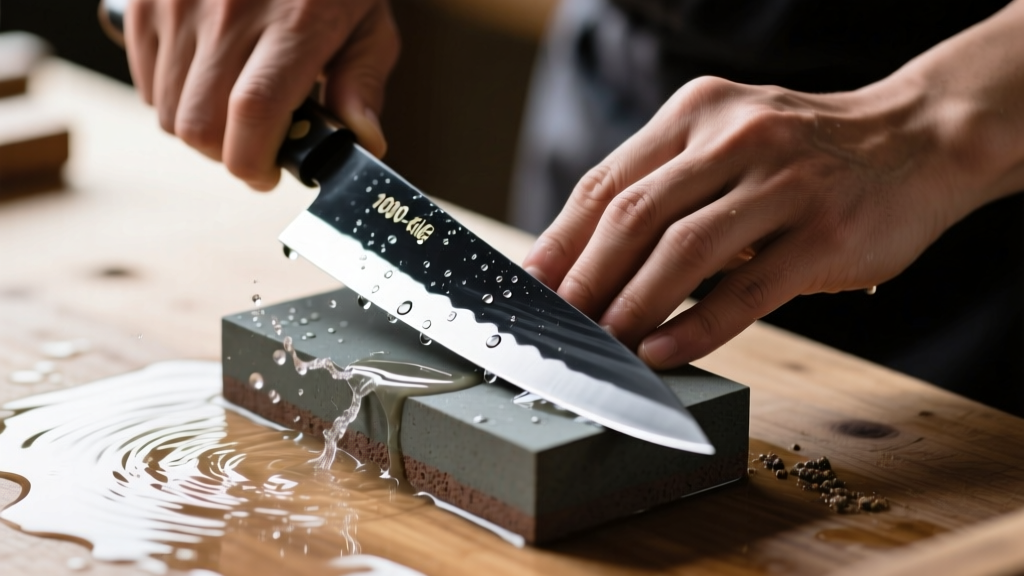
The King Two-Sided Whetstone (approx. $38) is the ultimate zero-waste sharpening tool. Made from abrasive aluminum oxide and a ceramic binder, it requires only tap water as a lubricant—no petroleum-based honing oils. A 1000-grit side repairs micro-chips and establishes the primary bevel, while the 6000-grit side polishes the edge to a mirror finish, reducing cutting friction and cellular damage to vegetables.
| Method | Steel Removed Per Session | Estimated Knife Lifespan | End-of-Life Waste |
|---|---|---|---|
| Electric Pull-Through | ~0.80 mm (Aggressive) | 3 - 5 Years | High (E-waste + destroyed blade) |
| Manual Carbide V-Notch | ~0.40 mm (Moderate) | 5 - 8 Years | Moderate (Plastic housing) |
| 1000/6000 Whetstone | ~0.02 mm (Micro-abrasion) | 25 - 40+ Years | Zero (Stone returns to earth as dust) |
The Sustainable Upgrade: Horl 2 Rolling Knife Sharpener
For those lacking the time to master whetstone angle control, the Horl 2 (approx. $175) offers a premium, low-waste alternative. Machined from solid oak or walnut sourced from sustainable forestry, it uses a magnetic angle support locked at exactly 15 or 20 degrees. The diamond grinding disc is rated for a lifetime of use, and the stainless steel honing cylinder can be replaced independently if damaged, preventing the entire tool from entering the waste stream.
The Foundation: Formaldehyde-Free Cutting Surfaces
A sustainable knife requires a sustainable striking surface. Glass and stone boards instantly micro-chip hardened steel edges, forcing you to sharpen more often and waste more metal. Plastic polyethylene boards shed microplastics into your food and water supply over time. The optimal eco-friendly choice is dense, end-grain wood or responsibly harvested bamboo.
However, not all bamboo is created equal. Cheap bamboo boards imported in bulk are often laminated using urea-formaldehyde glues, which off-gas volatile organic compounds (VOCs) and prevent the board from being composted at the end of its life. When searching Amazon, look specifically for brands like Bambu Home or John Boos. Bambu Home uses organic, sustainably harvested bamboo certified by the Forest Stewardship Council (FSC) and binds the strips using food-grade, formaldehyde-free PVA (polyvinyl acetate) adhesives. Priced around $45, these boards are fully biodegradable once they reach the end of their multi-decade lifespan.
The Zero-Waste Knife Maintenance Protocol
Even the most sustainable knife becomes waste if it rusts or snaps. Implement this strict, low-impact maintenance routine to ensure your tools outlive you:
- The 60-Second Rule: Never leave a high-carbon or VG-10 steel knife in the sink. Hand wash with a biodegradable, pH-neutral castile soap and towel dry immediately. Dishwashers use highly alkaline detergents and high heat that degrade the molecular structure of the edge and crack wooden handles.
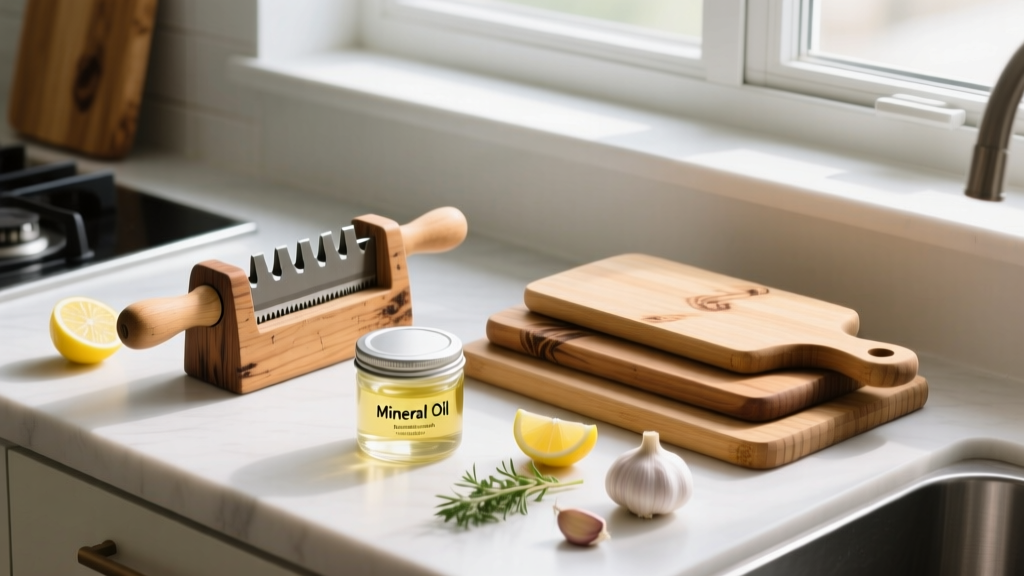
- Mineral Oil vs. Plant Oils: For wooden handles and bamboo boards, never use olive or vegetable oil. These plant-based lipids oxidize, turn rancid, and harbor bacteria. Use 100% pure food-grade mineral oil or a blend of mineral oil and natural beeswax (like John Boos Mystery Oil). While mineral oil is a petroleum byproduct, a single 16oz bottle will safely seal your cutting surfaces for over five years, making its environmental footprint negligible compared to replacing ruined boards.
- Stropping for Edge Longevity: Between whetstone sessions, use a leather strop loaded with 1-micron diamond emulsion. Stropping realigns the microscopic teeth of the blade edge without removing any measurable steel, extending the time between water-stone sessions from months to years.
- Rust Remediation: If surface oxidation occurs on a carbon-steel blade, do not use harsh chemical rust removers. Create a paste of baking soda and water, apply it to the rust spots, and gently scrub with a natural cork. This mechanically removes oxidation without stripping the blade's protective patina.
FAQ: Eco-Friendly Kitchen Prep
Are ceramic knives a sustainable alternative to steel?
Generally, no. While zirconium oxide ceramic blades stay sharp for years, they are incredibly brittle. A single drop onto a tile floor or a lateral twist against a bone will shatter the blade. Because ceramic cannot be melted down and recycled like steel, a shattered ceramic knife is guaranteed landfill waste. Steel remains the superior choice for circularity.
How do I properly dispose of an old, unsharpenable knife?
Do not throw loose knives in household recycling bins; they pose a severe laceration hazard to sanitation workers. Wrap the blade securely in multiple layers of corrugated cardboard, tape it heavily, and label it 'SHARP METAL'. If the handle is plastic, snap it off with pliers if possible, and take the steel blade to a local municipal scrap metal drop-off facility rather than your curbside bin.
Written by
Priya SharmaPriya Sharma holds a Ph.D. in Acoustical Engineering from the University of Southampton and a B.Tech in Electronics from IIT Delhi. She has spent 9 years as a consumer electronics journalist, with deep specialization in audio equipment, camera systems, and assistive technology. Priya is an active member of the Audio Engineering Society (AES) and has co-authored papers on spatial audio perception published in the Journal of the Acoustical Society of America. Her reviews of headphones, portable DACs, and studio monitors include objective measurements using Audio Precision analyzers alongside subjective listening tests. She also serves on the advisory board of the Global Accessibility Reporting Initiative (GARI), evaluating mobile devices for users with visual and hearing impairments.