7 Unique Gadgets for Musicians to Upgrade Your Rig in 2026
Discover 7 unique gadgets for musicians in 2026, from the TE OP-XY groovebox to Moog Muse. Upgrade your studio with these cool, boundary-pushing tools.
Beyond the Standard MIDI Controller
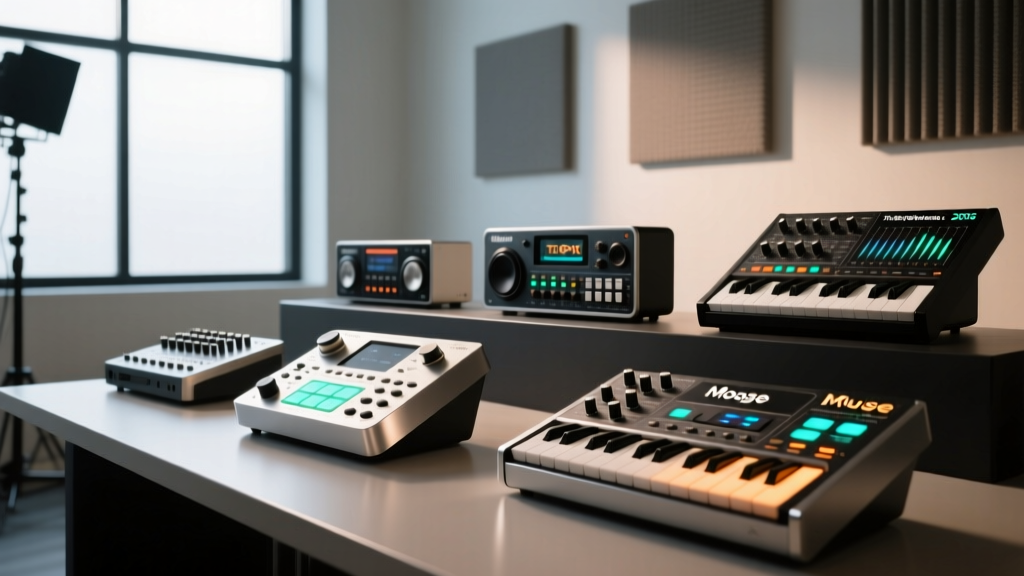
The modern recording studio is no longer defined solely by traditional black-and-white keyboards and standard 19-inch rack gear. In 2026, the most exciting advancements in music production hardware focus on tactile expression, non-linear sound generation, and hyper-portable sampling workflows. If you are looking to break out of creative ruts, standard MIDI controllers and preset-heavy digital synths will only take you so far. The true breakthroughs lie in boundary-pushing hardware that forces you to interact with sound differently.
Below is a curated selection of the most unique, technically fascinating gadgets for musicians available today. These tools are not just novelties; they are precision-engineered instruments designed to solve specific creative bottlenecks, from polyphonic aftertouch limitations to sterile digital reverbs.
1. Teenage Engineering OP-XY: The Brain-Expanding Groovebox
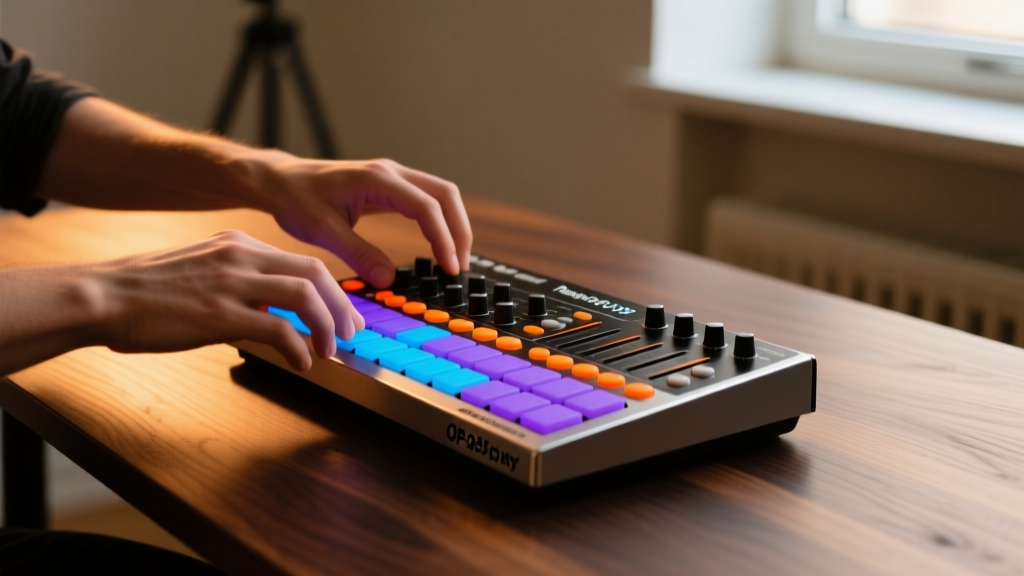
Teenage Engineering’s flagship OP-XY ($299) redefines portable sampling and sequencing. Unlike its predecessor, the OP-1, the OP-XY is built around a 24-key capacitive keyboard with built-in polyphonic aftertouch and a dedicated accelerometer for real-time pitch and effect modulation.
OP-XY Technical Snapshot
- Sampling Engine: 24-bit/48kHz internal mic and line-in with punch-in loop recording.
- Sequencer: 4-track, 16-step polyphonic sequencer with parameter locks per step.
- Connectivity: USB-C (MIDI & Audio), 3.5mm TRS MIDI out, 3.5mm audio in/out.
- Battery Life: 12 hours of continuous playback via internal Li-Po battery.
The standout feature is the 'Brain' sampler, which allows you to record audio directly into the sequencer steps. You can capture a vocal snippet, assign it to step 4, and instantly apply a granular delay effect only to that specific trigger. For electronic producers and beatmakers, this eliminates the need to bounce audio back and forth between a DAW and hardware.
2. Soma Laboratory Lyra-8: Organismic Synthesis
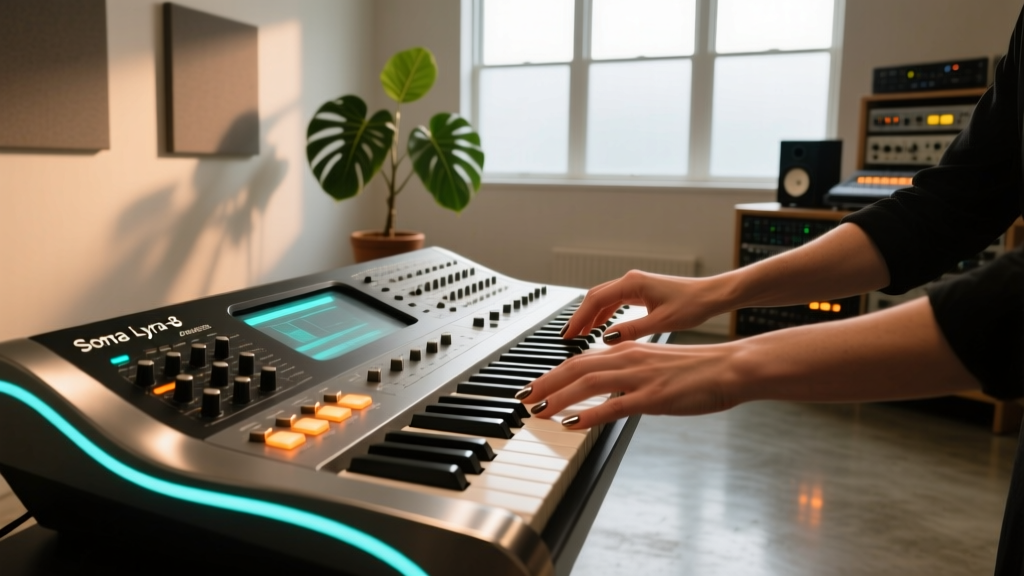
Priced around $650, the Soma Lyra-8 is not a synthesizer in the traditional sense; it is an 'organismic' instrument. It lacks a standard keyboard or a traditional VCO-LFO-Filter signal path. Instead, it features eight touch-sensitive metal plates that trigger complex, non-linear feedback loops.
"The Lyra-8 forces you to listen rather than program. You don't dial in a patch; you negotiate with the feedback network until it yields a texture you want to capture." — Sound Design Weekly, Hardware Review 2025
How Organismic Synthesis Works
Each of the eight voices contains a voltage-controlled amplifier and a delay line. The voices are cross-modulated via hyper-FM routing. When you press a metal plate, your body's electrical resistance alters the control voltage, meaning the exact timbre changes based on your skin moisture and how firmly you press. It is an unparalleled tool for generating evolving, cinematic drones and aggressive industrial textures that are virtually impossible to replicate with standard subtractive synths.
The Protocol War: MPE vs. Organismic vs. Standard MIDI
When integrating unique gadgets for musicians into a larger studio rig, understanding the underlying control protocol is critical. Here is how the current hardware paradigms compare regarding expressive data transmission.
| Protocol / Architecture | Polyphonic Aftertouch | Per-Note Pitch Bending | Best Use Case |
|---|---|---|---|
| Standard MIDI 1.0 | No (Channel AT only) | No (Global only) | Traditional sequencing, basic synth control |
| MPE (MIDI Polyphonic Expression) | Yes | Yes (Per-note) | Expressive lead playing, string/wind emulation |
| Organismic / Analog CV | N/A (Non-linear) | N/A (Voltage drift) | Generative ambient, industrial sound design |
For a deeper technical breakdown of how per-note expression is routed across separate MIDI channels, refer to the MIDI Association's official MPE specification.
3. Moog Muse: The Return of the Analog Poly Titan
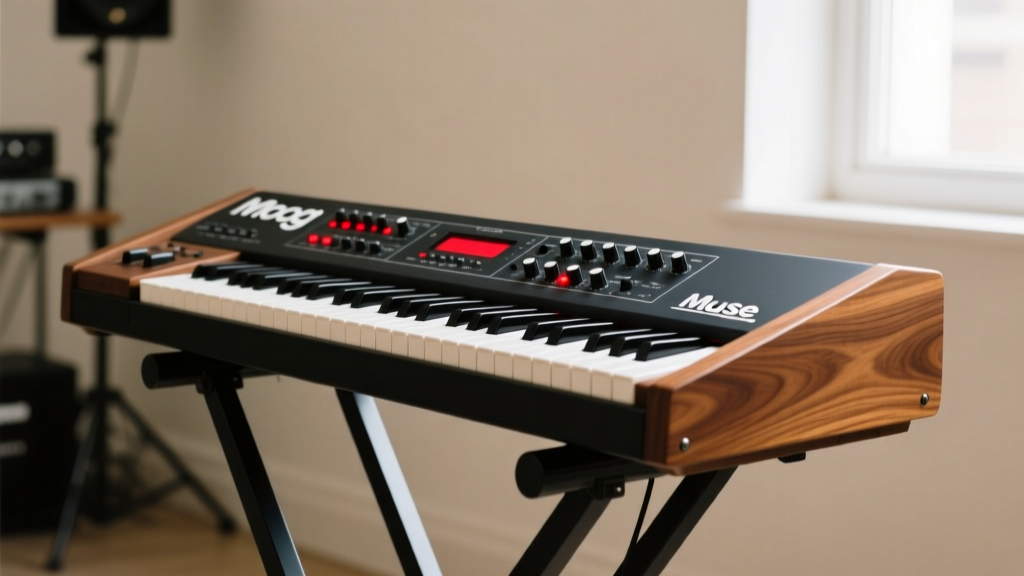
At $4,999, the Moog Muse is a massive, 16-voice polyphonic analog synthesizer that commands physical and sonic space. Weighing in at over 30 pounds, it features a 61-key Fatar keyboard with channel and polyphonic aftertouch.
Under the Hood: Voice Architecture
Each of the 16 voices is equipped with two analog VCOs, a classic Moog transistor ladder filter, and a secondary state-variable filter. However, the true uniqueness lies in the stereo analog diffusion delay. Unlike digital delays that simply repeat the audio signal, the Muse’s delay passes the repeats through an analog bucket-brigade circuit infused with a randomized diffusion algorithm, creating lush, chorused echoes that degrade organically.
Pros
- Unmatched analog polyphonic depth
- Per-voice panning and filter routing
- True hardware polyphonic aftertouch
Cons
- Requires significant desk/floor space
- High power consumption (requires dedicated circuit)
- Voice calibration takes 15+ minutes on boot
For full architectural schematics and voice-routing options, consult Moog Music's official Muse product page.
4. Universal Audio Sphere LX: Modeling Mic Magic
The Universal Audio Sphere LX ($999) is a large-diaphragm condenser that fundamentally changes how you record vocals and acoustic instruments. It is not just one microphone; it is a phase-aligned dual-capsule array that captures a 3D sound field.
How the Dual-Capsule Tech Actually Works
By capturing audio from both the front and rear capsules simultaneously, the Sphere LX records the spatial data required to mathematically reconstruct the polar patterns and off-axis coloration of 38 different legendary microphones (including vintage U47s, C12s, and modern ribbons) after the recording is complete. You can change the mic model, adjust the polar pattern from omnidirectional to figure-8, and even alter the virtual axis angle during the mixing stage.
5. ROLI Seaboard Rise 2: Tactile MPE Mastery
The ROLI Seaboard Rise 2 ($1,399) replaces mechanical keys with a continuous silicone surface featuring 49 'keywaves.' It is the premier hardware implementation of the MPE 2.0 standard. It tracks five dimensions of touch simultaneously: strike, press, glide, slide, and lift. This allows a keyboardist to execute a cello-like vibrato by wiggling a finger horizontally on a single key while swelling the volume by pressing deeper into the silicone. It is an essential gadget for film composers needing to program realistic string and brass articulations without relying on tedious DAW automation lanes.
Integration Decision Framework
Adding unique hardware to an existing studio requires careful planning. Use this framework to avoid workflow bottlenecks:
- Audit Your I/O: Do you have enough TRS-to-DIN MIDI adapters for the OP-XY? Do you have a stereo preamp channel available for the Sphere LX?
- Check Power Requirements: Analog polys like the Moog Muse draw significant current. Map your studio power strips to avoid ground loops.
- DAW Compatibility: Ensure your DAW natively supports MPE (Logic Pro, Bitwig, and Ableton Live 12+ do) before purchasing the Seaboard Rise 2.
Frequently Asked Questions
Can I use the Soma Lyra-8 with a standard MIDI keyboard?
No. The Lyra-8 does not have MIDI inputs or outputs. It is strictly controlled via its metal touch plates, CV inputs, and internal feedback mechanisms. It is designed as an isolated sound source, not a module to be played by external sequencers.
Does the Teenage Engineering OP-XY sync with Ableton Link?
Yes, the OP-XY supports Ableton Link over Wi-Fi, allowing it to sync tempo and transport controls seamlessly with your laptop or other Link-compatible hardware without the need for physical MIDI clock cables.
Is polyphonic aftertouch worth the premium in 2026?
Absolutely. With software instruments like Spitfire Audio and Omnisphere fully supporting MPE and polyphonic aftertouch, hardware that transmits per-note pressure data (like the Moog Muse and Seaboard Rise 2) drastically reduces the time spent manually drawing automation curves in your DAW.
Written by
Nina PetrovaNina Petrova holds a Master's degree in Child Development from the Erikson Institute and a B.S. in Nursing from the University of Illinois at Chicago. She worked as a pediatric nurse for 6 years before transitioning to family technology consulting, bringing clinical rigor to her evaluations of kid-friendly gadgets, educational toys, and parental control software. Nina has reviewed over 400 children's tech products, testing each for safety compliance (CPSC and ASTM standards), developmental appropriateness across age groups, screen-time impact, and data privacy practices. She serves on the Children's Technology Review advisory board and has testified before the FTC on children's data protection in connected toys. Her reviews are trusted by parents and educators alike for their evidence-based approach to balancing technology benefits with child safety.