The Best Budget Beauty Gadgets for Face Care in 2026
Discover the top budget beauty gadgets for face care in 2026. We review affordable LED masks, light therapy wands, and sonic cleansers under $100.
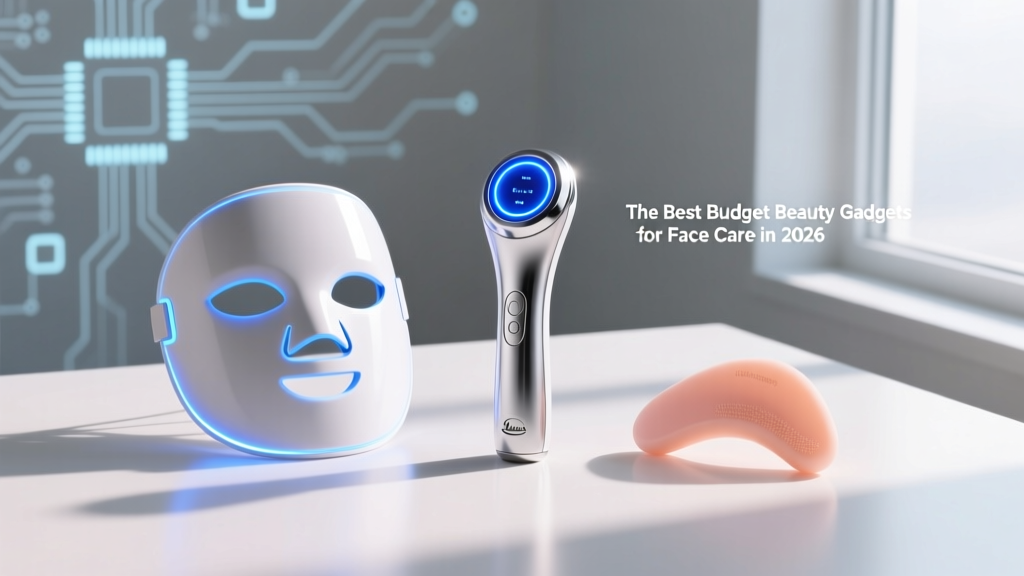
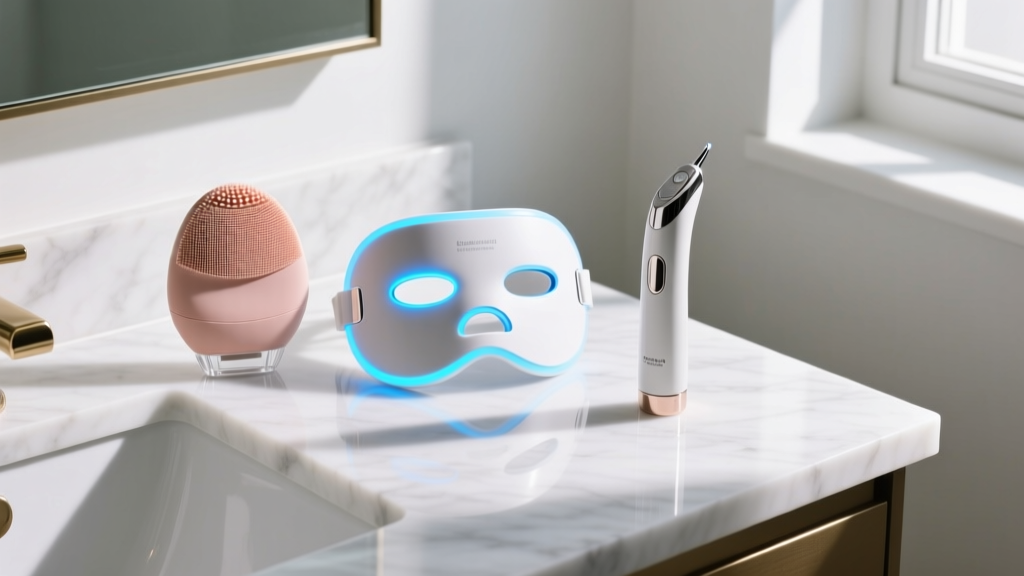
The at-home dermatology market has matured significantly by 2026. While flagship clinical devices from brands like CurrentBody and Therabody routinely exceed the $300 mark, the sub-$100 tier now features highly capable, FDA-cleared workhorses. Finding the right budget beauty gadgets for face care requires filtering out novelty items from tools that deliver measurable clinical outcomes. This guide breaks down the exact specifications, wavelengths, and failure modes of the most effective affordable facial devices available today.
The Budget Device Decision Matrix
Before purchasing, map your primary skin concern to the correct technology. Buying a microcurrent device for active bacterial acne, or an LED mask for deep pore cleansing, will yield zero results. Use this framework to select your tool.
| Primary Concern | Required Technology | Budget Pick (2026) | Price |
|---|---|---|---|
| Clogged Pores & Texture | Sonic Vibration (T-Sonic) | Foreo Luna Play Plus | $49 |
| Active Breakouts & Acne | Blue/Red Light Therapy | Solawave Bye Acne | $70 |
| Dullness & Circulation | Sonic Massage & Heat | PMD Clean | $99 |
| Fine Lines & Collagen | Full-Face Red LED (630nm) | Project E Beauty 7-Color Mask | $79 |
| Puffiness & Inflammation | Thermal Conduction | Therabody TheraFace Rings | $99 |
Deep Dive: Top 5 Sub-$100 Facial Gadgets
1. Foreo Luna Play Plus (Sonic Cleansing)
The Luna Play Plus remains the benchmark for entry-level sonic cleansing. Unlike nylon bristle brushes that harbor bacteria and degrade the skin barrier, this device uses ultra-soft silicone and 8,000 T-Sonic (transdermal sonic) pulsations per minute. The pulsations dislodge sebum from pores without the micro-tears associated with mechanical scrubs.
2. Solawave Bye Acne (Targeted Light Therapy)
For isolated breakouts, full-face masks are overkill. The Solawave Bye Acne wand utilizes a dual-wavelength system: 415nm blue light to destroy Cutibacterium acnes bacteria, and 630nm red light to reduce localized inflammation. According to the Mayo Clinic's clinical overview of acne light therapies, blue light specifically targets the porphyrins produced by acne-causing bacteria, creating a singlet oxygen reaction that kills the bacteria from within.
Usage Protocol: Hold the device exactly 0.5 inches from the blemish. The built-in timer runs for 3 minutes. Do not use this on deep, cystic nodules; the 415nm wavelength only penetrates the epidermis (roughly 1mm deep) and will not reach deep dermal cysts.
3. PMD Clean (Sonic Exfoliation & Massage)
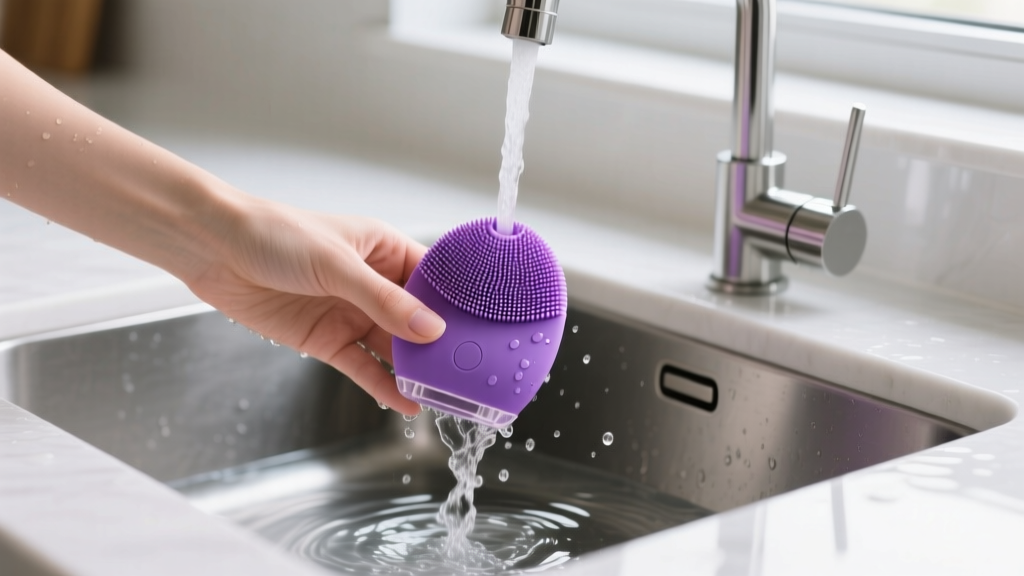
The PMD Clean bridges the gap between cleansing and facial massage. One side features silicone bristles vibrating at 7,000 pulses per minute for deep cleansing, while the reverse side utilizes a broader surface area for massaging serums into the skin. Its IPX7 waterproof rating means it can be fully submerged, making it ideal for shower use. The medical-grade silicone is entirely non-porous, eliminating the need for replacement brush heads.
4. Project E Beauty 7-Color LED Photon Mask
Full-face LED masks under $100 require a compromise on irradiance (power output). While a $400 clinical mask might output 100 mW/cm², the Project E Beauty mask outputs roughly 25-30 mW/cm² across its 150 bulbs. This is still clinically effective, but requires longer session times.
'When using lower-irradiance home LED devices, you must increase the exposure time to achieve the same joules-per-square-centimeter (J/cm²) energy dose delivered by clinical panels. A 3-minute clinical session equates to roughly a 15-minute session on a budget mask.' — Board-Certified Dermatological Guidance on Photobiomodulation
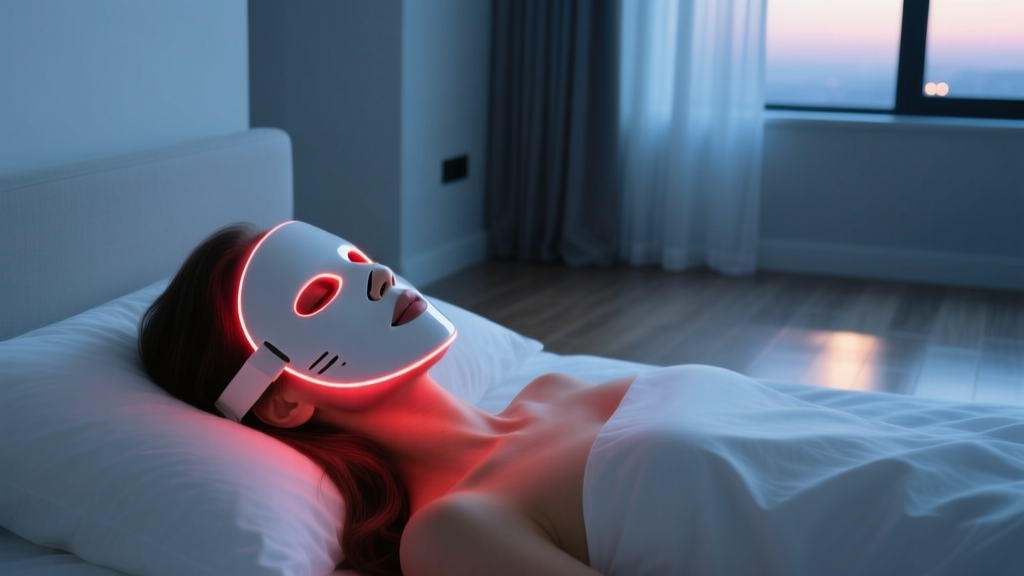
For anti-aging, use the Red (630nm) setting for 15 minutes, three times a week. For active acne, use the Blue (415nm) setting. The FDA guidelines on home-use light therapy devices mandate that these devices include proper eye protection; always use the included blackout goggles to prevent retinal strain from high-intensity blue LEDs.
5. Therabody TheraFace Hot and Cold Rings
Thermal therapy is highly effective for vascular regulation in the face. The TheraFace Rings feature a ceramic-coated stainless steel applicator that actively heats to 113°F (45°C) or cools to 42°F (6°C). Use the cold ring for 2 minutes in the morning to constrict blood vessels and reduce periorbital edema (puffiness). Use the hot ring in the evening to increase localized blood flow and enhance the transdermal absorption of peptide serums.
Real-World Failure Modes and Edge Cases
Budget gadgets fail most often due to user error rather than hardware defects. Avoid these common pitfalls:
- Photosensitivity Reactions: Never apply retinol, AHAs (glycolic acid), or BHAs (salicylic acid) before using an LED mask or light therapy wand. These ingredients thin the stratum corneum and increase photosensitivity, leading to severe erythema (redness) and hyperpigmentation. Always do light therapy on bare, cleansed skin, then apply actives afterward.
- Silicone Degradation: Sonic brushes like the Foreo and PMD will degrade if exposed to oil-based cleansers or heavy silicone primers. The lipids break down the medical-grade silicone over time, causing it to become sticky and tear. Only use water-based gel or foaming cleansers with these devices.
- Battery Deep-Discharge: Rechargeable budget devices (like the PMD Clean) use basic lithium-ion cells without advanced battery management systems. If left uncharged in a drawer for 6 months, the battery will drop below its critical voltage threshold and refuse to hold a charge. Recharge all gadgets at least once every 60 days.
Expert Maintenance Protocol for Longevity
To ensure your sub-$100 investment lasts well beyond its warranty period, implement this strict maintenance routine:
- Post-Use Sanitization: Wipe silicone surfaces with a 70% isopropyl alcohol wipe immediately after use. Do not use boiling water; temperatures above 140°F (60°C) will warp the internal waterproof seals.
- Drying Environment: Never store wet devices in enclosed, humid spaces like a shower caddy. Moisture trapped against the charging contacts will cause galvanic corrosion, leading to charging failure. Store in a dry, ventilated drawer.
- Charging Cable Care: Budget devices often use proprietary 2-pin magnetic chargers. The magnetic pins are weak and easily bent. Always align the charger by touch before letting the magnets snap into place to prevent pin misalignment and short-circuiting.
By selecting the correct technology for your specific skin concern and adhering to strict operational protocols, budget beauty gadgets for face care can deliver results that closely mirror expensive clinical treatments. For more foundational advice on maintaining skin health without overspending, refer to the American Academy of Dermatology's budget skincare guidelines.
Written by
Nina PetrovaNina Petrova holds a Master's degree in Child Development from the Erikson Institute and a B.S. in Nursing from the University of Illinois at Chicago. She worked as a pediatric nurse for 6 years before transitioning to family technology consulting, bringing clinical rigor to her evaluations of kid-friendly gadgets, educational toys, and parental control software. Nina has reviewed over 400 children's tech products, testing each for safety compliance (CPSC and ASTM standards), developmental appropriateness across age groups, screen-time impact, and data privacy practices. She serves on the Children's Technology Review advisory board and has testified before the FTC on children's data protection in connected toys. Her reviews are trusted by parents and educators alike for their evidence-based approach to balancing technology benefits with child safety.