7 Budget-Friendly Medical Gadgets for Women in 2026
Discover the best budget-friendly medical gadgets for women's health in 2026. Track vitals, monitor wellness, and save money with our top affordable picks.
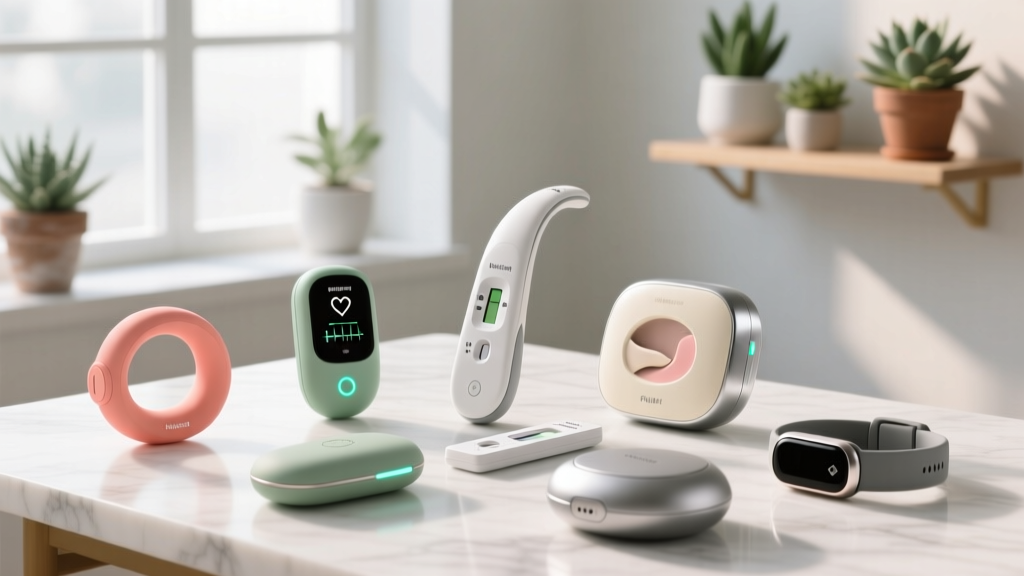
Women's health is deeply personal, yet the tools to monitor it have historically been locked behind steep clinical paywalls or exorbitant consumer markups. As we navigate 2026, the democratization of health tech means you no longer need to spend hundreds of dollars to gain clinical-grade insights into your cardiovascular, hormonal, and metabolic wellness. This roundup highlights the best budget-friendly medical gadgets that deliver high value, precision, and reliability without draining your wallet.
The Shift to At-Home Preventative Care
The landscape of personal health monitoring has shifted dramatically. According to FDA guidelines on home medical devices, the market has seen a surge in cleared, consumer-grade diagnostics that rival in-office equipment. For women managing conditions like PCOS, endometriosis, or hypertension, or simply tracking hormonal cycles and metabolic baselines, affordable medical gadgets offer a bridge between annual check-ups. The key is knowing which budget devices actually possess clinical validity and which are merely wellness toys. Below, we break down the top affordable, data-driven tools available this year.
Top 7 Budget Medical Gadgets for 2026
1. Omron Silver Blood Pressure Monitor ($45 - $55)
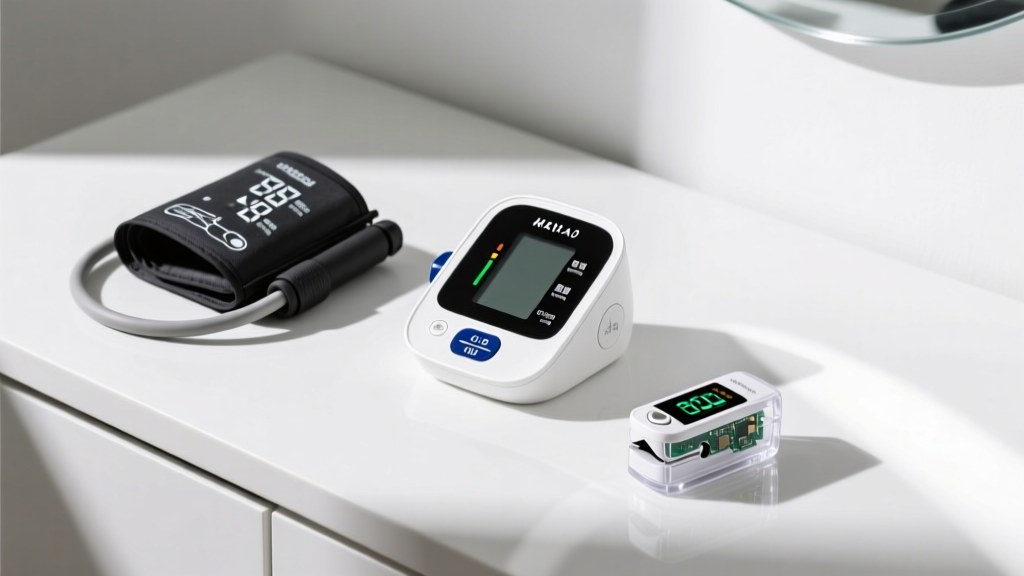
Cardiovascular health is a critical, often overlooked aspect of women's wellness, particularly during pregnancy and menopause. The Omron Silver is a single-cuff, Bluetooth-enabled device that holds the prestigious AMA (American Medical Association) validation for clinical accuracy. Unlike cheaper, uncalibrated alternatives, it uses an advanced pressure sensor to detect irregular heartbeats. It syncs seamlessly with the Omron Connect app, allowing you to export CSV files directly to your cardiologist or OB-GYN. The cuff fits arms 9 to 13 inches in circumference, accommodating most body types comfortably.
2. Fitbit Inspire 3 ($79)
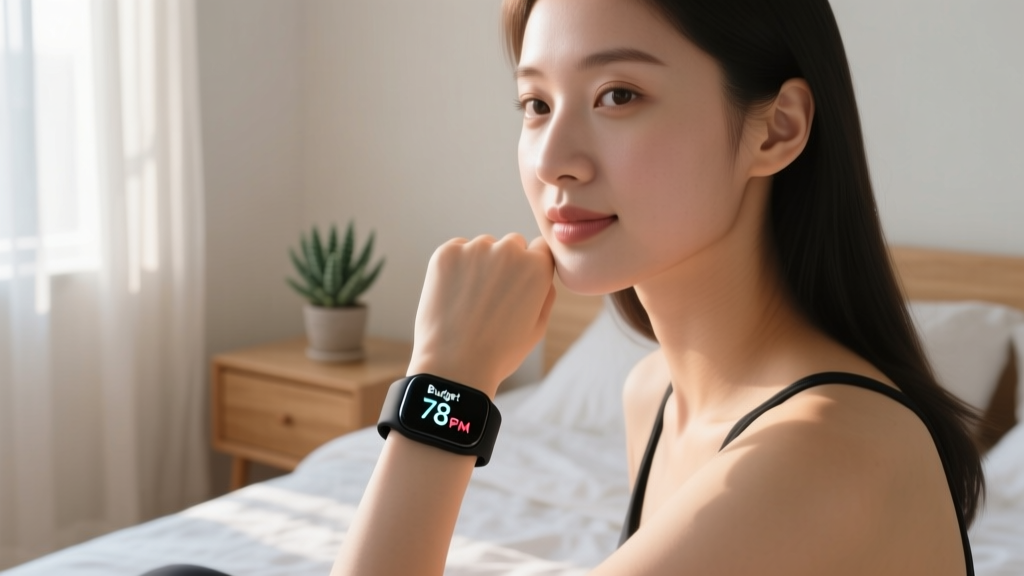
While technically a fitness tracker, the Inspire 3 crosses into medical utility with its continuous SpO2 (blood oxygen) variation tracking and advanced sleep apnea risk indicators. For women tracking their menstrual cycles, the built-in skin temperature variation sensor provides a baseline that can help predict ovulation windows and flag potential luteal phase defects. Priced under $80, it offers a battery life of up to 10 days, making it a highly practical, low-maintenance medical gadget for continuous biometric surveillance.
3. Wellue Finger Pulse Oximeter ($25)
Respiratory and circulatory monitoring is vital for women with asthma, anemia, or those recovering from surgery. The Wellue Finger Pulse Oximeter provides medical-grade readings with an accuracy of ±2% for SpO2 levels between 70% and 100%, aligning with Mayo Clinic standards for pulse oximetry. The dual-color OLED display adjusts automatically based on finger orientation, and the device includes a plethysmograph waveform, which helps you verify that the pulse signal is strong and not compromised by cold hands or poor circulation.
4. Renpho Smart Body Composition Scale ($29)
Standard BMI is an outdated metric that fails to capture the nuances of women's body composition, especially postpartum or during hormonal shifts. The Renpho Smart Scale utilizes bioelectrical impedance analysis (BIA) across 13 distinct metrics, including visceral fat, skeletal muscle mass, and basal metabolic rate (BMR). The ITO-coated glass surface ensures high sensitivity, detecting weight changes in 50-gram increments. While BIA scales require consistent hydration levels for perfect accuracy, the Renpho app's trend-tracking algorithm smooths out daily fluctuations to provide a reliable monthly metabolic overview.
5. iHealth Feel Wireless Thermometer ($35)
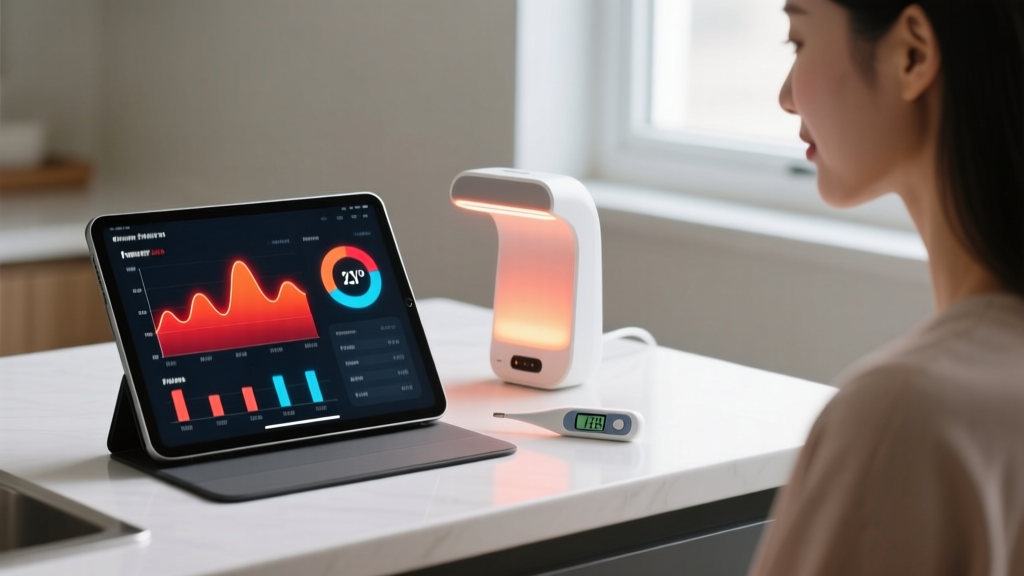
Tracking basal body temperature (BBT) is a cornerstone of fertility awareness and cycle tracking. The iHealth Feel Wireless Thermometer offers clinical-grade accuracy (±0.2°F) and connects via Bluetooth to log data instantly. For mothers monitoring a child's fever or women tracking BBT for natural family planning, the ability to set custom alarms and view historical temperature curves in the app transforms a basic diagnostic tool into a powerful longitudinal health tracker.
6. Beurer IL11 Infrared Heat Lamp ($25)
Thermal therapy is a highly effective, non-pharmacological intervention for dysmenorrhea (menstrual cramps) and pelvic floor tension. The Beurer IL11 emits targeted infrared radiation that penetrates deep into muscle tissue to stimulate blood flow and relax uterine contractions. Featuring a 100W bulb and an adjustable tilt angle, it is a remarkably simple yet effective medical gadget for at-home pain management, bypassing the need for systemic NSAIDs which can cause gastrointestinal distress over time.
7. Amazfit Band 7 ($49)
Competing directly with premium wearables, the Amazfit Band 7 includes an advanced menstrual cycle prediction algorithm that correlates heart rate variability (HRV) and resting heart rate to forecast period onset and PMS severity. It also features a dedicated blood oxygen monitor and a stress-recovery tracker. The large 1.47-inch display makes reading granular health data easy without needing to open a smartphone app, making it an exceptional budget choice for holistic hormonal tracking.
Clinical Accuracy vs. Price Matrix
When selecting budget medical gadgets, understanding the trade-off between price and clinical precision is essential. Below is a comparison matrix of our top picks.
| Gadget | Primary Metric | Clinical Validation | Avg Price (2026) | Best For |
|---|---|---|---|---|
| Omron Silver | Blood Pressure | AMA / FDA Cleared | $49 | Cardiovascular & Pregnancy |
| Wellue Oximeter | SpO2 / Pulse | ISO 80601-2-61 | $25 | Asthma / Anemia Monitoring |
| Renpho Scale | Body Comp (BIA) | Consumer Grade | $29 | Metabolic & Postpartum |
| iHealth Temp | Core Temperature | FDA Cleared | $35 | Fertility / BBT Tracking |
The At-Home Triage Decision Framework
Expert Insight: Never use consumer medical gadgets to replace emergency care. Use them to establish baselines and detect trends. If your Omron Silver reads 140/90 consistently over three days, or your Wellue Oximeter drops below 92% at rest, these are clinical triggers to contact your healthcare provider immediately.
To maximize the utility of your budget medical gadgets, adopt the Baseline-Trigger-Log framework:
- Baseline: Take measurements at the same time daily under identical conditions (e.g., blood pressure every morning after voiding, before caffeine).
- Trigger: Set app-based alerts for deviations. For example, set a trigger if your resting heart rate spikes by 10 BPM over your 30-day average, which can indicate infection or overtraining.
- Log: Export your data monthly. Most EHR (Electronic Health Record) portals now allow patients to upload CSV or PDF summaries from third-party apps like Apple Health or Omron Connect.
Frequently Asked Questions
Are budget blood pressure monitors accurate enough for medical use?
Yes, provided they are clinically validated. The American Heart Association recommends using upper-arm cuff monitors that appear on the AMA's validated device registry. The Omron Silver meets these strict criteria, making it just as reliable as the wall-mounted units in most clinics, provided the cuff is sized correctly for your arm.
Can smart scales accurately track visceral fat in women?
Consumer BIA scales like the Renpho use electrical currents to estimate fat distribution based on tissue resistance. While they cannot match a DEXA scan for absolute precision, they are highly effective at tracking relative trends over time. For women managing PCOS or insulin resistance, monitoring the directional trend of visceral fat is more clinically useful than the exact percentage on any given day.
How do I clean and maintain my at-home medical gadgets?
Proper maintenance ensures sensor accuracy. Wipe pulse oximeter silicone pads with 70% isopropyl alcohol after each use to remove oils that can obstruct light sensors. For smart scales, avoid placing them on thick carpets, as this alters the impedance reading. Store infrared lamps and thermometers in dry, room-temperature environments to protect internal calibration circuits from humidity damage.
Written by
Nina PetrovaNina Petrova holds a Master's degree in Child Development from the Erikson Institute and a B.S. in Nursing from the University of Illinois at Chicago. She worked as a pediatric nurse for 6 years before transitioning to family technology consulting, bringing clinical rigor to her evaluations of kid-friendly gadgets, educational toys, and parental control software. Nina has reviewed over 400 children's tech products, testing each for safety compliance (CPSC and ASTM standards), developmental appropriateness across age groups, screen-time impact, and data privacy practices. She serves on the Children's Technology Review advisory board and has testified before the FTC on children's data protection in connected toys. Her reviews are trusted by parents and educators alike for their evidence-based approach to balancing technology benefits with child safety.