Best Gadgets for Motorcycle Riders: Beginner vs Expert Gear Upgrades
Compare the best gadgets for motorcycle riders across experience levels. Discover beginner safety tech vs. expert telemetry, comms, and navigation upgrades.
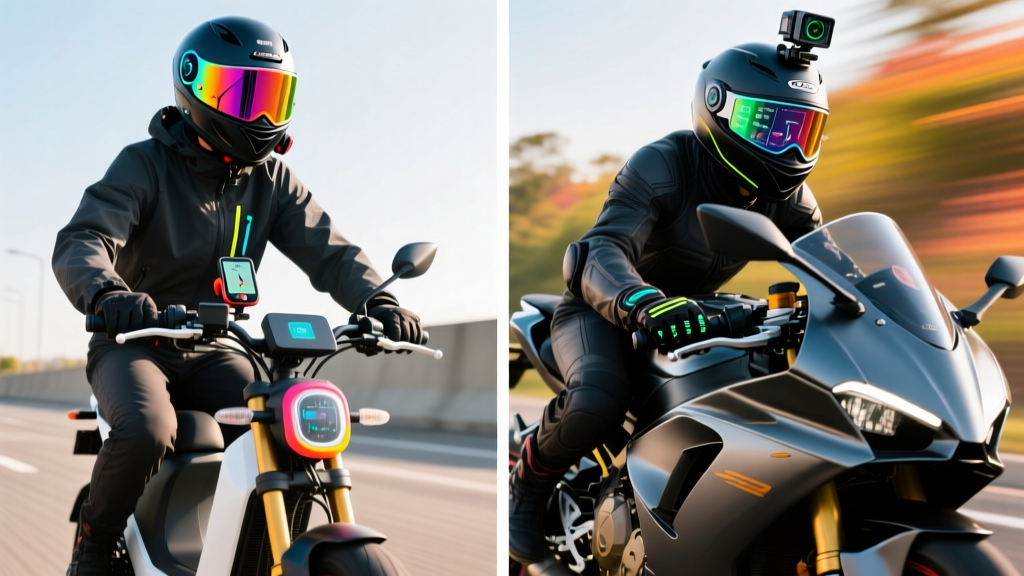
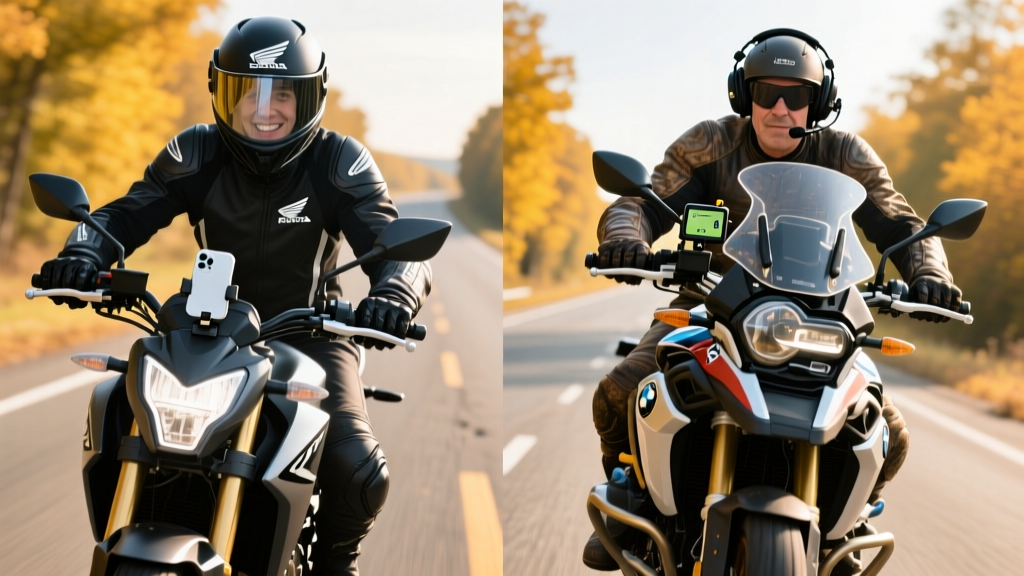
The Tech Divide: Why Experience Dictates Your Motorcycle Loadout
The aftermarket motorcycle accessory market is saturated with electronics, but throwing money at high-end tech does not automatically make you a safer or better rider. When evaluating the best gadgets for motorcycle enthusiasts, the dividing line between a beginner and an expert isn't just budget—it is about cognitive load management and data utilization.
According to the Insurance Institute for Highway Safety (IIHS), motorcycle fatalities remain disproportionately high compared to passenger vehicles, largely due to visibility and collision avoidance failures. Beginners need gadgets that passively enhance safety and reduce distraction. Experts, who have already internalized the physics of cornering and braking, require active telemetry, advanced environmental awareness, and high-fidelity communication systems. Below is a direct comparison of how your tech stack should evolve as your seat time increases.
Communication Systems: Basic Intercom vs. Dynamic Mesh Networks
Helmet communication is the first electronic upgrade most riders make. However, the hardware requirements shift drastically depending on whether you ride solo to work or tackle 200-mile weekend group runs.
The Beginner Setup: Sena SMH10R or Entry-Level Bluetooth
For riders in their first two years, the primary use case for a headset is taking occasional phone calls, listening to GPS prompts, and perhaps connecting to one other riding partner. Basic Bluetooth 4.1 or 5.0 headsets (like the Sena SMH10R, typically around $169) offer a 900-meter range in optimal conditions. The interface is usually a simple jog dial that can be operated with heavy winter gloves.
- Pros: Low cost, simple pairing, long battery life (12+ hours).
- Cons: Point-to-point connection drops if the lead rider brakes hard and falls out of range; pairing multiple brands is a frustrating ordeal.
The Expert Setup: Cardo Packtalk Edge with JBL Audio
Veteran riders and track-day groups require Dynamic Mesh Communication (DMC). The Cardo Packtalk Edge ($329) utilizes Bluetooth 5.2 and a proprietary mesh network that self-heals. If a rider drops out of the pack to grab fuel, the network instantly reconnects them when they return to range without manual re-pairing.
More importantly, experts ride at higher speeds where wind noise exceeds 95 dB. The Packtalk Edge features JBL-tuned 40mm speakers with advanced DSP (Digital Signal Processing) that dynamically boosts vocal frequencies while suppressing low-end wind rumble. Experts also utilize the 'Natural Voice' activation, allowing them to change tracks or mute comms without taking a hand off the clip-ons to press a button.
Navigation & Mounting: The Hidden Danger of High-Frequency Vibrations
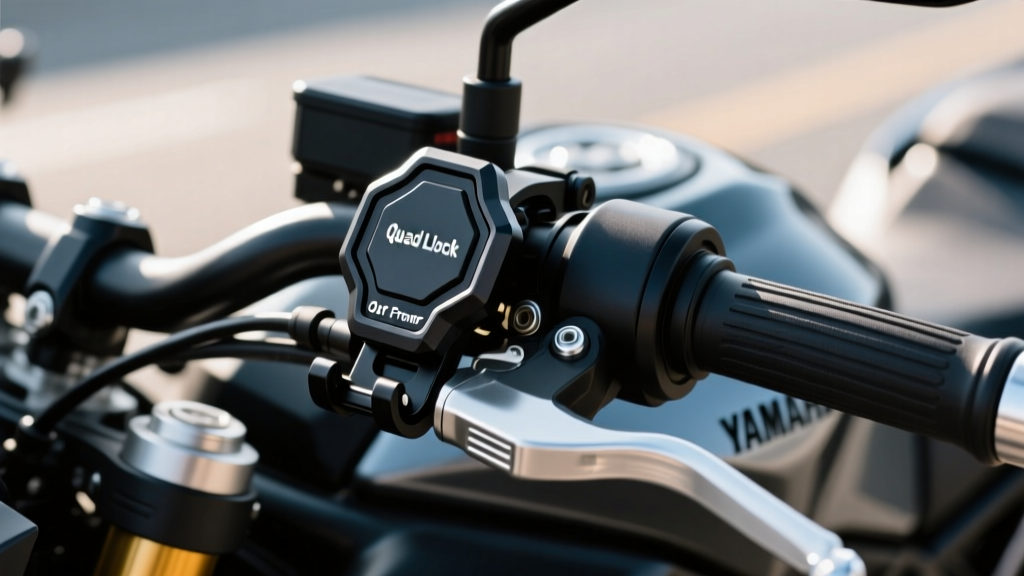
Every rider needs navigation, but the method of delivery separates the novices from the seasoned tourers. The most critical, yet widely ignored, piece of data regarding motorcycle phone mounts involves the destruction of smartphone cameras.
Modern smartphones use Optical Image Stabilization (OIS) and closed-loop autofocus systems that rely on delicate magnetic suspensions. The high-frequency, low-amplitude vibrations generated by motorcycle engines (particularly inline-fours and large V-twins) permanently shatter these mechanisms. Replacing a flagship phone camera module costs between $150 and $300. Never mount a bare phone to a motorcycle without a vibration isolator.
The Beginner Setup: Quad Lock with Vibration Dampener
Beginners should rely on their smartphones for navigation but must protect their hardware. The Quad Lock Out Front Mount paired with their proprietary Vibration Dampener (Total cost: ~$85) is the industry standard. The dampener uses a dual-chassis silicone isolation system that reduces high-frequency engine vibrations by up to 90%. Beginners get reliable GPS via Google Maps or Apple Maps without destroying their $1,200 device.
The Expert Setup: Garmin zūmo XT2 or Dedicated HUDs
Experts touring remote areas (like the Tail of the Dragon or the Dalton Highway) cannot rely on cellular data for map rendering. The Garmin zūmo XT2 ($599) is a ruggedized, glove-friendly GPS that utilizes preloaded topographical maps and satellite imagery. It features 'Adventurous Routing,' which algorithmically avoids boring straight highways in favor of curvy, elevation-changing roads. For track experts, Helmet HUDs (Heads-Up Displays) like the Chieftain or Crosshelmet project speed, RPM, and rear-view camera feeds directly onto the visor, eliminating the need to look down at a dash entirely.
Safety & Telemetry: Dashcams and Tire Management
As riders progress, they realize that post-incident evidence and pre-incident mechanical awareness are paramount. The National Highway Traffic Safety Administration (NHTSA) consistently highlights that multi-vehicle crashes often involve the other driver failing to see the motorcyclist. Video evidence is no longer optional.
| Feature Category | Beginner Gadget | Expert Gadget |
|---|---|---|
| Video Evidence | GoPro Hero (Handlebar Mount) | INNOVV C5 Dual-Channel Hardwired |
| Tire Pressure | Manual Digital Gauge (Weekly checks) | FOBO Bike 2 TPMS (Real-time Bluetooth) |
| Engine Diagnostics | Basic OBD2 Bluetooth Scanner | Hex ezCAN II / Denali DataHub |
Dashcam Evolution: Action Cams vs. Dedicated Moto DVRs
Beginners often strap a GoPro to their handlebars. While this captures great POV footage, action cams overheat when left recording on a dashboard in the sun, and their batteries degrade rapidly when hardwired to a 12V system. Furthermore, they only capture the front view.
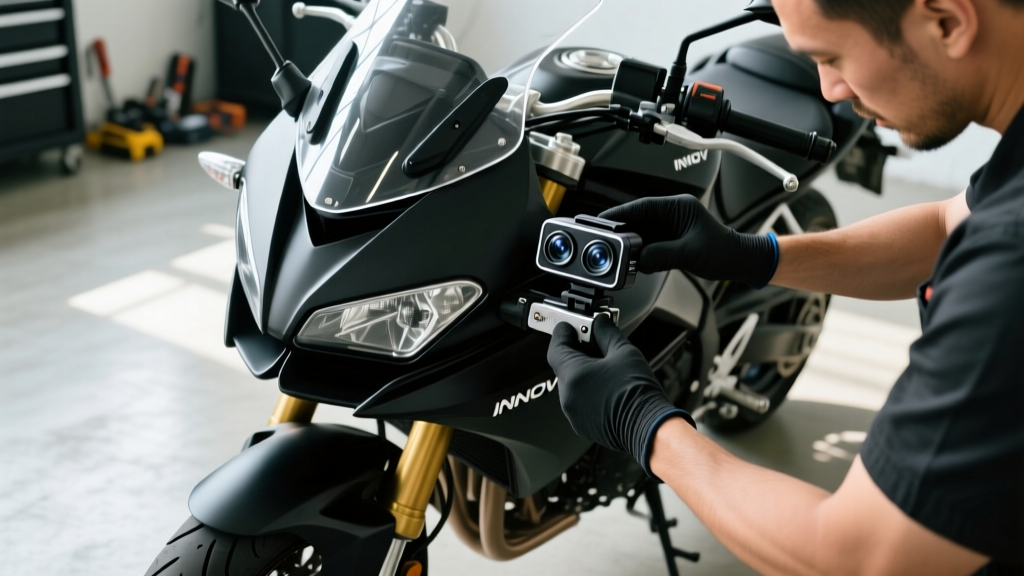
Experts install the INNOVV C5 ($299). This is a dedicated motorcycle DVR featuring an IP67-rated control unit that can be buried deep inside the fairing, completely protected from pressure washers and rain. It features dual Sony STARVIS sensors (front and rear) that hardwire directly into the bike's accessory fuse box, utilizing supercapacitors instead of lithium batteries to survive extreme summer heat without swelling or catching fire. The installation requires routing the GPS antenna away from the bike's metal frame to ensure satellite lock—a nuance only experienced wrenches anticipate.
Tire Pressure Monitoring Systems (TPMS)
A motorcycle's contact patch is roughly the size of two credit cards. A 2 PSI drop in pressure drastically alters the tire's sidewall flex, leading to unpredictable cornering behavior and accelerated edge wear. Beginners must check pressure manually before every ride. Experts install the FOBO Bike 2 ($159). This system replaces the valve stems with Bluetooth sensors that transmit exact pressure and temperature data to the rider's smartwatch or phone. Crucially, it alerts the rider to rapid pressure loss (a puncture) via an audible alarm while underway, providing the seconds needed to safely pull over before a catastrophic blowout at highway speeds.
The 'Do Not Buy' List for Beginners
When researching the best gadgets for motorcycle setups, beginners are often targeted by marketing for expert-level gear that actually hinders their learning curve. Avoid these purchases until you have at least two years of saddle time:
- Exhaust ECU Tuners (e.g., Power Commander, Dynojet): Adding fuel controllers to a beginner's bike often results in abrupt throttle response at low RPMs, increasing the likelihood of a low-side crash in slow-speed maneuvers.
- Handlebar Risers with Bar-End Mirrors: While aesthetically pleasing, bar-end mirrors vibrate heavily on most engines and require the rider to look down and outward, taking their eyes off the primary escape route.
- Active Electronic Suspension (Aftermarket): Systems like Öhlins Smart EC require a deep understanding of chassis geometry, sag, and damping rates. Without this knowledge, the automated adjustments will feel erratic and unsettle the chassis mid-corner.
Frequently Asked Questions
Can I use Apple AirPods instead of a dedicated motorcycle headset?
No. AirPods lack the IP-rating required for sudden rain, cannot connect to motorcycle intercom networks, and most importantly, do not have the passive noise isolation required to prevent long-term hearing damage from wind noise. Furthermore, wearing in-ear devices is illegal in several jurisdictions while operating a motorcycle.
Is a dedicated motorcycle GPS worth it if I have Apple CarPlay on my dash?
If your bike has factory-integrated CarPlay (like the Honda Africa Twin or BMW R1300GS), you do not need a standalone Garmin. However, if you are retrofitting an older bike, a dedicated unit like the zūmo XT2 is superior because it is engineered to be readable in direct sunlight and operable with heavy waterproof gloves, unlike retrofitted smartphone screens.
Written by
Lena ChenLena Chen earned her M.S. in Human-Computer Interaction from Carnegie Mellon University and a B.S. in Electrical Engineering from the University of Washington. She has spent the past decade specializing in smart home architecture and IoT ecosystems, helping over 200 homeowners design fully connected living spaces. Lena is a certified Matter protocol consultant and has published peer-reviewed research on voice-first interface design in the ACM Digital Library. Her reviews of smart home products combine deep technical analysis with real-world usability testing, evaluating everything from Zigbee mesh stability to Alexa skill responsiveness. She regularly speaks at CEDIA Expo and CES smart home panels.