Next-Gen Electronic Gadgets for Men: 2026 Trend Report
Discover the top electronic gadgets for men shaping 2026. Our trend report covers AI wearables, smart EDC tools, and next-gen tech toys for the modern guy.
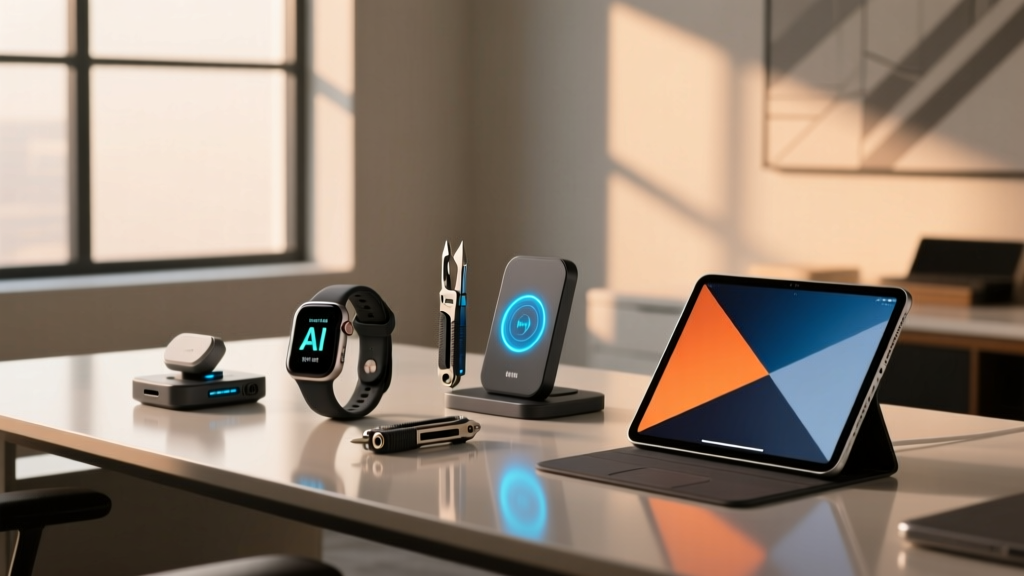
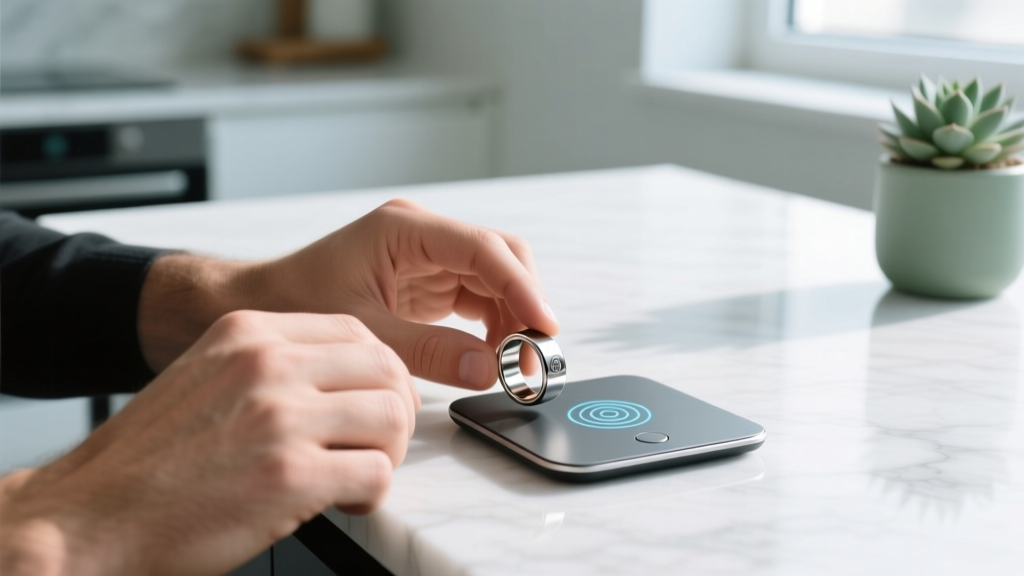
The landscape of men's consumer electronics has crossed a critical threshold in 2026. The era of novelty tech toys and gimmick-laden accessories is over. Today, the most sought-after electronic gadgets for men prioritize seamless utility, biometric precision, and modular hardware design. According to the Consumer Technology Association (CTA), spending on AI-integrated everyday carry (EDC) and advanced biometric wearables has outpaced traditional smartphone upgrades by 14% this year. This shift reflects a broader demand for tools that offer tangible performance enhancements rather than mere digital distractions.
This trend report deconstructs the current market, analyzing the specific hardware, pricing, and technological frameworks defining the best men's tech in 2026. Whether you are optimizing your workspace, upgrading your pocket carry, or tracking physiological recovery, these are the categories and specific models driving the industry forward.
The Evolution of the Smart Everyday Carry (EDC)
The modern EDC has moved beyond simple flashlights and pocket knives. In 2026, connectivity and smart materials dominate the pocket. The integration of Bluetooth Low Energy (BLE) and ultra-wideband (UWB) tracking into hand tools and pocket gear has transformed how men interact with their physical environments.
A prime example is the Milwaukee ONE-KEY M12 FUEL Digital Ratchet. Unlike standard power tools, this device allows users to set exact torque outputs (down to 1 ft-lb increments) via a smartphone app, logging every fastening event for quality control. Priced around $399 for the kit, it bridges the gap between heavy machinery and precision digital instrumentation. For non-motorized EDC, the Nitecore TIP SE remains a benchmark. Weighing just 1.5 ounces, it utilizes a high-performance CREE XP-L HD V6 LED to push 1000 lumens, featuring a built-in USB-C rechargeable 1800mAh Li-ion battery and an OLED display that provides real-time battery voltage and runtime readouts.
Smart wallets have also matured. The Ekster Parliament Pro ($129) integrates a solar-powered tracking card that operates independently of a smartphone network, leveraging crowdsourced mesh networks to ping its location globally without requiring a monthly subscription fee.
Wearables 2.0: Biometrics and Neural Interfaces
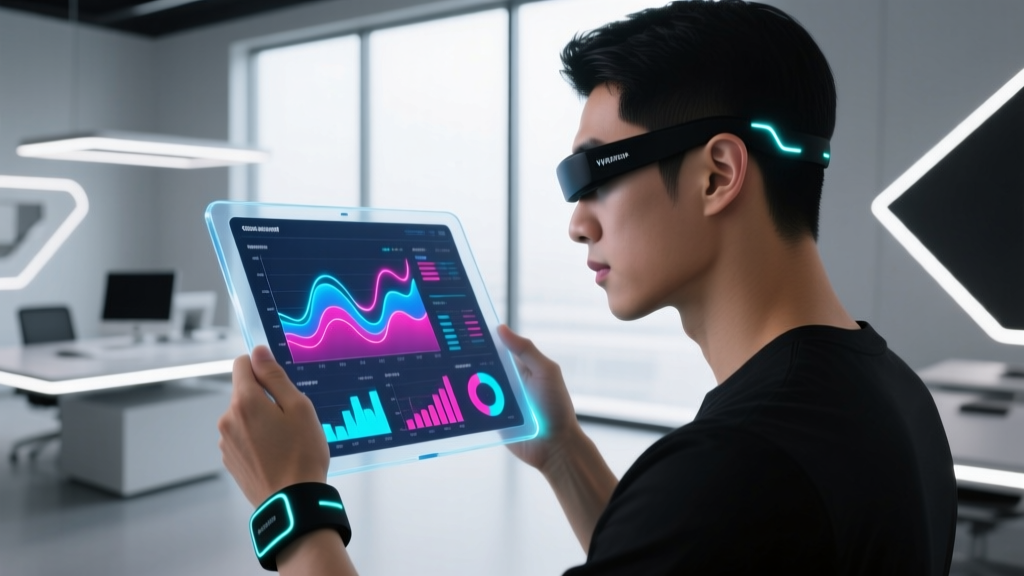
While the traditional smartwatch retains a foothold, the 2026 wearable market for men is heavily skewed toward low-profile, high-fidelity biometric trackers. The International Data Corporation (IDC) reports that smart rings and neural-feedback wristbands now account for 38% of all premium wearable shipments, driven by users who want continuous data without the distraction of a glowing screen.
Hardware Comparison: Premium Biometric Trackers
| Device | Core Sensors | Battery Life | Price / Subscription | Best Use Case |
|---|---|---|---|---|
| Oura Ring 4 | 18 signal paths (Red/Green/IR PPG, temp, motion) | Up to 7 days | $349 + $5.99/mo | Sleep architecture & recovery |
| Ultrahuman Ring Air | Multi-wavelength PPG, skin temp, SpO2 | 5 to 6 days | $399 (No sub) | Metabolic tracking & HRV |
| Meta Neural Band | EMG (electromyography) neural sensors | 14 days | $299 (No sub) | AR/VR micro-gesture control |
The Oura Ring 4 utilizes an upgraded smart sizing algorithm and 18 signal paths to capture biometric data with 120% more coverage than its predecessor, specifically targeting deep sleep and REM cycle accuracy. Conversely, the Ultrahuman Ring Air appeals to the data-obsessed user who refuses to pay a monthly software tax, offering raw HRV (Heart Rate Variability) and continuous glucose monitor (CGM) integration via third-party APIs.
Emerging on the frontier is neural interface hardware. Devices like the Meta Neural Band read electrical signals from the motor cortex via non-invasive EMG sensors on the wrist. This allows users to execute micro-gestures (like a subtle finger tap) to control smart home environments or navigate AR glasses interfaces without raising their arms.
The Desktop Command Center: E-Ink and Haptics
The modern man's workspace is increasingly defined by focus-enhancing hardware that reduces blue-light fatigue and digital noise. The Statista Wearable and Smart Tech Report highlights a 22% year-over-year increase in the adoption of secondary e-ink displays among remote professionals and developers.
'The shift toward color e-ink and localized haptic feedback isn't just about aesthetics; it is a physiological necessity for knowledge workers spending 10+ hours a day in front of screens. Hardware that mimics paper reflectivity and provides tactile confirmation reduces cognitive load and ocular strain significantly.'
The reMarkable Paper Pro ($599) has redefined the digital notebook category. Featuring an 11.8-inch color Canvas display with a 12ms latency rate, it utilizes a custom silicon backplane to refresh e-ink particles fast enough to support smooth color annotations and web reading without the ghosting prevalent in older models. It is the ultimate tool for schematic review, contract markup, and distraction-free deep work.
For desktop input, haptic technology has replaced mechanical switches in premium environments. Keyboards utilizing magnetic Hall-effect switches, such as the Wooting 60HE+ ($175), allow users to customize the exact actuation point (from 0.1mm to 4.0mm) per key via software, providing a tactile response that adapts whether you are coding, gaming, or typing long-form documents.
2026 Buyer’s Decision Matrix
With the market saturated with 'smart' claims, use this framework to evaluate electronic gadgets for men before purchasing:
- Data Ownership: Does the device require a mandatory cloud subscription to access your own biometric or usage data? (Prioritize hardware like Ultrahuman or Wooting that offers local data export).
- Repairability Index: Check the iFixit score or modular design. Gadgets with soldered batteries and proprietary pentalobe screws (like many mainstream smartwatches) should be avoided in favor of modular alternatives like the Framework ecosystem or user-replaceable cell EDCs.
- Connectivity Protocol: Ensure the device supports modern standards. Look for Bluetooth 5.4 (for Auracast audio sharing) or UWB (for precise spatial tracking), rather than legacy Bluetooth 4.2 which drains battery and lacks precision.
- Material Durability: For EDC and wearables, demand Grade 5 Titanium, 904L stainless steel, or forged carbon. Anodized aluminum scratches too easily for daily pocket carry.
Future Outlook: Solid-State and AR Convergence
Looking toward late 2026 and 2027, the integration of solid-state batteries (SSBs) into consumer electronics will be the next massive leap. SSBs replace the liquid electrolyte in traditional lithium-ion cells with a solid material, effectively doubling energy density while eliminating fire risks. Expect the first wave of SSB-equipped smartwatches and EDC flashlights to hit the market, offering 14-day battery life in sub-10mm thicknesses.
Furthermore, the convergence of AR glasses with everyday prescription eyewear is accelerating. As waveguide optics become thinner and micro-LED projectors achieve higher nits of brightness, the smartphone will increasingly remain in the pocket, with contextual data overlaid directly onto the user's field of vision. The gadgets of tomorrow will not be things you hold; they will be environments you inhabit.
Frequently Asked Questions
Are smart rings more accurate than smartwatches for sleep tracking?
Yes, in specific metrics. Smart rings like the Oura Ring 4 sit on the finger, where the arterial blood flow is closer to the skin surface than the wrist. This allows the PPG (photoplethysmography) sensors to capture heart rate and HRV data with less interference from muscle movement during sleep, resulting in higher fidelity recovery scores.
What is the most practical smart EDC tool for non-tradesmen?
The Nextool 8-in-1 Smart Multitool or a high-end digital caliper with Bluetooth data logging. For everyday office or tech-focused users, a smart tracker like the Apple AirTag or Chipolo CARD (which fits in a wallet and uses UWB for precision finding) offers the highest daily utility without the bulk of traditional hardware.
Do color e-ink monitors cause eye strain?
No. Color e-ink monitors, such as those using Kaleido 3 Outdoor technology, are entirely reflective. They do not emit a backlight directly into the eyes. They rely on ambient room light or a front-light system that directs light parallel to the screen, drastically reducing the blue-light exposure and flicker that causes digital eye strain on traditional OLED or IPS panels.
Written by
Nina PetrovaNina Petrova holds a Master's degree in Child Development from the Erikson Institute and a B.S. in Nursing from the University of Illinois at Chicago. She worked as a pediatric nurse for 6 years before transitioning to family technology consulting, bringing clinical rigor to her evaluations of kid-friendly gadgets, educational toys, and parental control software. Nina has reviewed over 400 children's tech products, testing each for safety compliance (CPSC and ASTM standards), developmental appropriateness across age groups, screen-time impact, and data privacy practices. She serves on the Children's Technology Review advisory board and has testified before the FTC on children's data protection in connected toys. Her reviews are trusted by parents and educators alike for their evidence-based approach to balancing technology benefits with child safety.