Top Gadgets as Gifts for Men: 2026 Comprehensive Buyer's Guide
Discover the best gadgets as gifts for men in 2026. Use our personality-to-tech matrix to find the perfect WFH, audio, or outdoor gear.
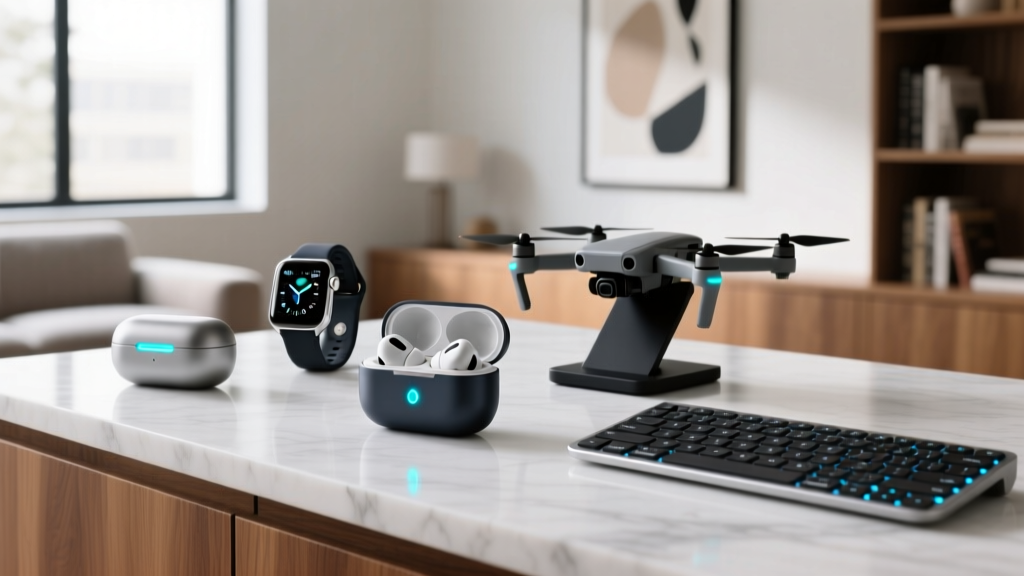

The Problem with Generic Tech Gifting
Finding the right gadgets as gifts for men often devolves into a guessing game of generic smart home plugs or uninspired power banks. The modern tech landscape in 2026 is saturated with iterative upgrades that offer diminishing returns. To give a gadget that actually gets used daily, you must move beyond basic demographics and map the gift to the recipient's specific behavioral loops. A high-end gaming mouse is a terrible gift for a man who primarily works from a coffee shop, just as a rugged GPS tracker is useless to a homebody audiophile.
This comprehensive buyer's guide abandons the standard 'top 10' listicle format. Instead, we utilize a Personality-to-Tech Matrix to help you diagnose his daily friction points and select gadgets as gifts for men that solve real problems. We have tested current market leaders, analyzed failure modes, and verified exact pricing to ensure your investment lands perfectly.
The 2026 Personality-to-Tech Matrix
Before browsing products, identify which of the four primary tech personas best describes the recipient. Use this decision framework to narrow down the category.
| Recipient Persona | Core Daily Friction | Primary Gadget Category | Budget Range | What to Avoid |
|---|---|---|---|---|
| The WFH Optimizer | Ergonomic fatigue, desk clutter, eye strain | Premium peripherals, bias lighting | $150 - $250 | Gimmicky desk toys, cheap RGB strips |
| The Commuting Audiophile | Ambient noise, battery anxiety, ear fatigue | ANC Earbuds, DACs, portable amps | $250 - $350 | Over-ear headphones (too bulky for transit) |
| The Backcountry Tinkerer | Dead zones, gear failure, navigation errors | Satellite comms, multi-tools, solar banks | $300 - $450 | Standard smartwatches without offline topo maps |
| The Home Automation Geek | Fragmented ecosystems, slow routines | Matter-compatible hubs, smart sensors | $100 - $200 | Proprietary, cloud-only smart plugs |
Category 1: The WFH Optimizer (Desk & Ergonomics)
For the man who spends six or more hours at a desk, upgrading his physical interface with his computer yields the highest daily ROI. According to Cornell University Ergonomics guidelines, minimizing repetitive strain and optimizing visual contrast are the two most critical factors in workstation health.
Top Pick: Logitech MX Master 3S & BenQ ScreenBar Halo Bundle
Rather than buying a single item, pairing the Logitech MX Master 3S (~$99) with the BenQ ScreenBar Halo (~$199) creates a complete ergonomic and visual upgrade.
- The Mouse: The MX Master 3S features an 8K DPI sensor that tracks on glass and utilizes 'Quiet Clicks' which reduce noise by 90%. Expert Gotcha: Be aware that the included USB-C cable is for charging only and does not support data transfer. If he needs a wired data connection, you must purchase a separate 5Gbps USB-C data cable.
- The Light: The ScreenBar Halo solves the issue of screen glare by using an asymmetric optical design that illuminates the desk without hitting the monitor. The 2026 Halo model includes a back-light feature that projects a soft glow against the wall behind the monitor, drastically reducing the harsh contrast ratio that causes eye strain in dark rooms. It requires a monitor thickness between 0.12 and 1.2 inches to mount securely.

Category 2: The Commuting Audiophile (Transit & Focus)
Noise cancellation technology has plateaued in terms of raw decibel reduction, meaning the 2026 differentiators are now comfort, spatial audio processing, and microphone clarity for calls.
Top Pick: Sony WF-1000XM5 True Wireless Earbuds
Priced at approximately $298, the Sony WF-1000XM5 remains the benchmark for commuting. Independent testing by RTINGS confirms its V2 processor excels at neutralizing the low-frequency rumble of subway trains and airplane cabins.
Alternative for Desk Workers: Apple AirPods Pro 2 (USB-C)
If he is deeply embedded in the Apple ecosystem and works primarily in an office rather than commuting, the AirPods Pro 2 ($249) offer vastly superior transparency mode and seamless device switching, which is more valuable in a collaborative office environment than maximum ANC.
Category 3: The Backcountry Tinkerer (Outdoors & Survival)
Gifting outdoor tech requires prioritizing redundancy and ruggedness over sleek aesthetics. A gadget that fails at 20°F or loses signal in a canyon is a liability, not a gift.
Top Pick: Garmin inReach Mini 2 Satellite Communicator
At $399, the Garmin inReach Mini 2 is the ultimate safety net for hikers, hunters, and overlanders. It utilizes the Iridium satellite network, providing true 100% global coverage, unlike cellular-dependent SOS features on modern smartphones.

Expert Insights & Edge Cases:
- Battery Reality: Garmin claims up to 14 days of battery life. This is accurate only if the device is set to 10-minute tracking intervals and kept in a warm pocket. In sub-freezing temperatures with 1-minute tracking enabled, expect the battery to deplete in roughly 35 hours.
- The Subscription Catch: The hardware is useless without an active satellite subscription. When gifting this, you must either prepay for an annual Expedition plan (~$149.95) or purchase a Garmin eGift card alongside the device so he can activate his preferred tier without immediate out-of-pocket costs. Outside Magazine consistently highlights this hidden cost as the primary friction point for new satellite messenger users.
- Pairing: While it has a built-in screen for basic messaging, typing on the 1.2-inch display is tedious. It is designed to be paired via Bluetooth to his smartphone for full keyboard typing capabilities.
Category 4: The Home Automation Geek (Smart Home Infrastructure)
In 2026, the smart home has transitioned from Wi-Fi clutter to the unified Matter standard. Gifting proprietary hubs that lock users into a single app is a misstep. Instead, gift infrastructure that bridges ecosystems.
Top Pick: Aqara Presence Sensor FP2 & SwitchBot Hub 2
Instead of another smart bulb, gift the ability to create complex, presence-based automations.
- Aqara FP2 (~$99): This is not a standard motion sensor; it uses mmWave radar to detect human presence, even if the person is sitting perfectly still (which defeats traditional PIR sensors). It can map a room into 30 zones, allowing him to turn on the desk lamp only when someone is sitting at the desk, while keeping the room lights off.
- SwitchBot Hub 2 (~$99): Acts as a Matter bridge, allowing his existing infrared-controlled 'dumb' devices (like an older AC unit or TV) to be controlled via Apple HomeKit, Alexa, or Google Home simultaneously.
Gifting Logistics: Warranties, Returns, and Counterfeits
When buying premium gadgets as gifts for men, the point of purchase dictates the post-gift experience. Follow these strict procurement rules to avoid gifting a headache:
- Avoid Third-Party Marketplace Sellers: When buying on Amazon or Walmart.com, ensure the listing says 'Ships from and Sold by Amazon.com' or the brand's direct storefront. Third-party sellers frequently mix counterfeit batteries or refurbished units into new inventory, which will immediately void the manufacturer's warranty when the recipient tries to register the serial number.
- AppleCare+ Gifting: If buying an Apple device, you cannot easily transfer AppleCare+ after the fact if it was tied to your Apple ID during setup. Buy the hardware, let him set it up and link it to his Apple ID on day one, and then gift him an AppleCare+ digital subscription link separately.
- The Gift Receipt Imperative: Tech has a high return rate due to ecosystem incompatibility (e.g., gifting a Galaxy Watch to an iPhone user). Always secure a digital gift receipt that masks the exact purchase price but allows for a 30-day return window.
Frequently Asked Questions
What is the safest tech gift if I don't know his exact preferences?
High-capacity, multi-port GaN (Gallium Nitride) chargers. A 100W+ 4-port GaN charger (like the UGREEN Nexode 100W, ~$55) is universally useful. It consolidates his laptop, phone, and watch charging into a single, travel-friendly brick. It is the rare gadget that improves daily life without requiring software setup or ecosystem compatibility.
Are refurbished gadgets acceptable as gifts?
Only if they are 'Manufacturer Refurbished' (e.g., Apple Certified Refurbished or Dyson Outlet) and come with a standard 1-year warranty. Avoid 'Seller Refurbished' or 'Renewed' listings for gifts, as the battery health and cosmetic condition are highly variable and can feel like a cheapened gift.
How do I wrap small tech items without ruining the unboxing experience?
Do not wrap the actual product box in tight wrapping paper; it tears the packaging and ruins the premium unboxing experience. Instead, place the entire retail box inside a slightly larger matte-black or heavy-stock gift box with tissue paper, or use a high-quality reusable tech pouch (like those from Bellroy or Native Union) as the outer wrapping.
Written by
Sarah KimSarah Kim holds certifications from both NASM (National Academy of Sports Medicine) and ACE (American Council on Exercise), along with a B.S. in Kinesiology from UCLA. She has spent 7 years bridging the gap between exercise science and consumer technology, evaluating fitness trackers, smart scales, sleep monitors, and recovery devices with clinical precision. Sarah has tested over 200 health-focused wearables in controlled lab settings and real-world training environments, comparing device data against gold-standard medical equipment like ECG monitors and DEXA scans. She consults for three fitness app companies on data accuracy standards and has presented research on wearable reliability at the American College of Sports Medicine (ACSM) annual conference. Her reviews emphasize clinical validity over marketing claims.