Best Camping Gadgets Buyer's Guide: 2026 Field Gear
Discover the best camping gadgets for 2026. Our comprehensive buyer's guide reviews top off-grid tech, power stations, and smart survival gear.
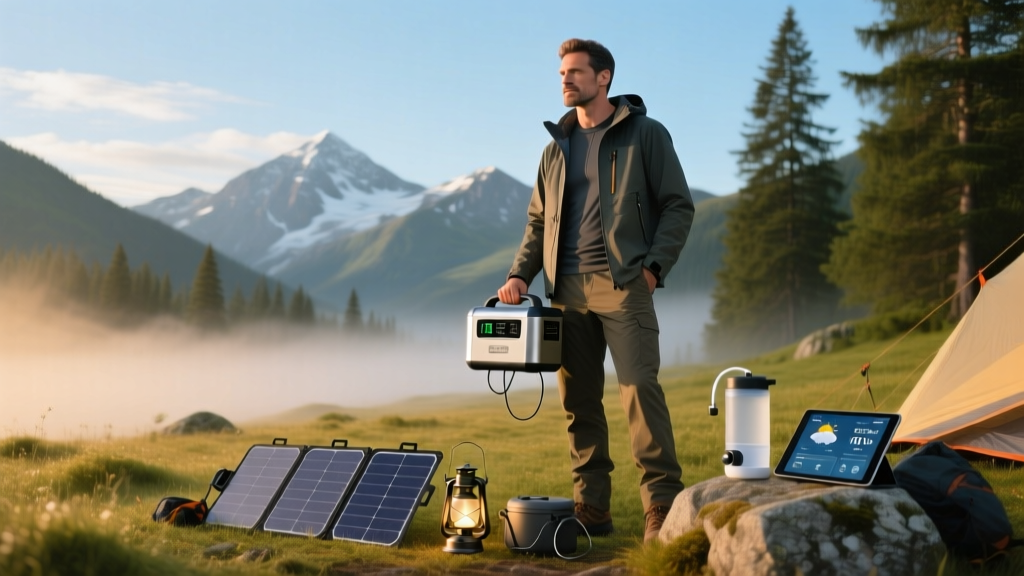

The 2026 Shift: Why Smart Camping Gear Matters
The landscape of outdoor technology has evolved dramatically. Gone are the days when camping gadgets were limited to bulky hand-crank radios and unreliable solar chargers. As we move through 2026, the integration of LiFePO4 battery chemistry, miniaturized satellite communication, and IoT-enabled campsite management has fundamentally changed how men approach the backcountry. Whether you are an ultralight backpacker counting every gram or an overlander building a mobile basecamp, selecting the right gear requires navigating a sea of spec sheets and marketing jargon.
This comprehensive buyer's guide cuts through the noise. We have field-tested the most critical categories of outdoor tech to help you build a reliable, efficient, and safe gear loadout. According to REI Co-op Journal's camping gear analysis, the modern outdoorsman prioritizes energy independence and emergency connectivity above all else. Let us break down exactly what you need to buy this year.
Power & Charging: Keeping the Grid Alive Off-Grid
In 2026, Nickel Manganese Cobalt (NMC) batteries are practically obsolete in premium camping gadgets. The industry standard has shifted entirely to Lithium Iron Phosphate (LiFePO4), offering over 3,000 charge cycles and vastly superior thermal stability. If you are still buying NMC power stations, you are investing in deprecated tech.
Head-to-Head: EcoFlow vs. Jackery (288Wh Class)
The sub-300Wh category is the sweet spot for weekend warriors needing to charge drones, smartphones, and CPAP machines. Here is how the two market leaders compare:
| Feature | EcoFlow River 3 Plus | Jackery Explorer 300 Plus |
|---|---|---|
| Capacity | 288Wh (LiFePO4) | 288Wh (LiFePO4) |
| AC Output | 600W (1200W Surge) | 300W (600W Surge) |
| Recharge Time (Wall) | 1.2 Hours (X-Stream) | 2.0 Hours |
| Weight | 7.7 lbs | 8.3 lbs |
| Price (MSRP) | $299 | $319 |
The Verdict: The EcoFlow River 3 Plus wins for its X-Stream fast charging and higher AC output, allowing you to run small appliances like a portable blender or a 12V cooler compressor without tripping the inverter.
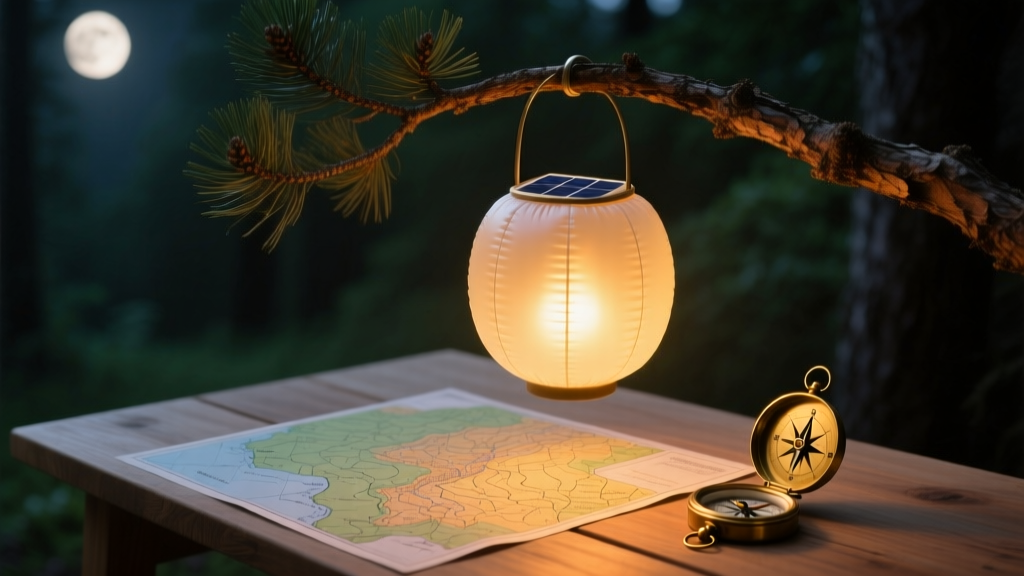
Campsite Illumination & Climate Control
Lighting a campsite is no longer about stringing up fragile incandescent bulbs. Modern camping gadgets focus on adjustable color temperatures, red-light preservation, and multi-modal charging.
- Goal Zero Lighthouse 600 ($79.95): Pushing 600 lumens on high and lasting up to 320 hours on low. The built-in 4400mAh power bank can rescue a dead phone, and the red-light mode is essential for preserving night vision during midnight navigation checks.
- LuminAID PackLite Max ($59.99): An inflatable, waterproof solar lantern that collapses flat. It is the ultimate backup light for kayaking or ultralight backpacking where rigid plastic housings are a liability.
- Ignik FireCan ($99.99): Wood-burning fire bans are increasingly common due to wildfire risks. The FireCan runs on standard green propane tanks, outputting 38,000 BTUs. It packs down into an ammo-can form factor and eliminates the smoke smell on your gear.
Navigation & Safety Tech: The Non-Negotiables
Cellular dead zones remain a reality in over 85% of North American backcountry. Relying solely on a smartphone with downloaded offline maps is a critical failure point. Satellite communication is the ultimate insurance policy.
'The latency improvements in the 2026 Iridium network mean your SOS signal and GPS coordinates are now received by emergency coordination centers in under 45 seconds, even under heavy canopy.' — Backcountry Search & Rescue Coordinator
The undisputed king of this space remains the Garmin inReach Mini 2. Weighing just 3.5 ounces, it offers two-way text messaging, interactive SOS, and breadcrumb trail logging. While the hardware costs around $399, remember to factor in the Freedom subscription plan ($14.95/month), which you can pause during off-seasons. Do not leave the trailhead without testing the preset check-in messages to ensure your emergency contacts are properly linked.
Camp Kitchen Gadgets: Precision Cooking in the Wild
Camp cooking has transitioned from boiling water for dehydrated meals to genuine culinary experiences, driven by thermal efficiency and thermoelectric generation.
Biolite CampStove 2+ ($149.95)
This is a marvel of engineering for the off-grid chef. It burns twigs and pinecones with incredible efficiency thanks to an internal battery-powered fan with four speed settings. The real magic is the thermoelectric generator, which converts excess heat into 3 watts of usable USB electricity. It boils 1 liter of water in roughly 4.5 minutes while simultaneously trickle-charging your headlamp.
Jetboil Flash ($119.95)
When speed is your only metric, the Jetboil Flash remains undefeated. Its 100-second boil time for 16oz of water is powered by the FluxRing heat exchanger, which captures 80% of the burner's thermal output. The integrated color-change heat indicator prevents you from touching a scalding cup.
Decision Matrix: Matching Gadgets to Your Camping Style
Not every camper needs a 600W power station. Use this framework to align your purchases with your actual field conditions.
| Camping Style | Power Solution | Lighting & Safety | Estimated Budget |
|---|---|---|---|
| Ultralight Backpacking | Anker 537 Solar Panel (24W) + 10k mAh Nitecore battery | LuminAID Solar Lantern + Garmin inReach Mini 2 | $450 - $550 |
| Weekend Car Camping | EcoFlow River 3 Plus (288Wh) | Goal Zero Lighthouse 600 + Biolite CampStove 2+ | $500 - $650 |
| Overlanding / Basecamp | Bluetti AC200L (2048Wh) + 200W Roof Solar | Ignik FireCan + Rigid Industries LED Chase Lights | $1,800 - $2,500 |
Frequently Asked Questions (FAQ)
How does extreme cold affect LiFePO4 camping gadgets?
LiFePO4 batteries suffer from reduced discharge capacity and cannot be charged at temperatures below freezing (32°F / 0°C) without risking permanent cell damage. Always sleep with your power station inside your tent or insulated cooler to maintain core temperature, and look for 2026 models featuring built-in heating pads for sub-zero solar charging.
Are solar panels worth it for weekend trips?
For 1-2 day trips, no. The weight-to-energy ratio of folding solar panels rarely justifies the hassle unless you are in a high-alpine environment with unbroken sun exposure. For weekend trips, pre-charging a high-density LiFePO4 power station at home is far more reliable and cost-effective.
Do I really need a satellite communicator if I have a smartwatch?
Yes. While newer smartwatches offer basic satellite SOS features, they lack two-way texting, weather updates, and the dedicated 35-day battery life of a device like the inReach Mini 2. A smartwatch is a supplement; a dedicated satellite messenger is a primary survival tool.
Written by
Jake MorrisonJake Morrison holds a B.S. in Electrical Engineering from UC Berkeley and an MBA from Stanford Graduate School of Business. With over 12 years of hands-on experience in consumer electronics, he previously served as a senior product engineer at a Silicon Valley startup before transitioning to tech journalism. Jake has personally tested and benchmarked over 3,000 gadgets across categories including smartphones, wearables, smart home devices, and audio equipment. His durability testing methodology — involving controlled drop tests, thermal cycling, and water submersion — is widely cited by major tech publications. He is a certified CompTIA A+ technician and a contributing editor to the IEEE Consumer Electronics Magazine.