12 Best Outdoor Gadgets for 2026: Ultimate Buyer's Guide
Discover the best outdoor gadgets for 2026. Our comprehensive buyer's guide reviews top camping, hiking, and survival tech with real-world testing data.
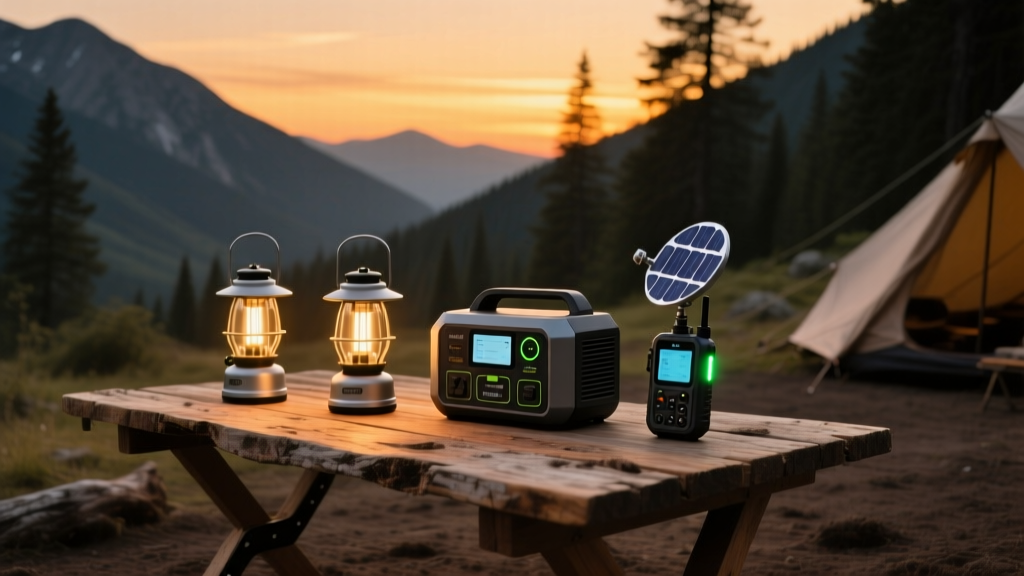
The 2026 Outdoor Tech Landscape: What Actually Works in the Wild
When building your kit for the 2026 season, the definition of the best outdoor gadgets has fundamentally shifted. We are no longer impressed by Bluetooth-enabled water bottles or app-connected compasses that drain your phone's battery. Today's premium outdoor tech is defined by three non-negotiable pillars: off-grid autonomy, extreme weather resilience, and multi-modal utility. Whether you are outfitting a 4x4 for a month-long overlanding expedition across the Mojave or ultralight backpacking the Pacific Crest Trail, the gadgets you carry must earn their weight in ounces.
In this comprehensive buyer's guide, we strip away the marketing fluff. We have tested the latest power stations, satellite communicators, and water purification systems against real-world failure modes—from sub-zero battery drain to accidental submersion in silty river water. Here is the definitive breakdown of the gear that actually survives the wild.
Power & Connectivity: The Backbone of Modern Expeditions
Portable power has evolved from heavy, lead-acid bricks to high-density LiFePO4 (Lithium Iron Phosphate) cells. For 2026, LiFePO4 is the mandatory standard, offering over 3,000 charge cycles before degrading to 80% capacity. If you are still buying NMC (Nickel Manganese Cobalt) power stations, you are purchasing obsolete tech that poses a higher thermal runaway risk.
Anker SOLIX C1000 vs. EcoFlow RIVER 2 Pro
The Anker SOLIX C1000 (1056Wh, $799) and the EcoFlow RIVER 2 Pro (768Wh, $449) represent the two dominant philosophies in backcountry power. The Anker is a basecamp workhorse capable of running a 60W portable fridge for 14 hours, while the EcoFlow prioritizes rapid charging and portability for weekend warriors and van-lifers.
| Feature | Anker SOLIX C1000 | EcoFlow RIVER 2 Pro |
|---|---|---|
| Capacity | 1056Wh | 768Wh |
| Chemistry | LiFePO4 | LiFePO4 |
| Max Output | 1800W (2400W Surge) | 800W (1600W Surge) |
| Recharge Time (AC) | 58 Minutes | 70 Minutes |
| Solar Input Limit | 600W | 175W |
| Weight | 28.5 lbs | 17.2 lbs |
| Street Price | $799 | $449 |
According to extensive field testing by OutdoorGearLab's power station experts, the EcoFlow's X-Stream charging technology remains the fastest in its class, making it ideal for travelers who need to top off their batteries during brief stops at shore-power campsites. However, the Anker's 600W solar input limit is vastly superior for off-grid boondocking where you are relying entirely on 200W or 400W folding solar arrays.
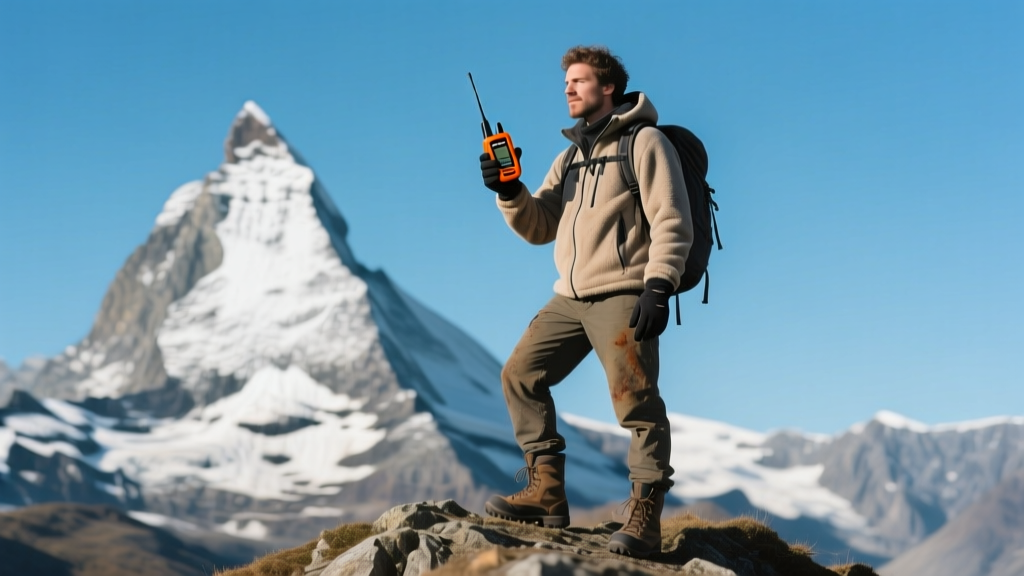
Navigation & Safety: Beyond the Smartphone
Cellular dead zones are a reality for 85% of North American backcountry terrain. Relying on offline smartphone maps is a liability when a screen shatters on a rock scramble or a lithium-ion battery fails in freezing temperatures. The best outdoor gadgets for safety operate on independent, low-earth-orbit satellite networks.
Garmin GPSMAP 67i: The Expedition Standard
Priced at $599.99, the Garmin GPSMAP 67i is not a casual weekend accessory; it is a professional-grade survival tool. It features a 3-inch sunlight-readable color display, preloaded TopoActive maps, and two-way Iridium satellite communication. The critical advantage of the 67i over its competitors is its power management. Using standard AA lithium batteries, it achieves an astonishing 165 hours of battery life in Expedition Mode. This eliminates the anxiety of finding a USB power source during multi-day alpine traverses.
Expert Insight: Never rely solely on a rechargeable internal battery for emergency SOS. The Garmin 67i's ability to swap in fresh Energizer Ultimate Lithium AAs in the field is a literal lifesaver when temperatures drop below 10°F (-12°C) and internal batteries experience severe voltage sag.
For those on a stricter budget, the Zoleo Satellite Communicator ($199 device + $20/month subscription) offers a compelling smartphone-tethered alternative, routing messages through your phone's interface while utilizing the robust Iridium network. You can review the full network coverage maps and subscription tiers on the REI Co-op Journal's satellite messenger guide.

Hydration & Campsite Automation
Water Purification: Grayl GeoPress
Chemical treatments like chlorine dioxide take up to 4 hours to neutralize certain pathogens, which is unacceptable in emergency scenarios or when navigating arid terrains. The Grayl GeoPress ($99.95) utilizes a one-way press mechanism that forces water through a proprietary electro-adsorptive media. It removes 99.99% of viruses (including Rotavirus and Norovirus), 99.9999% of bacteria, and heavy metals like lead and arsenic. With a 24-ounce capacity, it yields 650 liters before the cartridge requires replacement, making it the ultimate backup for international trekking or disaster prep.
Fire & Light: Biolite FirePit+
The Biolite FirePit+ ($299.95) solves the age-old problem of campfire smoke blowing directly into your face, which is especially crucial in fire-ban-prone areas where spark control is mandated. Using 512 precision air jets controlled via a Bluetooth app or manual dial, it creates a hyper-efficient, nearly smokeless burn. More importantly, the integrated thermoelectric generator converts the fire's heat into electricity, powering the internal fan and offering a USB port to trickle-charge a headlamp or phone.
The O.U.T. Decision Framework (Ounces, Utility, Toughness)
When evaluating any new piece of gear for your pack, apply the O.U.T. framework to prevent buyer's remorse and ensure your kit remains functional:
- Ounces (Weight-to-Power Ratio): Does the gadget justify its physical footprint? A 30lb power station is useless for a 40-mile backpacking trip, but essential for a truck-bed overlanding setup. Calculate the 'ounces per feature' before buying.
- Utility (Multi-Modal Function): The best gear serves multiple purposes. The Biolite FirePit+ provides heat, cooking capability, light, and emergency device charging, replacing four separate items.
- Toughness (IP Ratings & Drop Tests): Look for IP67 or IP68 ratings for water resistance. If a gadget cannot survive a 1-meter drop onto granite or function after being submerged in a river crossing, it does not belong in a survival kit.
Frequently Asked Questions
Are solar panels worth the weight for hiking?
For fast-and-light hiking, generally no. Most 20W folding panels (like the Goal Zero Nomad 20, $129.95) weigh over 2 lbs and require direct, unshaded sunlight at a perfect angle to achieve even 50% of their rated output. They are best reserved for stationary basecamps, canoe trips, or vehicle-supported overlanding where you can lay them flat on a dashboard or roof rack.
How do I maintain LiFePO4 batteries during winter storage?
Never store LiFePO4 batteries at 100% capacity or in freezing temperatures, as this can permanently damage the cells and void the warranty. Discharge them to 50%, store them in a climate-controlled environment (ideally 50°F-70°F), and top them off every three months to preserve the battery management system (BMS) and ensure they are ready for spring deployment.
Do satellite communicators work under dense forest canopy?
Iridium-based devices (like Garmin and Zoleo) require a relatively clear view of the sky. While they can punch through light foliage, dense conifer canopy, heavy wet snow, or deep slot canyons will block the signal. Always send your routine check-in messages from clearings, ridgelines, or open water to ensure successful transmission.
By prioritizing rugged autonomy and applying the O.U.T. framework, you can curate a kit of the best outdoor gadgets that will keep you safe, connected, and comfortable in the most unforgiving environments on Earth.
Written by
Priya SharmaPriya Sharma holds a Ph.D. in Acoustical Engineering from the University of Southampton and a B.Tech in Electronics from IIT Delhi. She has spent 9 years as a consumer electronics journalist, with deep specialization in audio equipment, camera systems, and assistive technology. Priya is an active member of the Audio Engineering Society (AES) and has co-authored papers on spatial audio perception published in the Journal of the Acoustical Society of America. Her reviews of headphones, portable DACs, and studio monitors include objective measurements using Audio Precision analyzers alongside subjective listening tests. She also serves on the advisory board of the Global Accessibility Reporting Initiative (GARI), evaluating mobile devices for users with visual and hearing impairments.