Rigging the Best Ice Fishing Gadgets: A Setup Guide
Learn how to set up, calibrate, and integrate the best ice fishing gadgets, from LiveScope sonar to lithium augers, for ultimate hard-water success.
The Modern Hard-Water Tech Stack
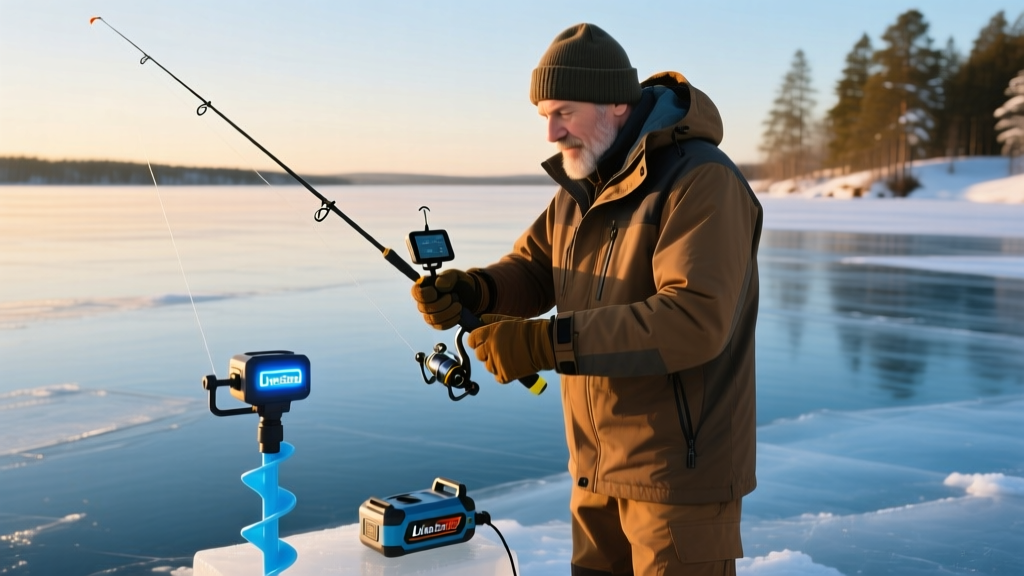
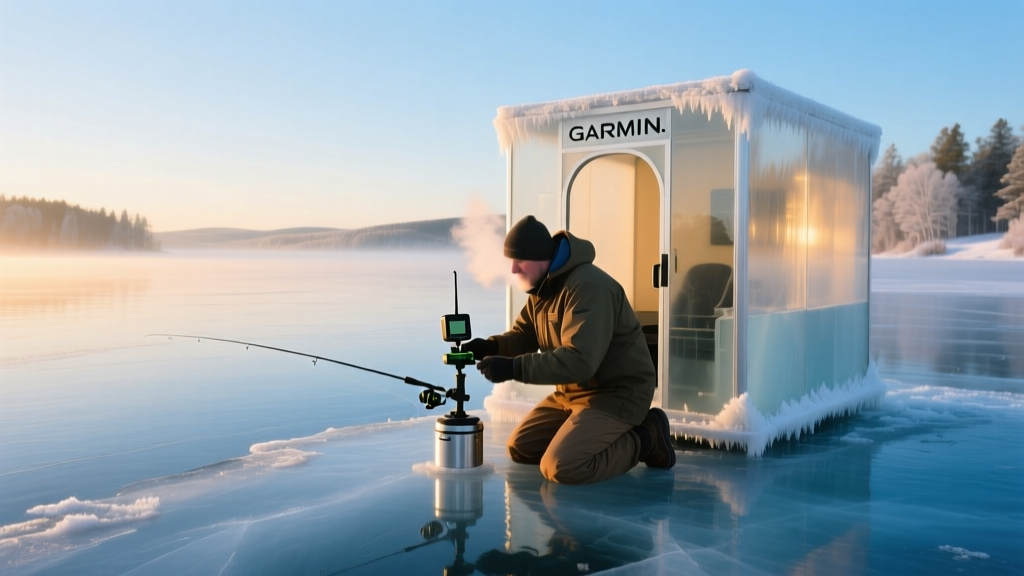
Ice fishing has evolved from a passive waiting game into a highly technical, data-driven pursuit. As we navigate the 2026 hard-water season, simply owning the best ice fishing gadgets isn't enough; you must know how to calibrate, deploy, and integrate them to outsmart pressured fish. The modern tech stack relies on three pillars: forward-facing sonar for real-time tracking, optical verification for species identification, and high-torque power augers for rapid mobility. This setup guide will walk you through the exact calibration steps, deployment techniques, and power management strategies required to turn top-tier gear into a fish-catching machine.
Step 1: Calibrating Forward-Facing Sonar for Shallow Ice
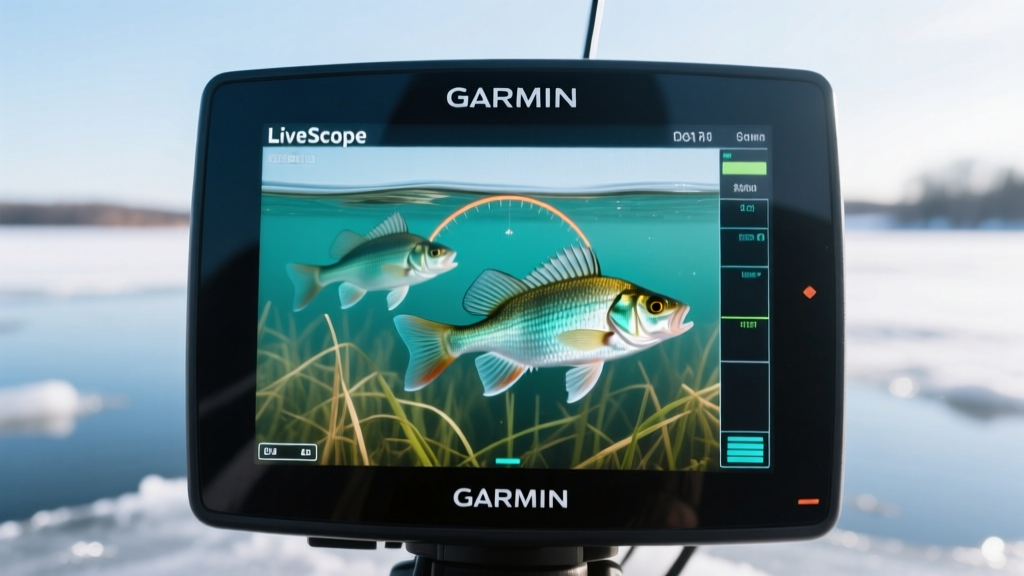
Forward-facing sonar, specifically the Garmin Panoptix LiveScope LVS34 Ice Fishing Bundle, has completely revolutionized how we target suspended crappie and roaming walleye. However, out of the box, the default settings are optimized for open water, not the hyper-localized, high-interference environment of an ice shanty.
Transducer Alignment and Arm Rigging
The LVS34 transducer must be perfectly level to ensure your on-screen representation matches the underwater reality. When mounting the transducer to the ice arm:
- Level the Shaft: Use a small bubble level on the transducer shaft before tightening the thumb screw. Even a 5-degree tilt will cause your jig to appear off-center on the screen.
- Depth Calibration: Lower the transducer exactly 12 inches below the ice-water interface. This avoids the slush layer while keeping the cone angle clear of the ice shelf.
Dialing in the Gain and Color Palette
In shallow water (under 25 feet), sonar noise is your biggest enemy. Set your Gain between 48% and 55%. Anything higher will create 'ghost' returns from ice crystals suspended in the water column. Switch your color palette to 'Amber' or 'Blue'—these offer the highest contrast for spotting the faint, tell-tale arch of a finicky panfish approaching your tungsten jig.
Step 2: Deploying Underwater Cameras Without Spooking Fish
While sonar shows you the fish, an underwater camera like the Aqua-Vu Micro 5 Plus shows you how they are reacting to your bait. The most common mistake anglers make is dropping the camera too aggressively, which creates a pressure wave that spooks shallow-water perch and bass.
Pro Tip: Lower your camera at a strict rate of 1 foot per second. Once the lens is 2 feet from the bottom, pause for 10 seconds to let the silt settle before turning on the infrared LEDs.
Positioning for the Perfect Vantage Point
Do not drop the camera down the same hole you are fishing. Instead, drill a secondary hole 3 feet away, angled toward your primary fishing hole. This allows you to watch your jig enter the frame from the side, mimicking the exact perspective of an approaching fish. Keep the camera lens 18 inches above the bottom to maximize your field of view without kicking up debris.
Step 3: Power Auger Battery Management in Sub-Zero Temps
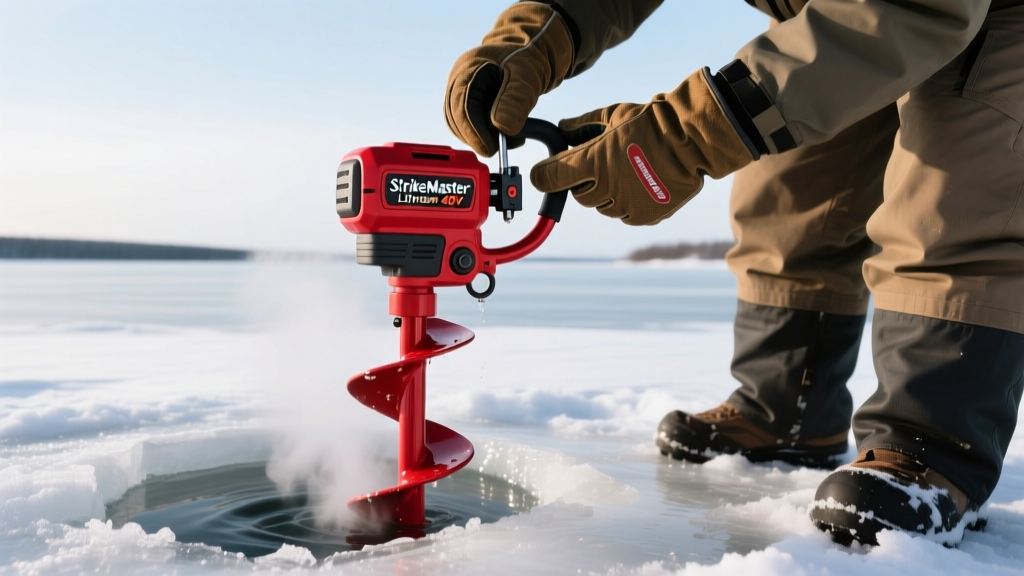
Mobility is the name of the game when searching for active schools. The StrikeMaster Lithium 40V 8-inch auger is widely considered one of the best ice fishing gadgets for cutting clean holes in seconds. However, lithium-ion chemistry is notoriously sensitive to extreme cold.
The Thermodynamics of Lithium Batteries
A 40V battery that drills 100 holes at 32°F will see its efficiency plummet in sub-zero conditions. Internal resistance increases as temperatures drop, causing voltage sag and premature low-battery warnings.
| Ambient Temperature | Estimated Holes (8-inch Ice) | Torque Output | Required Action |
|---|---|---|---|
| 32°F to 20°F | 90 - 100 | 100% | Standard operation |
| 19°F to 0°F | 65 - 75 | 85% | Keep battery inside coat between holes |
| -1°F to -15°F | 40 - 50 | 60% | Use insulated battery sleeve; swap batteries |
According to StrikeMaster engineering guidelines, you should never store your lithium battery in an unheated truck bed overnight. Keep the battery inside your heated shanty or tucked inside your parka until the exact moment you are ready to drill.
Step 4: Integrating Smart Tip-Up Alarms
When fishing multiple lines outside the shanty, integrating smart bite alarms saves you from staring at flag after flag in the freezing wind. Modern Bluetooth-enabled tip-up sensors clip directly onto traditional wooden tip-ups and send a push notification to your smartwatch or phone the moment the spool turns.
Setup Checklist for Smart Alarms:
- Sensitivity Tuning: Set the spool-sensor sensitivity to 'Medium' for walleye (which typically take line steadily) and 'High' for pike (which often strike and drop the bait before running).
- Connection Protocol: Pair the devices inside your warm vehicle before heading onto the ice. Cold fingers and capacitive touchscreens do not mix well when trying to pair Bluetooth devices at -10°F.
- Line Management: Use 30lb braided line with a 10-foot fluorocarbon leader. Braid doesn't stretch, ensuring the spool turns instantly upon a strike, triggering the alarm without delay.
Troubleshooting Common Gadget Failures on the Ice
Even the best gear can fail when subjected to freezing water and condensation. Here is how to troubleshoot the most common on-ice tech issues.
Sonar Interference and 'Ghost' Marks
If your LiveScope screen is cluttered with thick, erratic lines, you are likely experiencing cross-talk from nearby flashers or sonar units. If you are fishing in a community hole area, switch your LiveScope frequency from the default 115 kHz to 117 kHz to separate your signal from standard Vexilar or Marcum flashers running on lower frequencies.
Camera Lens Condensation
Bringing a cold underwater camera into a heated propane shanty guarantees instant condensation on the lens and inside the housing. To combat this, keep a small silica gel desiccant pack taped to the inside of the camera's battery compartment. Furthermore, never wipe the exterior lens with a bare glove; use a microfiber cloth treated with an anti-fog solution designed for scuba masks.
Final Checklist Before First Light
Before you step onto the ice at dawn, run through this rapid integration checklist to ensure your best ice fishing gadgets are primed for action:
- [ ] LiveScope transducer leveled and gain set to 52%.
- [ ] Underwater camera lens cleaned and anti-fog applied.
- [ ] Auger batteries stored at room temperature overnight.
- [ ] Tip-up alarms paired and sensitivity tested on the spool.
- [ ] Backup power bank (minimum 10,000mAh) kept in an inner pocket.
Mastering the setup and calibration of your electronics is what separates the anglers who watch fish from those who catch them. Take the time to dial in your gear, respect the limitations of lithium in the cold, and let the data guide your drill.
For more advanced tactics, check out the latest electronics guides on In-Fisherman.
Written by
Jake MorrisonJake Morrison holds a B.S. in Electrical Engineering from UC Berkeley and an MBA from Stanford Graduate School of Business. With over 12 years of hands-on experience in consumer electronics, he previously served as a senior product engineer at a Silicon Valley startup before transitioning to tech journalism. Jake has personally tested and benchmarked over 3,000 gadgets across categories including smartphones, wearables, smart home devices, and audio equipment. His durability testing methodology — involving controlled drop tests, thermal cycling, and water submersion — is widely cited by major tech publications. He is a certified CompTIA A+ technician and a contributing editor to the IEEE Consumer Electronics Magazine.