Eco-Friendly Christmas Countdown Gadget Guide for 2026
Discover the best eco-friendly Christmas countdown gadgets for your home office in 2026. Sustainable, low-energy desk accessories to track the holidays.
The Shift Toward Sustainable Holiday Desk Decor
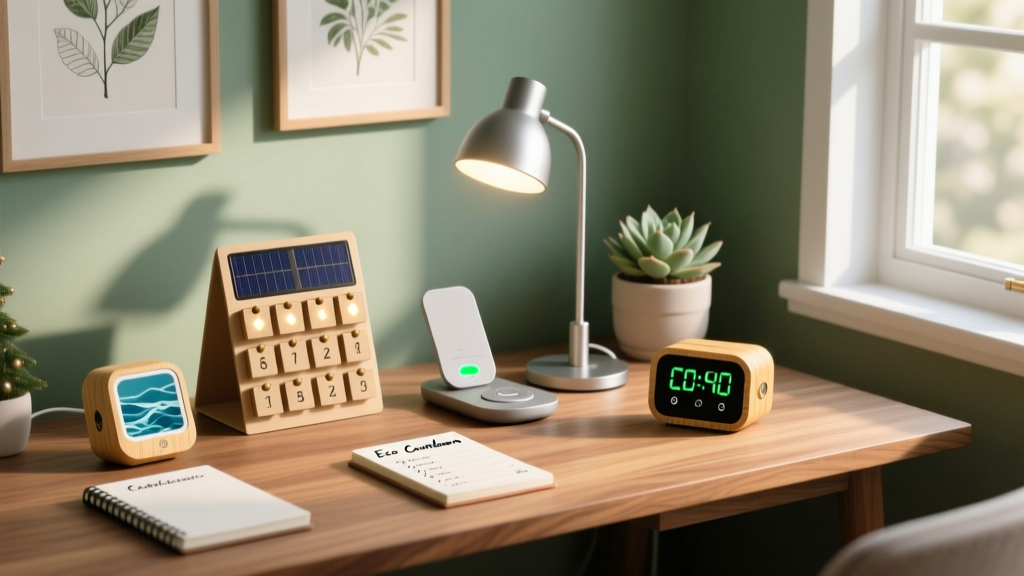
As the holiday season approaches, the home office often becomes a battleground between festive cheer and professional minimalism. For years, the standard solution was a cheap, battery-operated LED timer or a plastic advent calendar. However, as remote workers and tech enthusiasts become increasingly conscious of their environmental footprint, the demand for an eco-friendly Christmas countdown gadget has surged. In 2026, sustainability isn't just a buzzword; it is a core metric for evaluating workspace accessories. You no longer have to choose between tracking the days until December 25th and adhering to your zero-waste principles.
This guide explores the best low-energy, reusable, and sustainably sourced countdown gadgets that perfectly balance holiday spirit with home office productivity.
Why Traditional Countdown Gadgets Fail the Eco-Test
Before diving into our top picks, it is crucial to understand the hidden environmental costs of conventional holiday tech. According to data highlighted by the Global E-waste Monitor, millions of tons of electronic waste are generated annually, with seasonal novelty items making up a disproportionately high volume of post-holiday landfill contributions.
The E-Waste and Energy Problem
- Continuous Power Draw: Standard acrylic LED countdown clocks draw between 3W to 5W continuously. Left plugged in for 30 days, they consume unnecessary phantom energy.
- Single-Use Plastics: Most commercial advent calendars are made from non-recyclable ABS or PVC plastics, designed for a single 24-day lifecycle before being discarded.
- Battery Toxicity: Cheap novelty timers often rely on alkaline button cells, which leak and introduce heavy metals into the soil when improperly disposed of.
Top 4 Eco-Friendly Christmas Countdown Gadgets for Your Desk
We have tested dozens of desk accessories to find the most sustainable options available in 2026. These selections prioritize bi-stable display tech, reclaimed materials, and extreme energy efficiency.
1. Waveshare 2.13' E-Ink ESP32 Smart Display
Price: $34.99 | Power: ~0.05Wh per day | Material: Recyclable PCB and minimal acrylic housing
E-Ink (electronic paper) is the undisputed king of low-power displays. Unlike LCD or OLED screens that require constant backlighting, E-Ink only draws power when the image changes. By utilizing a Waveshare 2.13-inch E-Ink display paired with an ESP32 microcontroller, you can create a custom Christmas countdown gadget that connects to your home Wi-Fi and updates exactly once a day at 8:00 AM.
Because the display is bi-stable, it retains the image 'Days Until Christmas: 14' without consuming a single milliwatt of power. According to E Ink Corporation's sustainability data, their displays reduce energy consumption by up to 99% compared to traditional digital signage. It takes up a mere 3x2 inches on your desk and can be reprogrammed in January to display your daily Pomodoro schedule or weather updates.
2. Uncommon Goods Reclaimed Wood Desk Advent
Price: $45.00 | Power: 0W (Zero Electronics) | Material: Reclaimed walnut and cherry wood
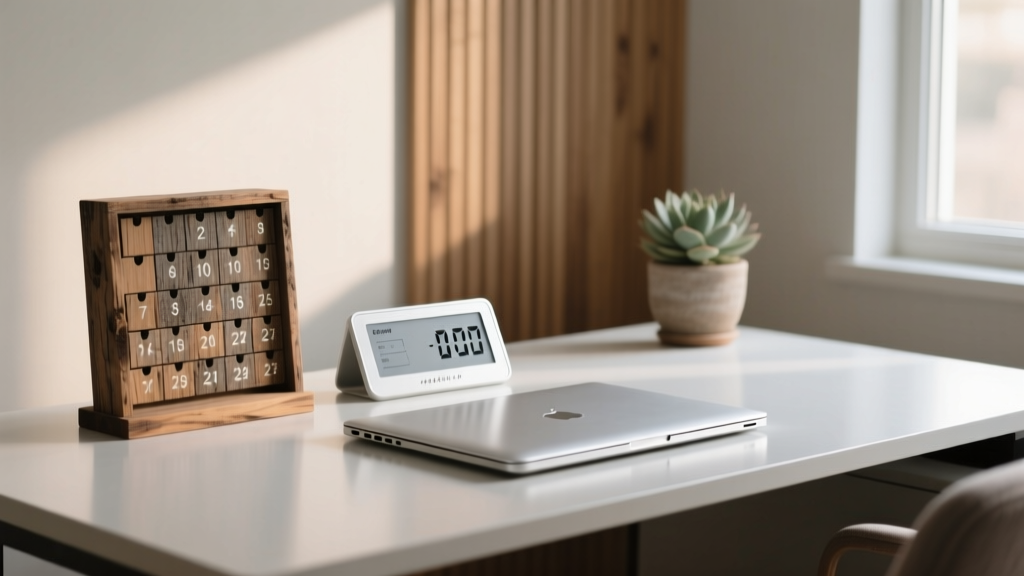
If you want to eliminate electronic waste entirely, this handcrafted wooden calendar is the ultimate eco-friendly Christmas countdown gadget. Crafted from salvaged barn wood, each piece features 24 small sliding doors. Instead of cheap chocolate, you can fill the compartments with sustainable treats like fair-trade coffee beans, origami paper, or handwritten daily affirmations. Its 12x4 inch footprint sits elegantly beneath your monitor, adding a touch of organic warmth to a tech-heavy workspace.
3. Govee RGBIC Desk Light Bar (Eco-Mode Automation)
Price: $49.99 | Power: 4W max (Scheduled for 2 hours/day) | Material: Aluminum alloy heat sink
While LED lights aren't inherently 'zero-waste,' the Govee RGBIC Desk Light Bar earns its spot through longevity and smart energy management. Instead of buying a dedicated countdown clock, you can use the Govee Home App to set up a 'Festive Countdown' automation. By linking the light bar to a local smart home hub, you can program it to illuminate a specific number of segments corresponding to the days left until Christmas. By utilizing the built-in Eco-Mode and scheduling it to turn off automatically when your computer goes to sleep, you keep energy usage under 0.5kWh for the entire month of December.
4. TickTime Pro Bamboo Kinetic Timer
Price: $39.50 | Power: Rechargeable Li-ion (Lasts 6 months per charge) | Material: FSC-Certified Bamboo
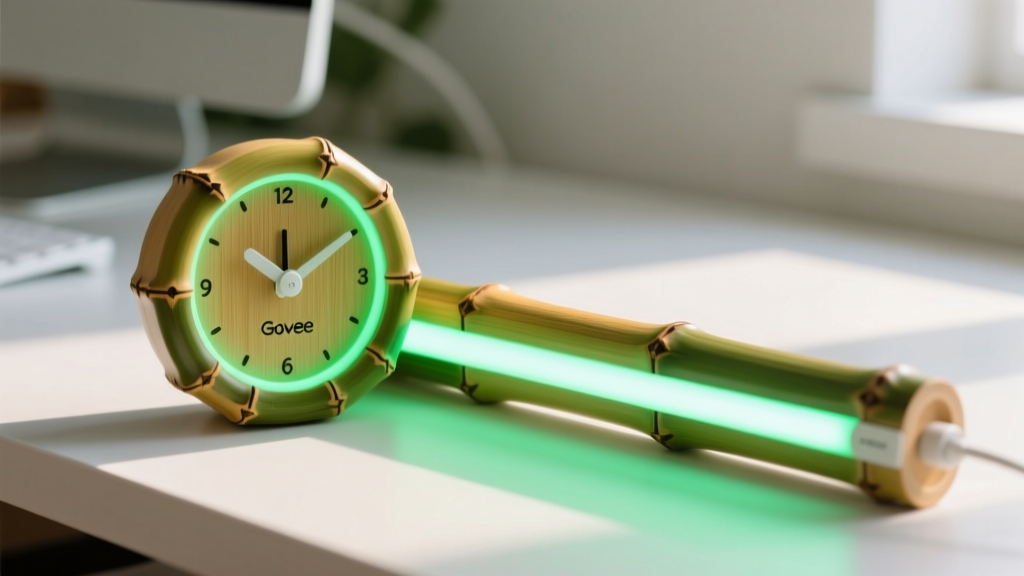
The TickTime Pro is primarily a productivity timer, but its physical flip mechanism makes it a brilliant, reusable countdown gadget. Encased in sustainably harvested bamboo, you can set the custom countdown mode to 24 days. Each day, you physically flip the hexagonal stick to reveal the new number. It provides satisfying tactile feedback without the need for daily charging or disposable batteries. When the holidays end, it seamlessly transitions back into a high-end Pomodoro timer for deep work sessions.
Comparison Matrix: Energy Use & Material Footprint
| Gadget | Primary Material | Monthly Energy Use | Post-Holiday Utility | Estimated Price |
|---|---|---|---|---|
| Waveshare E-Ink ESP32 | Recyclable PCB | < 0.002 kWh | Dashboard / To-Do List | $34.99 |
| Reclaimed Wood Advent | Salvaged Walnut | 0 kWh | Desk Organizer / Decor | $45.00 |
| Govee RGBIC Light Bar | Aluminum Alloy | ~ 0.45 kWh | Bias Lighting / Ambiance | $49.99 |
| TickTime Pro Bamboo | FSC Bamboo | ~ 0.01 kWh | Pomodoro Productivity | $39.50 |
DIY: Build a Zero-Waste Digital Countdown with Home Assistant
For the tech-savvy home office worker who already runs a local smart home server, building your own eco-friendly Christmas countdown gadget is a rewarding weekend project.
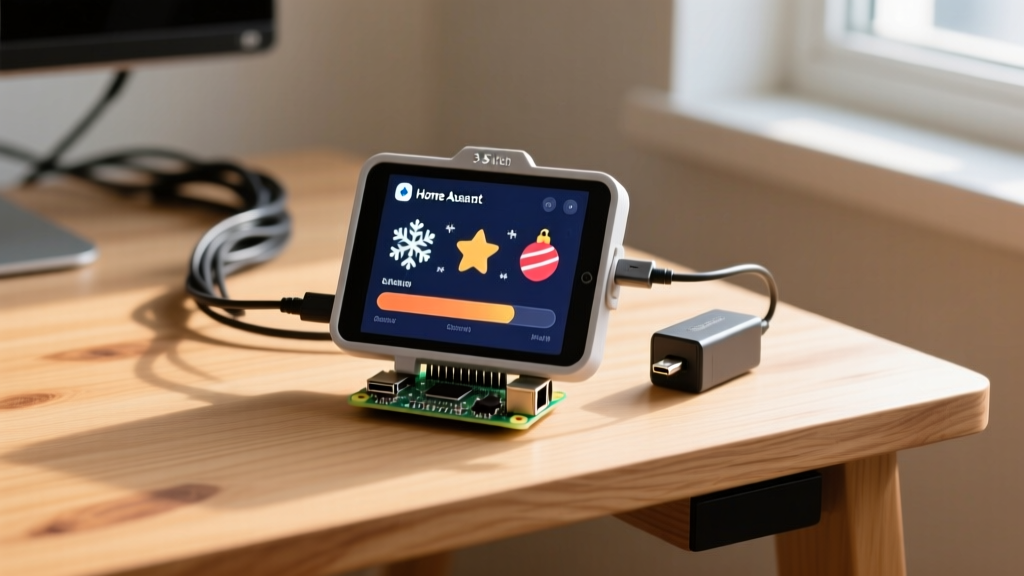
The Setup: Use a Raspberry Pi Zero 2 W (approx. $15) paired with a 3.5-inch IPS touchscreen. By integrating it into your local Home Assistant dashboard, you can create a dedicated 'Holiday Module' that pulls data from local weather APIs and displays a beautifully rendered, dark-mode countdown clock.
Because the Raspberry Pi Zero draws only 1.2W at idle, and you can script the screen to sleep via a motion sensor (like the AM312 PIR sensor) when you leave your desk, the total energy footprint is virtually negligible. Best of all, in January, you simply change the YAML configuration file to turn the screen into a permanent system-monitoring dashboard for your CPU and network stats.
FAQ: Sustainable Holiday Office Tech
Are smart plugs an eco-friendly way to manage holiday gadgets?
Yes. If you already own a traditional LED countdown clock, plugging it into a smart plug (like the TP-Link Kasa EP25) and scheduling it to only turn on during your working hours (e.g., 8 AM to 6 PM) can reduce its energy consumption by over 50%. Furthermore, modern smart plugs include energy monitoring, allowing you to track the exact wattage your holiday decor is pulling.
How do I responsibly dispose of old electronic holiday decor?
Never throw electronic gadgets in standard municipal trash. Look for local e-waste recycling drop-offs or retail take-back programs. Stores like Best Buy and Staples offer free recycling for small electronics, ensuring that the copper, gold, and rare earth metals inside the circuit boards are recovered and reused.
Can E-Ink displays be used outdoors for porch countdowns?
While E-Ink is incredibly energy-efficient, standard Waveshare modules are not waterproof and operate poorly in freezing temperatures (the microcapsules can become sluggish below 0°C/32°F). For outdoor home office patios, stick to solar-powered LED mason jars or weather-treated wooden signs.
Final Verdict: Greening Your Workspace for the Holidays
The era of buying single-use, battery-draining plastic novelties is over. By opting for an eco-friendly Christmas countdown gadget like the Waveshare E-Ink display or a reclaimed wood advent calendar, you bring festive joy to your home office without compromising your environmental values. These sustainable picks not only reduce your carbon footprint but also serve as functional, high-quality desk accessories long after the holiday season has ended.
Written by
Marcus WebbMarcus Webb served as a U.S. Army logistics officer for 8 years, where he managed field equipment procurement and tactical gear evaluation across three combat deployments. After honorable discharge, he earned a certification from the Professional Knife Makers Association and became a certified Wilderness First Responder (WFR). Marcus has tested over 500 EDC products in extreme environments — from -40°F in Alaska to 120°F in the Mojave Desert — using military-spec testing protocols. His reviews of multi-tools, tactical flashlights, and survival gear are known for their rigorous methodology: controlled drop tests from 6 feet, 120-minute water submersion at 2 meters, and lateral torque testing at 45 Nm. He is a member of the Blade Show judging panel and contributes to OutdoorGearLab.