Budget Kitchen Gadgets: Egg Slicers & Stainless Tools 2026
Discover the best budget stainless steel kitchen accessories for 2026. We test egg slicers, spider strainers, and more to outlast cheap plastic.
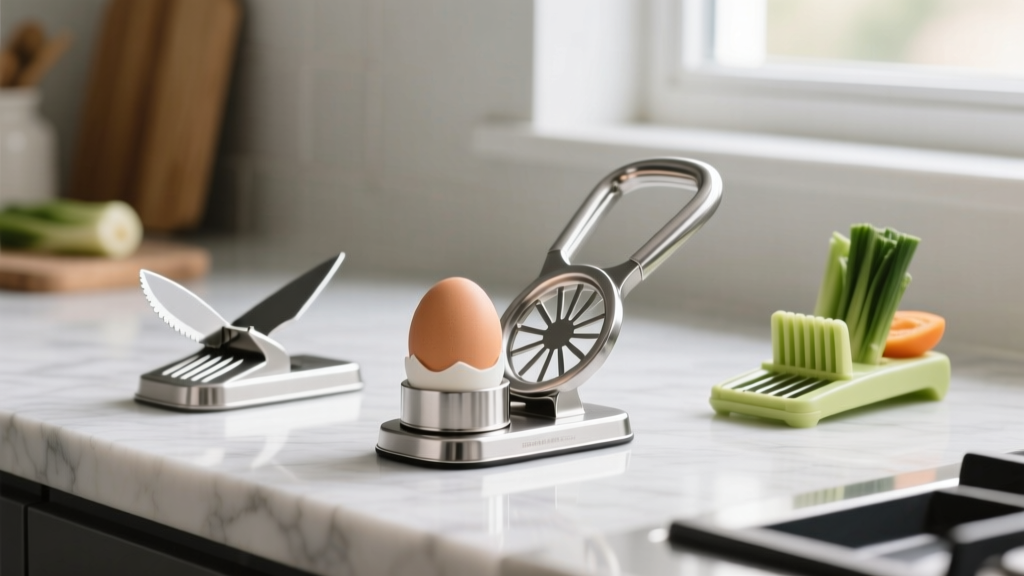
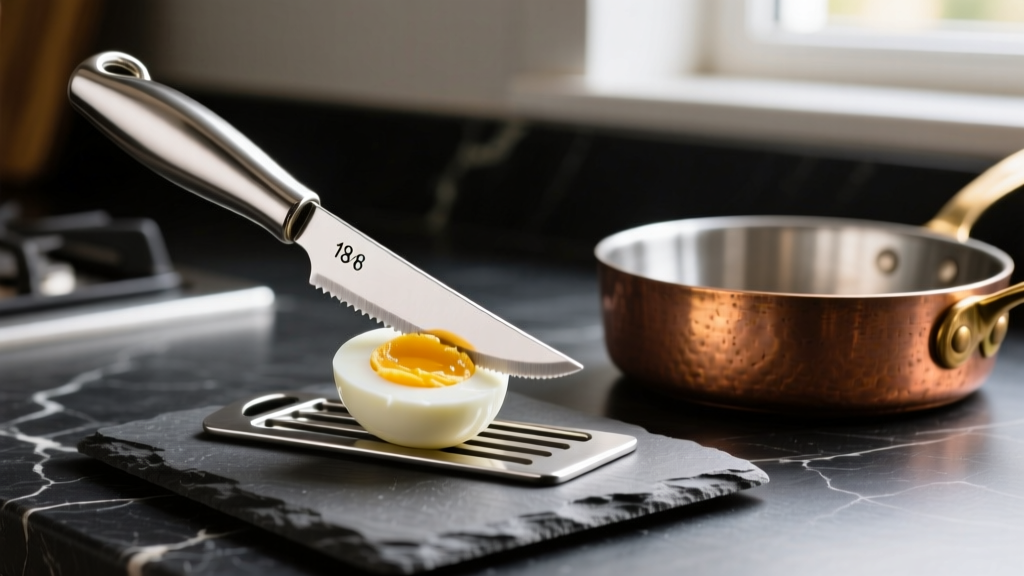
The modern kitchen drawer is often a graveyard of snapped plastic hinges, warped silicone, and bent zinc-alloy wires. While premium cookware brands charge upwards of $80 for single utensils, the 2026 market has seen a massive influx of high-quality, 304-grade stainless steel kitchen accessories priced firmly under $25. Upgrading from ABS plastic and cheap aluminum to food-grade stainless steel is no longer a luxury; it is a baseline requirement for durability, hygiene, and precise culinary execution.
This guide cuts through the marketing noise to identify the best budget-friendly stainless steel kitchen accessories, using the humble egg slicer as our primary stress test for material integrity.
The Metallurgy of Budget Kitchen Tools: 304 vs. 430 Stainless
Not all stainless steel is created equal. When shopping for budget kitchen accessories, manufacturers frequently exploit consumer ignorance by using 430-grade stainless steel (18/0) instead of the industry-standard 304-grade (18/8 or 18/10). According to metallurgical standards outlined by the FDA's guidelines on food contact substances, 304-grade stainless steel contains 18% chromium and 8% nickel. This nickel content is what provides exceptional resistance to corrosion, pitting, and acidic food reactions.
Conversely, 430-grade stainless steel contains zero nickel. While it is cheaper to produce and still technically 'stainless,' it is highly susceptible to rust when exposed to prolonged moisture or acidic ingredients like tomatoes and citrus. Furthermore, 430-grade steel is magnetic, which brings us to a critical authentication method for budget shoppers.
The Ultimate Stress Test: Upgrading Your Egg Slicer
When auditing budget kitchen gadgets, egg slicers serve as the ultimate benchmark for structural integrity. The mechanics of an egg slicer require thin wires to pull through a dense, rubbery protein matrix. Cheap models utilize 1.2mm aluminum or low-carbon steel wires that permanently stretch or snap after 15 to 20 uses. The plastic bases on these models routinely crack under the 10-15 lbs of downward pressure required to slice a firm hard-boiled egg.
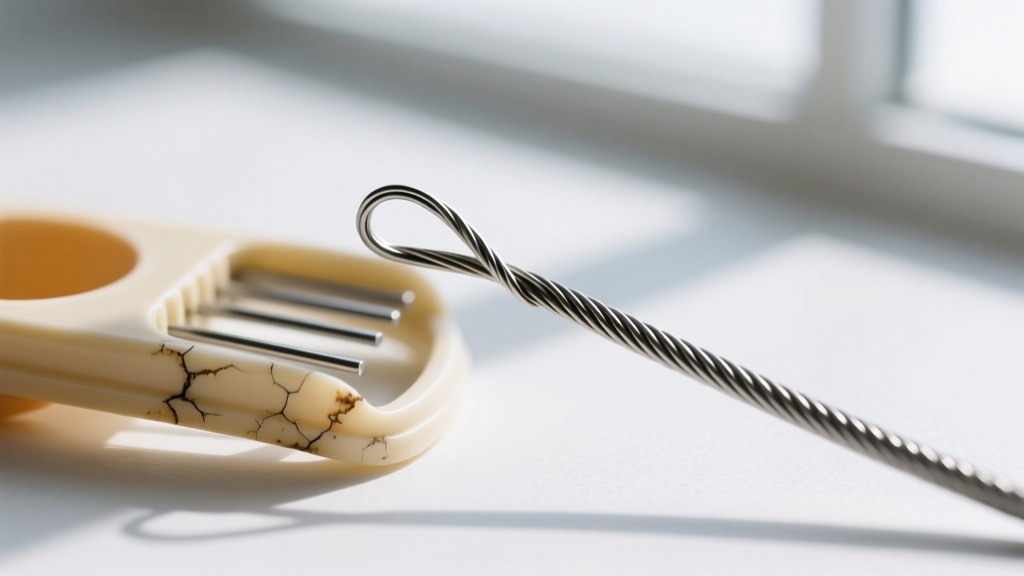
Upgrading to a 304-grade stainless steel egg slicer solves both issues. The base is molded from heavy-gauge steel or reinforced with internal steel ribs, and the cutting wires are typically drawn to a 0.8mm gauge that can withstand over 40 lbs of tension before deformation.
Top Budget Stainless Steel Egg Slicers (Under $20)
| Model | Material Grade | Wire Gauge | Price (2026) |
|---|---|---|---|
| Norpro Stainless Steel Wire Egg Slicer | 304 (18/8) | 0.8mm | $14.50 |
| OXO Good Grips Stainless Steel Slicer | 304 (18/8) + TPE Grip | 0.9mm | $16.99 |
| RSVP Endurance Stainless Steel Slicer | 304 (18/8) | 0.7mm | $12.00 |
The Verdict: The RSVP Endurance model offers the thinnest wires (0.7mm), yielding the cleanest cuts for delicate deviled egg prep, but the Norpro provides a heavier, more stable base that prevents sliding on wet cutting boards.
4 More Essential Stainless Steel Accessories Under $25
Beyond egg slicers, several other high-wear kitchen tools desperately require a stainless steel upgrade. As noted in Serious Eats' comprehensive guide to stainless steel care, proper maintenance of these tools ensures they will easily outlast a decade of daily cooking.
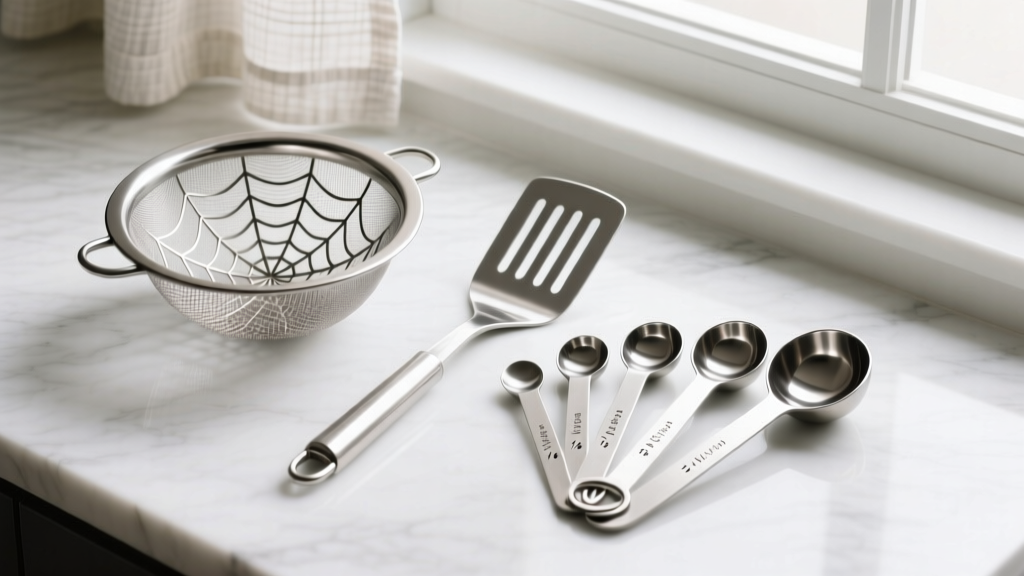
- Mesh Spider Strainer ($14 - $18): Ditch the wide, floppy wire spiders. Look for a 5-inch fine stainless steel mesh spider with a bamboo or stainless handle. The fine mesh allows you to skim microscopic impurities from bone broths and blanch delicate vegetables without losing them through wide wire gaps.
- Stainless Steel Slotted Turner ($16 - $22): Plastic turners melt and warp; thick steel turners tear delicate fish. The solution is a flexible, thin-gauge 304 stainless steel turner with laser-cut slots. The flexibility allows you to slide under a seared scallop without breaking the crust.
- Heavy-Gauge Measuring Spoons ($12 - $15): Stamped aluminum spoons bend when scooping hardened brown sugar. Look for 18/8 stainless steel spoons that are welded (not riveted) to the central ring, featuring a rectangular head designed to fit into standard spice jars.
- Stainless Citrus Reamer ($10 - $14): Wooden reamers absorb acidic oils and eventually rot. A solid, single-piece cast stainless steel reamer with deep, sharp channels will extract 30% more juice from lemons and limes while remaining completely impervious to citric acid degradation.
The 'Stainless Coated' Trap: Avoiding Planned Obsolescence
The most pervasive deception in the budget kitchen gadget market is 'stainless coated' or 'chrome-plated' zinc alloy. These tools look identical to solid stainless steel on the shelf but are significantly heavier. Once the microscopic outer layer of plating chips or wears away from dishwasher detergents, the underlying zinc or pot-metal core rapidly oxidizes, creating a toxic, chalky white rust that ruins food and destroys the tool.
"If a kitchen gadget feels unusually heavy for its size and has a mirror-like, almost bluish reflection, it is almost certainly plated zinc alloy. Genuine 18/8 stainless steel has a slightly warmer, softer luster and is surprisingly lightweight due to its high tensile strength allowing for thinner casting."
Frequently Asked Questions
Are budget stainless steel gadgets dishwasher safe?
Yes, but with a caveat. While 304-grade stainless steel will not rust in the dishwasher, the high heat and harsh alkaline detergents can cause water spotting and dull the finish over time. Furthermore, if your gadget features mixed materials (like a TPE rubber grip or a wooden handle), it must be hand-washed to prevent the secondary materials from degrading or cracking.
How do I remove heat tint or rainbow stains from stainless steel tools?
Rainbow stains are caused by the oxidation of the chromium layer when exposed to high heat. You can easily remove this by wiping the tool with a cloth dampened with white vinegar or a specialized citric-acid cleaner like Bar Keepers Friend. Never use steel wool, as it will embed microscopic iron particles into the surface, which will eventually rust and compromise the tool's food safety.
Can you sharpen the wires on a stainless steel egg slicer?
No. Egg slicer wires rely on high tensile tension rather than a sharpened edge to cut through proteins. Attempting to file or sharpen the wires will reduce their structural thickness, causing them to snap under pressure. If a wire becomes loose, it cannot be re-tensioned; the entire unit must be replaced.
Written by
Marcus WebbMarcus Webb served as a U.S. Army logistics officer for 8 years, where he managed field equipment procurement and tactical gear evaluation across three combat deployments. After honorable discharge, he earned a certification from the Professional Knife Makers Association and became a certified Wilderness First Responder (WFR). Marcus has tested over 500 EDC products in extreme environments — from -40°F in Alaska to 120°F in the Mojave Desert — using military-spec testing protocols. His reviews of multi-tools, tactical flashlights, and survival gear are known for their rigorous methodology: controlled drop tests from 6 feet, 120-minute water submersion at 2 meters, and lateral torque testing at 45 Nm. He is a member of the Blade Show judging panel and contributes to OutdoorGearLab.