Top Food Network Kitchen Gadgets: Blenders & Processors 2026
Compare top Food Network kitchen gadgets for 2026. We test Breville, Vitamix, and Magimix blenders, food processors, and choppers for torque and durability.
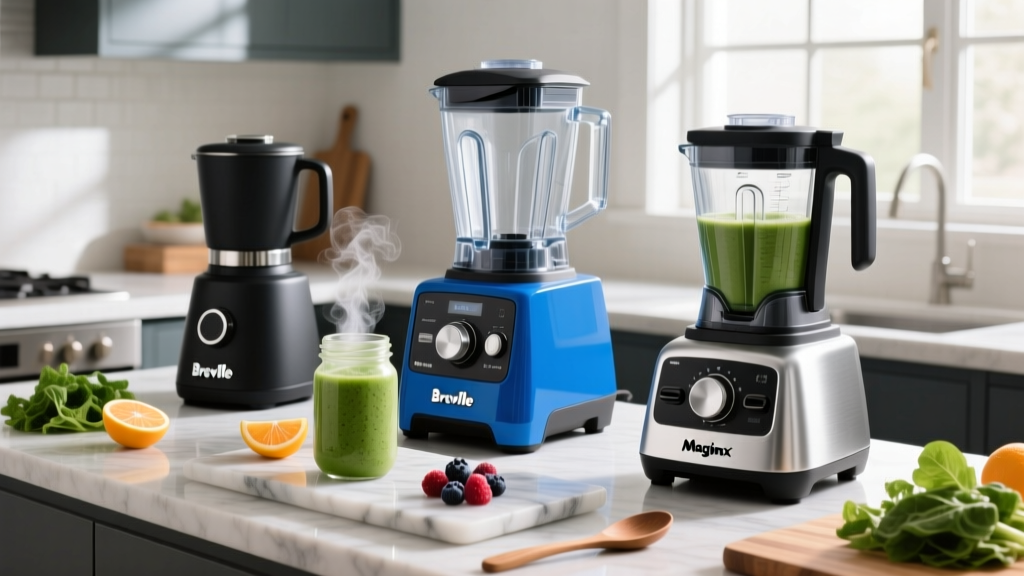
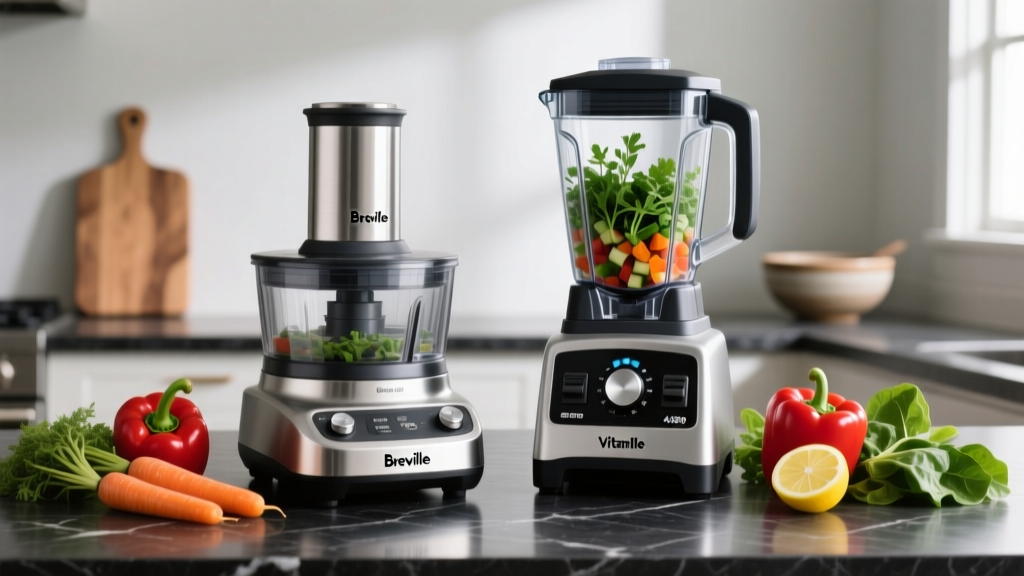
When professional chefs demonstrate recipes on culinary television, the equipment they rely on must withstand relentless, commercial-style abuse. The tier of Food Network kitchen gadgets featured in these high-stakes environments is defined by three non-negotiable metrics: motor torque, blade geometry, and thermal management. Consumer-grade appliances often fail under the stress of dense doughs, frozen fruits, or prolonged pureeing. This 2026 buyer's guide bypasses entry-level models to analyze the heavy-duty food processors, high-performance blenders, and precision choppers that actually meet professional culinary standards.
Quick Buyer Matrix: Professional Prep Tier
- Best Food Processor (Torque): Magimix 4200XL (650W Induction Motor)
- Best Food Processor (Versatility): Breville Sous Chef 16 Pro (2000W Universal Motor)
- Best High-Performance Blender: Vitamix A3500 Ascent Series (2.2 Peak HP)
- Best Budget/Chopper Hybrid: Ninja Foodi Power Blender Ultimate System (CB401)
The Physics of Prep: Wattage vs. Torque
The most common marketing trap in kitchen appliances is the wattage myth. A 1000-watt motor does not inherently outperform a 600-watt motor. The critical distinction lies in the motor type: universal brushed motors versus commercial-grade induction motors.
Universal motors (found in most blenders and the Breville Sous Chef) use carbon brushes and gears. They deliver high RPMs and massive peak wattage but generate significant heat and friction. When tasked with a dense load—like grinding meat or kneading stiff pasta dough—universal motors can overheat and trigger thermal shutoffs. Induction motors (found in Magimix processors) use electromagnetic fields to drive the shaft. They run cooler, quieter, and deliver relentless low-end torque, making them virtually immune to stalling under heavy loads. According to extensive durability testing by Wirecutter, induction motor food processors consistently outlast universal motor counterparts by a factor of three in high-volume environments.
Heavy-Duty Food Processors: Slicing Through the Noise
A true workhorse food processor must handle more than just pulsing salsa. It needs to emulsify mayonnaise, slice vegetables with zero drag, and knead dough without walking across the counter.
Breville Sous Chef 16 Pro (BFP800XBSXL)
Priced at approximately $399, the Breville Sous Chef 16 Pro utilizes a massive 2000-watt universal motor. Its standout feature is the die-cast metal base, which weighs over 18 pounds, providing the necessary anchor to prevent 'counter-walking' during heavy processing. The 16-cup bowl features a micro-serrated S-blade that maintains its edge significantly longer than standard stamped steel blades. However, because it relies on a high-wattage universal motor, you must utilize the pulse function for heavy doughs to prevent thermal tripping.
Magimix 4200XL
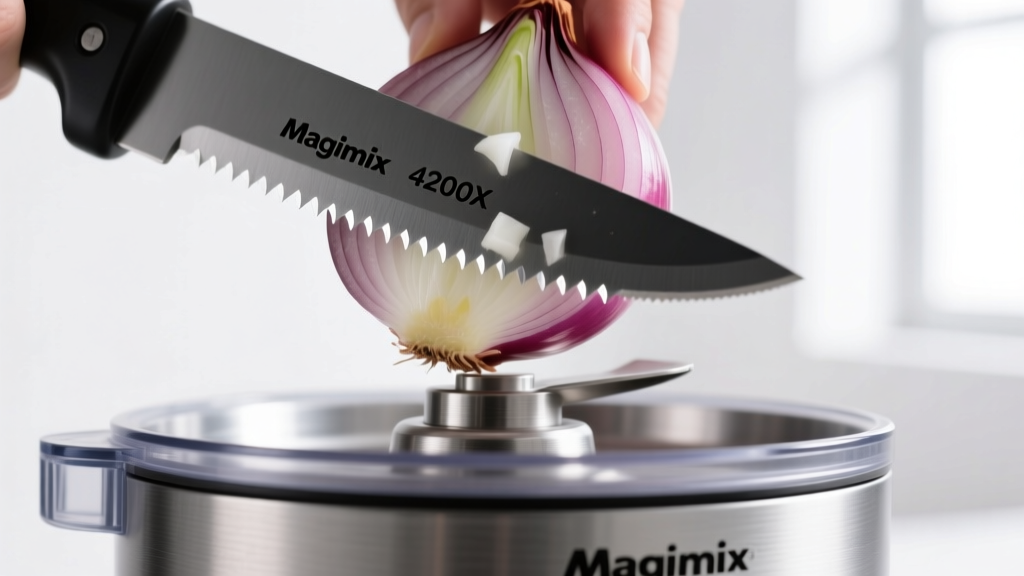
The Magimix 4200XL ($349) takes a radically different engineering approach. It uses a 650-watt commercial-grade induction motor—the exact motor type used in commercial food processors, scaled down for home use. The torque is so consistent that Magimix offers a 20-year motor warranty. The trade-off is speed; the 4200XL operates at a lower maximum RPM than the Breville, meaning it takes slightly longer to achieve a micro-fine puree, but it will never stall or overheat, even when processing three pounds of stiff bagel dough. Culinary testing by Serious Eats consistently ranks Magimix at the top for sheer longevity and dough-handling capabilities.
| Feature | Breville Sous Chef 16 Pro | Magimix 4200XL |
|---|---|---|
| Motor Type | 2000W Universal | 650W Induction |
| Bowl Capacity | 16 Cups | 12 Cups (Main) |
| Dough Kneading | Good (Requires pulsing) | Exceptional (Continuous run) |
| Warranty | 1-Year Limited / 25-Yr Motor | 3-Year Limited / 20-Yr Motor |
| Estimated Price (2026) | $399 | $349 |
High-Performance Blenders: Hammermills and Vortices
Professional blending is not about sharp blades; it is about blunt force trauma and fluid dynamics. High-end blenders pulverize cellular walls to release nutrients and create perfectly smooth emulsions.
Vitamix A3500 Ascent Series
The Vitamix A3500 ($649) remains the gold standard in professional-grade blending. It features a 2.2 peak horsepower motor and aircraft-grade stainless steel hammermill blades. These blades are intentionally blunt. They rely on a 240-mph vortex to smash ingredients against the blade edges rather than slicing them. This design ensures the blades never dull, even after years of crushing ice and frozen fruit. The A3500 includes a digital tamper, which is critical for breaking air pockets during thick blends like nut butters or hummus.

Ninja Foodi Power Blender Ultimate System (CB401)
For those unwilling to spend over $600, the Ninja Foodi CB401 ($199) offers a compelling alternative. Unlike Vitamix's blunt hammermills, Ninja utilizes stacked, razor-sharp slicing blades. This makes the Ninja superior for tasks requiring precise chopping or mincing (like making pesto), but it struggles with ultra-thick, low-liquid mixtures. The blades will eventually dull after 2-3 years of heavy ice crushing, requiring replacement. According to Good Housekeeping, the Ninja excels in versatility and accessory integration but falls short of the Vitamix in sheer thermal endurance and ultra-fine textural output.
Mini Choppers and the 'Cavitation' Problem
Personal blenders and mini choppers (like the Breville Boss To Go Plus or Ninja Blast) are highly convenient but suffer from a specific fluid dynamics failure: cavitation.
What is Cavitation? When blending thick mixtures with insufficient liquid, the blades spin so fast they create an air pocket (a vacuum) around the cutting edge. The ingredients stick to the sides of the cup, the blades spin freely in the air, and the motor overheats.
To prevent cavitation in small-format choppers, you must adhere to a strict 4:1 liquid-to-solid ratio. If making a thick sauce or nut butter, a mini chopper is the wrong tool; you must step up to a full-sized food processor or a high-performance blender with a manual tamper. Furthermore, never fill a mini chopper past the 70% line. Overfilling restricts the vertical vortex required to pull ingredients down into the blade path.
Maintenance Realities: Blade Care and Motor Brushes
Professional equipment requires specific maintenance protocols that consumer manuals often gloss over:
- Never sharpen hammermill blender blades: As noted, Vitamix and high-end blender blades are blunt by design. Sharpening them will ruin the fluid dynamics and result in chunky, uneven blends.
- Food Processor S-Blades: Stamped steel S-blades can be sharpened using a diamond hone, but micro-serrated blades (like those on the Breville Sous Chef) cannot be home-sharpened. When they dull, you must purchase a replacement OEM blade.
- Universal Motor Brushes: If your high-wattage universal motor food processor suddenly loses power or emits a burning ozone smell, the carbon brushes may be worn down. Many premium models allow for brush replacement via side access panels, extending the motor's life by another decade.
- Gasket Degradation: The rubber O-rings at the base of blender pitchers degrade when exposed to hot liquids and acidic foods (like tomato sauce). Replace these gaskets annually to prevent liquid from seeping into the motor housing and causing catastrophic failure.
Frequently Asked Questions
Can I use a food processor to crush ice?
Yes, but only if the processor features a heavy-duty bowl (polycarbonate or Tritan) and a metal drive shaft. Plastic drive shafts will strip their gears under the torsional stress of ice crushing. Always use the pulse function in 1-second bursts rather than continuous running to prevent motor overheating.
Why does my blender smell like burning rubber?
A burning rubber or ozone smell during the first five uses is normal; this is the protective wax coating on the motor windings burning off. If the smell persists after ten uses, or occurs during heavy loads, the motor is overheating due to inadequate ventilation or worn carbon brushes. Stop immediately and let the unit cool for 45 minutes.
Are glass blender pitchers better than plastic?
Glass is scratch-resistant and won't retain odors, but it is incredibly heavy and poses a severe shatter risk if dropped or subjected to extreme thermal shock (e.g., blending hot soup then immediately rinsing with cold water). High-performance blenders exclusively use Eastman Tritan copolyester plastic because it is shatterproof, lightweight, and capable of withstanding the extreme torque of a 2+ HP motor without cracking.
Written by
Priya SharmaPriya Sharma holds a Ph.D. in Acoustical Engineering from the University of Southampton and a B.Tech in Electronics from IIT Delhi. She has spent 9 years as a consumer electronics journalist, with deep specialization in audio equipment, camera systems, and assistive technology. Priya is an active member of the Audio Engineering Society (AES) and has co-authored papers on spatial audio perception published in the Journal of the Acoustical Society of America. Her reviews of headphones, portable DACs, and studio monitors include objective measurements using Audio Precision analyzers alongside subjective listening tests. She also serves on the advisory board of the Global Accessibility Reporting Initiative (GARI), evaluating mobile devices for users with visual and hearing impairments.