Setup Guide: Prepping Stainless Steel Kitchen Gadgets for Christmas
Learn how to properly unbox, deep-clean, and set up new stainless steel cookware and accessories gifted as kitchen gadgets for Christmas.
The Unboxing Phase: Removing Factory Oils and Polishing Compounds
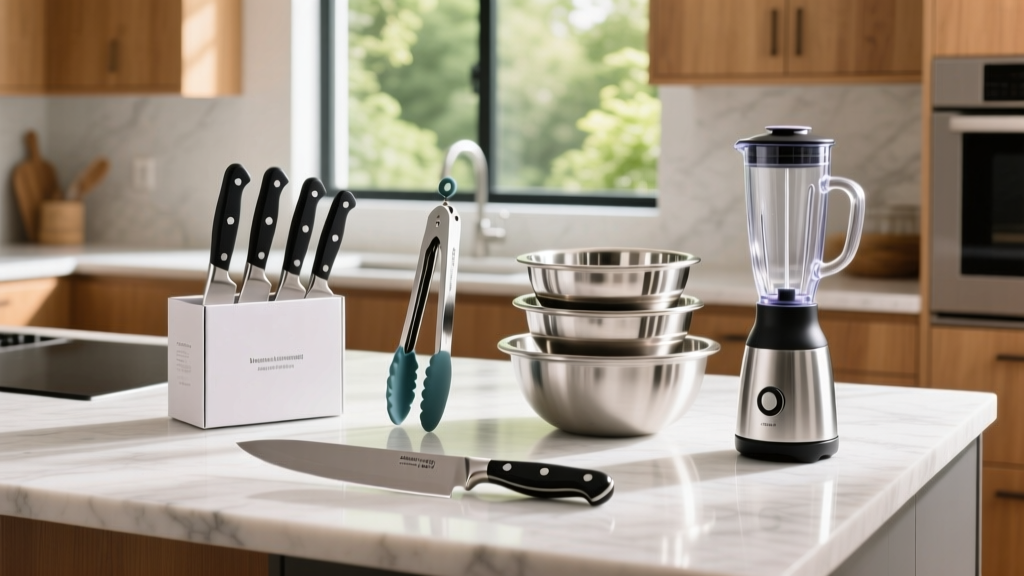
When selecting premium kitchen gadgets for Christmas, high-end stainless steel cookware and accessories remain the gold standard for serious home cooks. Whether you have unboxed a $149 All-Clad D3 10-Inch Fry Pan, a $109 Made In 5-Ply Stainless Frying Pan, or a set of OXO Good Grips stainless steel utensils, your first task is not to cook. It is to chemically strip the manufacturing residues.
During the industrial stamping and deep-drawing processes used to form tri-ply and 5-ply stainless steel vessels, factories apply heavy synthetic drawing oils to prevent the metal from tearing. Furthermore, the mirror-polish finish on the exterior is achieved using abrasive compounds containing aluminum oxide or chromium oxide. If you simply wash your new cookware with standard dish soap and water, these hydrophobic compounds will remain embedded in the microscopic pores of the steel, eventually carbonizing during your first cook and causing severe sticking.
The Initial Deep-Clean Protocol
To properly prepare your stainless steel kitchen gadgets for Christmas morning breakfast, you need an acidic boil followed by a chelating scrub. This two-step process guarantees a surgically clean cooking surface.
Step 1: The Acetic Acid Boil
- Fill your new pot or pan with a 1:1 ratio of tap water and standard 5% acidity white vinegar.
- Place the vessel on a burner and bring the solution to a rolling boil for exactly 10 minutes. The acetic acid breaks down the alkaline polishing compounds and emulsifies the heavy drawing oils.
- Carefully discard the hot liquid down the sink and rinse the pan with warm water. Do not dry it yet.
Step 2: The Oxalic Acid Chelation Scrub
While the pan is still damp, you must address embedded iron particles and surface oxidation. According to culinary science experts at Serious Eats, powdered cleansers containing oxalic acid are the most effective way to restore the passive layer of stainless steel.
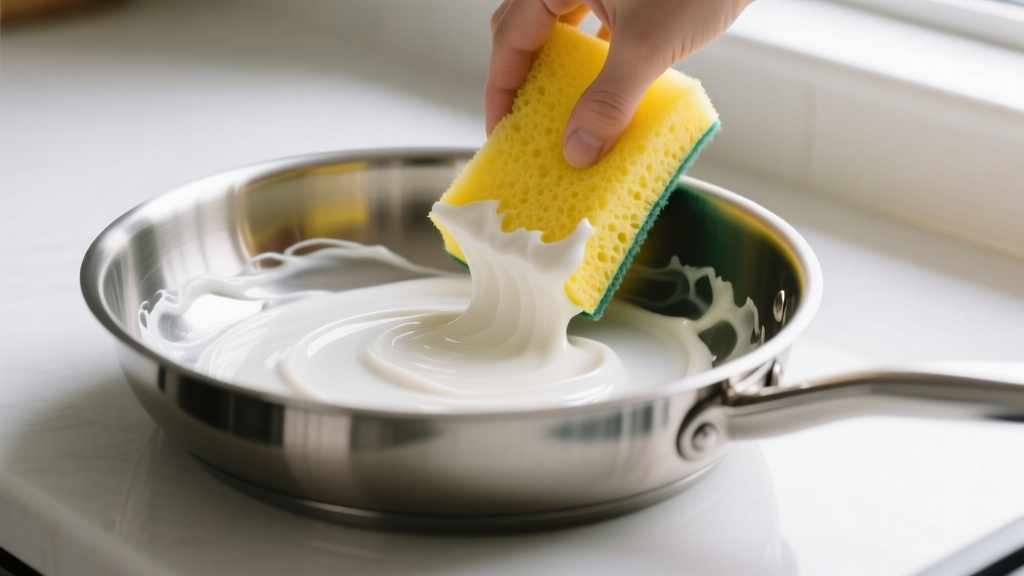
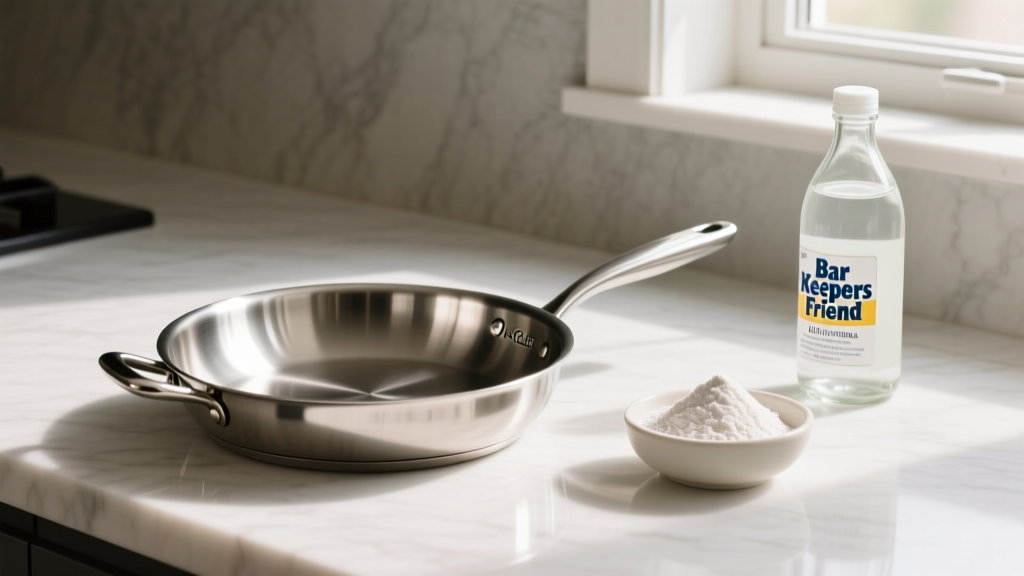
- Sprinkle a generous layer of Bar Keepers Friend (BKF) powder across the damp interior and exterior of the cookware.
- Add just enough water to create a thick, toothpaste-like slurry. A 2:1 ratio of powder to water is ideal.
- Using a non-scratch cellulose sponge, scrub the entire surface in tight, overlapping circular motions for 3 to 5 minutes. You will likely notice the paste turning gray or black—this is the oxidized metal and factory residue being lifted from the pores.
- Rinse thoroughly with warm water and immediately towel-dry with a microfiber cloth to prevent hard water calcium spots.
Building Your Stainless Steel Maintenance Kit
Stainless steel accessories and cookware require specific maintenance tools to preserve their finish and cooking performance. Avoid generic abrasive pads that can leave behind carbon steel fibers, which will rust and stain your premium pans.
| Cleaning Agent | Active Chemistry | Best Use Case | Abrasiveness |
|---|---|---|---|
| Bar Keepers Friend (Powder) | Oxalic Acid, Feldspar | Heat tint, burned carbon, initial factory strip | Medium (Mohs 6) |
| Bon Ami Powder Cleanser | Feldspar, Limestone | Daily light scrubbing, delicate mirror polishes | Low (Mohs 3-4) |
| Baking Soda Paste | Sodium Bicarbonate | Mild alkaline grease cutting, neutralizing acids | Very Low |
| Chainmail Scrubber | 316-Grade Stainless Rings | Removing stubborn fond without chemical cleaners | High (Physical only) |
The First Cook: Preventing Heat Tint and Pitting
Now that your stainless steel kitchen gadgets for Christmas are chemically prepped, you must understand the thermodynamics of your first cook. Stainless steel is notorious for food sticking, but this is entirely a matter of temperature mismanagement.
Mastering the Leidenfrost Effect
To achieve a temporary non-stick surface, you must preheat your dry pan until it reaches the Leidenfrost point—typically between 320°F and 350°F (160°C - 175°C). At this temperature, the metal expands enough to close its microscopic pores, and moisture from food instantly vaporizes, creating a steam cushion that prevents proteins from bonding to the iron.
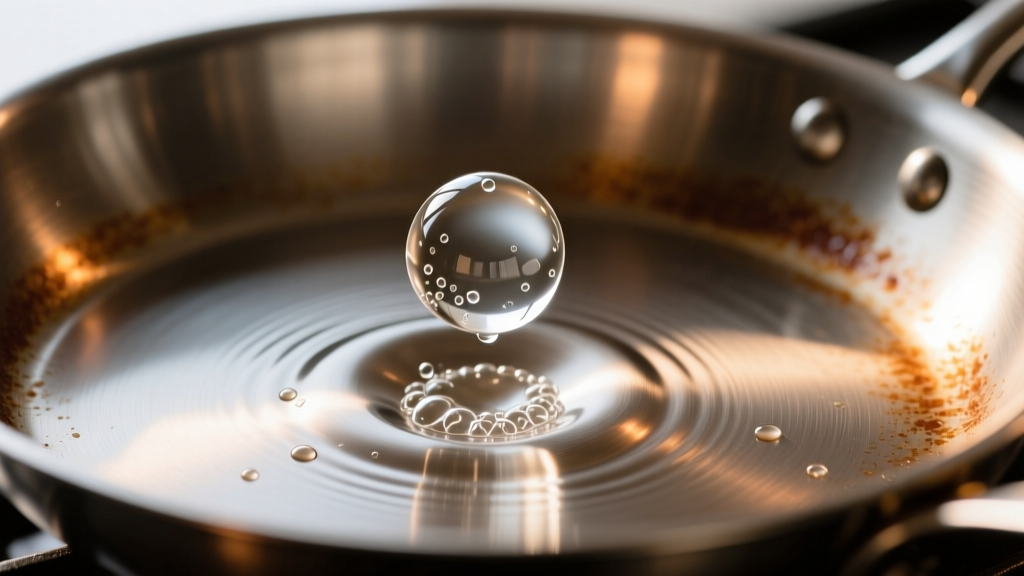
Perform the 'mercury ball test' before adding oil: flick a few drops of water into the dry, heated pan. If the water sizzles and evaporates immediately, the pan is too cold. If the droplets form a single, cohesive ball that glides effortlessly across the surface without evaporating, your pan is perfectly preheated. Wipe out the water, add your high-smoke-point oil (such as avocado or refined olive oil), and immediately add your food.
The Salt Timing Rule: Avoiding Chloride Pitting
One of the most common ways home cooks ruin new stainless steel pots is by adding salt to cold water before boiling pasta or blanching vegetables. The British Stainless Steel Association notes that undissolved salt crystals settling at the bottom of a pan create localized chloride concentrations. These chloride ions strip away the protective chromium oxide layer, causing permanent 'pitting corrosion'—tiny, irreversible divots in the metal that will harbor bacteria and cause food to stick permanently.
The Golden Rule: Never add salt to cold or warm water in a stainless steel pot. Always wait until the water has reached a vigorous, rolling boil. The rapid convection currents will dissolve the salt instantly before it can settle and attack the metal.
Troubleshooting Common Setup Mistakes
Even with careful preparation, you may encounter visual anomalies during your first few weeks of use. Here is how to diagnose and fix them:
- Rainbow Heat Tint: If your pan develops a rainbow-like discoloration, you have overheated the steel. This is a thickening of the chromium oxide layer. It is harmless but unsightly. Simply wipe the cooled pan with a paper towel soaked in pure white vinegar to dissolve the excess oxide.
- White Calcium Spots: Hard water leaves chalky white deposits after washing. Spray the dry pan with a 50/50 mix of water and white vinegar, let it sit for two minutes, and wipe clean.
- Gray Metallic Residue on Towels: If your drying towel turns gray, your initial Bar Keepers Friend scrub was insufficient. Repeat the oxalic acid paste step, ensuring you scrub for a full 5 minutes and rinse with high-pressure water.
Frequently Asked Questions
Can I put my new stainless steel cookware in the dishwasher?
While most premium brands like All-Clad and Tramontina market their tri-ply cookware as 'dishwasher safe,' it is highly discouraged. Dishwasher detergents contain harsh alkaline salts and chlorine-based rinsing agents that will dull the mirror polish and degrade the handle rivets over time. Hand washing with Dawn Platinum and a soft sponge takes less than 60 seconds and preserves the finish.
Do I need to season stainless steel like cast iron?
No. As detailed in America's Test Kitchen's guide to stainless steel science, the polymerization process that creates a cast iron seasoning layer will simply flake off stainless steel due to its non-porous, dense surface. Rely on the Leidenfrost effect and proper preheating instead of attempting to build a polymer layer.
What oil is best for the initial cook?
For your first cook, avoid extra virgin olive oil or butter, which have low smoke points (around 320°F and 350°F respectively) and will carbonize instantly upon hitting the preheated metal. Use refined avocado oil (smoke point 520°F) or ghee (smoke point 485°F) to ensure a clean, smoke-free sear.
Written by
Priya SharmaPriya Sharma holds a Ph.D. in Acoustical Engineering from the University of Southampton and a B.Tech in Electronics from IIT Delhi. She has spent 9 years as a consumer electronics journalist, with deep specialization in audio equipment, camera systems, and assistive technology. Priya is an active member of the Audio Engineering Society (AES) and has co-authored papers on spatial audio perception published in the Journal of the Acoustical Society of America. Her reviews of headphones, portable DACs, and studio monitors include objective measurements using Audio Precision analyzers alongside subjective listening tests. She also serves on the advisory board of the Global Accessibility Reporting Initiative (GARI), evaluating mobile devices for users with visual and hearing impairments.