The Future of DIY Gadgets: 2026 Maker Trend Report
Discover the future of DIY gadgets in our 2026 trend report. Explore AI-assisted PCB design, RISC-V microcontrollers, and next-gen maker tools.
The Paradigm Shift in Custom Electronics
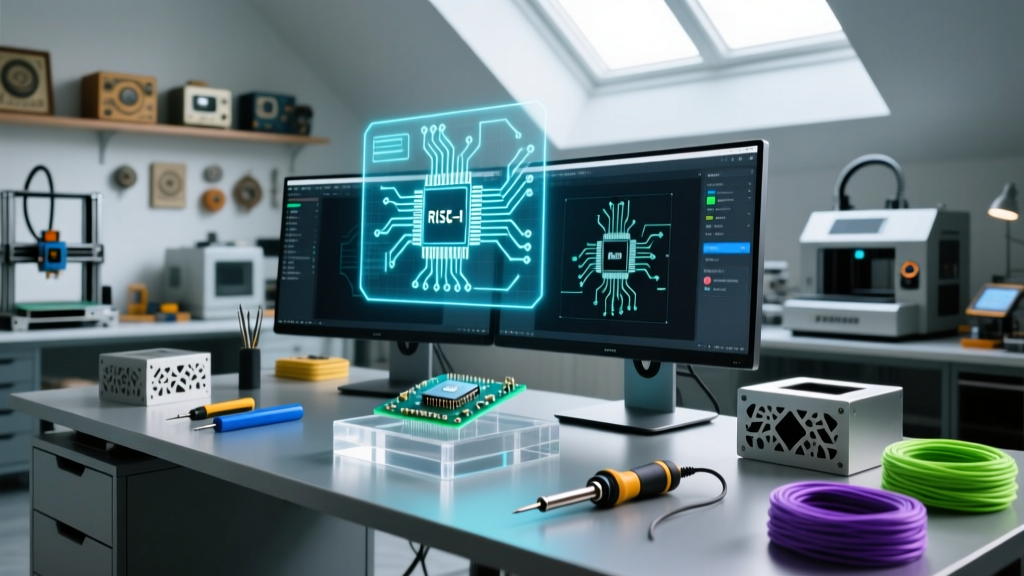
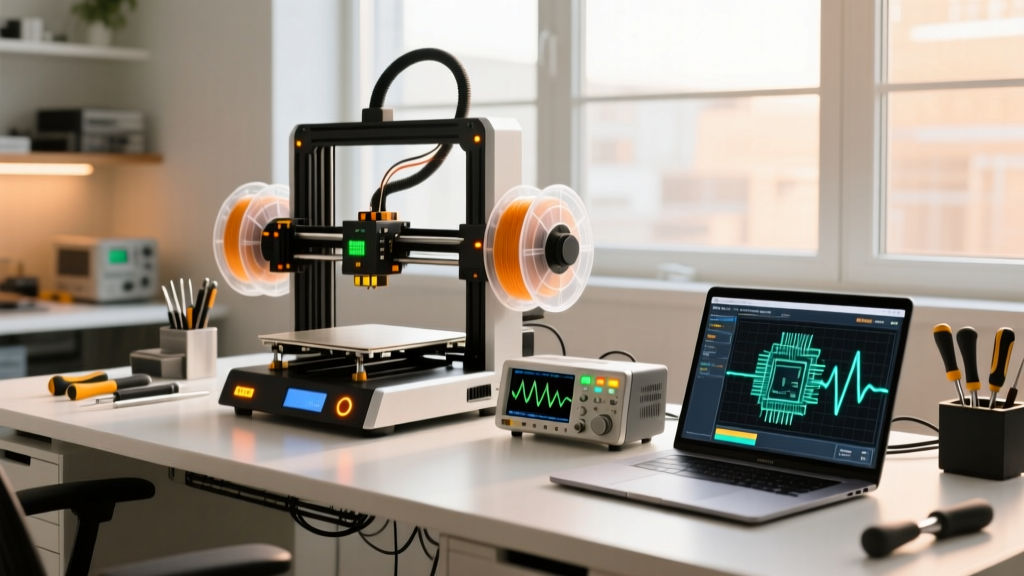
The era of simply wiring together off-the-shelf sensor modules on a breadboard is officially behind us. As we navigate through 2026, the landscape of diy gadgets has matured from a hobbyist pastime into a sophisticated, decentralized R&D ecosystem. Today's makers are not just assembling pre-fabricated blocks; they are designing custom silicon interfaces, training localized neural networks, and fabricating multi-layer high-density interconnect (HDI) boards from their home offices. According to ongoing coverage by Hackaday, the barrier to entry for professional-grade hardware design has collapsed, replacing the old gatekeepers with AI-assisted toolchains and open-source silicon architectures.
This trend report breaks down the exact hardware, software, and supply chain shifts defining the maker economy this year. Whether you are building a custom environmental monitor or a fully autonomous soft-robotic gripper, understanding these 2026 baselines is critical for your next build.
AI-Automated PCB Routing and Fabrication
The most significant bottleneck in creating advanced diy gadgets has always been printed circuit board (PCB) layout. In 2026, AI-driven electronic design automation (EDA) tools like Flux.ai and the latest KiCad 8 plugins have fundamentally changed this workflow. Makers no longer spend hours manually routing differential pairs for USB-C Power Delivery or calculating impedance for 2.4GHz RF traces.
Real-World Application and Failure Modes
By importing a netlist into an AI copilot, makers can now auto-route a 4-layer board in under 45 minutes. The AI automatically places decoupling capacitors within 2mm of the IC VCC pins and ensures 90-ohm differential impedance for high-speed data lines. However, this automation comes with specific failure modes. AI routers occasionally create ground loops if the board outline is not strictly constrained, leading to analog sensor noise. Experienced makers are now adopting a hybrid workflow: letting AI handle the digital routing while manually defining the analog ground planes and star-grounding topologies.
Pro Tip: Always run a secondary DRC (Design Rule Check) using an independent script after AI routing. AI tools sometimes violate minimum annular ring constraints on via-in-pad designs, which can cause drill breakout during manufacturing at budget fabs.
The RISC-V Revolution in Hobbyist Microcontrollers
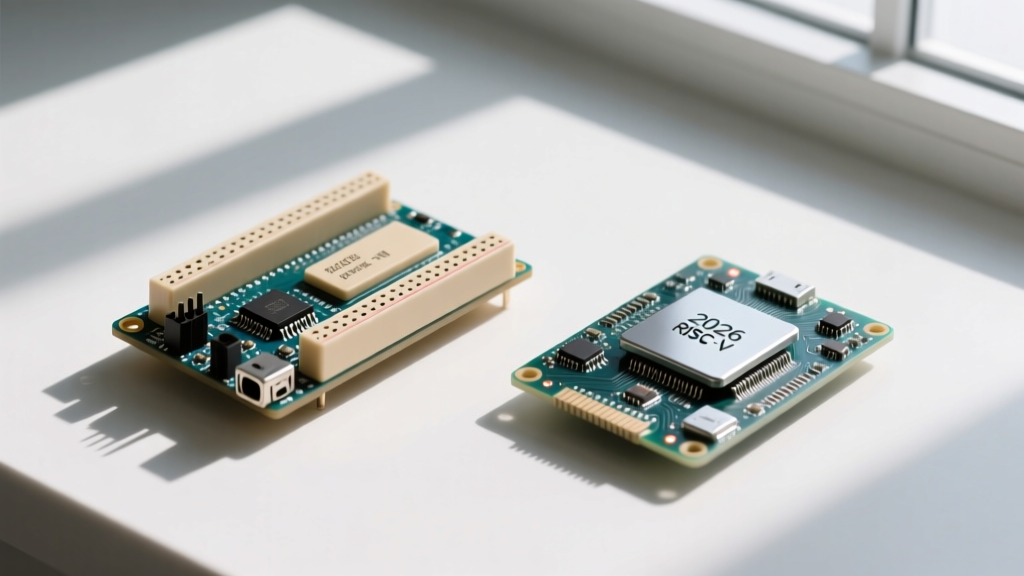
ARM licensing fees and supply chain bottlenecks of the early 2020s pushed the maker community toward open-source instruction set architectures. In 2026, RISC-V is the undisputed king of new microcontroller deployments. The Espressif ESP32-C6 and the Bouffalo Lab BL808 have become the standard bearers for IoT-focused diy gadgets.
The ESP32-C6, priced at roughly $1.80 per module in low quantities, offers native Wi-Fi 6, Bluetooth 5, and 802.15.4 (Thread/Matter) support. This allows hobbyists to build smart home devices that integrate seamlessly with modern Matter ecosystems without relying on proprietary cloud bridges. Furthermore, the debugging ecosystem has matured. While early RISC-V chips suffered from poor OpenOCD support, the 2026 release of PlatformIO 7.0 includes robust, plug-and-play debugging via the Segger J-Link or the open-source Picoprobe, making firmware development as seamless as it was during the peak Arduino era.
Component Cost & Accessibility Matrix
To understand where the market is heading, we must look at the shifting economics of hardware. The table below illustrates the transition from legacy standards to the 2026 maker baselines.
| Component Category | Legacy Standard (Pre-2023) | 2026 Maker Standard | Avg. Unit Cost | Key Advantage |
|---|---|---|---|---|
| Microcontroller | ATmega328P (Arduino Uno) | ESP32-C6 (RISC-V) | $1.80 | Native Wi-Fi 6 & Thread/Matter |
| SBC | Raspberry Pi 4B | Radxa Zero 3W / Pi 5 | $15 - $80 | NPU integration for Edge AI |
| Conductive Filament | Carbon-black PLA | NinjaTek Eel (TPU) | $45 / 500g | Flexible, strain-resistant |
| PCB Prototyping | 2-Layer FR4 (Standard) | 4-Layer HDI (Blind Vias) | $12 / 5 boards | High-density RF & BGA routing |
Soft Robotics and Conductive Silicones
Hardware is no longer limited to rigid enclosures and standard wiring. The integration of soft robotics into consumer-level maker projects has exploded, driven by the accessibility of conductive silicones and flexible TPU filaments. Materials like NinjaTek Eel offer a volume resistivity of roughly 100 ohms/cm, making them perfect for capacitive touch interfaces, low-power strain gauges, and embedded flex sensors within 3D-printed soft grippers.
Designing for Material Fatigue
When building soft robotic actuators for diy gadgets, the primary engineering challenge is material fatigue. Conductive carbon-black infused TPU will experience a permanent resistance drift after approximately 10,000 bend cycles. To combat this, 2026 best practices dictate embedding a calibration curve directly into the microcontroller's firmware. By measuring the baseline resistance upon device wake-up, the system can dynamically adjust its analog-to-digital converter (ADC) thresholds, ensuring accurate sensor readings even as the physical material degrades over months of use.

Edge AI: Moving Inference to the Sensor
The days of sending raw sensor data to a cloud API for processing are ending. Latency, privacy concerns, and Wi-Fi power consumption have pushed the community toward Edge AI. According to hardware analyses on Tom's Hardware, microcontrollers with integrated Neural Processing Units (NPUs) are now standard.
The Seeed Studio XIAO ESP32S3 Sense, retailing around $14, features a dual-core 240MHz processor and enough SRAM to run quantized ONNX models locally. Makers are deploying tinyML models directly onto these chips for localized wake-word detection, predictive maintenance via vibration analysis, and low-resolution gesture recognition. By processing data at the edge, battery-operated diy gadgets can achieve multi-year lifespans on a single 18650 lithium-ion cell, waking the main processor only when a specific neural trigger is met.
Energy Harvesting for Battery-Less Builds
A major trend for 2026 is the elimination of batteries entirely for low-power sensor nodes. Using advanced power management ICs (PMICs) like the e-peas AEM10941, makers are pairing indoor photovoltaic cells or TDK piezoelectric film harvesters with supercapacitors. These setups trickle-charge a 0.47F supercapacitor, providing enough burst current to power an ESP32-C6 deep-sleep wake cycle and transmit a LoRaWAN payload every 15 minutes. This approach is revolutionizing environmental monitoring, allowing makers to seal their diy gadgets in waterproof resin without ever worrying about battery degradation or replacement.
The 2026 Maker Decision Framework
With so many new technologies available, deciding how to architect your next project can be overwhelming. Use this framework to guide your component selection:
- Rule 1: Never route a 2-layer board for RF. If your project involves 2.4GHz Wi-Fi or BLE, use a 4-layer HDI stack-up with a dedicated ground plane. The $10 premium at modern fabs saves hours of impedance matching and guarantees reliable antenna performance.
- Rule 2: Default to RISC-V for new IoT deployments. ARM licensing fees are pushing module costs up. The Espressif ESP32-C6 offers superior power management and native Matter support for modern smart home integrations.
- Rule 3: Localize Edge AI. Do not send audio or video to the cloud for basic inference. Use local ONNX models to ensure sub-50ms latency and total data privacy.
- Rule 4: Design for Disassembly. With e-waste regulations tightening globally, use standard M3 brass heat-set inserts instead of self-tapping screws, and avoid potting compounds unless absolute waterproofing is required.
Sourcing and Supply Chain Realities
The global supply chain has restructured. The 30-day ePacket shipping model from overseas marketplaces has been largely replaced by regional maker-hubs and localized micro-fulfillment centers. As highlighted by Seeed Studio's maker blog, the fusion of local warehousing with on-demand manufacturing means that makers can now order custom CNC-machined aluminum enclosures and receive them within 48 hours in major tech corridors. This rapid iteration cycle allows for weekly hardware revisions, accelerating the prototyping phase of diy gadgets from months to mere days.
Final Thoughts on the Maker Economy
The future of DIY electronics is not about replacing commercial products; it is about hyper-specialization. Commercial manufacturers build for the masses, but the 2026 maker builds for the edge cases. Whether you are designing a soft-robotic prosthetic tailored to a specific user's anatomy or an AI-driven hydroponic controller that learns the exact nutrient needs of a rare orchid, the tools available today offer unprecedented power. By embracing RISC-V, Edge AI, and automated fabrication, the maker community continues to push the boundaries of what is possible outside the walls of a traditional corporate lab.
Written by
Tom ReynoldsTom Reynolds holds a CFA (Chartered Financial Analyst) designation and a B.S. in Finance from the University of Texas at Austin. Before entering tech journalism, he spent 6 years as a quantitative analyst at a hedge fund, building cost-benefit models for consumer product investments. Tom has maintained a proprietary database of over 10,000 tech deals for the past 8 years, developing his signature "penny-per-feature" evaluation framework that calculates the true value proposition of every gadget. His budget gadget reviews are known for their financial rigor — he tracks price history across 15+ retailers, calculates cost-per-use over 3-year lifespans, and identifies the exact inflection point where premium features justify their markup. Tom's deal alerts have saved his readers an estimated .3 million since 2018.