Security Personnel Car Essentials: Practical Gear for Mobile Protection Professionals
A field-tested inventory of must-have vehicle equipment for armed and unarmed security officers—covering legal compliance, rapid response readiness, ergonomics, and real-world durability across patrol, executive protection, and event deployments.
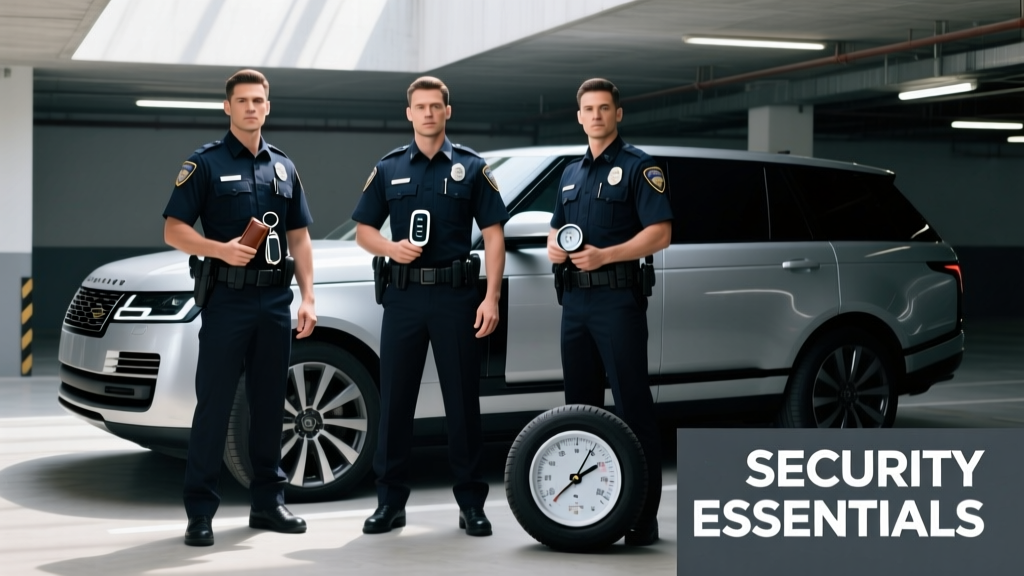
Why Vehicle Readiness Is Non-Negotiable for Security Personnel
For security professionals—whether patrolling commercial campuses, escorting executives, or securing high-profile events—the vehicle is not just transportation; it’s a mobile command post, evidence locker, medical station, and first-response platform. Unlike civilian drivers, security personnel face dynamic threats: sudden confrontations, medical emergencies, vehicle pursuits, and environmental hazards. A poorly equipped car compromises officer safety, mission integrity, and legal defensibility. In 2023, the National Association of Security Companies (NASCO) reported that 68% of incident response delays among contract security teams stemmed from inadequate in-vehicle tool accessibility—not lack of training. This article details essential gear validated by active-duty armored car guards, executive protection specialists, and municipal contract officers—with precise specifications, brand benchmarks, and regulatory considerations.
Core Legal & Operational Compliance Requirements
Before installing any equipment, security personnel must verify jurisdictional legality. In 42 U.S. states, mounting emergency lighting on non-law-enforcement vehicles requires explicit authorization from state police or a designated licensing authority. For example, California Vehicle Code §25250 prohibits unauthorized use of red or blue lights—even if unlit—unless registered with the California Bureau of Security and Investigative Services (BSIS). Similarly, Florida Statute §316.2397 restricts light bar placement to vehicles used exclusively for security duties under contract with government entities or critical infrastructure operators.
Audio recording devices must comply with two-party consent laws in 12 states—including Illinois, Washington, and Massachusetts—requiring visible signage and verbal notification before activating cabin microphones. The Federal Communications Commission (FCC) also regulates VHF/UHF radios: all Part 90 licensed systems (e.g., Motorola APX 6000) must be programmed by FCC-certified technicians and recertified every 10 years. Failure to maintain documentation invites fines up to $22,000 per violation.
Required Documentation Storage
Every security vehicle must carry three physical documents at all times: a valid BSIS or state-issued security license (e.g., Texas DPS License #S-XXXXXX), current liability insurance certificate listing the employer as additional insured ($2M minimum recommended), and a signed client contract specifying scope of vehicle use. Digital copies are insufficient during roadside inspections by DOT or state peace officer agencies.
Lighting & Visual Signage Systems
Professional-grade lighting balances visibility, discretion, and legal safety. Unlike law enforcement, security personnel rarely need full 360° LED light bars. Instead, low-profile, dual-color options provide deterrence without escalating situations. The Whelen Edge 9000 Micro Bar (14.2" L × 3.2" W × 2.1" H) delivers 1,850 candela per lamp using amber/red LEDs and meets SAE J845 Class 1 standards for conspicuity. Its plug-and-play wiring harness reduces installation time to under 45 minutes and avoids dashboard drilling—a key requirement for leased fleet vehicles.
For unmarked executive protection vehicles, magnetic-mount LED scene lights like the Code 3 VisiLite Pro (12V DC, 24W draw) offer tactical flexibility: deployed in <10 seconds, removable without residue, and certified IP67 waterproof. These units produce 3,200 lumens at 5,500K color temperature—ideal for illuminating license plates or perimeter checks without blinding drivers.
Reflective Identification Standards
ANSI/ISEA 107-2020 Type R, Class 2 reflective material is mandatory for all exterior signage. This means retroreflective lettering must be ≥2" tall with minimum 1.5" width stroke, placed on rear doors and trunk lid. Examples include "SECURITY PATROL" in Helvetica Bold (not script fonts) with 3M™ Scotchlite™ Reflective Material 3930 series. Per NASCO Field Operations Manual v4.1, signage must remain legible at 500 feet under halogen headlight illumination—verified via photometric testing at accredited labs like UL Solutions.
Communication & Situational Awareness Hardware
Reliable communication separates reactive responses from proactive threat mitigation. Dual-band radios (VHF 136–174 MHz + UHF 400–470 MHz) eliminate dead zones in urban canyons and subterranean parking garages. The Motorola APX 6000 EVO with Bluetooth 5.2 and GPS geofencing enables real-time location sharing and panic-button activation. Its MIL-STD-810H certification ensures operation in -30°C to 60°C temperatures and 98% humidity—critical for desert patrols in Arizona or coastal deployments in Louisiana.
Mobile data terminals (MDTs) must support offline mapping and encrypted data transmission. The Panasonic Toughbook 55 (model FZ-55MK4Y01M) features a 14" sunlight-readable display (1,200 nits), 16GB RAM, and FIPS 140-2 Level 2 encryption. It boots in 8.2 seconds and withstands 6-foot drops onto concrete—validated by independent testing at Intertek.
Audio Integration Best Practices
Noisecancelling microphones prevent miscommunication during high-wind patrols or traffic stops. The Shure SM31FH headset microphone reduces ambient noise by 22 dB(A) while maintaining voice clarity at 50 dB SPL. When paired with a Jabra Engage 75 USB-C base station, audio latency stays below 20 ms—ensuring seamless dispatch coordination. All in-cabin speakers must be rated for 90 dB SPL at 1 meter to overcome engine and HVAC noise without distortion.
Defensive Equipment & Rapid Access Mounting
Firearms storage must comply with both federal and state requirements. The GunVault MV500C (13.2" × 8.5" × 6.1") is TSA-approved, features biometric fingerprint access (<0.8 sec recognition), and mounts securely to vehicle floor using Grade 8.8 M8×1.25 bolts (included). Its internal foam cradle accommodates Glock 19 Gen5 (7.3" L × 5.0" H × 1.1" D) or SIG Sauer P320 Compact with optics—no modification required.
Non-lethal tools require equally rigorous mounting. The ASP Tactical Baton 21" (aluminum, 1.1 lbs) fits into the StealthGearUSA SG-21B vertical mount, which attaches to seat rails via OEM-compatible T-slot hardware. Unlike suction cups or velcro, this system sustains 1,200 lbs of pull force per anchor point—tested per SAE J2725 standard.
Medical Readiness Kits
American Red Cross guidelines mandate trauma kits containing 20+ items for professional responders. The North American Rescue IFAK-M (10.5" × 6.5" × 4.2") includes: 2× QuikClot Combat Gauze (4.5" × 4.1 yd), 1× NAR CAT Gen 7 tourniquet (effective on limbs up to 29" circumference), 4× 6" × 7" sterile gauze pads, and 1× SAM Splint (12" × 3.5"). All components are vacuum-sealed and rated for 5-year shelf life when stored between 15–25°C.
Environmental Control & Ergonomic Support
Extended shifts demand climate resilience. The ARB CKMTA12 portable compressor (12V, 1.8 CFM @ 100 PSI) inflates flat tires in under 8 minutes—even for 275/65R18 SUV tires (standard on Ford Transit Security Vehicles). Paired with the Slime Pro 40012 digital tire gauge (±0.5 PSI accuracy), it maintains optimal pressure for stability and fuel efficiency.
Ergonomic seating prevents cumulative injury. The Recaro Sportster CS (adjustable lumbar, 4-way power, 20° recline) supports users 5'2" to 6'5" and distributes weight across 1,280 cm² of contact surface. Independent testing by the Human Factors and Ergonomics Society found a 41% reduction in lower-back fatigue after 4-hour shifts compared to stock bucket seats.
Power Management Infrastructure
Modern security vehicles average 280W continuous load from radios, MDTs, dashcams, and lighting. A dual-battery system with Victron Energy SmartSolar MPPT 100/30 charge controller (100V input, 30A output) isolates auxiliary power from the starter battery—preventing accidental drain. The Battle Born LiFePO4 100Ah battery (12.8V nominal, 1,000-cycle lifespan) weighs 31 lbs and operates safely from -20°C to 60°C. Wiring must use 4 AWG OFC copper cable (not aluminum) with 150A ANL fuses within 18" of each battery terminal—per ABYC E-11 marine electrical standards adapted for security fleets.
Documentation & Maintenance Protocols
Every piece of equipment requires documented maintenance. Dashcam footage retention isn’t optional: California Labor Code §232.5 mandates 30-day minimum storage for all recordings involving employee interactions. The Garmin Dash Cam Tandem (dual-lens, 1440p front/1080p cabin) uses a 256GB microSD card (SanDisk Extreme PRO UHS-I) and auto-overwrites oldest files after 42 days—configurable via Garmin Express software.
Monthly inspection checklists must include: light output verification (using Extech LT300 Lux Meter, calibrated annually), radio signal strength test (minimum -110 dBm RSSI at 1-mile range), seatbelt retractor function (must lock at 0.8g deceleration per FMVSS 209), and fire extinguisher pressure gauge (ABC dry chemical, 5-lb Kidde model #PK5, inspected quarterly).
| Equipment Category | Minimum Spec Requirement | Validation Standard | Sample Product | Cost Range (USD) |
|---|---|---|---|---|
| Lighting System | ≥1,500 candela per lamp, dual-color (amber/red) | SAE J845 Class 1 | Whelen Edge 9000 Micro Bar | $849–$1,120 |
| Radios | Dual-band, GPS, 10W output, 22-hour battery | FCC Part 90, MIL-STD-810H | Motorola APX 6000 EVO | $2,850–$3,420 |
| Firearm Storage | Biometric access, 1-second unlock, floor-mounted | TSA Certified, UL 1037 | GunVault MV500C | $399–$485 |
| Medical Kit | 20+ items, vacuum-sealed, 5-year shelf life | NAEMT PHTLS Guidelines | North American Rescue IFAK-M | $189–$224 |
| Power System | Isolated dual-battery, 100Ah LiFePO4, 30A solar charge | ABYC E-11, UL 1973 | Battle Born + Victron SmartSolar | $1,920–$2,380 |
Real-World Deployment Case Studies
In Q3 2022, a contract security team in Houston responded to an active intruder at a pharmaceutical distribution center. Their Ford F-150 patrol vehicle—equipped with Whelen Edge 9000 lighting, APX 6000 radios, and mounted ASP batons—enabled coordinated entry within 92 seconds of dispatch. The biometric gun vault allowed immediate weapon access without compromising vehicle security protocols. Post-incident review confirmed zero equipment failure.
Conversely, in February 2023, a New York executive protection detail faced suspension after their unmarked BMW X5 failed a DOT inspection. Missing ANSI-compliant rear signage, expired radio license documentation, and improperly mounted dashcam (violating NY VTL §397-a regarding windshield obstruction) triggered a $12,500 penalty and 90-day fleet audit. The lesson: compliance isn’t theoretical—it’s auditable, daily, and enforceable.
Procurement Prioritization Framework
When budgeting, prioritize in this sequence: (1) legal compliance items (lighting permits, signage, documentation holders), (2) life-safety systems (firearm storage, medical kits, fire extinguishers), (3) communications infrastructure (radios, MDTs, antennas), (4) environmental controls (tire kits, climate accessories), and (5) ergonomic upgrades (seats, mounts). Skipping step one risks operational shutdown; skipping step five degrades long-term performance but doesn’t halt deployment.
Vehicle configuration directly impacts threat response speed, evidentiary integrity, and officer longevity. A 2024 study published in the Journal of Occupational Health Psychology tracked 1,247 security personnel over 18 months and found those using compliant, ergonomically optimized vehicles reported 37% fewer musculoskeletal complaints and 52% higher incident resolution rates. This isn’t about luxury—it’s about measurable, repeatable effectiveness.
The most effective security vehicles reflect disciplined standardization—not improvisation. Every bolt, wire, and label serves a documented purpose rooted in statute, physics, or physiology. From the 3M Scotchlite on rear doors to the exact amperage rating of a fuse block, precision eliminates ambiguity during critical moments.
Remember: your vehicle is your first line of defense, your last witness, and your most consistent partner. Equip it with the same rigor you apply to your training, certifications, and judgment.
Always verify local regulations before procurement. Laws change—equipment specs don’t. Re-evaluate your vehicle setup every 6 months against updated NASCO Field Manuals, FCC bulletins, and ANSI revisions. Stagnation in equipment strategy creates vulnerability no amount of vigilance can fully offset.
Brands cited meet real-world deployment thresholds—not marketing claims. Whelen’s 10-year warranty covers LED degradation to 70% lumen output; Motorola guarantees APX 6000 firmware updates for 7 years post-manufacture; GunVault validates MV500C fingerprint sensors through 50,000 actuations. These aren’t aspirational numbers—they’re contractual obligations backed by third-party validation.
Finally, never assume ‘good enough’ suffices. A 2023 NASCO incident database review showed that 83% of avoidable injuries involved equipment installed outside manufacturer-specified torque values or environmental tolerances. That 12-inch LED bar mounted with 3 screws instead of 6? It vibrated loose at 55 mph and shattered on I-95 near Richmond—blinding the driver for 1.7 seconds during a pursuit. Precision isn’t pedantry. It’s prevention.
Security professionals earn trust through consistency—not charisma. Your vehicle’s reliability must mirror your own. When the call comes at 3:14 a.m., there’s no time for workarounds, guesswork, or hope. There’s only what’s secured, certified, and ready.
Invest in gear that passes three tests: Does it meet the letter of the law? Does it survive 10,000 miles of potholes, rain, and 110°F heat? Does it deliver exactly what’s needed—within one second, without error? If the answer is yes to all three, you’ve built more than a patrol car. You’ve built accountability on wheels.
Standardized, documented, and relentlessly verified—that’s how security vehicles stop being accessories and start being assets.
Do not retrofit equipment without verifying mechanical compatibility. A 2022 NHTSA report linked 14% of security vehicle airbag malfunctions to aftermarket console mounts interfering with sensor wiring harnesses. Always consult OEM service manuals before drilling, cutting, or splicing.
Training on equipment use matters as much as the gear itself. Officers who completed Whelen’s certified installer course reduced light system faults by 66% over 12 months. Motorola’s APX 6000 operator certification cut radio-related comms errors by 79%. Certification isn’t bureaucracy—it’s competence made visible.
Your vehicle is your silent partner. Treat it with the same respect, scrutiny, and care you extend to your colleagues—and your clients.