Top Budget Gadgets for Musicians: Essential Gear Under $100 for 2026
Discover the best budget gadgets for musicians in 2026. We review top studio and stage gear under $100, including 32-bit recorders and pro audio interfaces.
The New Standard for Sub-$100 Studio Gear
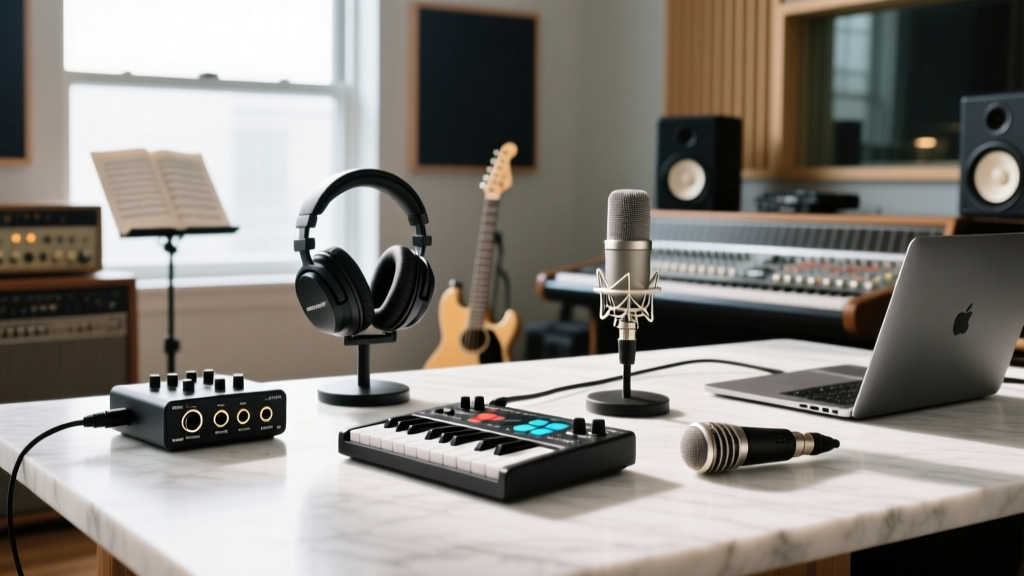
The barrier to entry for professional-grade audio production has completely collapsed. In 2026, the DSP (Digital Signal Processing) and converter technologies that were strictly reserved for $500+ boutique interfaces and rackmount units are now standard in sub-$100 consumer gadgets. For independent producers, touring singer-songwriters, and podcasters, this means you no longer have to compromise on dynamic range, bit depth, or build quality when working with a tight budget.
This roundup cuts through the marketing noise to highlight the most technically capable budget gadgets for musicians available today. We focus strictly on gear that delivers measurable audio fidelity, robust build quality, and practical utility for real-world recording scenarios.
Quick Comparison Matrix: Top Budget Picks
| Gadget | Category | Price (Approx) | Standout Specification | Ideal User |
|---|---|---|---|---|
| Zoom H1essential | Field Recorder | $99 | 32-bit float WAV recording | Foley artists, live gig recordists |
| Arturia MiniFuse 1 | Audio Interface | $99 | 115dB dynamic range, -129 dBu EIN | Bedroom producers, vocalists |
| Arturia MiniLab 3 | MIDI Controller | $99 | MIDI 2.0 ready, 25-key Fatar bed | Beatmakers, synth programmers |
| Marantz Sound Shield | Acoustic Treatment | $89 | High-density EVA foam, folding hinges | Voiceover artists, podcasters |
| Boss TU-10 | Clip-on Tuner | $35 | True bypass, cent-accurate piezo pickup | Gigging guitarists, bassists |
The 32-Bit Float Revolution: Zoom H1essential
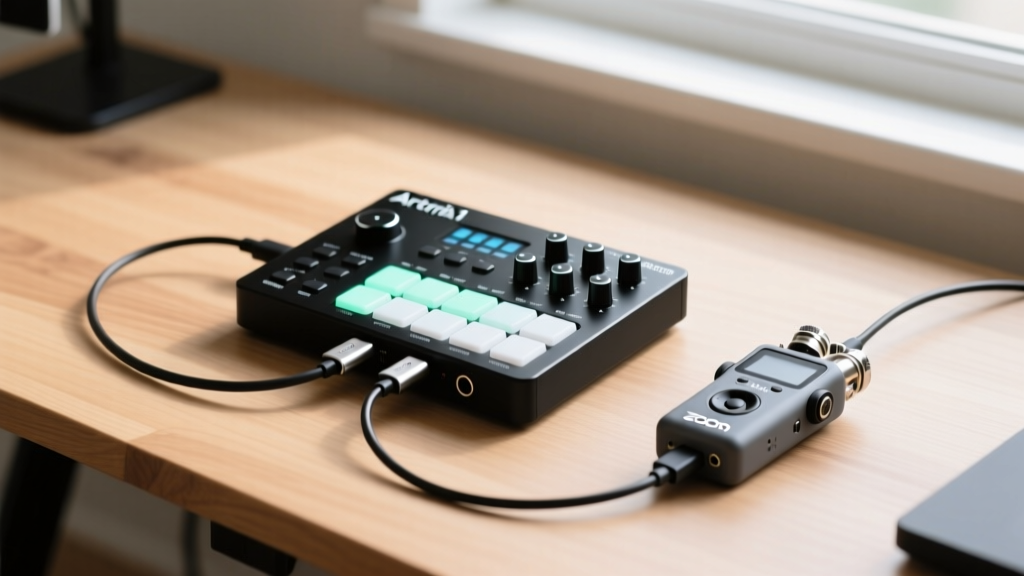
For decades, the biggest point of failure in field recording was improper gain staging. Set the input gain too low, and you capture unusable noise; set it too high, and the audio clips and distorts permanently. The Zoom H1essential completely eliminates this problem by utilizing 32-bit float recording technology.
Unlike standard 24-bit recorders that require careful manual gain adjustment, 32-bit float captures a dynamic range so massive (over 1500 dB of theoretical headroom) that the concept of clipping is virtually eradicated. The H1essential lacks a physical gain knob entirely. Instead, it records the raw, unclipped 32-bit WAV file, allowing you to adjust the volume in post-production within your DAW without introducing digital artifacts or raising the noise floor.
Real-World Application
If you are recording a live concert where the sound engineer suddenly pushes the master fader during the chorus, a 24-bit recorder would clip. The H1essential simply captures the massive transient, and you can pull the waveform down by -20dB in post, revealing perfectly clean audio underneath. At just $99, it is arguably the most important budget gadget for musicians who record outside the controlled environment of a studio.

High-Headroom Conversion: Arturia MiniFuse 1
When evaluating budget audio interfaces, the most critical metric is the Equivalent Input Noise (EIN) and the dynamic range of the AD/DA converters. The Arturia MiniFuse 1 punches vastly above its weight class by offering a 115dB dynamic range and an EIN of -129 dBu. To put this in perspective, many interfaces in the $200-$300 bracket struggle to break 110dB.
This ultra-low noise floor is crucial if you are recording quiet sources—like fingerpicked acoustic guitar or whispered vocal takes—and need to apply heavy compression or makeup gain later. The MiniFuse 1 also provides a true 48V phantom power supply capable of driving demanding condenser microphones (like the Shure SM81 or Audio-Technica AT2020) without the voltage sag that plagues cheaper, USB-bus-powered alternatives.
Pro-Tip: USB-C Power Delivery
While the MiniFuse 1 is USB-C bus-powered, ensure you are plugging it directly into a motherboard USB-C port or a powered hub delivering at least 5V/1.5A. Plugging it into an unpowered front-panel case header can result in insufficient voltage for the 48V phantom power circuit, causing a low-frequency hum in your recordings.
Tactile MIDI Control: Arturia MiniLab 3
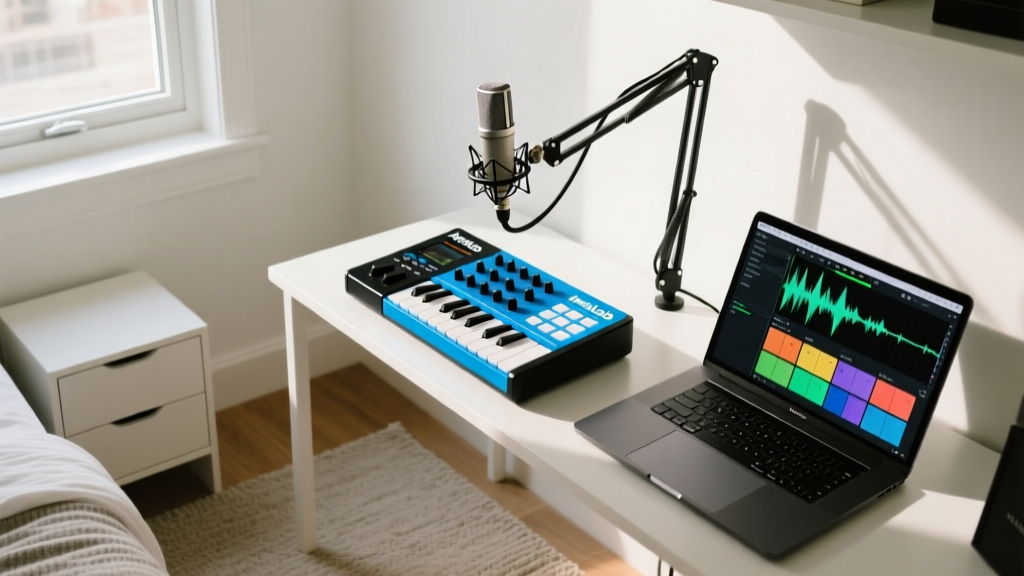
Software synthesizers are only as expressive as the hardware used to control them. The Arturia MiniLab 3 ($99) bridges the gap between budget pricing and professional tactile feedback. It features 25 slim keys with a surprisingly responsive velocity curve, alongside 8 velocity-sensitive RGB pads and 4 assignable faders.
The standout feature for 2026 is its native support for MIDI 2.0 via firmware updates. This allows for high-resolution velocity data (up to 32-bit) and per-note pitch bend (MPE) when paired with compatible software synths. This means you can bend the pitch of a single note within a chord without affecting the others—a feature previously locked behind $500+ MPE controllers.
Portable Acoustic Treatment: Marantz Professional Sound Shield
You cannot fix a highly reverberant room with EQ or noise reduction plugins without degrading the source audio. If your budget does not allow for permanent acoustic panels, the Marantz Professional Sound Shield ($89) is a highly effective localized solution.
Constructed from high-density EVA (Ethylene-Vinyl Acetate) foam, it absorbs mid and high-frequency reflections before they can bounce off untreated bedroom walls and re-enter the microphone's polar pattern. Unlike rigid, bulky competitors, the Marantz shield features folding hinges, collapsing down to a fraction of its size for storage or travel. It includes a standard 5/8-inch thread adapter, allowing it to mount directly to standard boom mic stands.
Decision Framework: Which Budget Gadget to Buy First?
If you only have $100 to spend right now, prioritize based on your immediate bottleneck:
- The Singer-Songwriter: Buy the Arturia MiniFuse 1. Your primary bottleneck is capturing your voice and acoustic instruments with a low noise floor. A high-quality converter is non-negotiable.
- The Beatmaker / Electronic Producer: Buy the Arturia MiniLab 3. You already have virtual instruments; your bottleneck is humanizing your drum programming and playing synth lines with physical expression rather than drawing MIDI notes with a mouse.
- The Field Recordist / Sound Designer: Buy the Zoom H1essential. Your bottleneck is capturing unpredictable environmental audio without clipping. 32-bit float is the ultimate insurance policy for location audio.
Frequently Asked Questions
Do budget audio interfaces like the MiniFuse 1 support DSP monitoring?
No. Sub-$100 interfaces typically do not include onboard DSP for zero-latency effects processing. You will need to rely on your DAW's native plugin buffer for monitoring. Keep your buffer size at 64 or 128 samples to maintain a playable latency of under 5ms on modern 2026 CPUs.
Can I use the Zoom H1essential as a USB audio interface?
Yes. The H1essential features a built-in USB-C audio interface mode, allowing you to stream 32-bit float audio directly into your DAW for live podcasting or streaming, completely bypassing the need for an external interface.
Is the Marantz Sound Shield enough to block out low-frequency room rumble?
No. Portable vocal shields are designed to absorb mid and high-frequency room reflections (reverb and flutter echo). They will not block low-frequency transmission (like traffic rumble or HVAC hum). For low-frequency issues, you must address the physical isolation of the room or use a high-pass filter (around 80Hz) in post-production.
For deeper dives into acoustic measurement and interface benchmarking, consult the Sound on Sound review archives, which provide rigorous, lab-tested frequency response graphs for nearly all current market offerings.
Written by
Nina PetrovaNina Petrova holds a Master's degree in Child Development from the Erikson Institute and a B.S. in Nursing from the University of Illinois at Chicago. She worked as a pediatric nurse for 6 years before transitioning to family technology consulting, bringing clinical rigor to her evaluations of kid-friendly gadgets, educational toys, and parental control software. Nina has reviewed over 400 children's tech products, testing each for safety compliance (CPSC and ASTM standards), developmental appropriateness across age groups, screen-time impact, and data privacy practices. She serves on the Children's Technology Review advisory board and has testified before the FTC on children's data protection in connected toys. Her reviews are trusted by parents and educators alike for their evidence-based approach to balancing technology benefits with child safety.