The Coolest Startup Gadgets in Wearable Tech for 2026
Discover the coolest startup gadgets in wearable tech for 2026. We review niche smart rings, EEG headbands, and haptic bands breaking the mold.

The Wearable Rebellion: Why 2026 Belongs to Startups
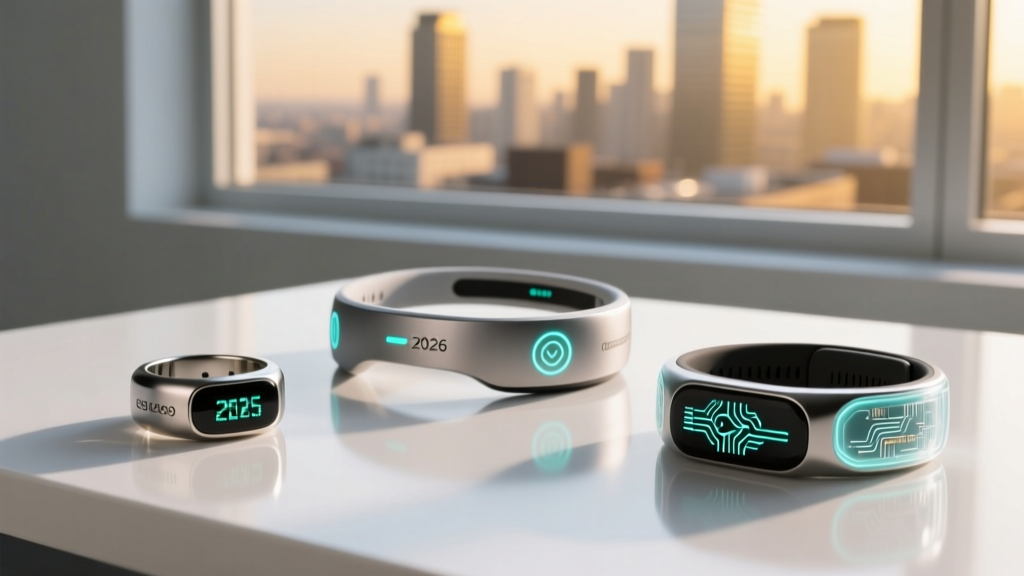
For the last half-decade, the wearable tech market has been trapped in a monotonous cycle of iterative updates from the same three tech giants. But if you are hunting for the most innovative startup gadgets in 2026, you need to look past the Apple Watches and Samsung Galaxy Rings. The real revolution is happening in the indie space, where agile startups are leveraging medical-grade sensors, neuro-haptics, and open-source SDKs to solve niche problems that mainstream manufacturers ignore.
As enthusiasts, we do not just want another step counter; we want actionable biometric data, nervous system regulation, and hardware that respects our privacy. According to The Verge's comprehensive smart ring buyer guide, consumer fatigue with mandatory monthly subscriptions has directly fueled the rise of indie hardware startups offering lifetime access to raw data. Below, we break down four of the most unique startup gadgets redefining the wearable landscape this year.
4 Unique Startup Gadgets Rewriting the Wearable Rulebook
1. Evie Ring (Cherish Health): The Medical-Grade Women’s Health Tracker
Most smart rings are simply scaled-down fitness bands. The Evie Ring by Cherish Health was engineered from the ground up specifically for female physiology. Unlike the rigid, closed-loop designs of its competitors, the Evie features a flexible, open-ended titanium band that accommodates natural finger swelling throughout the day and menstrual cycle.
- Core Sensors: Medical-grade PPG, SpO2, and continuous skin temperature.
- Standout Feature: FDA 510(k) clearance for atrial fibrillation (AFib) detection and blood oxygen spotting, a massive regulatory hurdle that most indie startups fail to clear.
- Battery Life: 7 days (wireless charging via a sleek, magnetic lotus-shaped dock).
- Pricing: $299 flat. Zero mandatory subscription fees.
The Enthusiast Take: The open-ended design is a masterclass in ergonomic engineering. By utilizing a flexible inner polymer, it maintains skin contact for accurate continuous temperature tracking—a critical metric for ovulation and cycle prediction—without the discomfort of a rigid metal band.
2. Neurosity Crown 3: EEG-Powered Flow State Engineering
While smartwatches track what your body is doing, the Neurosity Crown 3 tracks what your brain is doing. This is not a consumer toy; it is a serious piece of biofeedback hardware designed for developers, writers, and biohackers who want to quantify and trigger 'flow states'.
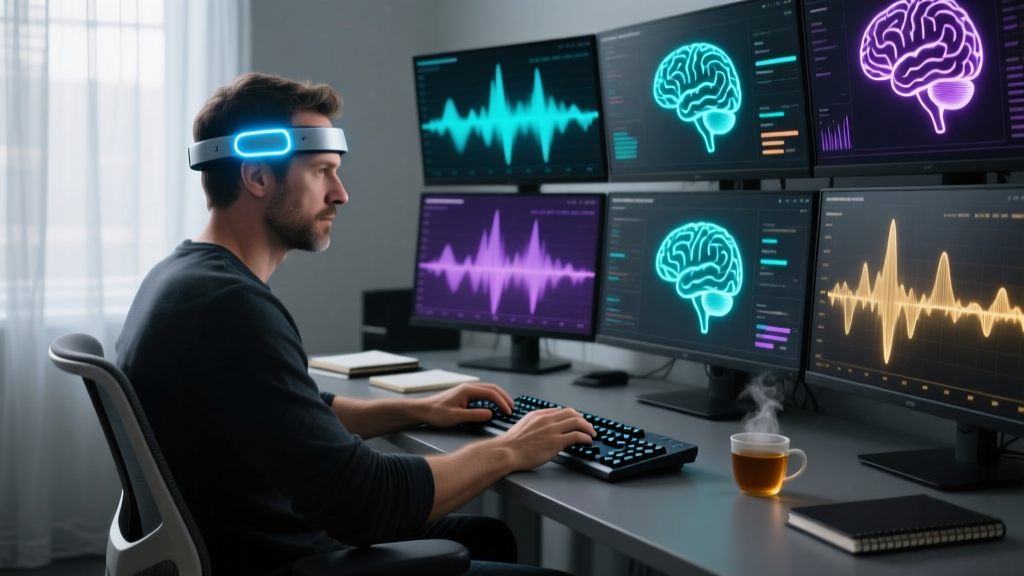
- Core Sensors: 8-channel dry EEG (electroencephalogram) sensors.
- Standout Feature: The proprietary 'Flow State' algorithm detects when your brain enters deep focus and can automatically trigger API webhooks (e.g., setting your Slack to DND, blocking distracting websites, or adjusting smart lighting).
- Battery Life: 12 hours of continuous EEG streaming.
- Pricing: $899 (Includes lifetime access to the Neurosity OS and developer SDK).
The Enthusiast Take: At nearly $900, this is an investment. However, the ability to export raw CSV brainwave data and write custom Python scripts via their SDK makes it an unparalleled tool for cognitive researchers and extreme productivity hackers.
3. Apollo Neuro Neo: Haptic Nervous System Regulation
The Apollo Neuro Neo does not track your steps; it actively changes how you feel. Developed by neuroscientists, this wearable uses low-frequency haptic vibrations to stimulate the vagus nerve, signaling your brain to shift between states of focus, calm, or alertness. As highlighted in Wired's testing of haptic wearables, the clinical backing for vibroacoustic therapy makes this one of the most scientifically grounded wellness gadgets on the market.
- Core Tech: Silent, low-frequency haptic transducers (not standard vibration motors).
- Standout Feature: 40Hz gamma wave stimulation mode for pre-workout energy or deep-work focus, and slow-wave delta patterns for sleep onset.
- Form Factor: Can be worn on the wrist, ankle, or clipped to a bra strap/waistband.
- Pricing: $349 (No subscription required for core modes).
The Enthusiast Take: The Neo model's upgraded haptic engine is completely silent. You can wear it during a board meeting or a meditation session, and the person sitting next to you will have no idea it is actively down-regulating your sympathetic nervous system.
4. Doppel V3: The Rhythmic Focus Wristband
Doppel takes the concept of rhythm and turns it into a wearable productivity tool. It is essentially a highly advanced, wrist-worn metronome that uses tactile beats to influence your heart rate and cognitive arousal based on the principle of entrainment.
- Core Tech: High-fidelity linear resonant actuator (LRA) for precise, variable BPM haptics.
- Standout Feature: Adjustable rhythm from 40 BPM (to induce calm and lower heart rate) up to 120 BPM (to stimulate alertness and physical pacing).
- Build: Aerospace-grade aluminum casing with a breathable fluoroelastomer strap.
- Pricing: $199.
The Enthusiast Take: It sounds simple until you use it during a marathon or a high-stress coding sprint. The physical sensation of a steady, external heartbeat on your wrist acts as a powerful psychological anchor, keeping panic at bay and maintaining a steady physical cadence.
Spec Showdown: Indie Wearables vs. The Mainstream Monopoly
How do these niche startup gadgets actually compare to the mainstream giants when you look at the raw specifications and ecosystem philosophy? Here is the 2026 comparison matrix.
| Device | Primary Biometric / Function | Battery Life | Subscription Required? | Raw Data Export? | Price |
|---|---|---|---|---|---|
| Evie Ring | SpO2, Temp, AFib (Women's Health) | 7 Days | No | Yes (CSV) | $299 |
| Neurosity Crown 3 | 8-Channel EEG (Brainwaves) | 12 Hours | No | Yes (API/CSV) | $899 |
| Apollo Neuro Neo | Vagus Nerve Haptic Regulation | 72 Hours | No | N/A (Output Device) | $349 |
| Oura Ring Gen 4 | General Sleep & Recovery | 8 Days | Yes ($5.99/mo) | Limited | $349 |
| Apple Watch Ultra 3 | Jack-of-all-trades Fitness | 36 Hours | No (Apple Fitness+ optional) | Yes (Health App) | $799 |
The Enthusiast’s Framework: Vetting Crowdfunded Wearables
The wearable startup space is littered with vaporware and failed Kickstarter campaigns. Before you back or buy an emerging wearable, run it through this three-point E-E-A-T framework:
- Hardware Iteration Rule: Never buy a startup's first-generation hardware. Gen 1 devices are essentially beta tests funded by early adopters. Wait for Gen 2 or Gen 3 (like the Apollo Neo or Neurosity Crown 3), where the manufacturing kinks and sensor calibration issues have been resolved.
- Sensor Validation: Look for third-party validation. If a startup claims medical-grade accuracy, demand to see their FDA 510(k) clearance number or peer-reviewed clinical trial data. Self-reported internal testing is a red flag.
- Ecosystem Openness: True enthusiast gadgets do not lock you in. Check if the device offers an open API, IFTTT integration, or raw data export. If your biometric data is trapped in a proprietary app with no export function, walk away.
Frequently Asked Questions
Are smart rings from startups as accurate as mainstream smartwatches?
For specific metrics like continuous skin temperature and resting heart rate, startup rings like the Evie Ring often outperform smartwatches simply because the finger has fewer capillaries and less ambient light interference than the wrist. However, for high-intensity interval training (HIIT) GPS tracking, a mainstream wrist-based wearable remains superior.
Do EEG wearables like the Neurosity Crown actually work for focus?
Yes, but with caveats. Clinical studies referenced by Tom's Guide smart ring laboratory testing and independent neurological research confirm that EEG can accurately detect states of high cognitive load. However, the device requires proper calibration to your baseline brainwaves to be effective; it is not a magic 'focus pill', but rather a highly advanced biofeedback mirror.
Why do indie wearable startups avoid subscription models?
Startups in the enthusiast space recognize that tech-savvy consumers are experiencing severe subscription fatigue. By charging a premium upfront for the hardware and offering raw data access, they build intense brand loyalty and differentiate themselves from legacy brands that gatekeep your own biological data behind monthly paywalls.
Written by
Ryan TanakaRyan Tanaka holds a B.S. in Mechanical Engineering from Oregon State University and is a certified AWS Solutions Architect. He has built over 80 custom electronics projects ranging from CNC machines to IoT sensor networks, and has reviewed development boards, 3D printers, soldering equipment, and maker tools for the past 6 years. Ryan is an active contributor to 12 open-source hardware projects on GitHub and teaches monthly workshops at three hackerspaces across the Pacific Northwest. His reviews combine engineering rigor with accessibility — he evaluates products not just on specs but on documentation quality, community support, and learning curve for beginners. He has presented at Maker Faire Bay Area, Open Hardware Summit, and the Adafruit community showcase, and maintains a popular blog documenting his build processes.