Beyond the Chip N Dale Rescue Rangers Gadget: Real SAR Drones
Discover how modern SAR drones and payload gadgets solve real-world rescue problems, turning cartoon nostalgia into life-saving 2026 tech.
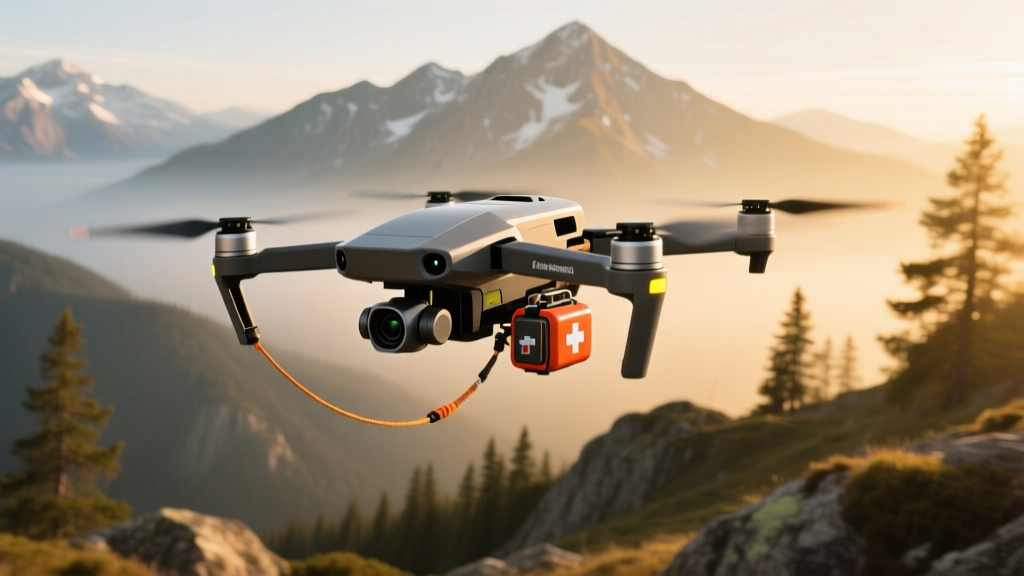
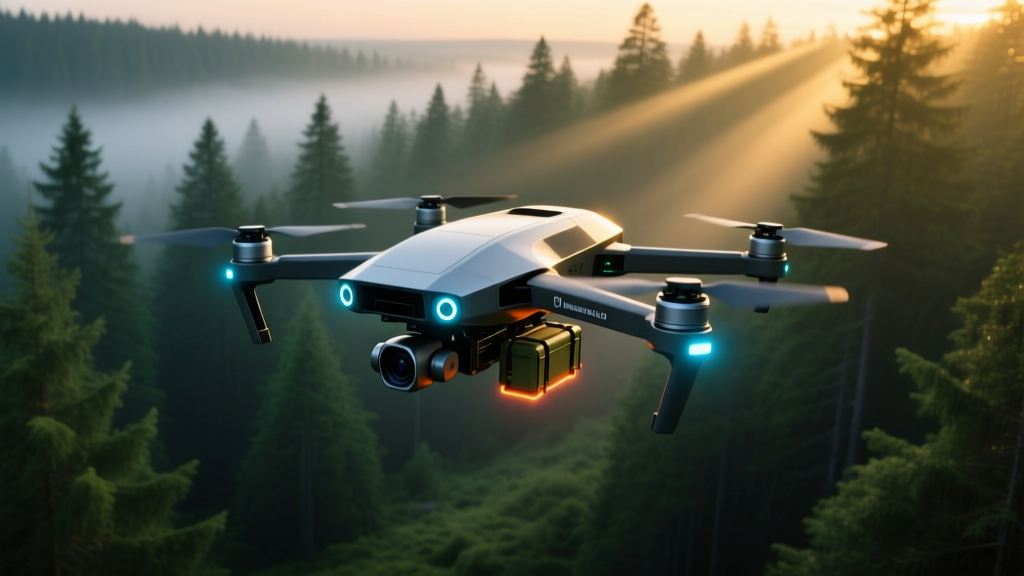
If you grew up watching the classic animated series, you likely dreamed of owning a functional chip n dale rescue rangers gadget—from motorized grappling hooks to miniature gyrocopters. While those cartoon inventions were pure fiction, the core philosophy behind them—using specialized, modular tech to solve complex retrieval and rescue problems—is very much alive today. In 2026, the most practical, life-saving iteration of this concept isn't a toy; it's the modular Search and Rescue (SAR) drone.
For tech enthusiasts, first responders, and off-grid adventurers, building a custom SAR drone loadout is the ultimate problem-solving exercise. It requires integrating thermal imaging, precision payload delivery, and extreme-weather resilience into a single flying platform. Here is your comprehensive, problem-solver guide to engineering a real-world rescue drone rig that outperforms any cartoon fantasy.
The 'Ranger Plane' Evolved: Choosing Your Base Platform
You cannot mount heavy rescue gadgets on a sub-250g consumer drone. Real SAR operations require enterprise-grade lift capacity, IP55 (or better) weather resistance, and redundant flight systems. In the current landscape, two platforms dominate the sub-$15,000 enthusiast and first-responder market:
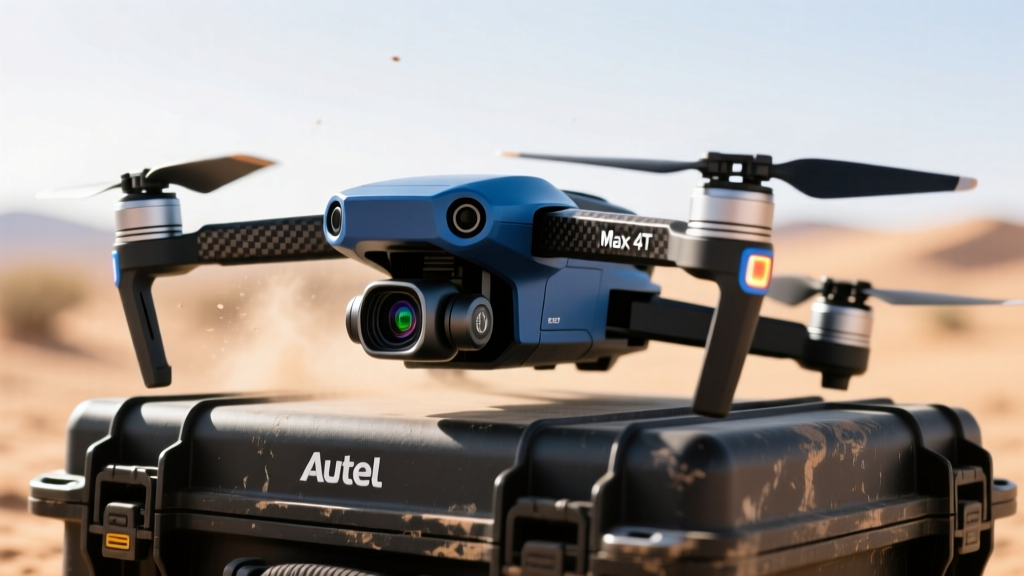
1. Autel EVO Max 4T
Priced around $7,300, the EVO Max 4T is a favorite for rugged environments. Its standout feature is A-Mesh networking, which allows multiple drones to share thermal data and create a localized communication mesh independent of cellular networks. It features a 42-minute max flight time (real-world SAR payload time is closer to 28 minutes) and an impressive 70° obstacle avoidance field of view.
2. DJI Matrice 30T (M30T)
At roughly $10,500, the M30T is the workhorse of modern public safety. According to DJI Enterprise Public Safety documentation, the M30T integrates a wide, zoom, and thermal camera into a single gimbal, alongside a laser rangefinder accurate up to 1,200 meters. Its quick-deploy folding arms and IP55 rating make it ideal for rapid deployment in torrential rain.
Gadget 1: Thermal Imaging (Seeing the Unseen)
The Problem: Locating a missing hiker or injured animal in dense foliage or total darkness using standard RGB cameras is nearly impossible.
The Solution: Long-Wave Infrared (LWIR) thermal sensors.
Modern SAR drones rely on uncooled microbolometer sensors operating in the 8-14 micrometer spectrum. The gold standard for add-on thermal payloads is the Teledyne FLIR UAS sensor lineup, specifically the Vue TZ20. However, integrated systems like the DJI Zenmuse H20T (640×512 resolution, NETD <40mK) provide incredible thermal contrast.
Expert Insight: Thermal cameras do not 'see' temperature; they detect infrared radiation. A missing person will appear as a bright white or black hotspot (depending on your color palette) against the cooler ambient ground. However, thick pine canopies can block LWIR radiation. Always fly offset angles (30-45 degrees) to peer through gaps in the tree line rather than strictly top-down.
Gadget 2: Payload Delivery Systems (The Modern Winch)
The Problem: You've located a stranded climber or a diabetic hiker experiencing a medical emergency, but the terrain is too dangerous for an immediate ground approach.
The Solution: Precision airdrop mechanisms.
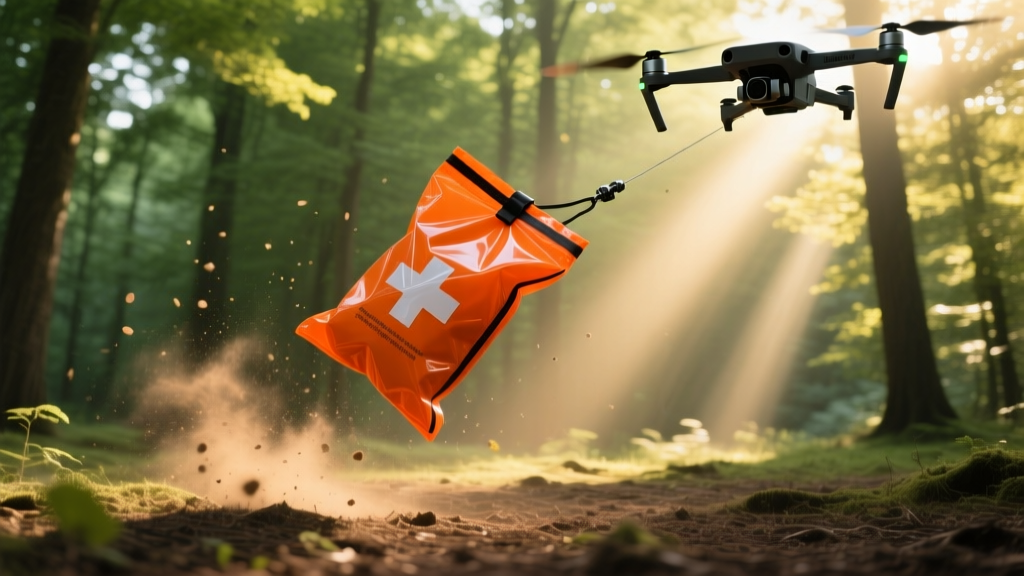
Forget cartoon winches; modern SAR rigs use PWM-triggered servo release systems. The Foxtech FTS-20 Payload Drop System (approx. $350) is a highly reliable, universal accessory. It mounts to the drone's landing gear or underbelly and connects to an auxiliary channel on your flight controller.
- Capacity: Up to 2kg (sufficient for an EpiPen, two-way radio, or compact life jacket).
- Trigger Mechanism: Light-sensor or PWM servo release.
- Practical Tip: Always attach a high-visibility streamer and a foam dampener to your payload pouch to prevent injury to the recipient upon impact.
Gadget 3: Illumination & Audio (Spotlights and Loudspeakers)
Signaling and communication in dead zones require massive lumen output and directional audio. The GL300E Drone Spotlight pushes an astonishing 300,000 lumens and features a 3-axis gimbal to keep the beam locked on a target while the drone banks. Paired with a 120dB drone loudspeaker, operators can issue verbal instructions to lost individuals, guiding them to safe extraction points long before ground crews arrive.
Comparison Matrix: The Ultimate SAR Loadout
| Component | Top 2026 Pick | Est. Price Range | Primary Use Case |
|---|---|---|---|
| Base Drone | DJI Matrice 30T | $10,000 - $11,500 | All-weather flight, integrated optics |
| Thermal Add-On | FLIR Vue TZ20-R | $11,000+ | Deep-search, radiometric analysis |
| Payload Drop | Foxtech FTS-20 | $300 - $400 | Medical supply / radio delivery |
| Spotlight | GL300E Gimbal Light | $800 - $1,200 | Night signaling, ground tracking |
| Battery System | BS30 Plus (Self-Heating) | $400 per pair | Cold-weather operations (down to -20°C) |
Practical Framework: Assembling a Sub-$12K Rig
Not everyone has a municipal budget. Here is a practical, budget-conscious framework for enthusiasts building a dedicated SAR and retrieval drone:
- The Platform ($7,300): Autel EVO Max 4T. It includes a built-in 640x512 thermal camera, eliminating the need for a $10k external FLIR payload.
- The Drop System ($350): Universal PWM servo drop rigged to the landing skids.
- Lighting ($250): A fixed-mount 10,000-lumen LED floodlight (sacrificing gimbal stabilization to save weight and cost).
- Power Redundancy ($1,200): Three sets of high-discharge batteries and a ruggedized field charging station.
Total Investment: ~$9,100. This leaves budget for FAA licensing, insurance, and custom 3D-printed payload housings.
Operational Edge Cases & Real-World Failures
Building the gadget is only half the battle; operating it in chaotic environments is where most enthusiasts fail. Keep these edge cases in mind:
Edge Case 1: Cold Weather Voltage Sag
Lithium Polymer (LiPo) batteries suffer from increased internal resistance in freezing temperatures. At 32°F (0°C), expect a 20% to 30% loss in usable capacity. If your drone warns of low voltage at 25%, in the cold, that battery could collapse to 0% in seconds. Always use self-heating enterprise batteries and keep spare batteries in an insulated cooler with chemical hand warmers.
Edge Case 2: FAA Night Operations
Most SAR missions happen at night. Under current FAA Part 107 guidelines, night operations no longer require a special waiver, provided the remote pilot has completed the updated recurrent training and the drone is equipped with anti-collision lighting visible for at least 3 statute miles. Ensure your drone's strobes are not obscuring your thermal camera's view.
FAQ: Real-World Rescue Drone Operations
Can thermal drones see through water or glass?
No. LWIR thermal sensors cannot penetrate glass (it reflects IR) or water. If you are searching for a submerged vehicle or a person under thick ice, thermal imaging will only show the surface temperature of the water or ice, not what lies beneath.
How do I prevent the payload string from tangling in the rotors?
Always use a weighted drop line and release the payload from a minimum altitude of 15 meters (50 feet). If the drone descends too quickly after the drop, it can 'outfly' its own payload string, leading to catastrophic rotor entanglement. Ascend immediately upon release.
Is a cartoon-style grappling hook viable?
While motorized winches exist for heavy-lift hexacopters (like the DJI FlyCart 30), using a grappling hook on a sub-15lb quadcopter is highly dangerous. The sudden shift in center-of-gravity and the risk of motor stall from a snagged line make airdrops the vastly superior, safer alternative for enthusiast rigs.
Ultimately, the true magic of modern drone technology isn't found in a single, magical invention. It is found in the modular integration of sensors, payloads, and flight algorithms. By thoughtfully assembling your SAR loadout, you are building a life-saving machine that would make any fictional rescue ranger proud.
Written by
Nina PetrovaNina Petrova holds a Master's degree in Child Development from the Erikson Institute and a B.S. in Nursing from the University of Illinois at Chicago. She worked as a pediatric nurse for 6 years before transitioning to family technology consulting, bringing clinical rigor to her evaluations of kid-friendly gadgets, educational toys, and parental control software. Nina has reviewed over 400 children's tech products, testing each for safety compliance (CPSC and ASTM standards), developmental appropriateness across age groups, screen-time impact, and data privacy practices. She serves on the Children's Technology Review advisory board and has testified before the FTC on children's data protection in connected toys. Her reviews are trusted by parents and educators alike for their evidence-based approach to balancing technology benefits with child safety.