Space-Saving 3D Printer Kitchen Gadgets: Peelers, Graters and Slicers
Discover how 3D printer kitchen gadgets revolutionize small spaces with modular, collapsible peelers, graters, and slicers for compact prep work.
The Drawer Space Crisis in Modern Kitchens
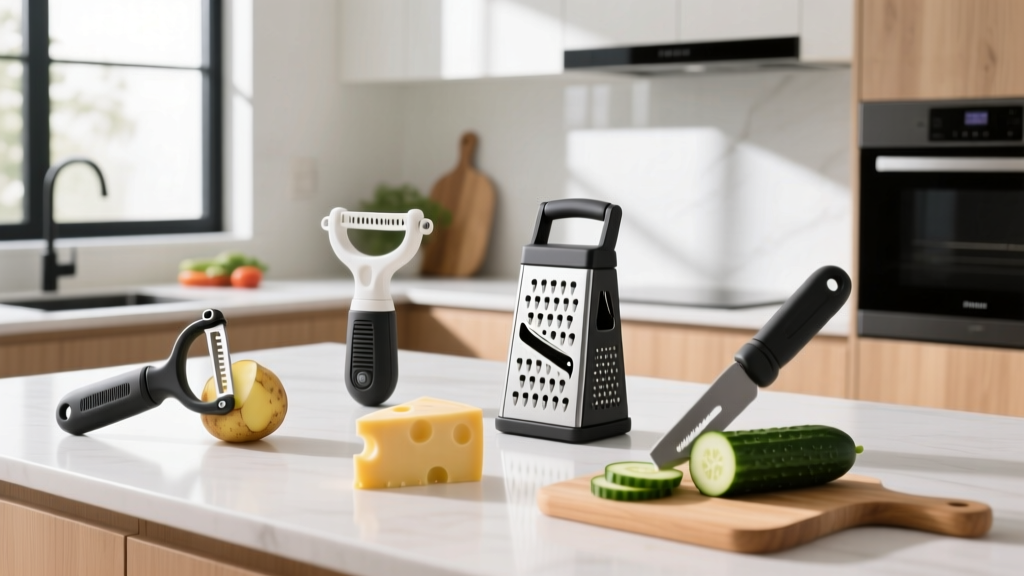
Standard kitchen prep tools are notoriously inefficient regarding spatial volume. A traditional four-sided box grater occupies roughly 120 cubic inches of drawer space, while a standard mandoline slicer with its safety guard and angled base demands over 200 cubic inches. For apartment dwellers, tiny home owners, or anyone optimizing a compact culinary space, these single-purpose, rigid geometries are unacceptable. The solution lies in modular design and additive manufacturing. By leveraging 3D printer kitchen gadgets, home cooks can replace bulky, fixed-form tools with collapsible, interchangeable, and flat-pack prep systems that reduce drawer footprint by up to 90%.
Why 3D Printer Kitchen Gadgets Excel at Space-Saving
Injection-molded commercial products require expensive tooling, forcing manufacturers to design for the broadest possible consumer base. This results in over-engineered, bulky housings. 3D printing bypasses these constraints, allowing for hyper-specific, space-optimized geometries. When designing 3D printer kitchen gadgets for vegetable peelers, graters, and slicers, the primary advantage is modularity. Instead of storing three separate tools, you print a single ergonomic handle and a series of flat, 0.25-inch thick blade cartridges that snap into place. This transforms a chaotic utensil drawer into a neat, stackable array of precision components.
Modular Slicer Frameworks and Mandoline Sleds
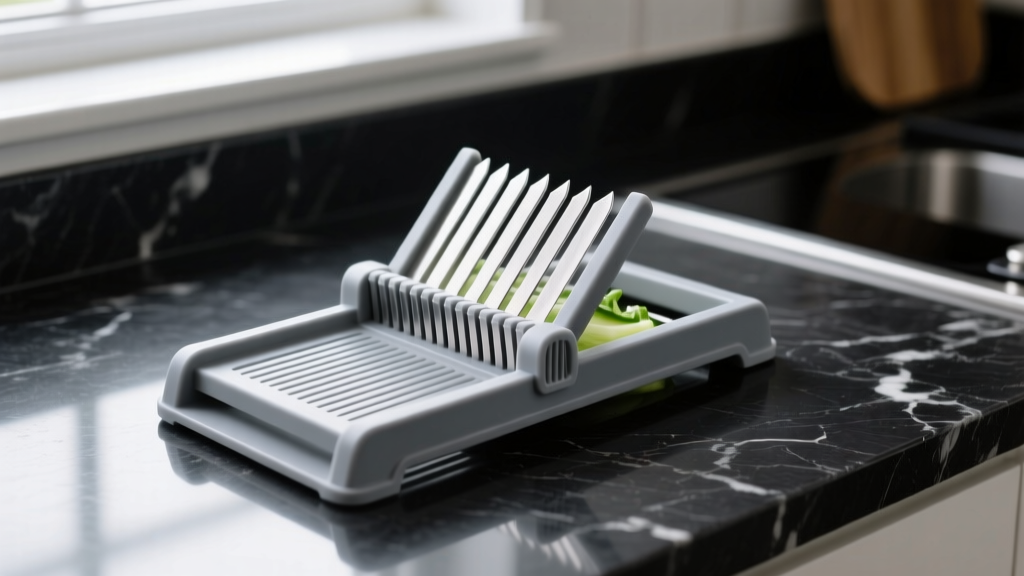
Traditional mandolines are dangerous and difficult to store. A 3D printed modular slicer framework solves both issues. The most effective space-saving design utilizes a flat, low-profile sled that accepts standard, commercially available replacement blades.
The Collapsible Mandoline Concept
By designing a chassis that folds flat via living hinges (printed in TPU) or M3 stainless steel pin joints, a mandoline can be reduced from a 6-inch height to a 0.75-inch profile. The cutting surface should be designed to hold standard trapezoid utility blades or specific replacement julienne inserts (such as the 105mm wide blades used in commercial food processors). These blades cost less than $0.20 each, are razor-sharp, and can be safely removed for cleaning, allowing the 3D printed PETG or ABS frame to be sanitized without risking warping in a dishwasher.
Custom Grater Attachments and Zester Modules
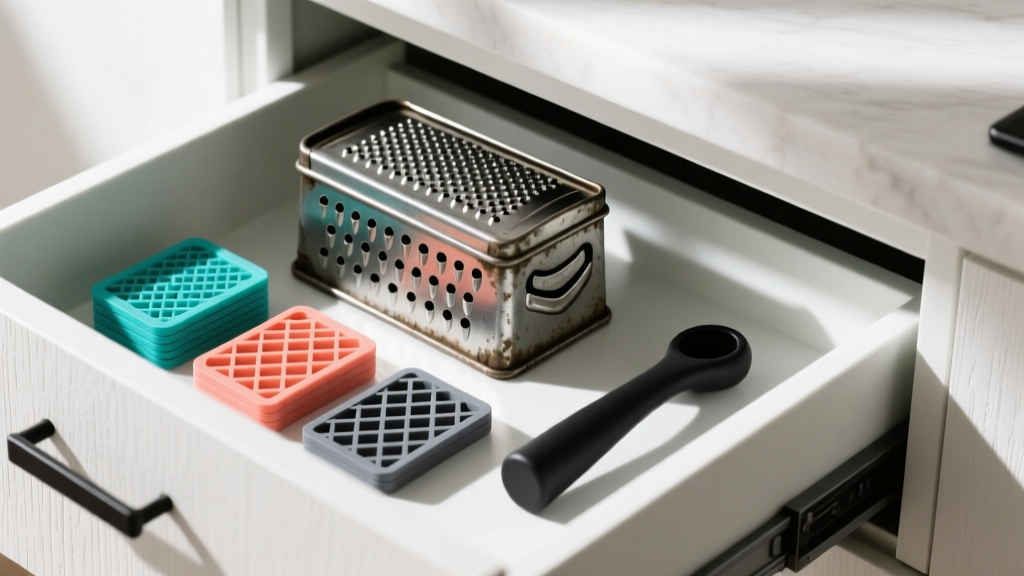
Box graters are the ultimate space wasters. The 3D printed alternative is the flat-insert grater system. You can 3D print a universal handle with a standardized dovetail or magnetic locking mechanism. The grating surfaces themselves are laser-etched stainless steel sheets (readily available from specialty kitchen suppliers or metal fabrication shops) that slide into the 3D printed frame.
For zesting citrus or grating hard cheeses like Parmigiano-Reggiano, a flat, 1.5-inch wide stainless steel zester blade mounted in a 3D printed housing takes up roughly 10 cubic inches of space—a 91% reduction compared to a standard box grater. When not in use, the flat blades stack neatly in a dedicated 3D printed drawer organizer tray.
| Tool Type | Traditional Volume | 3D Printed Modular Volume | Space Reduction |
|---|---|---|---|
| Box Grater (4-Sided) | ~120 cu in | ~12 cu in (Handle + 4 flat inserts) | 90% |
| Mandoline Slicer | ~220 cu in | ~25 cu in (Folding sled + blade pack) | 88% |
| Y-Peeler | ~18 cu in | ~8 cu in (Folding TPU-hinge design) | 55% |
Ergonomic and Foldable Peeler Designs
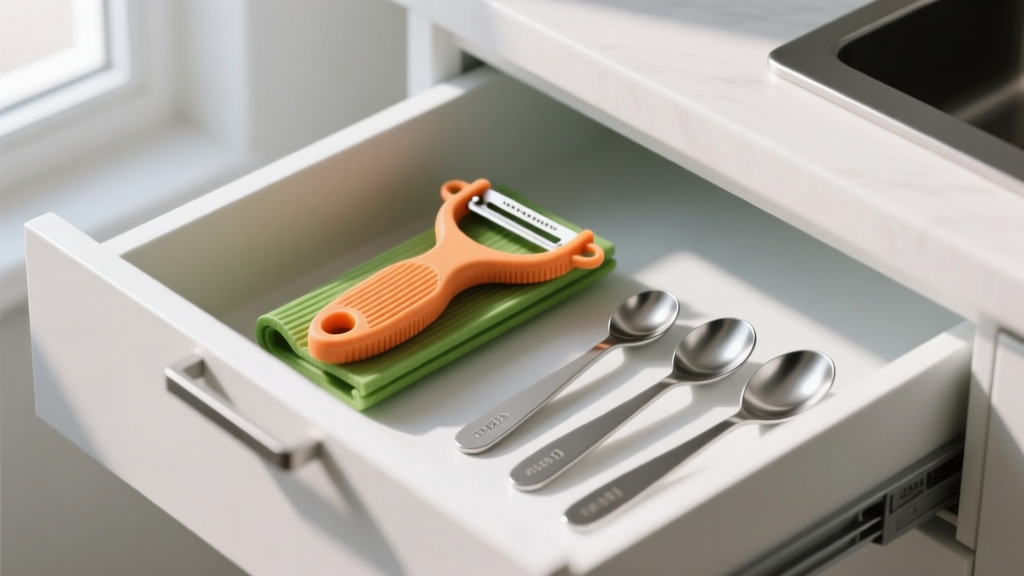
Standard Y-peelers and swivel peelers feature rigid handles that dictate their storage dimensions. Using 3D printing, you can engineer a peeler handle with an integrated folding mechanism. By printing the main body in rigid PETG and the hinge section in flexible TPU (Shore 95A hardness), the peeler can fold in half, reducing its length from 6.5 inches to 3.5 inches. This allows it to fit into shallow silverware dividers or even pocket-sized camping cooksets. The blade holder should accept standard 1.5-inch swivel peeler replacement blades, secured by a 3D printed snap-fit cap or a small M2 stainless steel set screw.
Sourcing Food-Safe Blades and Hardware
The structural chassis of your 3D printer kitchen gadgets can be printed at home, but the cutting edges must be sourced from specialized manufacturers. Do not attempt to 3D print cutting edges; FDM plastics cannot hold an edge and will contaminate food with micro-plastics.
- Slicer Blades: Search for "replacement mandoline blades 105mm" or standard "trapezoid utility blades" (ensure they are high-carbon stainless steel to resist rust).
- Grater Sheets: Look for "flat stainless steel cheese grater replacement plates" or commission custom laser-etched sheets from local metalworkers using 304-grade stainless steel.
- Hardware: Use only 304 or 316 marine-grade stainless steel for all pins, screws, and springs. Standard zinc-plated hardware from hardware stores will oxidize and rust rapidly in a kitchen environment.
Material Selection and Sanitation Protocols
When manufacturing 3D printer kitchen gadgets, material choice dictates both longevity and safety. Standard PLA is entirely unsuitable; it deforms at 60°C (140°F), meaning a wash in hot water will warp the tolerances of your modular snaps. According to comprehensive guides on food-safe 3D printing materials, PETG, ABS, and ASA are the minimum requirements for kitchen environments due to their higher glass transition temperatures and chemical resistance.
Furthermore, the FDA regulates materials that come into contact with food under their Food Contact Substances (FCS) guidelines. While the raw filament may be technically food-safe, the FDM process creates voids. To properly seal a 3D printed peeler handle or grater frame, apply a two-part food-safe epoxy resin (such as ArtResin) or a food-grade shellac. This fills the layer lines, creating a glass-smooth, non-porous surface that can be safely washed with hot, soapy water without harboring Salmonella or E. coli.
Optimal Slicer Settings for Structural Rigidity
For any 3D printed component that will experience lateral torque (like a grater handle or a mandoline sled), use the following slicer profile:
- Infill: 100% rectilinear or gyroid. Hollow parts can crack under pressure, creating internal bacterial pockets.
- Perimeters: Minimum of 4 walls to ensure the outer shell is thick enough to sand and seal.
- Top Layers: Enable "Ironing" in your slicer to melt the top surface flat, drastically reducing the depth of the layer lines before epoxy application.
Frequently Asked Questions
Can I put my 3D printed modular peelers and graters in the dishwasher?
No. Even high-temperature materials like ABS or ASA can warp under the intense, localized heat of a dishwasher's drying cycle. Furthermore, the harsh alkaline detergents used in dishwashers can degrade food-safe epoxy coatings over time. Always hand-wash 3D printed kitchen gadgets with warm water and mild dish soap, and dry them immediately to protect the stainless steel hardware.
How do I prevent the 3D printed snap-fits from wearing out?
Plastic-on-plastic friction will eventually degrade snap-fit joints. To ensure your modular grater inserts and slicer sleds last for years, design the chassis to use small neodymium magnets (e.g., 6mm x 2mm discs) pressed into the frame, or use stainless steel ball-spring detents. This shifts the wear from the plastic to the metal components, which are easily replaced.
Where can I find reliable CAD files for these space-saving gadgets?
Platforms like Printables and Thingiverse host numerous open-source kitchen tool designs. However, always audit downloaded files for food safety. Look for designs that isolate the 3D printed plastic from the food path, utilizing stainless steel for all cutting and direct-contact surfaces. For a deep dive into safe material choices, consult the All3DP food-safe materials guide before sending any model to your printer.
Written by
Marcus WebbMarcus Webb served as a U.S. Army logistics officer for 8 years, where he managed field equipment procurement and tactical gear evaluation across three combat deployments. After honorable discharge, he earned a certification from the Professional Knife Makers Association and became a certified Wilderness First Responder (WFR). Marcus has tested over 500 EDC products in extreme environments — from -40°F in Alaska to 120°F in the Mojave Desert — using military-spec testing protocols. His reviews of multi-tools, tactical flashlights, and survival gear are known for their rigorous methodology: controlled drop tests from 6 feet, 120-minute water submersion at 2 meters, and lateral torque testing at 45 Nm. He is a member of the Blade Show judging panel and contributes to OutdoorGearLab.