Best New Kitchen Gadgets 2025: Smart Kettles & Water Dispensers
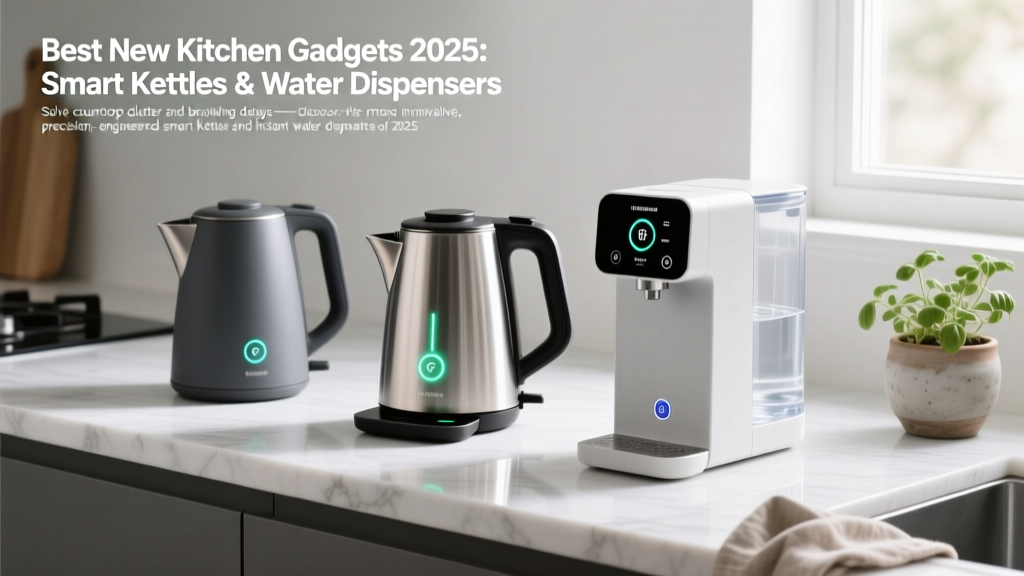
Solve countertop clutter and brewing delays. We test the best new kitchen gadgets 2025 for precision kettles and instant water dispensers.
The Countertop Hydration Bottleneck
Waiting for a stovetop kettle to boil or settling for the uneven, scalding heat of a microwave mug are two of the most common friction points in daily kitchen routines. When evaluating the best new kitchen gadgets 2025 has introduced to the market, electric kettles and water dispensing systems stand out for their immediate impact on daily efficiency. However, not all heating elements are created equal. The gap between a $30 dorm-room plastic boiler and a $200 precision brewing instrument is defined by thermal stability, material safety, and workflow integration.
This guide cuts through marketing jargon to analyze the exact engineering, real-world failure modes, and practical applications of the top temperature-control kettles and instant water dispensers available today. Whether you are dialing in a pour-over coffee or need instant 185°F water for matcha, these are the problem-solving picks that justify their countertop footprint.
Precision Temperature Kettles: Solving the Burnt Coffee Problem
The National Coffee Association mandates a brewing temperature between 195°F and 205°F for optimal extraction. Water boiled at 212°F and immediately poured over grounds will scorch the coffee, extracting bitter tannins. Precision kettles solve this by allowing exact degree-by-degree control.
Fellow Stagg EKG Pro Studio Edition vs. Breville IQ Kettle Pure
The market is currently dominated by two distinct approaches to thermal precision: the low-volume, high-control gooseneck design, and the high-volume, multi-purpose pitcher design.
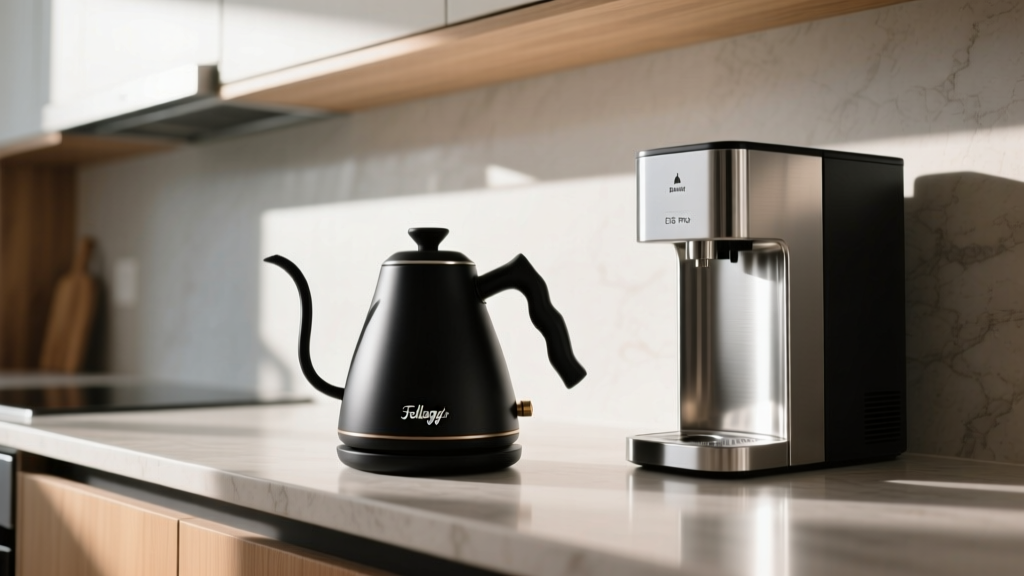
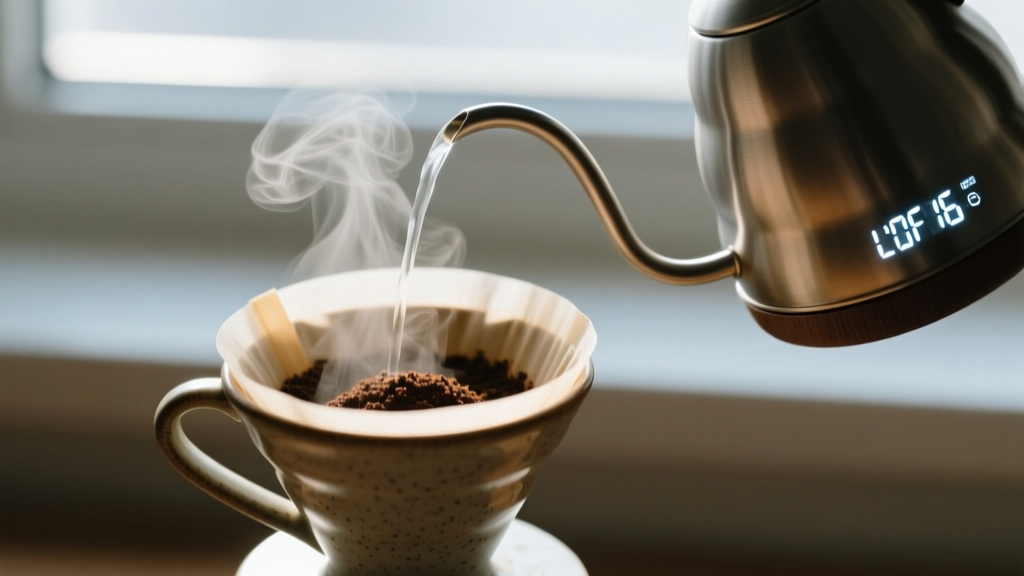
The Fellow Stagg EKG Pro Studio Edition ($195) is engineered specifically for manual coffee brewing. Its 0.9-liter capacity and counterbalanced handle provide the exact flow rate required for V60 or Chemex pour-overs. Unlike basic kettles that use a simple bimetallic strip thermostat—which often overshoots the target temperature by 5°F to 10°F before clicking off—the Stagg EKG Pro utilizes a PID (Proportional-Integral-Derivative) controller. This algorithm pulses the 1200-watt heating element in micro-bursts, maintaining your set temperature within a 1°F variance for up to 60 minutes.
Conversely, the Breville BKE830XL IQ Kettle Pure ($149) is a 1.7-liter workhorse built for households. It features a Soft Top lid to prevent steam burns and five preset temperature buttons optimized for different teas and French press coffee. According to extensive thermal testing by Serious Eats, Breville's dual-sensor system accurately reads water temperature at both the base and the center of the jug, ensuring uniform heating without the violent rolling boil that degrades delicate white and green teas.
| Feature | Fellow Stagg EKG Pro (0.9L) | Breville IQ Kettle Pure (1.7L) |
|---|---|---|
| Current Retail Price | $195 | $149 |
| Heating Element | 1200W Concealed | 1500W Concealed |
| Time to Boil (1L equivalent) | 4 min 15 sec | 3 min 45 sec |
| Temperature Accuracy | ± 1°F (PID Controller) | ± 3°F (Dual-Sensor) |
| Interior Material | 304 Stainless Steel | Schott Glass / Stainless Base |
| Best Use Case | Precision pour-over coffee, single servings | Family breakfasts, French press, cooking prep |
Instant Hot Water Dispensers: Eradicating the Microwave Mug
If your primary need is instant hot water for oatmeal, cup noodles, or quick tea without waiting for a kettle to heat up, an instant hot water dispenser is the superior gadget. These systems maintain a reservoir of near-boiling water, dispensing it on demand.
Under-Sink vs. Countertop Bottom-Load
The InSinkErator Hot100S ($239) is the gold standard for under-sink installations. It mounts directly to your sink's plumbing and requires a dedicated 110V electrical outlet under the counter. The Hot100S delivers up to 60 cups of 200°F water per hour. Its mechanical lever dispensing head is incredibly durable, lacking the electronic touchpads that frequently fail in high-moisture environments.
For renters or kitchens lacking under-sink electrical access, the Avalon A12 Bottom Loading Water Dispenser ($259) is the practical alternative. Standing 41 inches tall, it houses a 3-gallon or 5-gallon water bottle in the base, eliminating the heavy lifting of top-load models. It features three distinct spigots: ice cold, room temperature, and hot (185°F). The hot water spigot is equipped with a dual-action child safety lock—a physical push-and-lever mechanism that prevents accidental scalding.
Scale Buildup and Maintenance: The Hidden Gadget Killer
The most common point of failure in both kettles and dispensers is not electronic burnout, but mineral scale accumulation. The Water Quality Association notes that hard water contains high levels of dissolved calcium and magnesium. When heated, these minerals precipitate out as calcium carbonate scale.
Scale acts as a thermal insulator. A mere 1mm layer of scale on a concealed heating element can increase energy consumption by 12% and cause the kettle's internal thermal sensors to misread the water temperature, triggering premature shut-offs or erratic PID cycling.
The Citric Acid Descaling Protocol
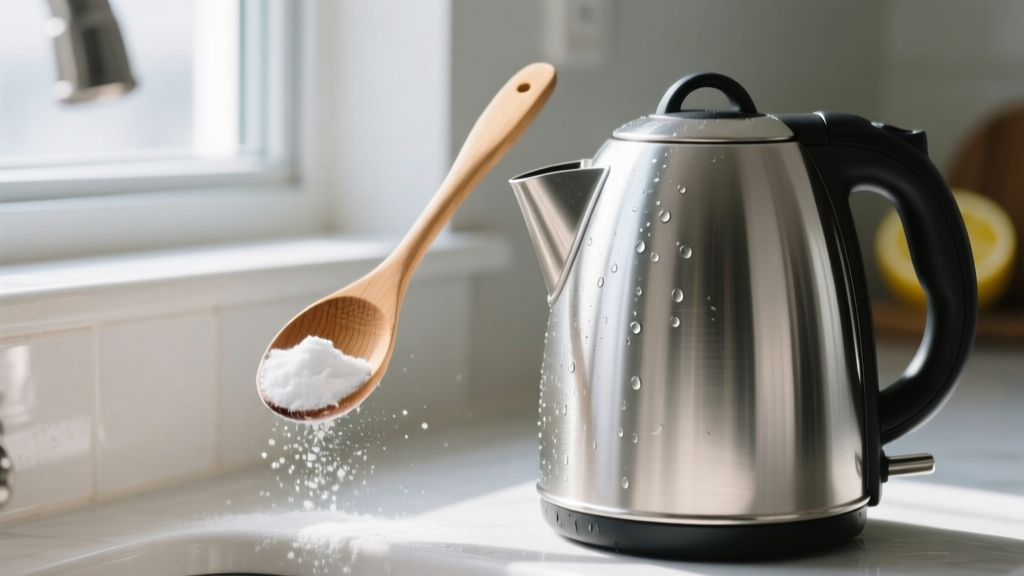
Skip white vinegar. While acidic enough to dissolve calcium, vinegar leaves a lingering acetic odor that permeates silicone gaskets and taints the flavor of subsequent brews. Instead, use food-grade citric acid.
- Measure 1 tablespoon of food-grade citric acid powder.
- Dissolve the powder in 500ml of warm water directly inside the kettle or dispenser reservoir.
- Bring the solution to a full boil, then turn the appliance off.
- Allow the solution to sit for exactly 15 minutes. The mild acid will break the ionic bonds of the calcium carbonate without damaging 304-grade stainless steel or borosilicate glass.
- Dump the solution and rinse the interior three times with fresh, cold water.
Perform this maintenance every 45 days in areas with moderate hard water (60-120 mg/L), and every 21 days in areas with very hard water (180+ mg/L).
Practical Buying Framework: Match the Gadget to Your Routine
Do not buy a gadget based on aesthetics; buy it based on your specific hydration friction points. Use this decision matrix to finalize your purchase:
- If you brew manual pour-over coffee daily: Buy the Fellow Stagg EKG Pro. The gooseneck spout and PID temperature stability are non-negotiable for proper extraction.
- If you need hot water for a family of four every morning: Buy the Breville IQ Kettle Pure. The 1.7L capacity and fast 1500W element prevent the need for multiple boils.
- If you own your home and drink 5+ cups of tea/cocoa daily: Install the InSinkErator Hot100S. The instant delivery saves roughly 4 minutes per cup, adding up to over 100 hours of saved time annually.
- If you rent or lack under-sink power: Buy the Avalon A12 Bottom Loader. It provides instant hot and cold water without permanent plumbing modifications.
Frequently Asked Questions
Does high altitude affect smart kettle temperature settings?
Yes. Water boils at 212°F (100°C) only at sea level. For every 1,000 feet of elevation gain, the boiling point drops by approximately 1.8°F. If you live in Denver (5,280 ft), water boils at roughly 202°F. If you set a smart kettle to 205°F at this altitude, it will never reach the target and will run continuously until it triggers a safety timeout. Always calibrate your kettle's maximum temperature setting to your local boiling point.
Are plastic interior kettles safe for boiling water?
While BPA-free plastics are legally approved for food contact, heating plastics to near-boiling temperatures accelerates the degradation of the polymer matrix, potentially leaching microplastics and endocrine disruptors into your water. For daily use, strictly limit your purchases to kettles with 304-grade (18/8) stainless steel or borosilicate glass interiors where the water never touches plastic components.
Written by
Marcus WebbMarcus Webb served as a U.S. Army logistics officer for 8 years, where he managed field equipment procurement and tactical gear evaluation across three combat deployments. After honorable discharge, he earned a certification from the Professional Knife Makers Association and became a certified Wilderness First Responder (WFR). Marcus has tested over 500 EDC products in extreme environments — from -40°F in Alaska to 120°F in the Mojave Desert — using military-spec testing protocols. His reviews of multi-tools, tactical flashlights, and survival gear are known for their rigorous methodology: controlled drop tests from 6 feet, 120-minute water submersion at 2 meters, and lateral torque testing at 45 Nm. He is a member of the Blade Show judging panel and contributes to OutdoorGearLab.