QVC Kitchen Gadgets for Storage: Beginner vs Expert Organization
Compare QVC kitchen gadgets for storage and organization. Learn expert frameworks for pantry containers, material science, and spatial efficiency.
The Material Science of Food Storage: Beyond Aesthetics
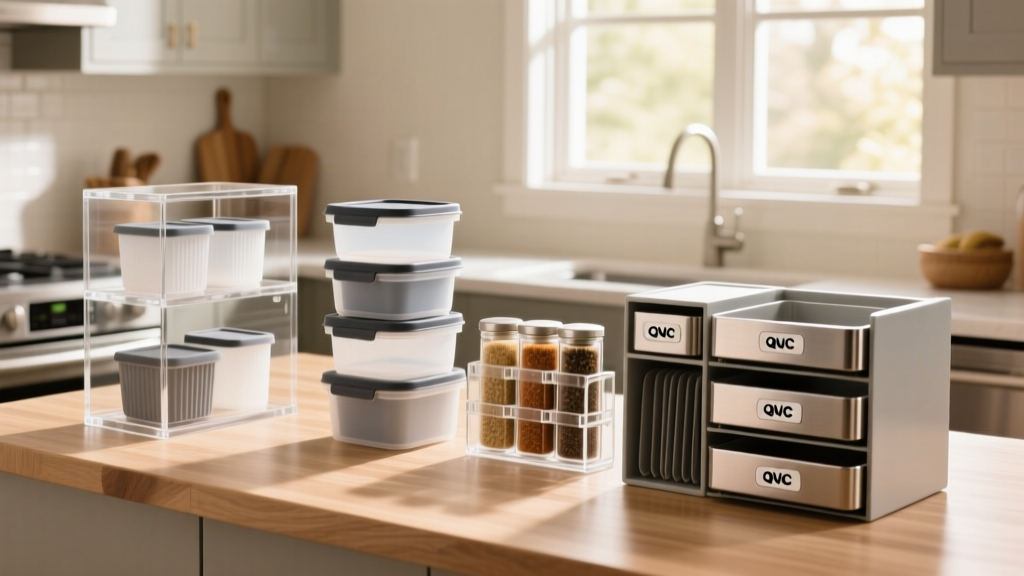
When evaluating QVC kitchen gadgets for storage and organization, the divide between a novice home cook and a culinary professional is immediately apparent in their material choices. Beginners typically prioritize uniform aesthetics, purchasing massive 50-piece matching sets based solely on visual harmony. Experts, however, select storage solutions based on material science, volumetric efficiency, and specific degradation vectors like UV light and oxygen permeability.
The modern market for QVC kitchen gadgets has evolved significantly, moving past generic plastic tubs to feature advanced polymers and specialized ceramics. Understanding the chemical and physical properties of these materials is the first step in upgrading your kitchen organization from amateur to expert.
| Material | Thermal Shock Resistance | UV & Stain Resistance | Expert Application |
|---|---|---|---|
| Eastman Tritan™ | Moderate (Up to 96°C) | High (Dishwasher safe, resists tomato acids) | High-turnover pantry staples, fridge leftovers |
| Borosilicate Glass | Extreme (Freezer to 400°C oven) | Impervious (Zero odor retention) | Marinades, acidic sauces, oven-to-table storage |
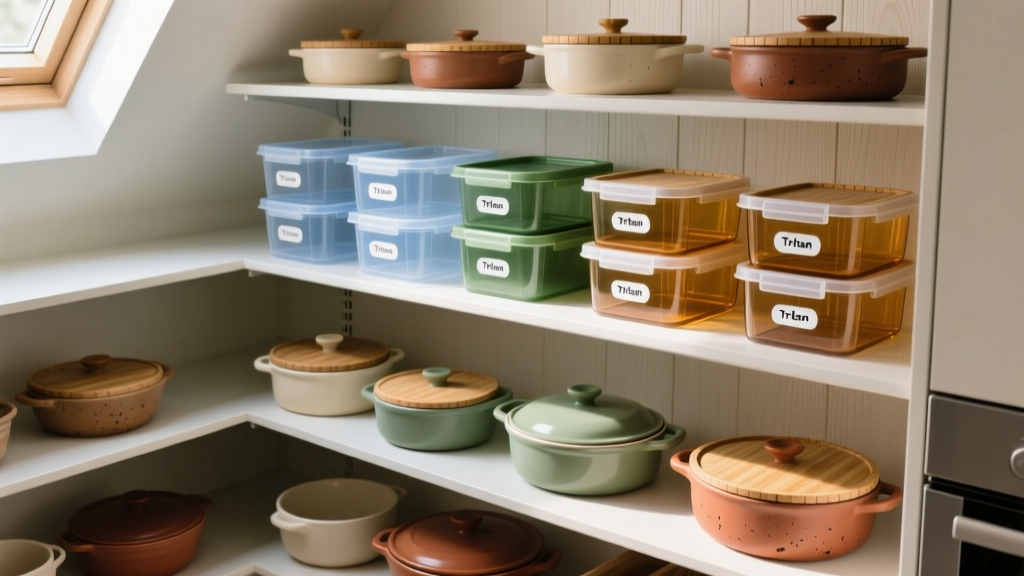
| Glazed Ceramic | High (Oven safe, slow temp changes) | Moderate (Glaze can craze over time) | UV-sensitive goods (coffee, tea), baking prep |
| Soda-Lime Glass | Low (Prone to shattering if shocked) | Impervious | Dry pantry storage only, no extreme temp shifts |
According to the U.S. Food and Drug Administration (FDA), modern food-contact copolyesters like Tritan are rigorously tested for safety, ensuring they do not leach endocrine-disrupting chemicals when exposed to heat or acidic foods. Experts leverage this by using Tritan for everyday modular stacking, reserving heavier borosilicate or ceramic for specialized thermal tasks.
The Decanting Fallacy: Beginner Traps vs. Expert Frameworks
A pervasive trend on social media is the 'decanting' of every grocery item into clear, uniform bins. Beginners fall into this trap, pouring everything from flour to whole-bean coffee into clear acrylic containers. This ignores a fundamental rule of food science: UV light and oxygen are the primary catalysts for lipid oxidation and flavor degradation.
The Expert's Selective Decanting Matrix
Professional organizers and chefs apply a strict decision framework before decanting:
- High-Turnover, Low-Moisture (Decant into Clear): Pasta, white rice, dried beans, and lentils. These are consumed quickly and are not highly susceptible to UV degradation. Clear containers allow for instant visual inventory.
- UV-Sensitive, High-Lipid (Store in Opaque/Ceramic): Coffee beans, nuts, seeds, and specialty teas. Experts use opaque ceramic canisters (like the Temp-tations line often featured on QVC) to block light and preserve volatile aromatic compounds.
- High-Moisture, Clumping (Keep Original Packaging): Brown sugar and certain spice blends. Transferring these to rigid containers often accelerates moisture loss and hardening unless a specialized terra-cotta humidity disk is added.
Never store raw garlic in oil at room temperature in an airtight container. According to the USDA Food Safety and Inspection Service, this creates an anaerobic environment ideal for Clostridium botulinum spores. Always store garlic-in-oil mixtures in the refrigerator and consume within four days.
QVC Kitchen Gadgets Showdown: Temp-tations vs. LocknLock
When browsing QVC for organizational tools, two dominant storage philosophies emerge, best represented by the Temp-tations and LocknLock brands. Understanding their mechanical differences is crucial for spatial efficiency.
LocknLock: The Engineer’s Choice for Volumetric Stacking
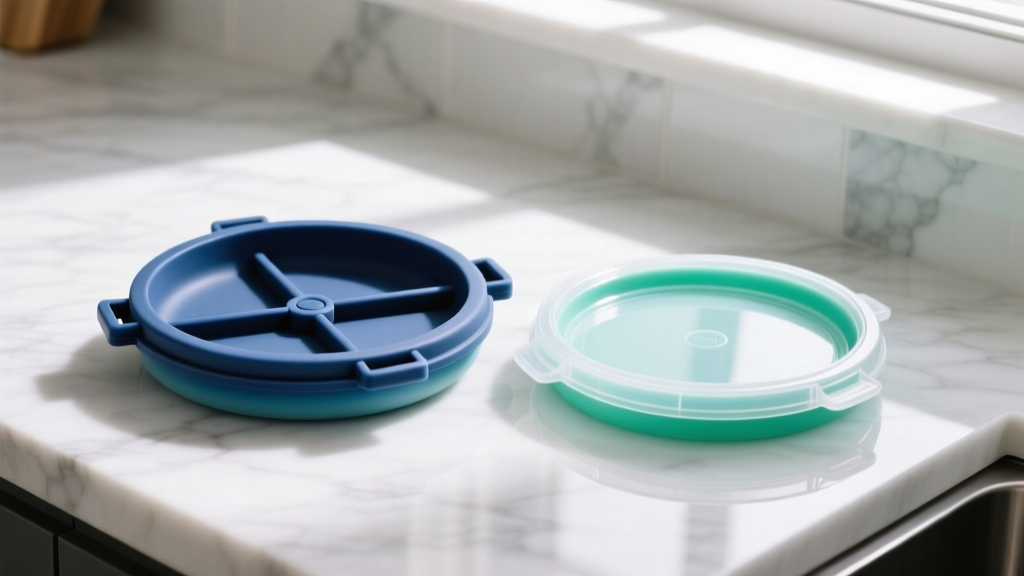
LocknLock containers utilize a patented four-hinge locking system paired with a hollow-cylinder silicone seal. This mechanical advantage creates a 100% airtight and leakproof environment, verified by a 3-meter drop test and submersion testing.
Expert Use Case: Storing liquids, pre-portioned wet marinades, and stacking to the absolute maximum height of a cabinet shelf. The flat, recessed lids allow a 10kg weight load without buckling, meaning you can stack five or six units safely.
Temp-tations: The Aesthetic Workhorse for Thermal Transitions
Temp-tations relies on heavy glazed ceramic with silicone-gasket lids featuring a single top-mounted release valve. While visually stunning and capable of moving directly from a 400°F oven to the dining table, the lids are not designed for high-PSI liquid transport.
Expert Use Case: Fridge-to-oven casseroles, proofing bread dough (the ceramic retains ambient temperature beautifully), and storing UV-sensitive dry goods. They fail the 'shake test' for liquids, making them poor choices for soup storage or transport.
Spatial Geometry: The Expert’s 3-Step Measurement Protocol
The most common failure in kitchen organization is purchasing gadgets that physically cannot fit the space. Standard US base cabinets are 24 inches deep, but upper cabinets and pantry shelves are typically 12 inches deep. However, the usable depth is rarely 12 inches.
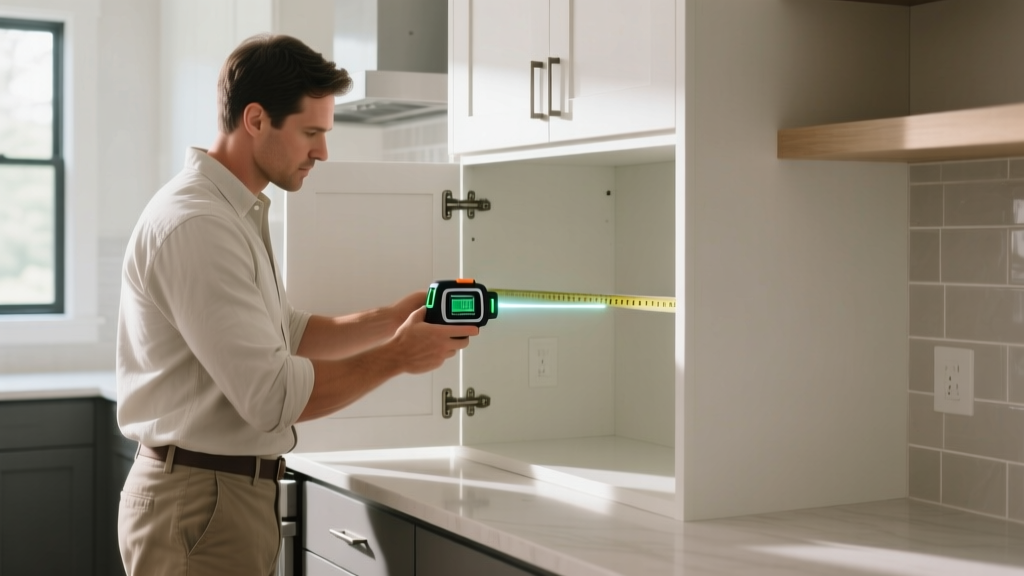
Before adding any QVC kitchen gadgets to your cart, execute this precise measurement protocol:
- Measure the True Depth: Use a digital laser measure from the back wall to the front lip of the shelf. If the shelf has a front lip, subtract 0.5 inches.
- Calculate Hinge Sweep Clearance: Open the cabinet door to 90 degrees. Measure how far the hinge protrudes into the cabinet interior. On standard European concealed hinges, this protrusion is typically 0.75 to 1.25 inches. You must subtract this from your total width and depth for any pull-out organizers or turntables.
- Determine Vertical Pitch: Measure the distance between shelves. Subtract 0.25 inches for finger grip clearance. If your shelf gap is 11 inches, the absolute maximum height for a stacked container system is 10.75 inches.
'Amateurs measure the empty space; professionals measure the space minus the mechanical clearances of the cabinet hardware. A turntable that is 11.5 inches wide will bind against a 12-inch cabinet the moment the door hinge sweeps inward.' — Industrial Kitchen Ergonomics Standard, NSF International Guidelines
Advanced Drawer Organization: Beyond the Junk Drawer
For deep drawers, experts abandon static plastic trays in favor of dynamic, expandable bamboo or steel dividers. Brands frequently featured in QVC's home organization segments, such as YouCopia or Household Essentials, offer modular tension-fit systems.
The 'Zone and Flow' Technique:
Divide your primary utensil drawer into three distinct zones based on frequency of use. The front 4 inches (Zone 1) should contain daily drivers (chef's knife tongs, primary spatulas). The middle 8 inches (Zone 2) holds secondary tools (peelers, whisks). The rear 6 inches (Zone 3) is for specialty gadgets (thermometers, trussing pins). By utilizing expandable dividers that lock into these exact dimensions, you prevent the 'avalanche effect' that occurs when drawers are opened and closed rapidly.
Ultimately, mastering kitchen storage requires shifting your perspective from visual uniformity to mechanical and chemical functionality. By applying material science to your container choices, respecting the geometry of your cabinetry, and utilizing selective decanting frameworks, you can transform any standard kitchen into a highly efficient culinary workspace using the right specialized gadgets.
Written by
Sarah KimSarah Kim holds certifications from both NASM (National Academy of Sports Medicine) and ACE (American Council on Exercise), along with a B.S. in Kinesiology from UCLA. She has spent 7 years bridging the gap between exercise science and consumer technology, evaluating fitness trackers, smart scales, sleep monitors, and recovery devices with clinical precision. Sarah has tested over 200 health-focused wearables in controlled lab settings and real-world training environments, comparing device data against gold-standard medical equipment like ECG monitors and DEXA scans. She consults for three fitness app companies on data accuracy standards and has presented research on wearable reliability at the American College of Sports Medicine (ACSM) annual conference. Her reviews emphasize clinical validity over marketing claims.