Unusual Kitchen Gadgets: Precision Kettles & Water Dispensers for 2026
Discover unusual kitchen gadgets that actually solve problems. We review precision electric kettles and smart water dispensers for your 2026 kitchen upgrade.
The Gimmick Trap vs. Engineering Reality
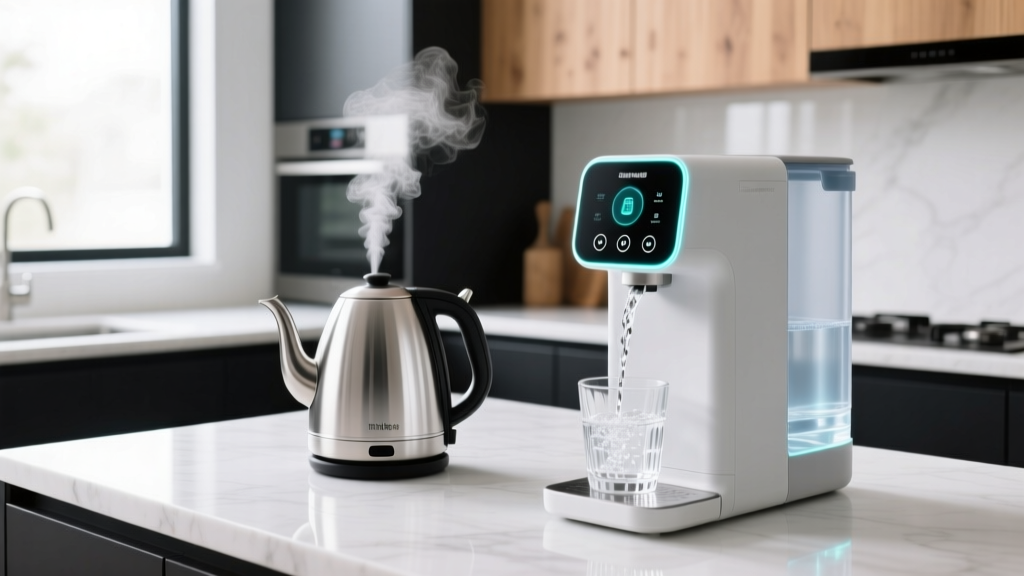
The market is flooded with unusual kitchen gadgets that solve problems you never knew you had—until you realize they create three more. Motorized salt shakers and single-use avocado savers usually end up in a drawer, then the landfill. However, when you apply the label of unusual kitchen gadgets to water heating and dispensing, the conversation shifts from cheap gimmickry to genuine culinary engineering. Water is the primary ingredient in coffee, tea, sous vide baths, and baking. Controlling its temperature and volume with exact precision fundamentally alters your culinary output.
Standard electric kettles operate on a simple binary: heat until boiling, then shut off. This brute-force approach scorches delicate green teas (which require 160°F to 170°F) and overshoots the optimal extraction window for light-roast coffees. In 2026, the most practical problem-solving gadgets in the kitchen are those that introduce laboratory-grade PID controllers, ultrasonic flow meters, and vacuum insulation to the countertop. Here is a deep dive into the water-dispensing and heating tools that justify their footprint and price tag.
The Pour-Over Extraction Problem: PID Controllers and Flow Restriction
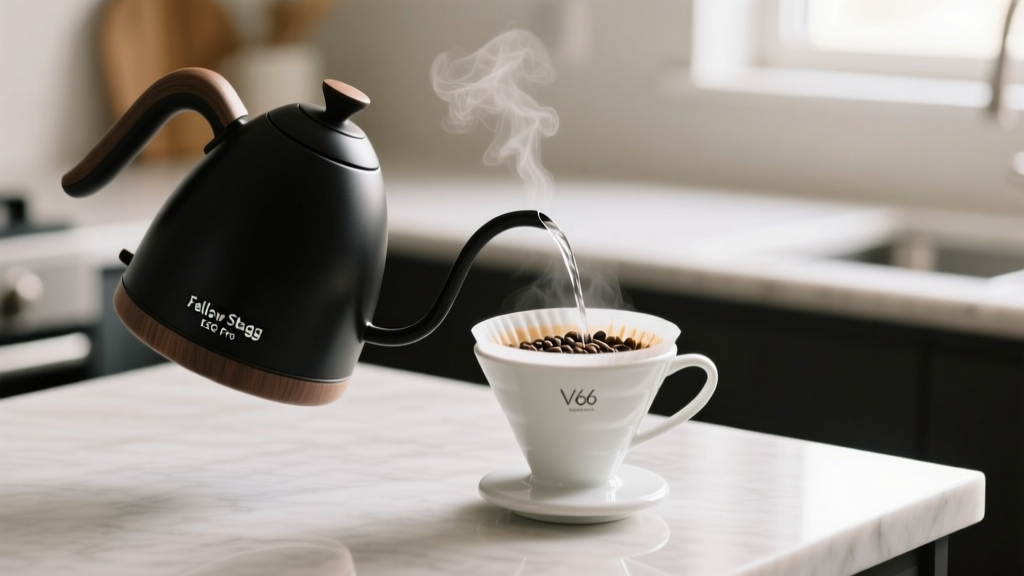
According to the Specialty Coffee Association, optimal coffee extraction requires water between 195°F and 205°F. A standard rolling boil hits 212°F, which aggressively extracts bitter tannins from light roasts. The Fellow Stagg EKG Pro ($195) solves this using a PID (Proportional-Integral-Derivative) controller. Unlike basic thermostats that cycle power on and off in wide temperature swings, the PID algorithm continuously adjusts the 1200W heating element in micro-pulses, holding the water temperature within a +/- 1°F variance.
Beyond temperature, the physical spout design is where this gadget earns its keep. The gooseneck spout restricts flow to exactly 1.5 ml per second when tilted at a 45-degree angle. This specific flow rate prevents channeling in V60 and Chemex filter beds. The edge case? Hard water. If your municipal water exceeds 150 ppm Total Dissolved Solids (TDS), calcium carbonate will precipitate and clog the narrow gooseneck spout far faster than a standard wide-mouth kettle. You must descale this specific model every 45 days if using unfiltered tap water.
The Volume Dispensing Dilemma: Smart Faucets vs. Countertop Towers
Measuring exact volumes of water for baking hydration ratios or filling sous vide containers introduces friction and dishwashing clutter. Countertop water dispensers take up valuable real estate and often harbor bacterial biofilms in their internal tubing if not sanitized weekly. The alternative is integrating precision dispensing directly into your plumbing.
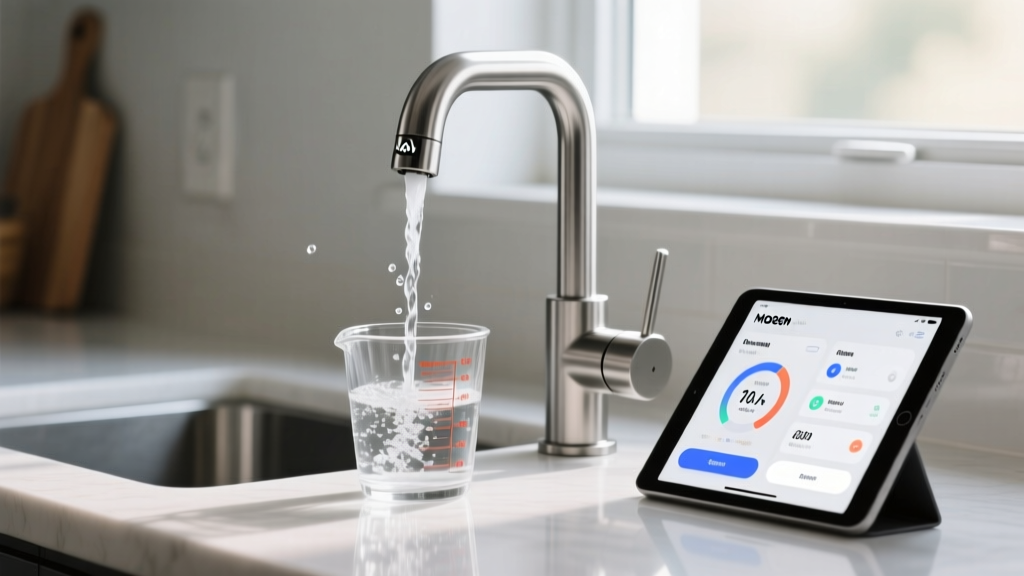
The Moen Smart Faucet with Motion Control (Model 22901RCSRS) ($650) is an unusual kitchen gadget that hides its complexity behind a minimalist stainless steel shell. It utilizes an ultrasonic motion sensor and a digital solenoid valve to dispense exact measurements. You can place a bowl under the spout and say, 'Dispense one and a half cups,' or use the manual wave gesture calibrated to specific volumes via the app. The internal flow meter measures water displacement in real-time, shutting off the valve at the exact milliliter.
The Reality Check: Early firmware versions of smart faucets suffered from Wi-Fi dropout issues when connected to crowded 2.4GHz networks. The 2026 hardware revisions utilize a dual-band Wi-Fi module and a localized Duralock quick-connect system that retains your volume presets in the faucet's onboard memory, meaning it still dispenses your preset '1 cup' gesture even if your home router goes offline. Furthermore, ensuring your plumbing meets EPA drinking water regulations is critical before installing any smart valve, as stagnant water in the digital mixing chamber can concentrate lead if your home has legacy pipes. Always verify your supply lines are certified by NSF International for lead reduction.
The Temperature Maintenance Challenge: Active Reheating vs. Vacuum Insulation
If you drink multiple cups of green or white tea throughout the morning, you need water held steadily at 175°F. There are two engineering approaches to this problem, and choosing the wrong one will ruin your tea's flavor profile.
Active Reheating (The Breville Approach)
The Breville BKE820XL Soft Top Pure ($130) uses a 1500W element to actively reheat the water whenever it drops below the target threshold. While convenient, repeatedly bringing water back up to temperature drives off dissolved oxygen. Deoxygenated water results in a flat, muted tea extraction. It also accelerates limescale precipitation on the heating element.
VE Hybrid Technology (The Zojirushi Approach)
The Zojirushi CV-DSC40 VE Hybrid Water Boiler ($220) takes a radically different, highly unusual approach. It boils the water once at full power, then relies on Vacuum Electric (VE) insulation—a double-walled stainless steel chamber with a vacuum seal between the layers. It requires only 30 watts of electricity to maintain a 175°F or 195°F hold for up to 7 hours. Because the water is not aggressively re-boiled, it retains its dissolved oxygen content, yielding a significantly brighter, more complex tea extraction. The trade-off is a larger countertop footprint and a slower initial heat-up time (approx. 14 minutes for 3 liters).
Comparison Matrix: Precision Water Gadgets
| Gadget / Model | Primary Problem Solved | Temp Accuracy | Flow / Volume Control | Maintenance Reality |
|---|---|---|---|---|
| Fellow Stagg EKG Pro | Pour-over channeling & temp overshoot | +/- 1°F (PID) | 1.5 ml/sec fixed spout | High; spout clogs easily in hard water |
| Moen 22901RCSRS Smart Faucet | Baking hydration & measuring friction | N/A (Ambient/Hot mix) | Ultrasonic exact ml dispensing | Low; requires inline filter replacement every 6 months |
| Zojirushi CV-DSC40 | Tea oxidation & energy waste | +/- 3°F (VE Hold) | Manual pump / electric dispense | Medium; descale inner reservoir bi-monthly |
| Breville BKE820XL | Multi-temp needs on a budget | +/- 5°F (Active pulse) | Wide mouth, uncontrolled pour | Low; wide base makes manual descaling easy |
Troubleshooting Hidden Failure Modes
Unusual kitchen gadgets with advanced electronics and narrow waterways introduce specific failure modes that standard appliances do not. Understanding these edge cases will extend the lifespan of your investment from two years to a decade.
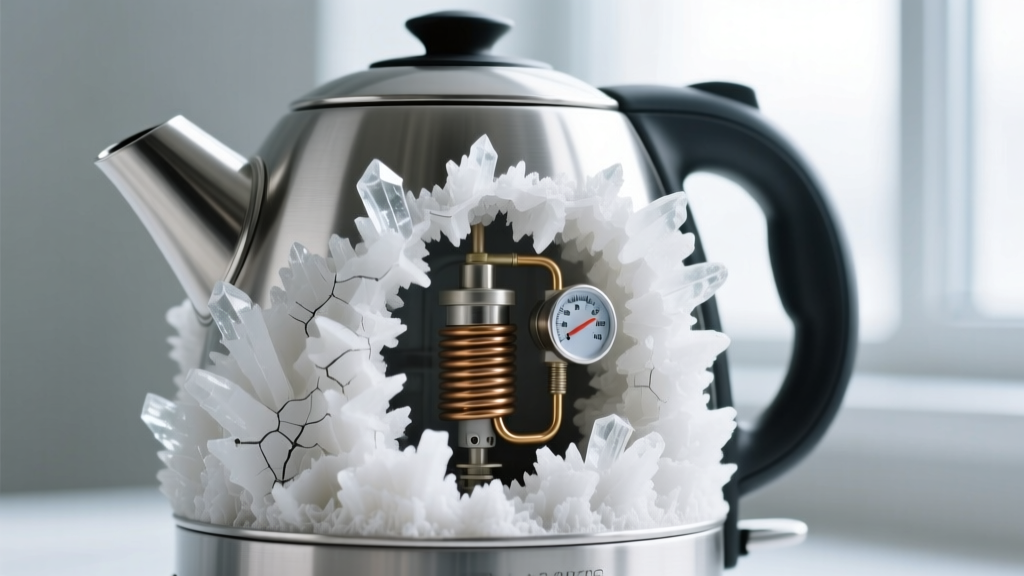
- Capacitive Touch Sensor Failure: Many smart kettles use capacitive touch panels on the handle or base. If steam ingress breaches the silicone gasket over time, the microcontroller registers 'ghost touches,' causing the kettle to shut off prematurely or fail to start. Fix: Never submerge the base, and wipe condensation off the handle immediately after use. If ghost touches occur, unplug the unit for 10 minutes to reset the capacitive baseline.
- Flow Meter Calibration Drift: In smart faucets and automated dispensers, the internal impeller flow meters can accumulate microscopic debris from municipal pipe flushing, causing them to under-dispense by 5-10% over a year. Fix: Run a manual flush cycle at maximum pressure once a month, and verify your dispense volumes using a digital kitchen scale (1 gram = 1 milliliter) quarterly.
- The Vinegar Descaling Myth: A pervasive internet myth suggests using white vinegar to descale precision kettles. Acetic acid can degrade the silicone O-rings in gooseneck spouts and leaves a lingering odor that ruins delicate tea profiles. Fix: Use a 5% citric acid solution (15 grams of food-grade citric acid powder per 500ml of water). Heat to 140°F, let sit for 20 minutes, and rinse. This dissolves calcium carbonate without damaging elastomers.
'Water is not just a solvent; it is an active ingredient. The mineral content and thermal stability of your water dictate the ceiling of your culinary extraction. Gadgets that control these variables are not luxury items; they are fundamental tools.' — Adapted from Maxwell Colonna-Dashfield, Water for Coffee research.
When evaluating unusual kitchen gadgets, ignore the motorized novelties and focus on the tools that manipulate the physics of your core ingredients. A precision PID kettle or a volumetric smart faucet requires a higher upfront investment and slightly more rigorous maintenance, but the daily friction they eliminate and the culinary consistency they provide make them indispensable problem solvers in the modern kitchen.
Written by
Tom ReynoldsTom Reynolds holds a CFA (Chartered Financial Analyst) designation and a B.S. in Finance from the University of Texas at Austin. Before entering tech journalism, he spent 6 years as a quantitative analyst at a hedge fund, building cost-benefit models for consumer product investments. Tom has maintained a proprietary database of over 10,000 tech deals for the past 8 years, developing his signature "penny-per-feature" evaluation framework that calculates the true value proposition of every gadget. His budget gadget reviews are known for their financial rigor — he tracks price history across 15+ retailers, calculates cost-per-use over 3-year lifespans, and identifies the exact inflection point where premium features justify their markup. Tom's deal alerts have saved his readers an estimated .3 million since 2018.