The Best Kitchen Gadgets for Outdoor Prep: Knives & Sharpeners
Discover the best kitchen gadgets for outdoor cooking. We review top BBQ knife sets, portable sharpeners, and heavy-duty cutting tools for camping.
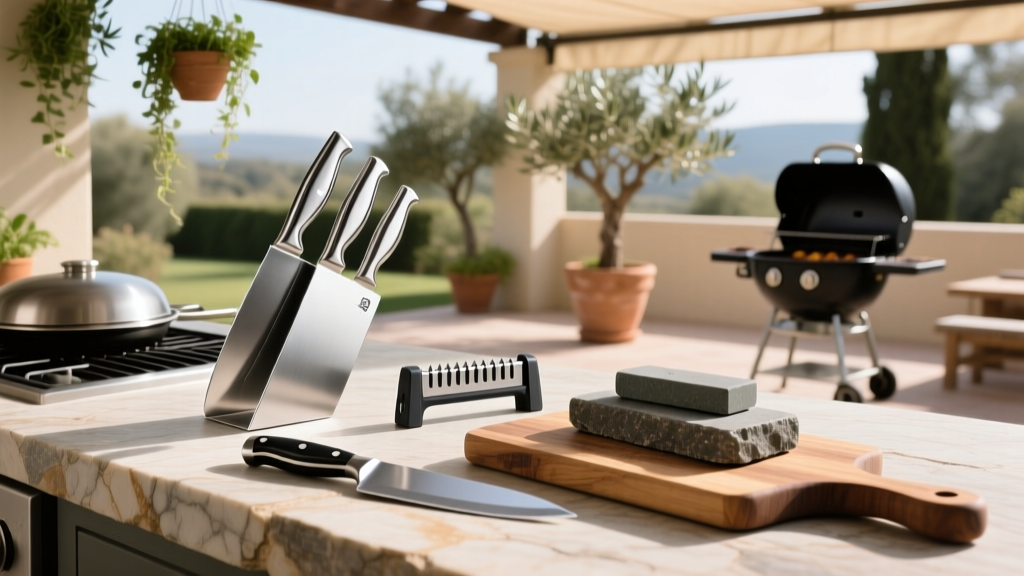
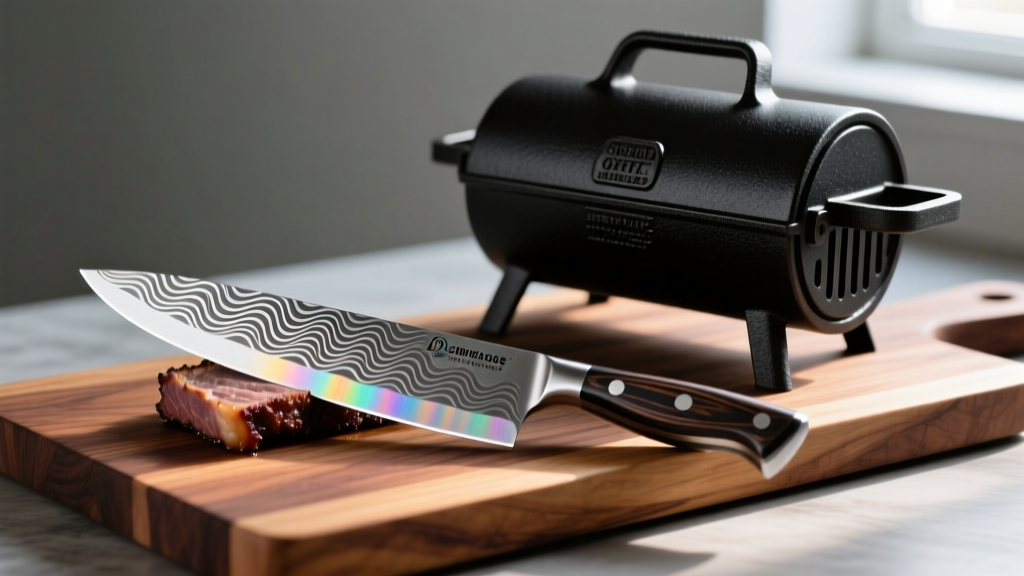
Why Indoor Cutlery Fails in the Wild
Taking your indoor culinary setup to a tailgate, campsite, or outdoor kitchen exposes your tools to harsh variables: high humidity, airborne ash, dirt, and a lack of running water. When curating the best kitchen gadgets for outdoor environments, standard high-carbon stainless steel knives and porous end-grain wooden cutting boards quickly become liabilities. Outdoor prep demands specialized metallurgy, non-porous cutting surfaces, and field-maintainable sharpening systems.
The primary failure point for indoor knives outdoors is micro-corrosion. Humidity levels at a summer barbecue or a coastal campsite can trigger surface rust on VG-10 or standard X50CrMoV15 steels within hours if not meticulously dried. Furthermore, cutting on makeshift outdoor surfaces like coolers or folding plastic tables dulls edges exponentially faster than indoor butcher blocks. To build a reliable outdoor prep kit, you must prioritize corrosion resistance, edge toughness, and portable maintenance tools.
The Metallurgy of Outdoor Knives: What to Look For
Not all stainless steels are created equal. For outdoor cooking, you need a balance of high chromium content (for rust resistance) and fine carbide structure (for edge retention without chipping on bone or frozen foods).
Steel Comparison for Outdoor Culinary Use
| Steel Type | Corrosion Resistance | Edge Retention | Best Outdoor Application | Estimated Cost Range |
|---|---|---|---|---|
| CPM-MagnaCut | Exceptional | Very High (HRC 62-64) | Premium BBQ slicers, high-humidity coastal tailgating | $250 - $350 |
| CPM-S35VN | High | High (HRC 60-62) | All-around camp chef knives, processing wild game | $180 - $280 |
| 420HC | Very High | Moderate (HRC 56-58) | Beater knives, easy field sharpening, heavy chopping | $40 - $80 |
| VG-MAX / VG-10 | Moderate | High (HRC 60-61) | Vegetable prep (Nakiri), slicing boneless meats | $120 - $180 |
Source reference for steel properties: Blade HQ Steel Guide
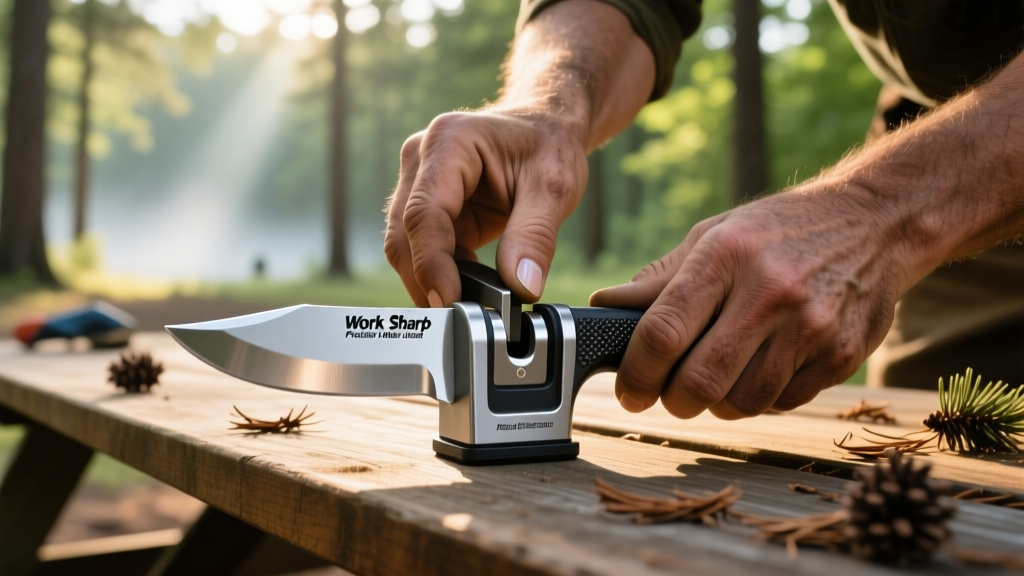
Field Sharpeners: Maintaining the Edge Off-Grid
A dull knife at a campsite is a dangerous knife. Pull-through carbide sharpeners strip away too much metal and leave a jagged, micro-serrated edge that tears delicate proteins like smoked salmon or brisket. For outdoor prep, you need guided angle systems or portable diamond plates that allow for precise bevel control.
Top Portable Sharpening Systems
- Work Sharp Precision Adjust ($59.95): This clamping system uses adjustable angle guides (15° to 20°) and interchangeable abrasive plates. The 320-grit diamond plate is ideal for reprofiling a damaged edge after hitting a bone, while the ceramic rod acts as a strop for final polishing. Its tri-brasive design eliminates the need to carry multiple loose stones.
- DMT Dia-Sharp Pocket Sharpener ($25.00): A credit-card-sized continuous diamond surface. The Fine (600 mesh) grit is perfect for quick touch-ups on 420HC or S35VN blades while actively cooking. It requires no water or oil, making it the ultimate dry-camp accessory.
- Lansky Turn Box ($35.00): Features preset ceramic rods at 20 and 25 degrees. Ceramic rods do not remove significant metal; instead, they realign the microscopic teeth of the edge. Use this mid-cook to maintain a brisket slicer's sharpness without grinding away the blade's lifespan.
Heavy-Duty Cutting Surfaces for Tailgating
End-grain walnut or teak boards are stunning indoors, but they absorb meat juices, warp in changing outdoor temperatures, and require constant oiling. Glass boards are equally problematic, instantly dulling your carefully sharpened edges. The solution for outdoor prep lies in advanced synthetic materials.
HDPE and Richlite: The Outdoor Standards
High-Density Polyethylene (HDPE): These are the commercial kitchen standard, adapted for the tailgate. HDPE boards (like those from Dexter-Russell) are non-porous, meaning raw poultry juices cannot penetrate the surface. They are dishwasher safe (if you have access to one) and can be bleached. More importantly, HDPE has a slight 'give' that protects knife edges. For tailgating, buy a color-coded set: red for raw meats, green for vegetables, to prevent cross-contamination in environments where sink access is limited.
Richlite (Epicurean Brand): Made from resin-infused paper composite, Richlite boards are incredibly dense, heat-resistant up to 350°F (allowing you to set a hot cast-iron skillet directly on them), and completely dishwasher safe. They offer the aesthetic and acoustic feel of wood without the bacterial risks or warping. A 14x11 inch Epicurean board weighs under two pounds, making it ideal for backpacking or minimalist car camping.
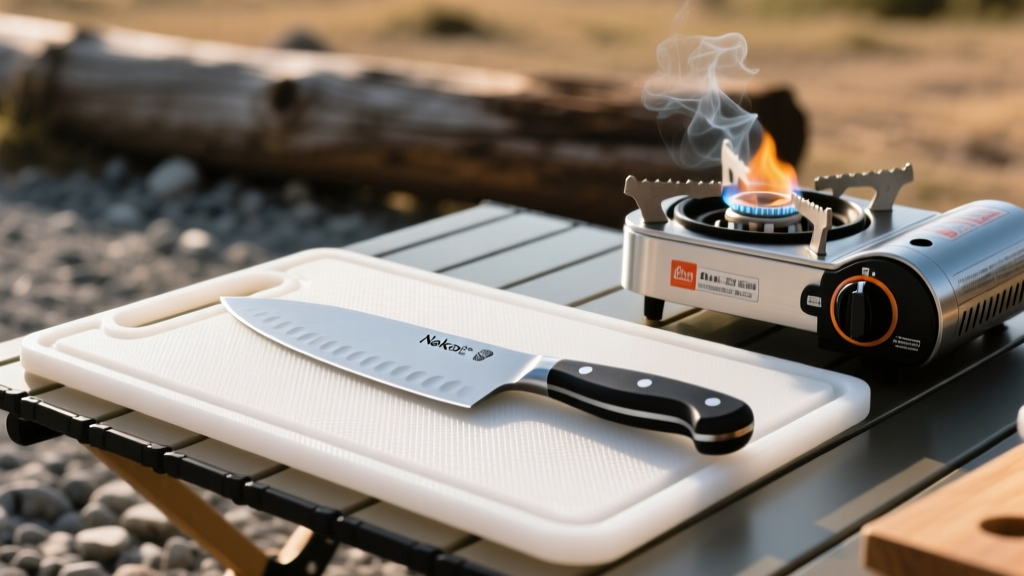
Storage and Rust Prevention in High-Humidity
How you store your knives between outdoor cooking sessions dictates their longevity. Tossing a high-performance blade into a plastic toolbox guarantees a ruined edge and potential rust spots from trapped moisture.
"The biggest mistake outdoor cooks make is putting a knife away slightly damp. In a humid summer environment, surface oxidation begins within 45 minutes on standard stainless steels. Always carry a dedicated microfiber towel and a small vial of protective oil."
The Maintenance Protocol
- Clean: Wipe the blade with a damp cloth and mild biodegradable soap (like Dr. Bronner's) immediately after use. Never let acidic foods (tomatoes, citrus marinades) sit on the blade.
- Dry: Use a dedicated microfiber towel. Air drying outdoors invites dust and pollen to stick to any residual moisture.
- Protect: Apply three drops of Tsubaki (Camellia) Oil or food-grade mineral oil. Unlike vegetable oils (olive, canola) which will go rancid and sticky in the summer heat, Tsubaki oil remains stable, odorless, and provides a hydrophobic barrier against humidity.
- Sheath: Store the knife in a Kydex or Boltaron sheath. Leather sheaths absorb moisture from the air and trap it against the steel, acting as a rust incubator. If using a knife roll, ensure the blade slots are lined with a light coat of oil and the roll is stored in a dry bin.
Building Your Outdoor Prep Kit
Forget hauling a 15-piece wooden block to the campsite. A highly efficient outdoor prep kit requires only three specialized tools:
- The Workhorse: A 6-inch to 8-inch utility or chef's knife in CPM-S35VN or 420HC. Used for 80% of tasks, from dicing onions to breaking down chickens.
- The Slicer: A 10-inch or 12-inch scalloped-edge slicer (Granton edge). The scallops create air pockets that prevent sticky, fatty BBQ bark from clinging to the blade, ensuring paper-thin brisket slices.
- The Detailer: A 3-inch paring knife or a high-quality folding knife (like the Benchmade Bugout with a CPM-S30V blade) for intricate tasks like deveining shrimp or trimming silver fat in tight cooler spaces.
Pair these with an HDPE cutting board and a Work Sharp Precision Adjust, and you will possess a cutting system that outperforms most indoor residential kitchens, regardless of the weather or terrain.
Written by
Ryan TanakaRyan Tanaka holds a B.S. in Mechanical Engineering from Oregon State University and is a certified AWS Solutions Architect. He has built over 80 custom electronics projects ranging from CNC machines to IoT sensor networks, and has reviewed development boards, 3D printers, soldering equipment, and maker tools for the past 6 years. Ryan is an active contributor to 12 open-source hardware projects on GitHub and teaches monthly workshops at three hackerspaces across the Pacific Northwest. His reviews combine engineering rigor with accessibility — he evaluates products not just on specs but on documentation quality, community support, and learning curve for beginners. He has presented at Maker Faire Bay Area, Open Hardware Summit, and the Adafruit community showcase, and maintains a popular blog documenting his build processes.