Space-Saving New Kitchen Gadgets: Compact Cutting Boards
Discover the best space-saving new kitchen gadgets for 2026. We review ultra-slim cutting boards, over-sink prep tools, and vertical surface solutions.
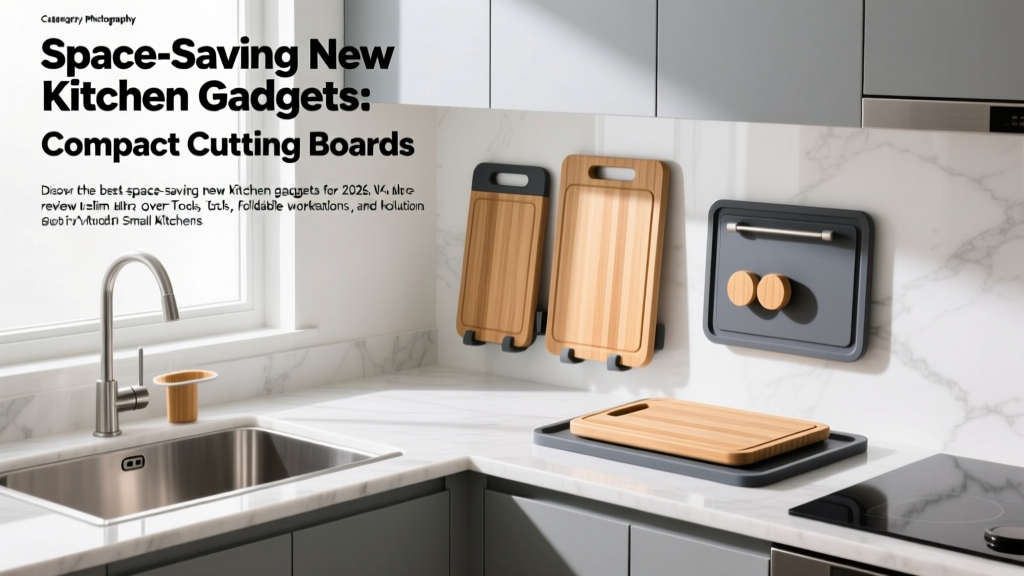
The Geometry of Micro-Kitchens: Why Standard Boards Fail
The proliferation of Accessory Dwelling Units (ADUs), urban micro-apartments, and galley-style renovations has fundamentally altered kitchen spatial dynamics. In a standard 200-square-foot kitchen, usable countertop prep space often shrinks to less than 12 square feet after accounting for fixed appliances. A traditional 18x12-inch, 0.75-inch-thick end-grain maple board consumes 1.5 square feet of prime real estate and creates vertical clearance issues under low-hanging cabinetry.
When evaluating new kitchen gadgets for compact environments, the cutting board is often the most overlooked spatial offender. The solution is not simply buying smaller boards—which compromises safety and knife control—but adopting multi-axis, ultra-slim, and topography-shifting surface tools.
Space-Saving New Kitchen Gadgets: The 2026 Shortlist
1. Epicurean Kitchen Series Slim-Profile (0.25")
Epicurean’s Kitchen Series utilizes Richlite, a paper-composite material originally engineered for aerospace and skateboard ramps. The 0.25-inch slim profile reduces vertical storage footprint by 66% compared to standard poly boards. Because Richlite is non-porous, it meets FDA Food Code standards for food-contact surfaces without requiring the heavy mineral oil maintenance of wood.
- Dimensions: 11.25" x 8.5" x 0.25" (Small) / 14.5" x 11.25" x 0.25" (Medium)
- Weight: 1.1 lbs (Medium)
- Price Range: $38 - $52
- Edge Case Warning: The slim profile lacks the mass to absorb heavy cleaver impacts. Reserve this board for slicers, santokus, and paring knives.
2. Joseph Joseph Index Compact Vertical Set
Horizontal storage is the enemy of the compact kitchen. The Index Compact system stores four color-coded polypropylene prep mats inside a vertical steel holder that measures just 3.5 inches wide at the base. This footprint is smaller than a standard 1-quart saucepan. The 2025/2026 iterations feature textured grip zones on the reverse side, preventing the mats from sliding on quartz and laminate counters during vigorous chopping.
3. Bambu Home Fold-Away Chute Board
Bamboo remains a polarizing material due to its high silica content (which accelerates knife dulling), but its tensile strength allows for hinged designs. The Fold-Away board features a central stainless-steel hinge. Flat, it offers a 12x10-inch prep zone. Folded, it instantly transforms into a V-shaped chute for sweeping diced aromatics directly into a skillet or compost bin, eliminating the need for a separate transfer bowl on cramped counters.
Reclaiming Dead Space: Over-Sink Workstations
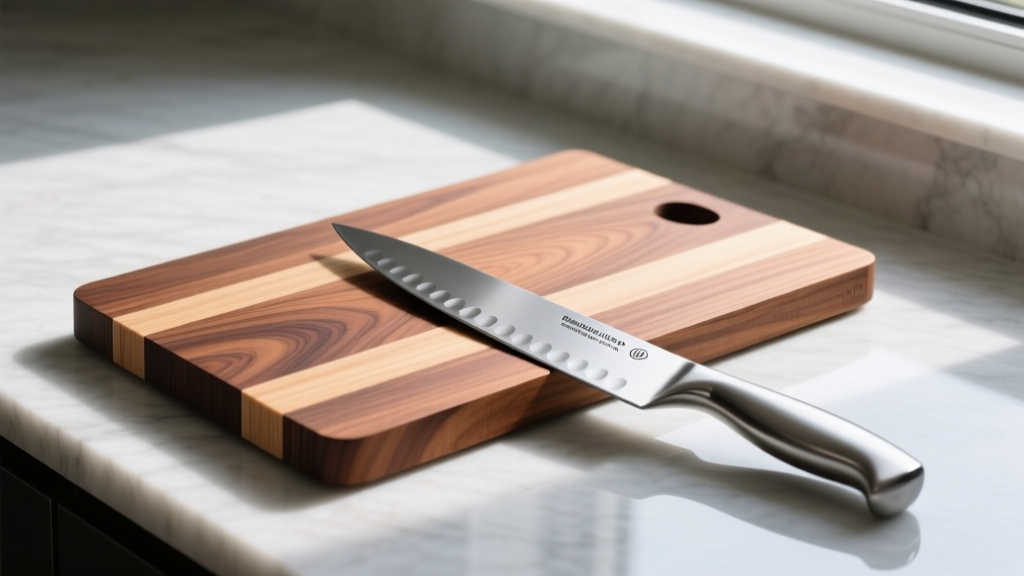
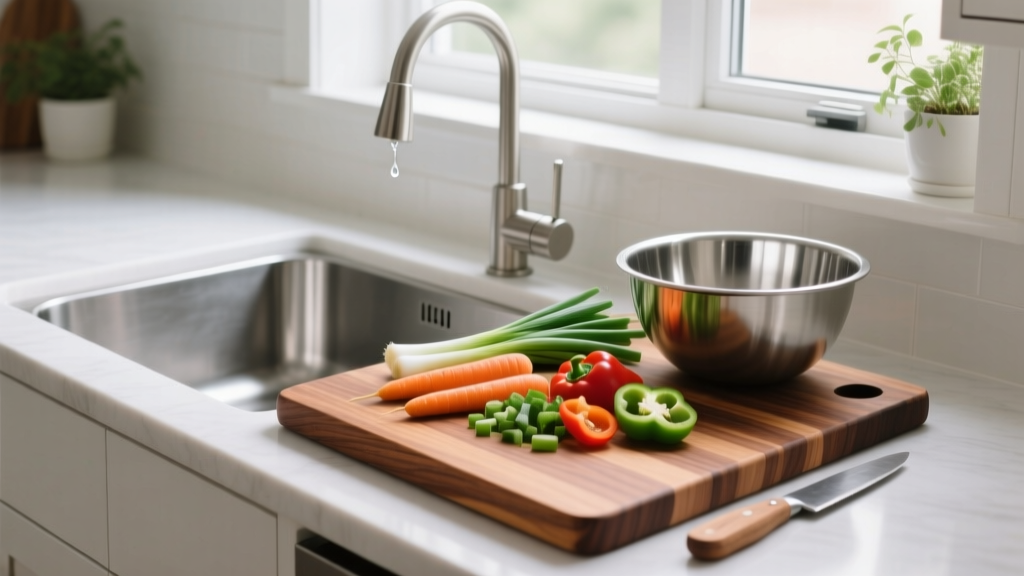
If the countertop is full, move the prep zone to the sink. Over-sink cutting boards represent a massive leap in spatial efficiency. By spanning the width of a standard 30-inch or 33-inch farmhouse or undermount sink, these boards reclaim 4 to 5 square feet of dead space. Furthermore, they integrate seamlessly with the USDA's recommended food safety protocols, allowing cooks to sweep raw poultry trimmings directly into the garbage disposal or a sink-mounted compost catcher without crossing the kitchen.
| Feature | Standard Countertop Prep | Over-Sink Workstation Board |
|---|---|---|
| Counter Space Consumed | 1.5 to 2.5 sq ft | 0 sq ft (Uses sink void) |
| Scrap Disposal Flow | Requires transfer bowl or hand-cupping | Direct sweep into sink/disposal |
| Cross-Contamination Risk | High (drips onto counter during transit) | Low (contained over basin) |
| Average Cost (Custom Teak) | $40 - $80 | $130 - $260 |
Material Science: Thin Profiles vs. Knife Edge Retention
"The compromise of ultra-slim cutting boards is acoustic dampening and edge cushioning. A 0.25-inch board will transmit the shock of a knife strike directly to the hard countertop beneath it, which accelerates micro-chipping on high-hardness Japanese steels (HRC 62+)."
To mitigate this without adding bulk, look for space-saving boards that incorporate a micro-textured surface or a thin vulcanized rubber underlay. Brands like Hasegawa utilize a honeycomb internal structure in their folding boards, providing a 1-inch thick exterior profile that compresses to 0.5 inches for storage, offering premium edge retention while maintaining a compact storage footprint.
Troubleshooting Edge Cases: Warping in Ultra-Thin Boards
If your ultra-slim bamboo or composite board develops a convex warp, you can recalibrate it using controlled moisture and weight distribution:
- Hydrate the Concave Side: Dampen a clean microfiber cloth with warm water and lay it exclusively on the concave (inward-curved) side of the board for exactly 15 minutes.
- Apply Even Pressure: Place the board on a perfectly flat surface (like a stone countertop or glass stovetop). Stack 20-30 lbs of evenly distributed weight (such as canned goods or cast-iron pans) across the entire surface.
- Dry and Seal: Leave the weight for 24 hours in a climate-controlled room (40-50% humidity). Once flat, immediately apply a heavy coat of food-grade mineral oil or beeswax to all six sides to seal the pores and prevent future moisture intrusion.
Frequently Asked Questions
Can I use a silicone prep mat instead of a compact cutting board?
Silicone mats are excellent for rolling dough or transferring pre-chopped ingredients, but they fail as primary cutting surfaces. Silicone lacks the structural rigidity to support downward knife pressure, leading to uneven cuts and a high risk of the blade slipping. Use silicone mats as a supplement to, not a replacement for, a rigid compact board like the Epicurean Slim.
Are foldable cutting boards safe for raw meat?
Foldable boards with exposed hinges present a sanitation risk for raw poultry and pork. Bacteria can lodge in the mechanical joints of the hinge. If you must process raw meat in a small kitchen, use a solid, non-porous board (like the Joseph Joseph Index polypropylene mats) that can be sanitized in a dishwasher at 160°F, reserving the hinged bamboo boards strictly for vegetables and breads.
How do I store over-sink boards when not in use?
Over-sink boards are inherently large. The most space-efficient storage method is vertical mounting. Install a heavy-duty, adhesive-backed magnetic strip or a slotted wooden wall rack on the side of your refrigerator or an empty stretch of backsplash. Ensure the mounting hardware is rated for at least 15 lbs to safely support a dense teak or walnut over-sink board.
Written by
Ryan TanakaRyan Tanaka holds a B.S. in Mechanical Engineering from Oregon State University and is a certified AWS Solutions Architect. He has built over 80 custom electronics projects ranging from CNC machines to IoT sensor networks, and has reviewed development boards, 3D printers, soldering equipment, and maker tools for the past 6 years. Ryan is an active contributor to 12 open-source hardware projects on GitHub and teaches monthly workshops at three hackerspaces across the Pacific Northwest. His reviews combine engineering rigor with accessibility — he evaluates products not just on specs but on documentation quality, community support, and learning curve for beginners. He has presented at Maker Faire Bay Area, Open Hardware Summit, and the Adafruit community showcase, and maintains a popular blog documenting his build processes.