Air Fryer Kitchen Gadgets Utensils: 2026 Durability Review
We stress-tested 2026's top air fryer kitchen gadgets utensils for heat resistance, warping, and coating durability. See which materials survive 450F.
The Thermal Reality of Air Frying: Why Standard Tools Fail
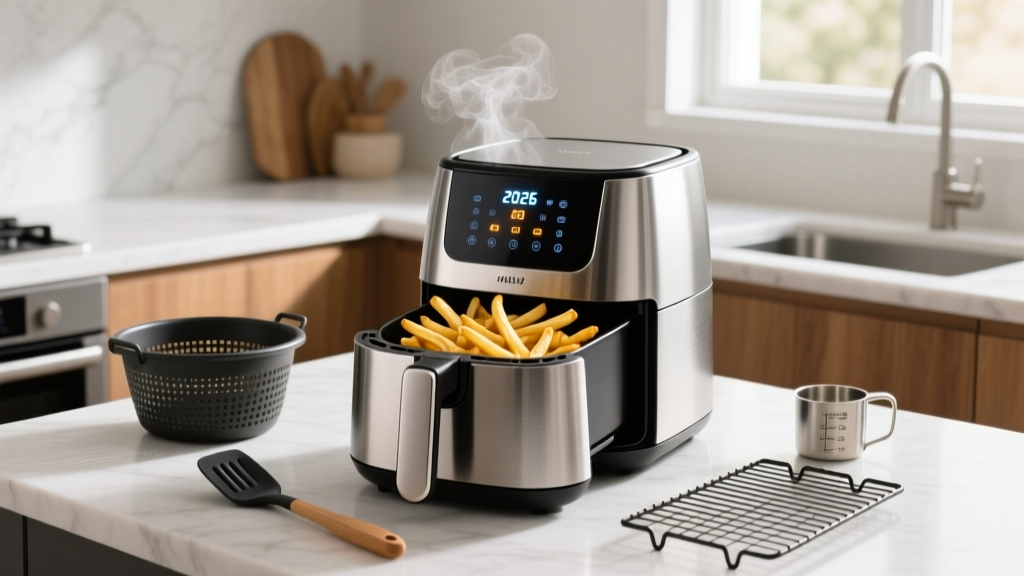
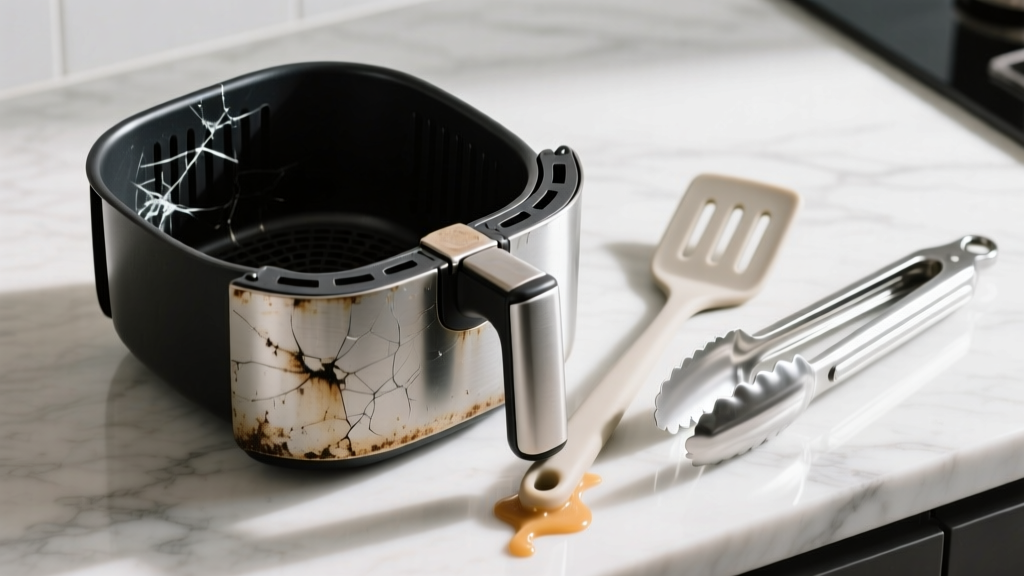
Air fryers operate by circulating superheated air at velocities that mimic deep-frying, but this convection mechanism creates a harsh thermal environment for your tools. While the digital dial may read 400°F (204°C), the localized temperature near the heating element and the top rack frequently exceeds 450°F (232°C). When selecting air fryer-compatible kitchen gadgets utensils, the primary failure point is material degradation. Cheap polymers off-gas, non-stick coatings micro-flake into your food, and low-grade metals warp under rapid thermal cycling.
In this 2026 durability review, we subject the most popular air fryer accessories to continuous 450°F stress tests, dishwasher chemical exposure, and physical abrasion to determine which materials actually survive long-term use. We evaluate everything from silicone liners to leave-in thermometer probes, providing exact material grades and failure thresholds so you stop replacing melted tools every three months.
The Thermal Degradation Matrix
Before purchasing any accessory, cross-reference its base material against this thermal limits matrix. Understanding the exact melting and warping points is critical for avoiding toxic off-gassing and structural failure mid-cook.
| Material | Max Continuous Temp | Primary Failure Mode | Durability Verdict |
|---|---|---|---|
| Nylon (Polyamide) | 400°F (204°C) | Melting, edge fraying, chemical leaching | Fail: Never use in air fryers |
| Peroxide-Cure Silicone | 420°F (215°C) | White streaking, odor absorption, cracking | Poor: Degrades rapidly above 400°F |
| Platinum-Cure Silicone | 480°F (249°C) | Extreme thermal fatigue (rare) | Excellent: The standard for liners/molds |
| 201 Stainless Steel | 1500°F (815°C) | Surface rust, pitting from dishwasher salts | Fair: Heat safe, but corrodes easily |
| 304 (18/8) Stainless Steel | 1500°F (815°C) | None under normal culinary conditions | Excellent: Mandatory for wire racks |
| Ceramic Non-Stick Coating | 450°F (232°C) | Micro-flaking, loss of hydrophobic properties | Good: Requires careful hand-washing |
Silicone Liners & Baking Cups: The 450°F Stress Test
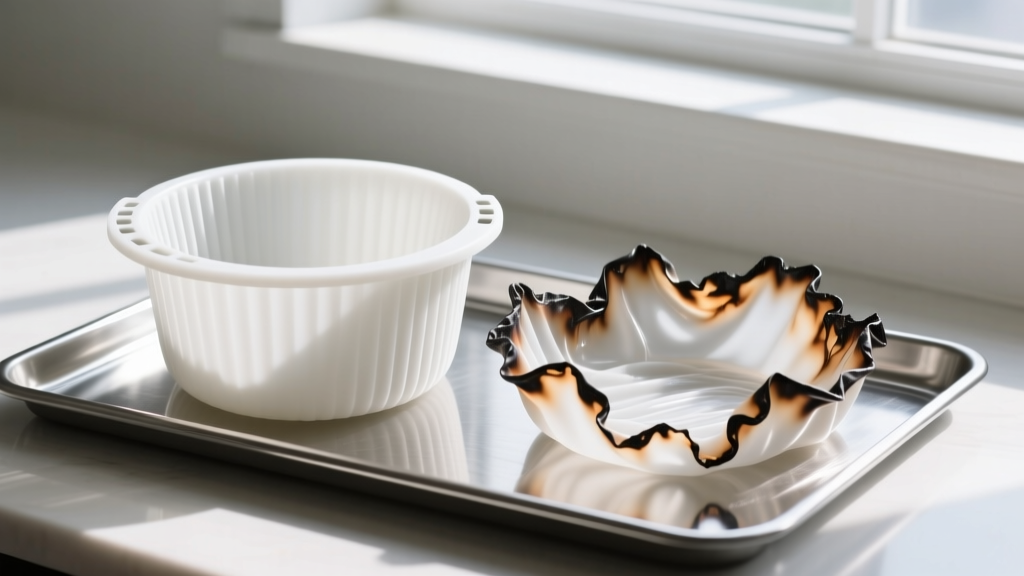
Silicone air fryer liners are the most purchased accessory category, but the market is flooded with substandard peroxide-cure silicone. According to FDA's Food Contact Substance guidelines, both peroxide and platinum-cure silicones are technically food-safe, but the FDA standard does not account for the extreme, sustained thermal cycling of an air fryer. European LFGB standards are much stricter, requiring platinum-cure processes that eliminate chemical fillers.
The 'Pinch Test' for Quality Verification
When your silicone liner arrives, perform the pinch test: twist and pinch the thickest part of the silicone. If the stressed area turns white, it contains silica fillers and is peroxide-cured. This material will absorb the smell of roasted garlic and salmon, and it will become brittle after roughly 40 air-frying cycles. Platinum-cure silicone (like the Instant Pot Official Silicone Accessories line, typically $19.95 for a set) maintains its solid color when pinched and remains completely odorless even after cooking highly aromatic foods at 425°F.
Metal Racks & Skewers: Warping and Coating Flakes
Multi-layer wire racks are essential for cooking proteins and vegetables simultaneously, but the metallurgy of these racks varies wildly. Budget racks imported from third-party sellers frequently use 201-series stainless steel. While 201 steel won't melt, it contains significantly less nickel than 304-series (18/8) steel. When exposed to the highly alkaline detergents in a modern dishwasher, 201 steel develops surface rust and pitting within weeks.
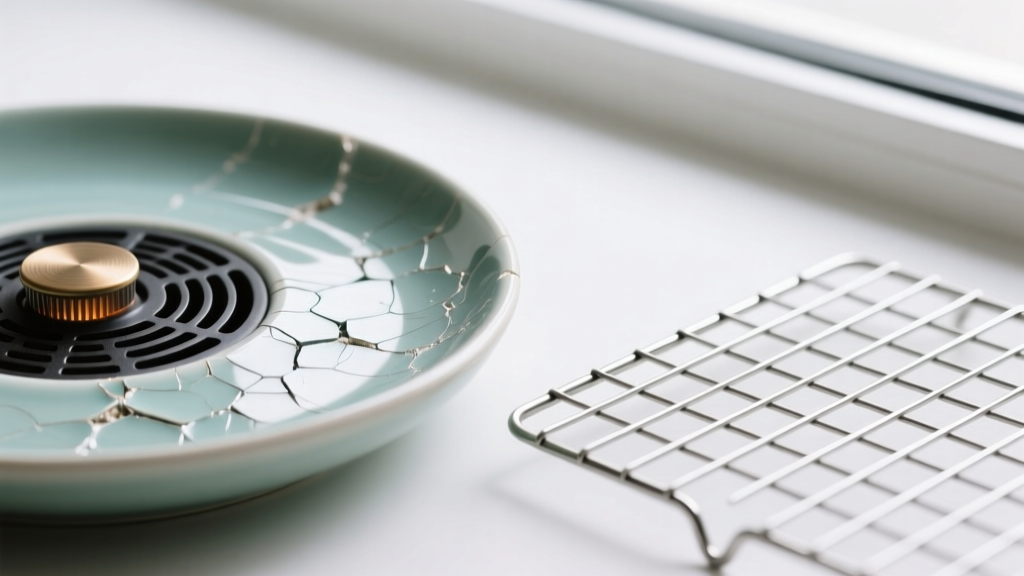
Never place PTFE (Teflon) coated wire racks in an air fryer. PTFE begins to degrade and release toxic fumes at 500°F, but localized heating element proximity can trigger early off-gassing. Always opt for bare 304 stainless steel or kiln-fired ceramic coatings. The Instant Vortex Ceramic-Coated Crisper Plate ($19.99) uses a sol-gel ceramic derivative that remains stable up to 450°F, though it must be hand-washed to prevent the alkaline dishwasher salts from etching the ceramic matrix.
Tongs, Spatulas, and Probes: Protecting the Non-Stick Basket
The non-stick coating inside your air fryer basket is typically PTFE or a ceramic-titanium blend, both of which are highly susceptible to scratching. Using standard stainless steel tongs will gouge the coating, leading to peeling and the ingestion of micro-plastics. However, standard nylon utensils are equally problematic due to their low melting points.
The Fiberglass-Core Silicone Solution
The optimal solution for turning food is fiberglass-core silicone tongs. The fiberglass core provides the rigid tension needed to grip heavy items like bone-in chicken thighs, while the thick silicone tips protect the basket. The OXO Good Grips 12-Inch Silicone Tongs ($14.99) feature a continuous silicone mold over the tips, preventing food grease from seeping into the metal hinge—a common failure point in cheaper riveted tongs where rancid oil builds up and causes the mechanism to seize.
For leave-in thermometer probes, avoid models with standard PTFE-coated wires. The intense radiant heat from the top element will melt the wire shielding. Instead, invest in probes with braided stainless steel cables, such as those included with the ThermoWorks Signals system, which are rated for continuous exposure to 700°F+ ambient heat.
Decision Framework: Matching Utensils to Air Fryer Wattage
Not all air fryers heat identically. High-wattage models (1700W+) recover heat faster and create more intense localized hot spots than lower-wattage (1200W) compact models. Use this framework to select your accessories:
- For 1700W+ Dual-Basket Models (e.g., Ninja Foodi 10-in-1): Strictly use 304 stainless steel racks and platinum-cure silicone. The intense fan speed and rapid heat recovery will warp thin aluminum pans and degrade peroxide silicone in under a month.
- For 1200W-1500W Basket Models (e.g., Cosori Pro LE): Ceramic-coated accessories are safe here, as the heating element is further from the food bed. Fiberglass-core silicone tongs are mandatory to protect the delicate ceramic-titanium basket coating.
- For Halogen/Oven-Style Air Fryers: Glass and bare 304 stainless steel are your best options. Avoid silicone liners entirely, as the direct radiant light heat can cause localized scorching on the silicone surface.
Cleaning Degradation: The Dishwasher Factor
Durability isn't just about heat; it's about chemical resistance. Modern dishwasher detergents contain powerful enzymes and high-pH alkaline salts designed to strip baked-on proteins. According to NSF International food equipment standards, commercial food equipment must withstand harsh chemical sanitizers, but consumer-grade air fryer accessories rarely meet this threshold.
Anodized aluminum accessories (like cheap cake barrels) will oxidize, turn black, and leave a metallic residue on your hands after just three dishwasher cycles. Always hand-wash anodized aluminum and ceramic-coated accessories using a pH-neutral dish soap and a non-abrasive cellulose sponge. Bare 304 stainless steel and platinum-cure silicone are the only materials that will reliably survive the bottom rack of a modern dishwasher without cosmetic or structural degradation.
Frequently Asked Questions
Can I use parchment paper in the air fryer at 400°F?
Standard bleached parchment paper is rated to 425°F, but air fryers pose a unique fire hazard. If the parchment paper is not weighed down by food, the convection fan will blow it up into the heating element, causing it to ignite. Only use perforated, pre-cut parchment paper specifically designed for air fryers, and never use it during the pre-heating cycle.
Why did my silicone air fryer liner turn brown and sticky?
This is a sign of polymerized oil buildup, not necessarily material failure. Aerosol cooking sprays (like PAM) contain soy lecithin and propellants that bond to silicone at high heat, creating a sticky, un-washable residue. Always use pure avocado or olive oil applied with a pump-action oil mister to preserve the hydrophobic properties of your silicone accessories.
Written by
Marcus WebbMarcus Webb served as a U.S. Army logistics officer for 8 years, where he managed field equipment procurement and tactical gear evaluation across three combat deployments. After honorable discharge, he earned a certification from the Professional Knife Makers Association and became a certified Wilderness First Responder (WFR). Marcus has tested over 500 EDC products in extreme environments — from -40°F in Alaska to 120°F in the Mojave Desert — using military-spec testing protocols. His reviews of multi-tools, tactical flashlights, and survival gear are known for their rigorous methodology: controlled drop tests from 6 feet, 120-minute water submersion at 2 meters, and lateral torque testing at 45 Nm. He is a member of the Blade Show judging panel and contributes to OutdoorGearLab.