Cool Baking Gadgets for Artisan Italian Pasta & Focaccia
Discover cool baking gadgets for Italian cooking. Master extruded pasta al forno, high-hydration focaccia, and artisan ravioli with our 2026 expert guide.
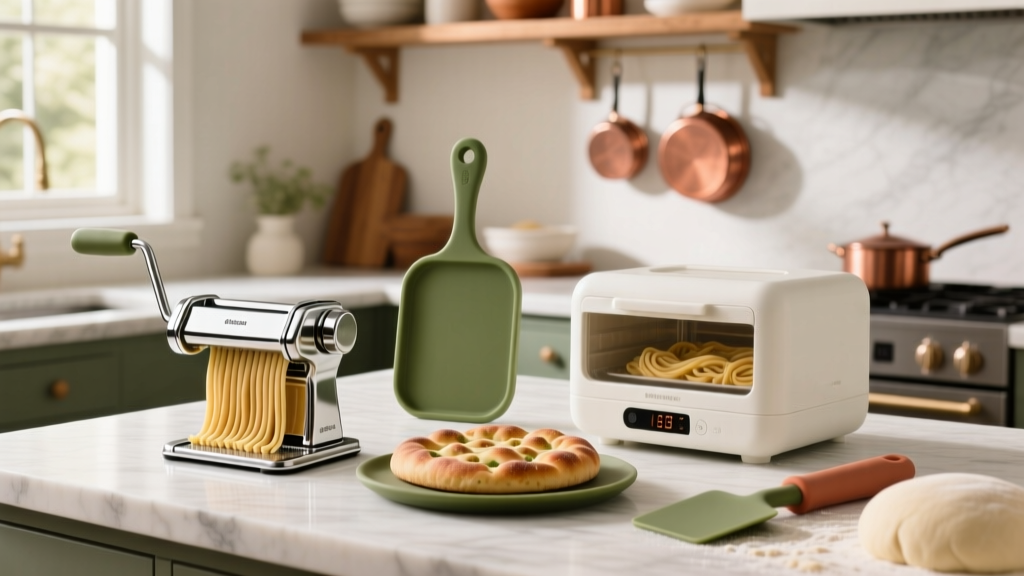
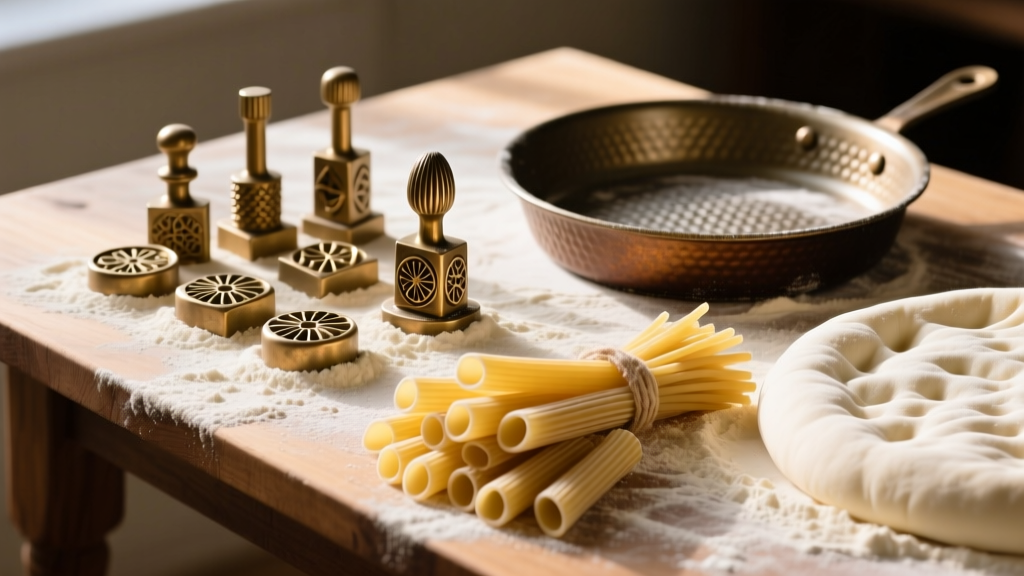
When home cooks search for cool baking gadgets, they often default to cake turntables, silicone macaron mats, or digital pastry scales. But the intersection of baking and Italian cuisine—specifically the crafting of extruded pasta for pasta al forno (baked pasta dishes), high-hydration focaccia, and stuffed ravioli—demands a highly specialized toolkit. Italian dough crafts rely on precise friction, controlled hydration, and specific thermal environments. In 2026, the market has matured beyond basic wooden rolling pins, offering mechanical and metallurgical upgrades that transform amateur kitchens into artisan workshops.
The Extrusion Engine: Perfecting Pasta al Forno
Baked Italian dishes like rigatoni al forno or baked ziti require pasta shapes that can trap heavy ragù and melted mozzarella. While hand-rolled sheets are excellent for lasagna, tubular extruded pasta requires serious mechanical force. The KitchenAid Gourmet Pasta Press (Model KSMPEXTA) remains the gold standard for home extrusion, retailing around $199.99.
Unlike budget extruders that use Teflon or plastic dies, the KSMPEXTA utilizes a reinforced stainless steel auger and traditional bronze dies. Bronze is microscopically porous. As the semolina dough is forced through the die at a low RPM (preventing heat buildup that destroys gluten networks), the bronze creates microscopic abrasions on the pasta's surface. This rough texture is non-negotiable for baked pasta; it acts as a mechanical anchor for sauces and cheese, preventing them from sliding off during the 40-minute bake at 375°F (190°C).
Focaccia & Ciabatta: Mastering High-Hydration Breads
Italian baking extends far beyond pasta. Focaccia and ciabatta are defined by their open, irregular crumb structures, which require dough hydrations ranging from 75% to 85%. Handling dough this wet requires specialized bakeware and climate control.
The Bakeware: USA Pan Aluminized Steel Focaccia Pan
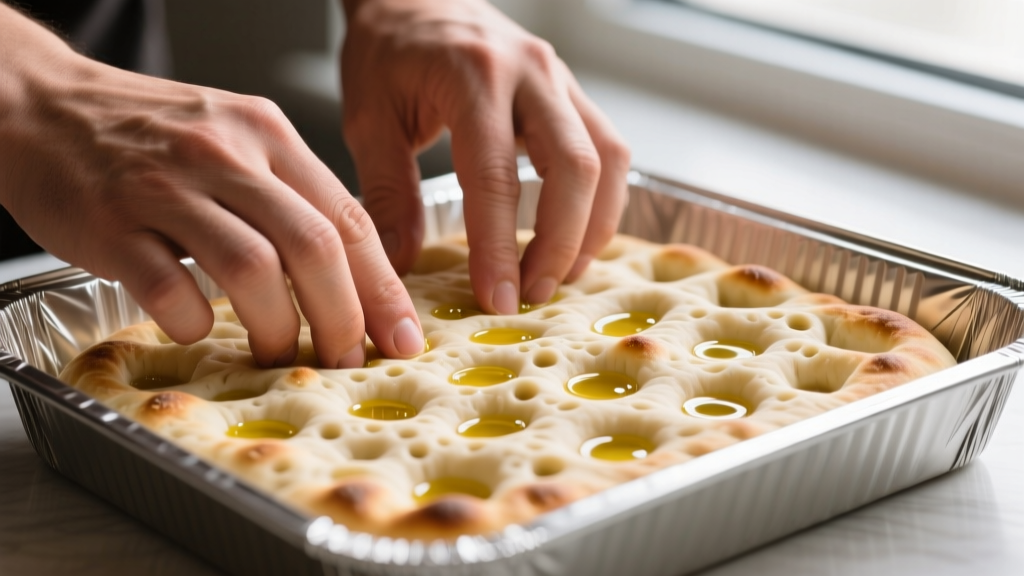
The USA Pan 16 x 12 Inch Focaccia Pan ($45.00) is engineered specifically for high-hydration doughs. Unlike standard aluminum pans that can react with the acidic byproducts of long-fermented doughs, aluminized steel provides superior thermal mass. This ensures the bottom crust achieves a deep, golden crunch (the Maillard reaction) before the interior crumb dries out. The pan's corrugated surface pattern, combined with a proprietary silicone non-stick coating, allows you to perform the crucial "dimpling" technique directly in the pan without tearing the delicate gluten network.
Climate Control: Brod & Taylor Folding Proofer
High-hydration Italian doughs are highly sensitive to ambient temperature fluctuations. The Brod & Taylor Folding Proofer ($179.00) provides a controlled microclimate. For a traditional 24-hour cold-fermented focaccia, you can use the proofer to maintain an exact 78°F (25.5°C) during the initial bulk fermentation, then fold it away when not in use. According to baking experts at The Perfect Loaf, maintaining a strict 75°F–78°F window optimizes yeast activity without over-activating the protease enzymes that break down gluten in wet doughs.
Italian Dough Hydration & Proofing Matrix
| Dough Type | Target Hydration | Ideal Proofing Temp | Required Gadget Feature |
|---|---|---|---|
| Extruded Pasta | 45% - 50% | Room Temp (68°F) | Low-RPM Auger & Bronze Die |
| Classic Focaccia | 75% - 80% | 75°F - 78°F | Corrugated Aluminized Steel Pan |
| Ciabatta | 80% - 85% | 78°F (High Humidity) | Enclosed Proofer with Water Tray |
| Panettone | 55% - 60% (Enriched) | 82°F - 85°F | Precise Thermostat Control |
The Ravioli Assembly Line: Stuffing, Sealing, and Baking
While ravioli is typically boiled, ravioli al forno (baked ravioli in a creamy sage butter or light tomato sauce) is a rising trend in modern Italian home cooking. Baking stuffed pasta introduces a unique failure mode: trapped air expands in the oven, causing the ravioli to burst and leak their filling into the baking dish.
To prevent this, the Marcato Ravioli Tablet ($85.00) offers a superior mechanical advantage over standard rolling-pin methods. This gadget features a specialized metal hopper and a rolling pin with integrated sealing ridges.
- Sheet Preparation: Roll your pasta dough to setting #6 on a Marcato Atlas 150. The sheet must be thin enough to see your hand through it, but thick enough to withstand the pressure of the filling.
- The Egg Wash Barrier: Lightly brush the bottom pasta sheet with an egg white wash. This creates a protein-based adhesive that seals tighter than water when exposed to oven heat.
- Hopper Loading: Load the filling into the metal hopper. The tablet's design automatically spaces the mounds perfectly, ensuring uniform cooking.
- The Vacuum Seal: As you roll the top pin over the mold, the integrated ridges press the air out from the center of each ravioli toward the edges before sealing. This mechanical air-evacuation is the secret to oven-safe stuffed pasta.
Gadget Comparison Matrix: Building Your Italian Dough Station
Selecting the right tools depends on your primary Italian baking focus. Here is how the top specialty gadgets compare for the serious home cook.
| Gadget | Primary Use | Price Range | Key Material | Maintenance Level |
|---|---|---|---|---|
| KitchenAid KSMPEXTA | Tubular Baked Pasta | $199.99 | Bronze / Stainless | High (Dry brushing only) |
| USA Pan Focaccia Pan | High-Hydration Breads | $45.00 | Aluminized Steel | Low (Hand wash, no soap) |
| Brod & Taylor Proofer | Dough Fermentation | $179.00 | ABS Plastic / Glass | Low (Wipe down) |
| Marcato Ravioli Tablet | Stuffed Pasta Sealing | $85.00 | Anodized Aluminum | Medium (No dishwasher) |
Expert Maintenance: Protecting Your Investment
The most common failure point for Italian baking gadgets is improper cleaning. The cardinal rule of bronze pasta dies and anodized aluminum ravioli molds is absolute zero water contact. Water causes bronze to oxidize and develop a green patina (verdigris), and it strips the protective layer off anodized aluminum.
After extruding pasta, let the bronze dies sit out on a wire rack for 24 hours until the residual dough is completely petrified. Once dry, use a stiff brass wire brush and a wooden toothpick to dislodge the semolina from the intricate grooves. As noted by culinary scientists at Serious Eats, preserving the microscopic roughness of the bronze is what guarantees your pasta will hold onto sauces effectively. For a deep dive into high-hydration dough management and pan preparation, the master bakers at King Arthur Baking offer excellent guidelines on seasoning aluminized steel to build a permanent non-stick patina over time.
By investing in these specialized cool baking gadgets, you move beyond basic recipes and begin engineering authentic Italian textures—from the sauce-gripping ridges of bronze-extruded rigatoni to the shatteringly crisp, oil-pooled crust of a perfectly proofed focaccia.
Written by
Marcus WebbMarcus Webb served as a U.S. Army logistics officer for 8 years, where he managed field equipment procurement and tactical gear evaluation across three combat deployments. After honorable discharge, he earned a certification from the Professional Knife Makers Association and became a certified Wilderness First Responder (WFR). Marcus has tested over 500 EDC products in extreme environments — from -40°F in Alaska to 120°F in the Mojave Desert — using military-spec testing protocols. His reviews of multi-tools, tactical flashlights, and survival gear are known for their rigorous methodology: controlled drop tests from 6 feet, 120-minute water submersion at 2 meters, and lateral torque testing at 45 Nm. He is a member of the Blade Show judging panel and contributes to OutdoorGearLab.