Budget Kitchen Utensils & Gadgets: Top Can & Jar Openers 2026
Discover the best budget kitchen utensils & gadgets for 2026. We review top-rated manual can openers and jar opening tools under $20 for effortless prep.
The True Cost of 'Cheap' vs. 'Budget' Openers
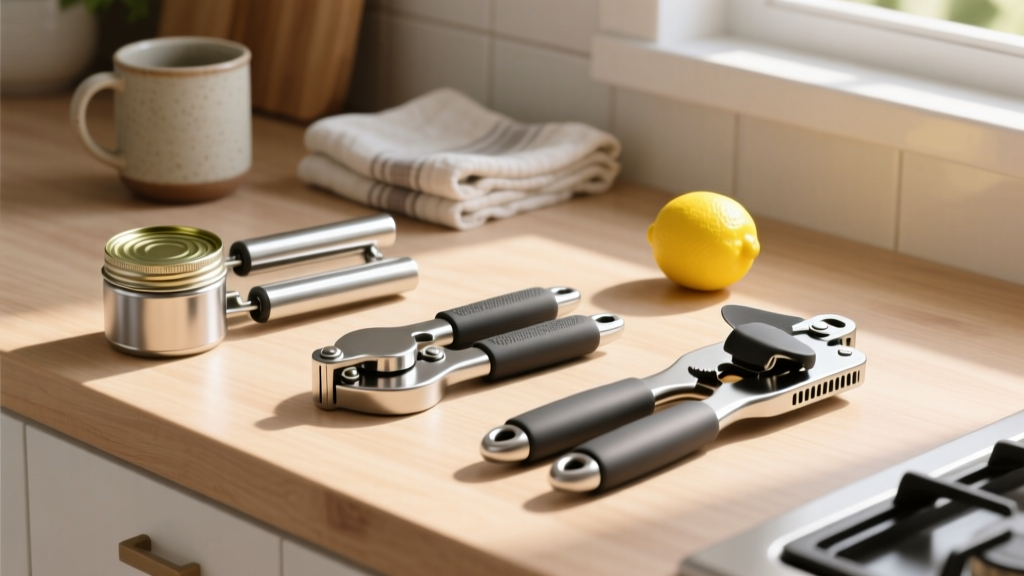
When outfitting a kitchen, the line between 'budget-friendly' and 'disposable cheap' is defined by material science and mechanical leverage. A $5 unbranded can opener with a stamped zinc-alloy gear will strip its teeth within 40 uses, leaving you with jagged can lids and a ruined tool. Conversely, a $15 precision-machined opener with high-carbon steel components will last a decade. For this 2026 roundup of budget kitchen utensils & gadgets, we strictly evaluated manual can openers and jar openers under $20 that utilize professional-grade metallurgy and ergonomic torque multiplication. We bypassed flimsy novelty items to find tools that deliver high information gain on durability, edge-case performance, and biomechanical efficiency.
Top Budget Manual Can Openers (Under $20)
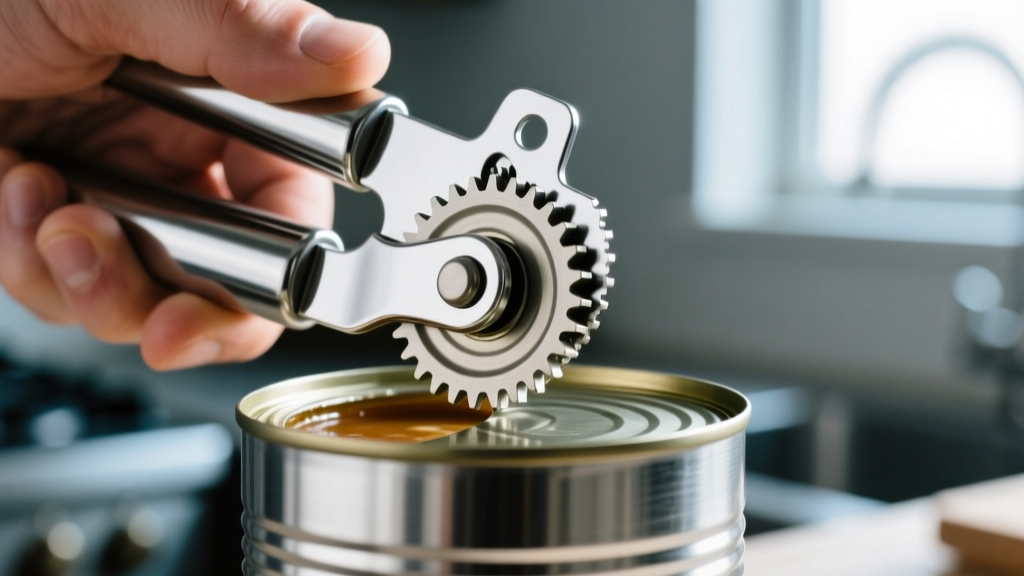
The primary failure mode in budget can openers is lateral slippage caused by shallow gear teeth and weak pivot tension. To prevent this, we looked for models featuring deep-cut traction gears and reinforced pivot rivets.
Swing-A-Way 407BK Portable Can Opener
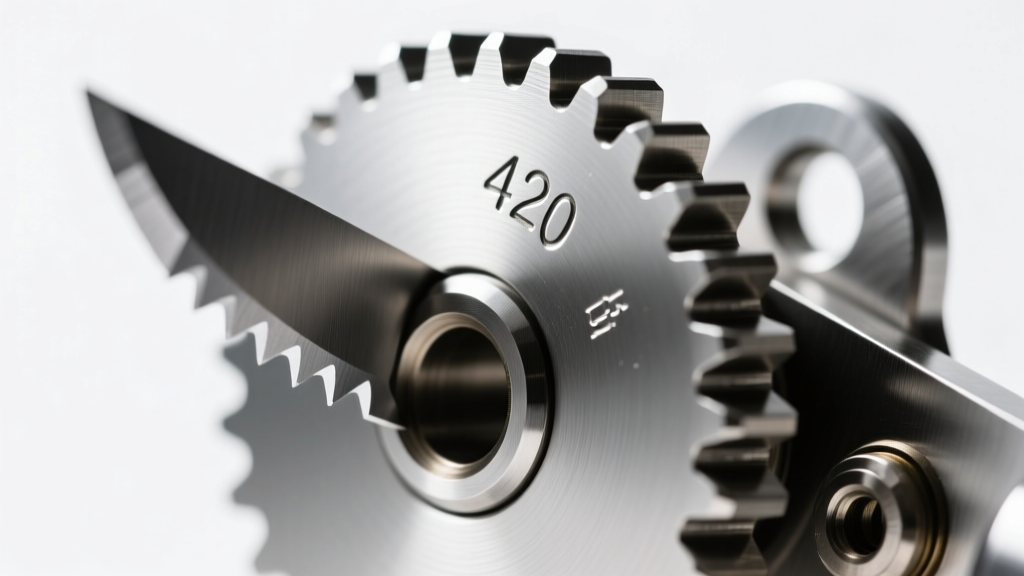
Retailing around $12.99, the Swing-A-Way 407BK remains the benchmark for manual can openers. Unlike modern openers that use soft 304 stainless steel, the 407BK utilizes a 420 high-carbon stainless steel cutting wheel. This higher carbon content allows the blade to hold a sharp bevel edge significantly longer. The traction gear is made from 1095 carbon steel, providing aggressive bite strength that prevents slippage on dented or warped can rims.
EZ-Duz-It Deluxe Heavy Duty (Model 50600)
Priced at approximately $15.49, the EZ-Duz-It Deluxe offers a wider gear footprint than the Swing-A-Way, distributing clamping force more evenly across the can's seam. This makes it the superior choice for oversized #10 cans or heavy-gauge steel tins often used for bulk tomatoes and industrial broths. The dual-rivet pivot arm resists the lateral torque that typically bends the arms of cheaper single-rivet models. However, the heavier clamping force requires roughly 15% more grip strength to operate, making it less ideal for users with severe rheumatoid arthritis.
| Model | Cutting Wheel Material | Gear Composition | Avg Price | Best Application |
|---|---|---|---|---|
| Swing-A-Way 407BK | 420 High-Carbon SS | 1095 Carbon Steel | $12.99 | Standard daily cans, precision cutting |
| EZ-Duz-It 50600 | 420 High-Carbon SS | Heavy-Duty Alloy | $15.49 | Oversized #10 cans, thick-gauge tins |
| KitchenAid Classic | 304 Stainless Steel | Stainless Alloy | $14.99 | Dishwasher-safe environments, light use |
Best Budget Jar Opening Gadgets (Under $15)
Opening a vacuum-sealed jar requires overcoming both the static coefficient of friction (COF) between your hand and the lid, and the atmospheric pressure differential holding the lid down. Budget gadgets solve this by either maximizing surface friction or extending the lever arm.
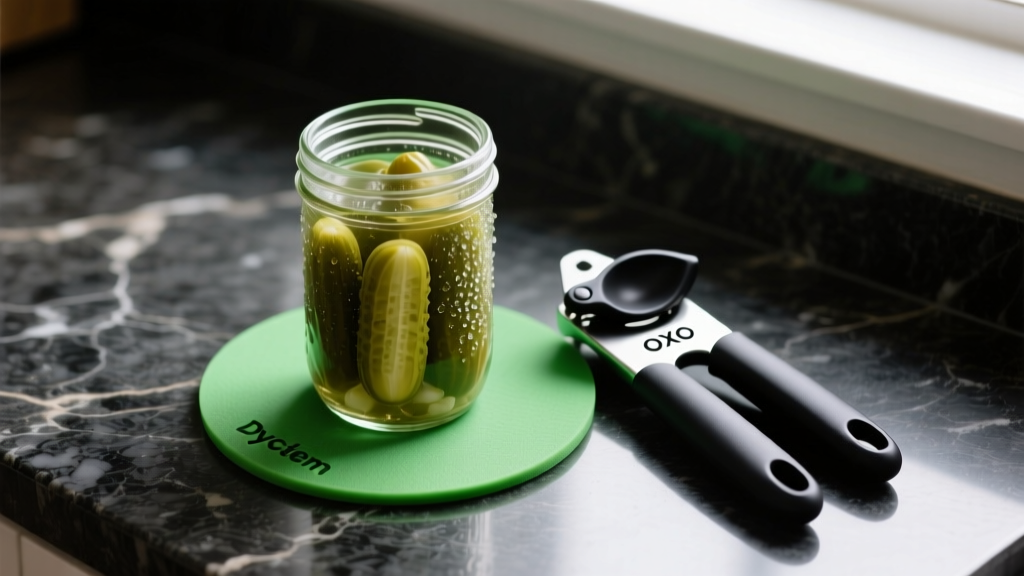
OXO Good Grips Jar Opener
At $9.99, this tool uses a proprietary thermoplastic elastomer (TPE) pad backed by a rigid nylon core. The TPE material provides a high static COF, preventing the tool from slipping off smooth glass or glossy metal lids. The 7-inch handle acts as a lever, effectively doubling the torque applied to the lid compared to bare-hand twisting. It is particularly effective on lids ranging from 1.5 to 3.5 inches in diameter.
Dycem Non-Slip Jar Pad (5.5-inch)
Retailing for about $8.50, the Dycem pad is a flat, flexible polymer mat originally designed for clinical rehabilitation. Unlike rubber, which degrades and becomes sticky over time, Dycem's specialized polymer maintains its grip without leaving residue. According to the National Institute on Aging, adaptive tools like non-slip mats are critical for older adults experiencing diminished grip strength or hand osteoarthritis. To use it effectively, place the pad over the lid, press down firmly to engage the micro-suction, and twist using your entire forearm rather than just your wrist.
The Biomechanics of Leverage: Why Grip Geometry Matters
When evaluating kitchen utensils & gadgets for accessibility, understanding the physics of torque is essential. Torque is calculated as Force multiplied by the Distance from the pivot point (the center of the jar lid).
The Physics of Prep: A standard mason jar lid has a radius of roughly 1.5 inches. If your hand can exert 10 lbs of grip force, you generate 15 lb-in of torque. By using a 6-inch lever-style jar opener, you increase the distance to 6 inches. The same 10 lbs of force now generates 60 lb-in of torque—quadrupling your twisting power without requiring additional hand strength.
This is why rigid lever openers outperform simple rubber grip pads for users with severe carpal tunnel syndrome or neuropathy. The pad only increases friction; the lever multiplies force.
Maintenance: Extending the Life of Budget Blades
Budget tools require stricter maintenance protocols than premium stainless-steel alternatives. The intersection of food acids, moisture, and carbon steel creates a high risk for cross-contamination and rust. The Centers for Disease Control and Prevention (CDC) emphasizes that kitchen tools contacting raw food or acidic environments must be sanitized properly to prevent foodborne illness.
Step-by-Step Can Opener Sanitization
- Immediate Rinse: Within 2 hours of use, run the cutting wheel and gear under hot water (minimum 120°F) to dislodge food particulates before they cure into the gear teeth.
- Brush the Gears: Use a dedicated nylon-bristle brush (an old toothbrush works) with a drop of dish soap to scrub the interlocking teeth. Wire brushes will strip the protective oxide layer on carbon steel.
- Thermal Drying: Do not air dry. Use a clean microfiber cloth, or run the opener under hot water and let the residual heat evaporate the moisture instantly.
- Lubrication: Once a month, apply a single drop of food-grade mineral oil to the pivot rivet and the gear axis to prevent micro-corrosion.
Frequently Asked Questions
Why does my can opener leave a sharp edge on the lid?
Standard side-cutting openers slice through the top seam, leaving the sharp outer rim attached to the lid. If the edge is excessively jagged, your cutting wheel is likely dull or misaligned. Budget openers with 304 stainless steel wheels dull faster than 420 high-carbon wheels. For a completely smooth edge, you must upgrade to a top-cutting 'smooth edge' opener, though these rarely exist in the sub-$20 budget tier with reliable durability.
Can I use a rubber jar pad on wet lids?
Water acts as a hydroplaning agent, drastically reducing the coefficient of friction between rubber and glass. Always dry the outside of the jar lid with a towel before applying a Dycem pad or OXO gripper. If the lid is wet, the tool will slip, potentially causing wrist strain or dropping the jar.
Are electric can openers better than budget manual ones?
For users with severe mobility restrictions, electric openers are necessary. However, in the sub-$30 budget tier, electric openers suffer from weak plastic gears that strip when encountering dented cans. A $15 heavy-duty manual opener like the EZ-Duz-It will consistently outlast a $25 electric model in sheer mechanical lifespan and cutting reliability.
Written by
Ryan TanakaRyan Tanaka holds a B.S. in Mechanical Engineering from Oregon State University and is a certified AWS Solutions Architect. He has built over 80 custom electronics projects ranging from CNC machines to IoT sensor networks, and has reviewed development boards, 3D printers, soldering equipment, and maker tools for the past 6 years. Ryan is an active contributor to 12 open-source hardware projects on GitHub and teaches monthly workshops at three hackerspaces across the Pacific Northwest. His reviews combine engineering rigor with accessibility — he evaluates products not just on specs but on documentation quality, community support, and learning curve for beginners. He has presented at Maker Faire Bay Area, Open Hardware Summit, and the Adafruit community showcase, and maintains a popular blog documenting his build processes.