Unique Kitchen Gadgets Made in USA for Italian Cooking
Discover unique kitchen gadgets made in USA for authentic Italian cooking, from copper sauciers for polenta to heavy-duty meat grinders for sausage.
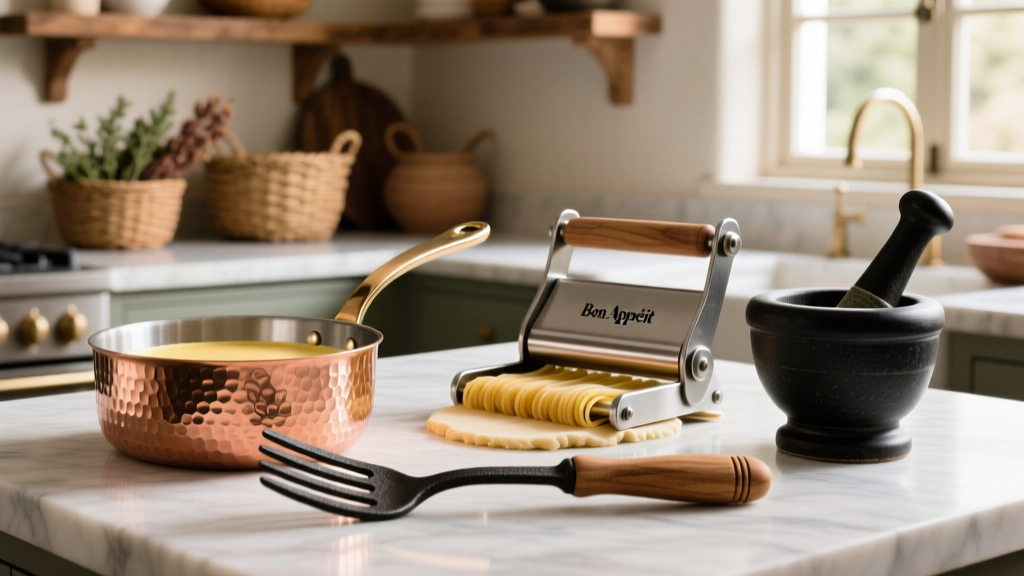
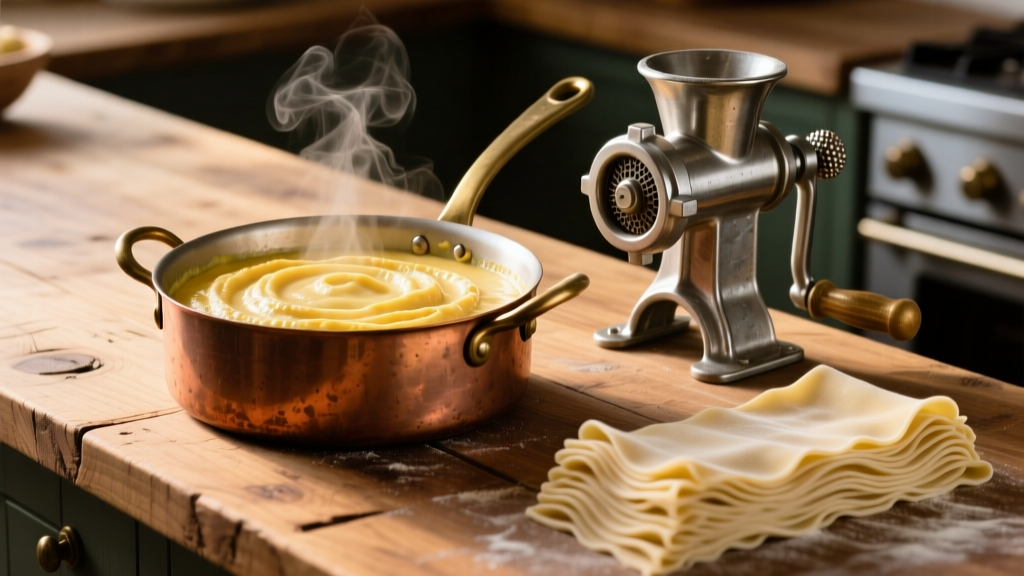
The Renaissance of Domestic Craftsmanship in Italian Cooking
When outfitting an Italian kitchen, the default instinct is to import. We look to Marcato for pasta rollers, Imperia for extruders, and Mauviel for copper. However, the landscape of domestic manufacturing has shifted dramatically. Today, sourcing kitchen gadgets made in USA yields specialized, heavy-duty tools that frequently outperform their European counterparts in metallurgy, motor torque, and structural longevity.
According to the Federal Trade Commission, a legitimate "Made in USA" label requires that "all or virtually all" significant parts and processing be of domestic origin. This strict standard eliminates the "assembled in the US from imported parts" loophole, ensuring you are investing in genuine American industrial craftsmanship. For the Italian home cook, this means accessing commercial-grade meat grinders, thermally superior copper sauciers, and warp-resistant bakeware that are purpose-built for the rigorous demands of traditional Italian cuisine.
4 Unique Kitchen Gadgets Made in USA for the Italian Kitchen
1. LEM Products Big Bite #8 Meat Grinder (The Sausage & Ragù Engine)
Authentic salsiccia (Italian sausage) and traditional Ragù alla Bolognese require precisely textured ground meat. Stand mixer attachments utilize small worm gears that generate friction heat, smearing the pork fat and ruining the bind. The LEM Products Big Bite #8 (Model 704), engineered and manufactured in Ohio, solves this with a dedicated 0.35 HP motor and a patented auger design that bites into meat aggressively, processing 4 to 5 pounds per minute without smearing.
2. Brooklyn Copper Cookware 2.5 Qt Saucier (The Polenta & Risotto Master)
Stirring polenta for 45 minutes or coaxing the starch out of Carnaroli rice for risotto requires immaculate heat distribution. Standard stainless steel has a thermal conductivity of roughly 16 W/(m·K), leading to localized hot spots that scorch dairy and starch. Brooklyn Copper Cookware, hand-spun in New York, utilizes 2.5mm thick pure copper, which boasts a thermal conductivity of ~401 W/(m·K). This means the entire surface of the 2.5 Qt Saucier heats evenly and responds instantly to flame adjustments.
Unlike traditional French copper lined with tin (which melts at 450°F and requires expensive retinning), Brooklyn Copper lines their vessels with 18/8 stainless steel. This makes the pan safe for high-heat searing before deglazing, and completely impervious to the high acidity of a slow-simmered tomato sugo.

3. USA Pan Aluminized Steel Focaccia & Pizza Pans
Baking Focaccia Genovese or Pizza al Taglio at home often results in a pale, steamed crust rather than a crispy, blistered base. The culprit is usually thin, reactive aluminum. USA Pan, operating out of Pennsylvania, manufactures commercial-grade bakeware using aluminized steel. This material features a heavy-gauge steel core for structural rigidity (preventing warping at 500°F oven temperatures) that is hot-dipped in an aluminum-silicon alloy for rapid, even heat transfer.
Their proprietary Americoat coating is a silicone-based, non-toxic release agent that allows high-hydration focaccia doughs (often 80% hydration or higher) to release cleanly without excessive oil pooling. The corrugated surface texture on their half-sheet and 9x13 pans also promotes air circulation beneath the dough, accelerating the Maillard reaction on the crust.
4. Ateco Stainless Steel Fluted Pastry Wheels
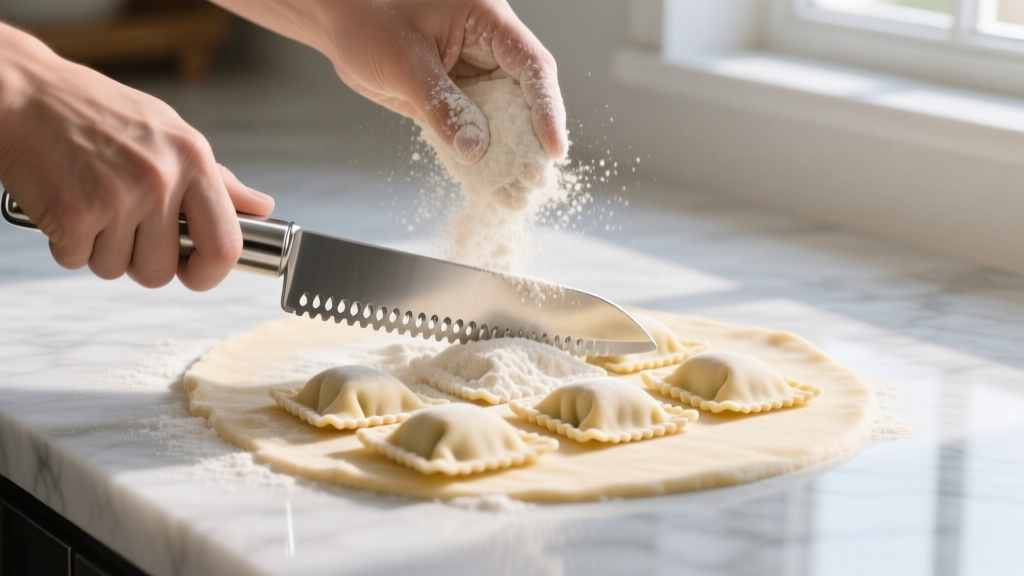
While Italy dominates the pasta roller market, the finishing tools used to shape agnolotti, ravioli, and cappelletti benefit from American precision stamping. Ateco manufactures a wide array of its professional hand tools in the USA. Their 4-inch fluted pastry wheel features a high-carbon stainless steel blade with a scalloped edge.
When cutting filled pasta, a straight blade often drags and seals the edges too tightly, causing them to pop open during a rolling boil. The fluted edge creates a micro-scalloped cut that presses the dough layers together more securely, ensuring your ricotta or braised meat fillings stay sealed inside the pasta pocket during cooking.
Comparison Matrix: USA-Made Italian Cooking Arsenal
| Gadget | Primary Italian Application | Material / Metallurgy | Approx. Price (2026) | Maintenance Requirement |
|---|---|---|---|---|
| LEM Big Bite #8 | Fresh Sausage, Ragù Meat | 304 Stainless Steel Housing | $380 - $420 | Hand wash, oil plates with food-grade mineral oil |
| Brooklyn Copper 2.5 Qt | Polenta, Risotto, Pan Sauces | 2.5mm Copper / 18/8 SS Lining | $340 - $360 | Polish exterior with Bar Keepers Friend; dishwasher safe |
| USA Pan Focaccia Pan | Focaccia, Pizza al Taglio | Aluminized Steel / Americoat | $35 - $45 | Hand wash only; avoid metal utensils to protect coating |
| Ateco Fluted Wheel | Agnolotti, Ravioli Cutting | High-Carbon Stainless Steel | $15 - $25 | Dry immediately after washing to prevent micro-corrosion |
Sourcing and Maintaining Your Domestic Tools
Investing in premium domestic manufacturing requires specific maintenance protocols to ensure longevity. For the LEM Meat Grinder, never wash the carbon-steel cutting blades and grinder plates in the dishwasher. The high heat and harsh detergents will cause immediate flash rusting. Instead, wash them in hot soapy water, dry them completely with a towel, and coat them lightly in food-grade mineral oil before storage. For long-term storage, vacuum-seal the metal parts with a desiccant packet.
For Brooklyn Copper Cookware, the stainless steel interior is virtually indestructible, but the bare copper exterior will develop a natural patina. If you prefer the brilliant rose-gold shine, use a dedicated copper polish or a paste of Bar Keepers Friend and water. Avoid using abrasive steel wool, which can leave behind microscopic iron particles that will rust and pit the copper surface over time.
When sourcing these items, buy direct from the manufacturers or authorized culinary dealers. The USDA Food Safety and Inspection Service provides excellent guidelines on safe meat handling, which is particularly relevant when utilizing high-output commercial grinders at home for large-batch Italian sausage making.
Frequently Asked Questions
Are there any USA-made pasta extruders?
While the US produces exceptional stand mixers (like the KitchenAid Pro Line series), the specialized brass and bronze dies required for authentic pasta extrusion are still predominantly manufactured in Italy. However, USA-made heavy-duty meat grinders (like the LEM) can be fitted with third-party stainless steel pasta extrusion attachments, though purists argue that bronze dies from Italian makers like Torchio yield superior surface roughness for sauce adhesion.
Can I use USA Pan aluminized steel for acidic tomato sauces?
USA Pan bakeware is designed for baking, not stovetop simmering. While the aluminized steel and Americoat coating are highly resistant to corrosion, you should not use their sheet pans as makeshift roasting trays for highly acidic liquids (like a wet tomato braise) for extended periods, as the acid can eventually degrade the silicone coating. For stovetop tomato sauces, stick to the stainless-lined Brooklyn Copper saucier or enameled cast iron.
Why choose a fluted pastry wheel over a straight bench scraper for ravioli?
A straight bench scraper relies entirely on downward pressure, which often squeezes the filling out of the edges or fails to seal the two layers of pasta dough completely. A fluted wheel rolls across the dough, simultaneously cutting and crimping the edges. This mechanical crimping creates a physical lock between the top and bottom pasta sheets, drastically reducing the failure rate (burst ravioli) during the boiling process.
Written by
Ryan TanakaRyan Tanaka holds a B.S. in Mechanical Engineering from Oregon State University and is a certified AWS Solutions Architect. He has built over 80 custom electronics projects ranging from CNC machines to IoT sensor networks, and has reviewed development boards, 3D printers, soldering equipment, and maker tools for the past 6 years. Ryan is an active contributor to 12 open-source hardware projects on GitHub and teaches monthly workshops at three hackerspaces across the Pacific Northwest. His reviews combine engineering rigor with accessibility — he evaluates products not just on specs but on documentation quality, community support, and learning curve for beginners. He has presented at Maker Faire Bay Area, Open Hardware Summit, and the Adafruit community showcase, and maintains a popular blog documenting his build processes.